









Introduction
Chess engines are among the most powerful tools ever created for learning the game. With a few clicks, players can access analysis stronger than any human in history. Engines reveal tactical shots instantly, evaluate complex positions accurately, and expose mistakes that would otherwise remain hidden.
Yet paradoxically, many players who rely heavily on engines struggle to improve. They analyze every game, check every move, and still repeat the same mistakes. Some even feel less confident over time, unable to make decisions without consulting an evaluation bar.
This is not a failure of engines—it is a failure of how they are used. Chess engines are powerful teachers, but poor students can learn the wrong lessons.
In this article, we explain how to use chess engines correctly. You will learn why engine dependence happens, how strong players avoid it, and how to turn engines into tools for understanding rather than crutches for decision-making.

Why Chess Engines Are So Tempting
Engines provide immediate, authoritative feedback. After a game, you can instantly see where the evaluation changed and which move was “best.” This clarity feels reassuring, especially after a frustrating loss.
Engines are tempting because they:
· Eliminate uncertainty
· Provide concrete answers
· Appear objective and final
· Work instantly
However, chess improvement is not about knowing the best move—it is about understanding why a move is best and being able to find good moves independently during a game.
The Core Problem: Confusing Evaluation With Understanding
One of the biggest mistakes players make is equating engine evaluation with understanding. Seeing “+1.2” or “-0.8” does not explain anything by itself.
Common symptoms of engine misuse include:
· Memorizing engine lines without understanding plans
· Copying moves that feel unnatural
· Inability to explain engine recommendations
· Playing worse without engine support
Strong players do not treat engine output as instructions. They treat it as a hypothesis to investigate.
Why Engine Dependence Slows Improvement
Engine dependence creates several long-term problems:
1. Loss of Independent Thinking
Players stop calculating seriously because the engine will “tell them later.”
2. Shallow Pattern Recognition
Engines often recommend moves based on deep calculation that humans cannot replicate. Copying these moves builds no usable pattern.
3. Reduced Confidence
Players doubt their own decisions, even when they are reasonable.
4. Poor Practical Play
Engine-perfect moves are not always practical under human time pressure.
Improvement requires building a thinking process that works during games, not after them.

How Strong Players Use Chess Engines
Strong players use engines differently from beginners.
They:
· Analyze positions themselves first
· Use engines to verify, not replace, analysis
· Focus on ideas and plans
· Ignore engine lines they cannot understand
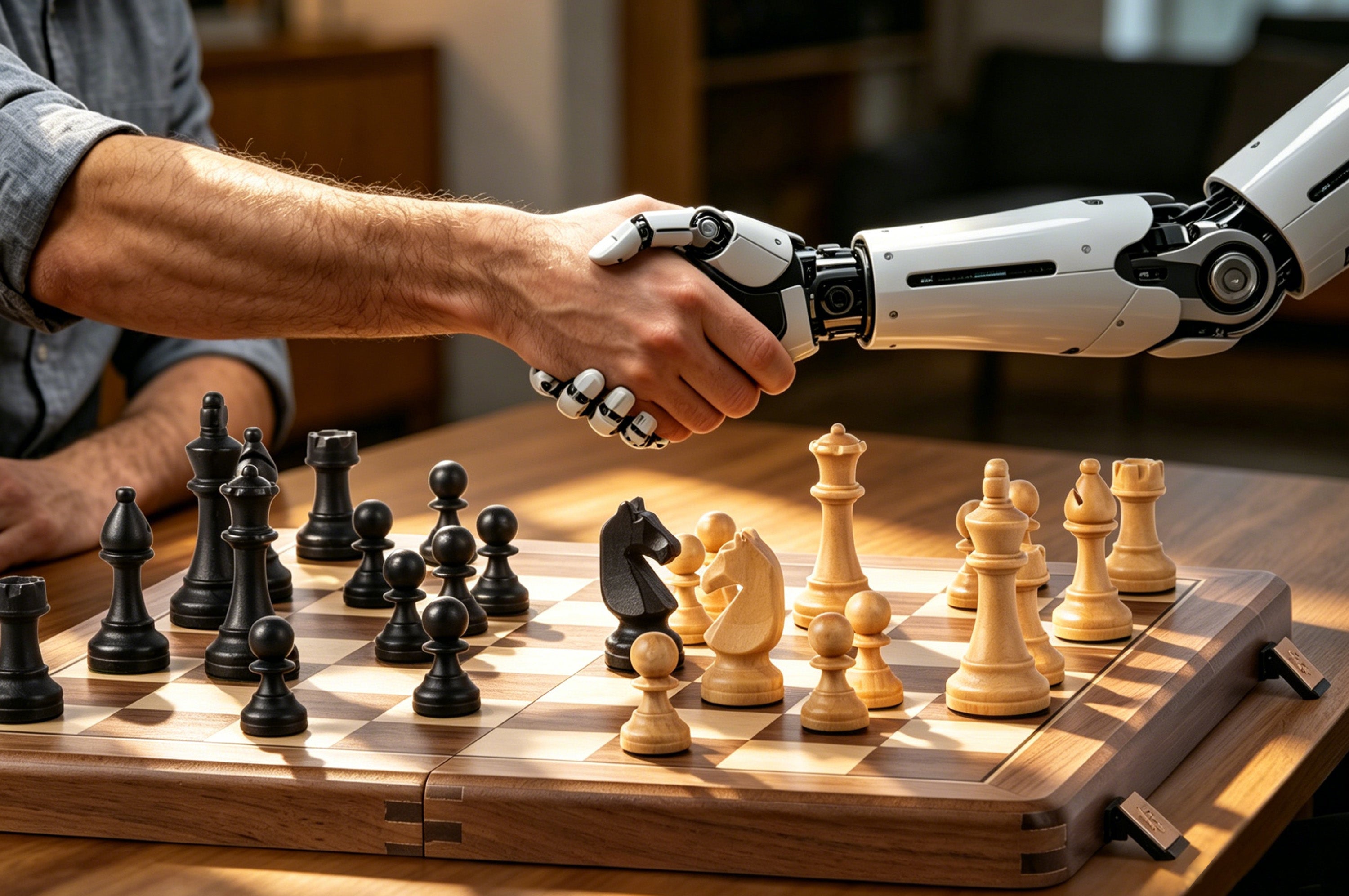
For them, the engine is a sparring partner, not a coach giving orders.
The Correct Order of Analysis
A simple but powerful rule:
Human first. Engine second.
Step 1: Self-Analysis
Replay the game without an engine. Identify critical positions. Write down your thoughts and candidate moves.
Step 2: Hypothesis Formation
Decide what you think went wrong and why.
Step 3: Engine Verification
Check tactics, missed resources, and evaluate alternative plans.
This order preserves independent thinking while benefiting from engine accuracy.
How to Ask the Engine the Right Questions
Instead of asking “What is the best move?”, ask:
· Why is this move better than my move?
· What long-term plan does the engine support?
· Which positional factor mattered most here?
Engines answer implicitly through variations. Your job is to interpret those answers.
Understanding Engine Moves That Feel “Strange”
Engine moves often violate classical rules:
· Early king walks
· Pawn sacrifices for initiative
· Delayed development
When encountering a strange move:
1. Look at the idea, not the move
2. Identify what the move enables
3. Ask whether the idea is humanly playable
If you cannot explain the move, do not adopt it blindly.

Tactical Use of Engines (Where They Shine Most)
Engines are excellent tactical teachers.
Best tactical uses include:
· Verifying combinations
· Checking calculation accuracy
· Exploring forcing lines
· Identifying missed tactics
For tactics, engines provide immediate, concrete feedback that humans can learn from efficiently.
Strategic Use of Engines (Where Caution Is Needed)
Strategic positions are where engine misuse is most common.
In quiet positions:
· Engines see long-term compensation
· Evaluations change slowly
· Moves may lack obvious justification
In these cases, focus on plans, not precise moves. Ask what the engine is improving and why.
Opening Preparation: Avoid the Engine Trap
Many players misuse engines in opening study by memorizing deep lines.
A healthier approach:
· Use engines to test ideas
· Focus on common structures
· Learn typical plans and piece placement
If you cannot explain the middlegame plan arising from an opening, engine preparation has failed.
Engine Use in Endgames
Engines are extremely valuable in endgames.
Good endgame engine use includes:
· Learning winning techniques
· Discovering defensive resources
· Understanding tablebase positions
Here, precision matters more, and engine guidance is often directly applicable.

Training Without an Evaluation Bar
A powerful training habit is to turn off the evaluation bar during analysis.
This forces you to:
· Evaluate positions yourself
· Think in terms of plans
· Avoid emotional reactions to numbers
Many strong players only turn the evaluation bar on at the end of analysis.
How Often Should You Use Engines?
More engine time does not equal more improvement.
A balanced guideline:
· Analyze a few games deeply
· Use engines selectively
· Spend more time thinking than checking
Engines amplify good habits—but also bad ones.
Common Engine Myths
Myth 1: Engines always show the truth.
They show optimal play, not necessarily practical play.
Myth 2: Copying engine moves makes you stronger.
Understanding makes you stronger.
Myth 3: More engine analysis equals faster improvement.
Quality matters more than quantity.
A Practical Engine-Use Checklist
Before using an engine, ask:
· Have I analyzed this position myself?
· Do I understand my mistake?
· What question am I asking the engine?
After using an engine, ask:
· Can I explain the engine’s idea?
· Is this idea practical for me?
· Does it change how I would play similar positions?
Psychological Effects of Engine Overuse
Excessive engine use can:
· Reduce confidence
· Increase fear of mistakes
· Create perfectionism
Strong players accept imperfection and focus on decision quality, not engine approval.
Engines as Long-Term Training Partners
Used correctly, engines:
· Sharpen calculation
· Reveal hidden resources
· Expand strategic understanding
Used incorrectly, they:
· Replace thinking
· Create dependency
· Slow improvement
The difference lies entirely in how you interact with them.
Conclusion
Chess engines are among the greatest learning tools ever created—but only when used wisely. The goal is not to play like an engine, but to think better as a human.
By analyzing independently first, asking the right questions, and focusing on ideas rather than evaluations, players can harness engine power without sacrificing confidence or creativity.
The strongest improvers treat engines as partners in understanding, not authorities to obey. That balance is the key to long-term growth.






Laisser un commentaire
Ce site est protégé par hCaptcha, et la Politique de confidentialité et les Conditions de service de hCaptcha s’appliquent.