










Table of Contents
- The History of the Staunton Chess Set
- Anatomy of Staunton Chess Pieces
- Understanding Chess Piece Sizes
- Wood Types and Materials
- Staunton Piece Size Comparison
- How to Choose the Right Staunton Set
- Frequently Asked Questions
If you have ever browsed a chess store or watched a professional tournament, you have seen Staunton chess pieces. With their elegant, balanced design and instantly recognizable silhouettes, Staunton pieces are the official standard used in every major chess competition around the world. But what makes them so special, and how do you choose the right set for your own games? In this guide, we dive into the history, anatomy, sizes, and materials of Staunton chess pieces so you can buy with confidence.
The History of the Staunton Chess Set
The Staunton design was patented in 1849 by London-based woodworkers Nathaniel Cooke and marketed by the famous chess player Howard Staunton, after whom the pieces are named. Before Staunton, chess sets were wildly inconsistent in shape. Some featured ornate, figurative designs that were difficult to distinguish during fast play, while others were barely recognizable as chess pieces at all. Cooke's breakthrough was to design pieces that were ergonomic, symmetrical, and visually distinct — each piece had a unique silhouette that a player could identify at a glance, even in peripheral vision.
The design was an immediate success. By the early 20th century, Staunton pieces had become the standard for tournament play, and in 1924 the newly formed Fédération Internationale des Échecs (FIDE) adopted them as the official equipment for international competition. Today, whether you are playing at your local club or following the World Championship, you are looking at a design that has remained essentially unchanged for over 175 years.
Anatomy of Staunton Chess Pieces
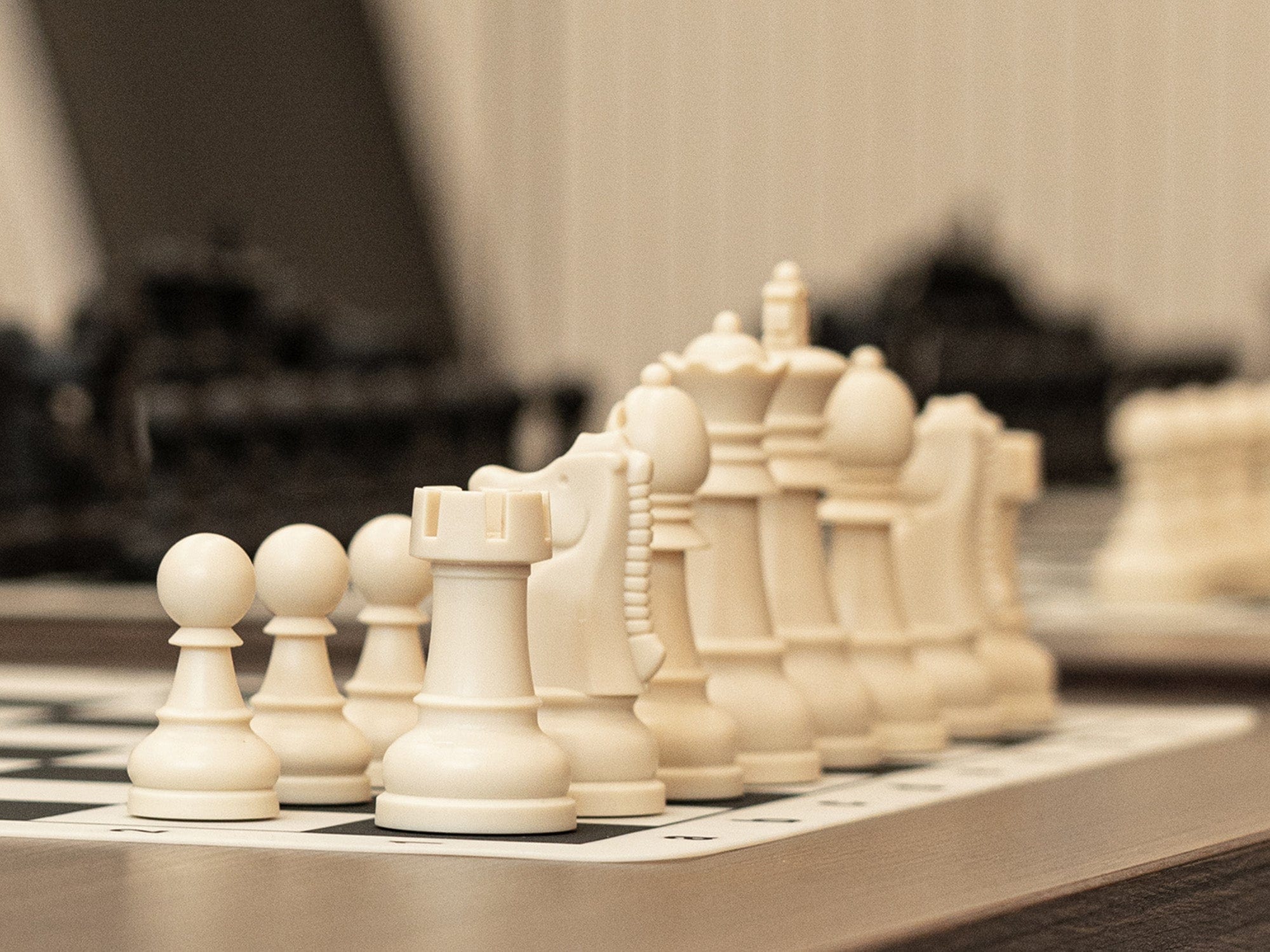
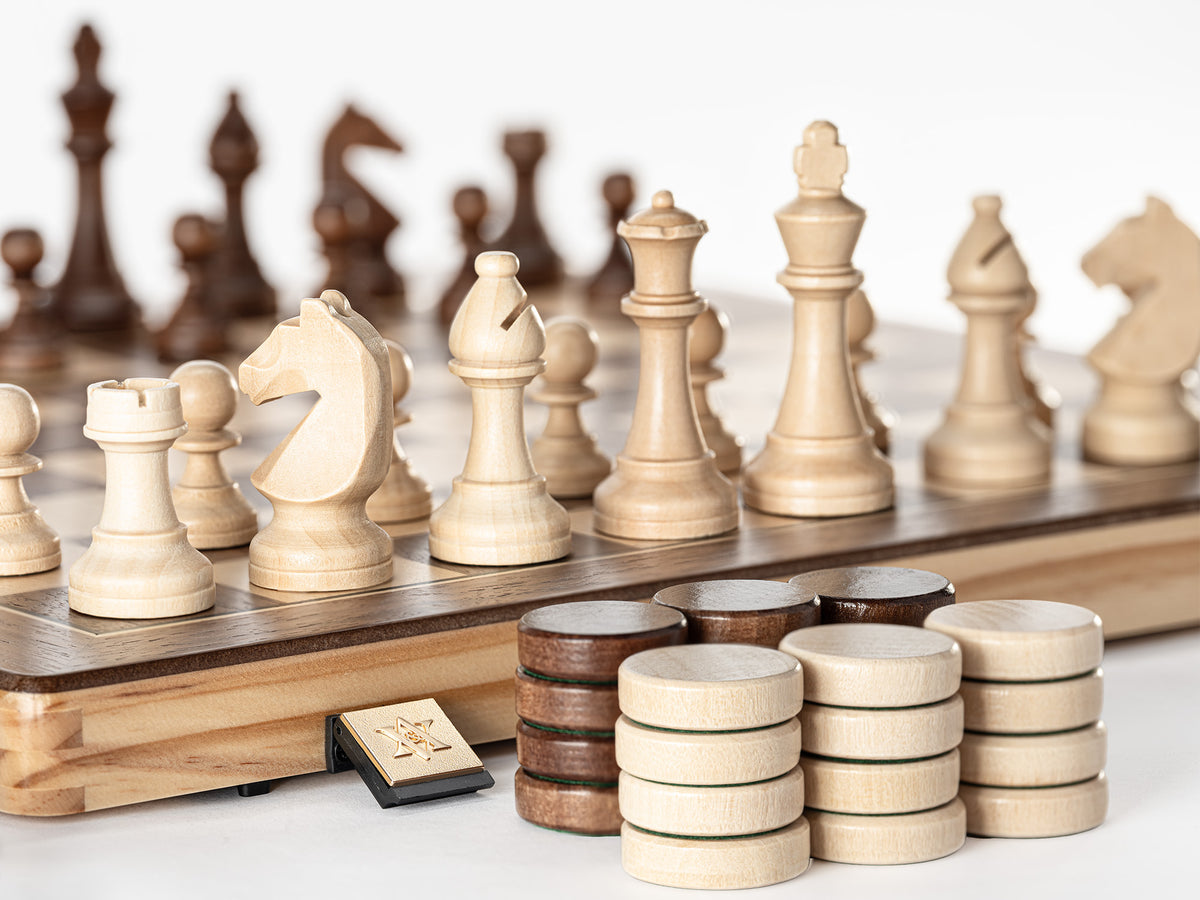
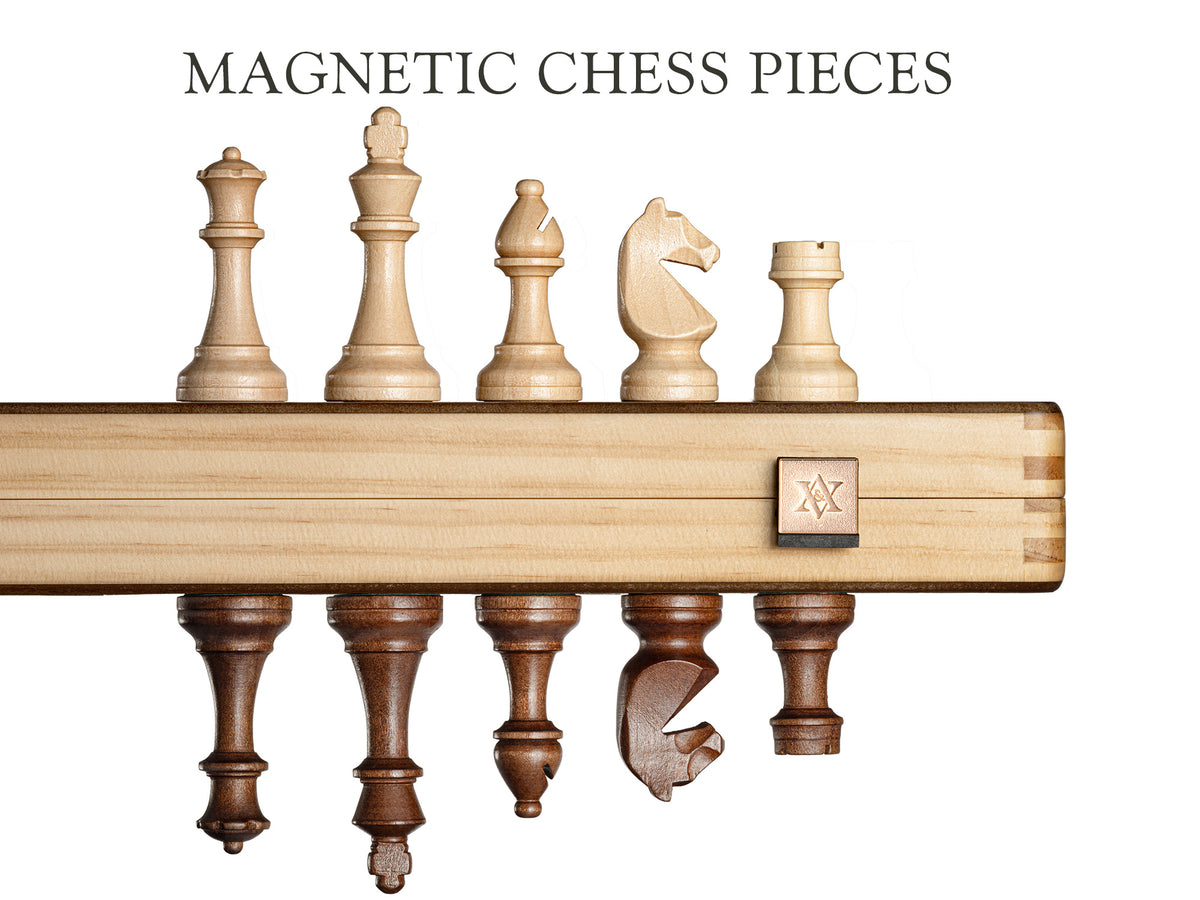
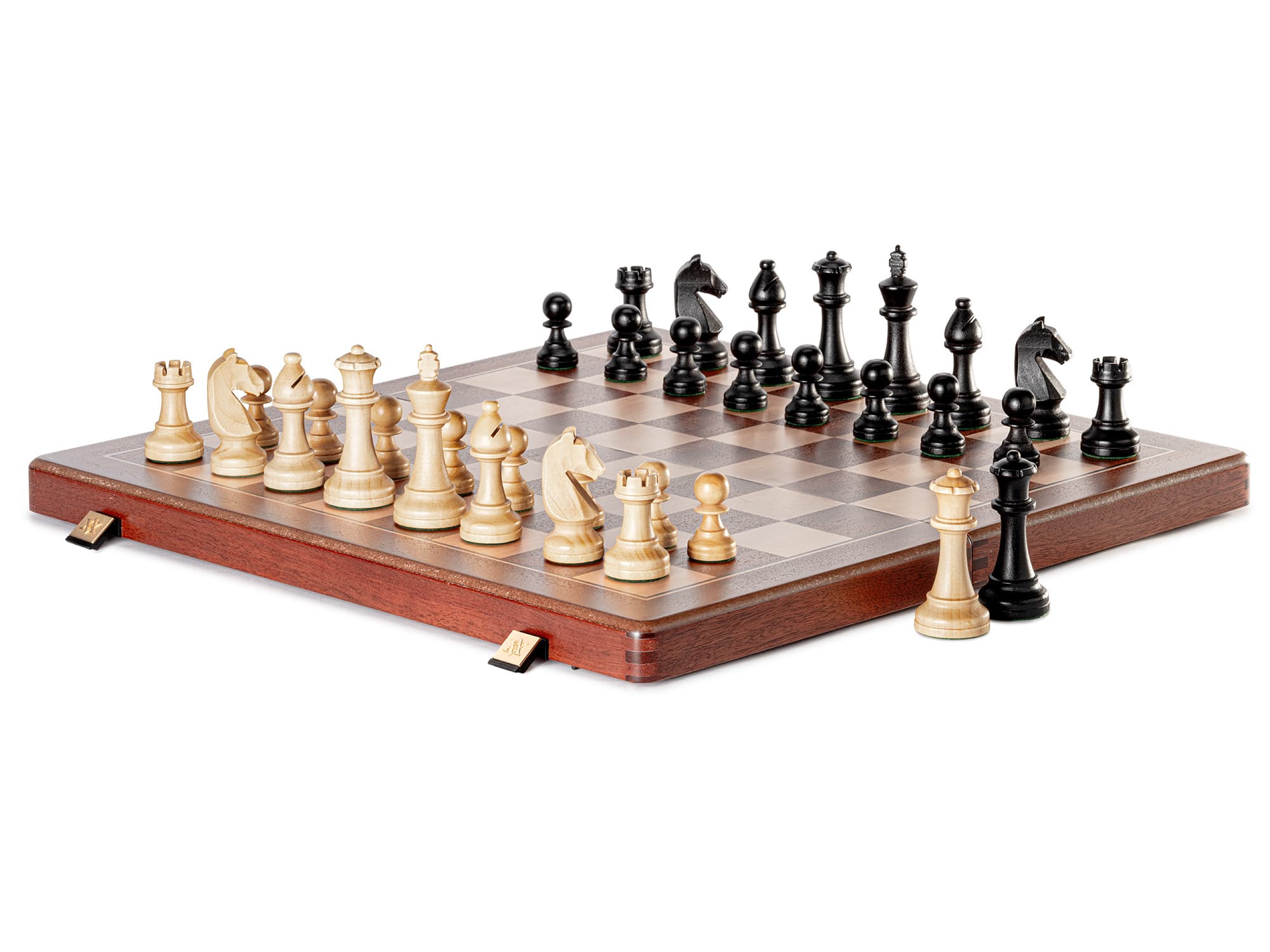
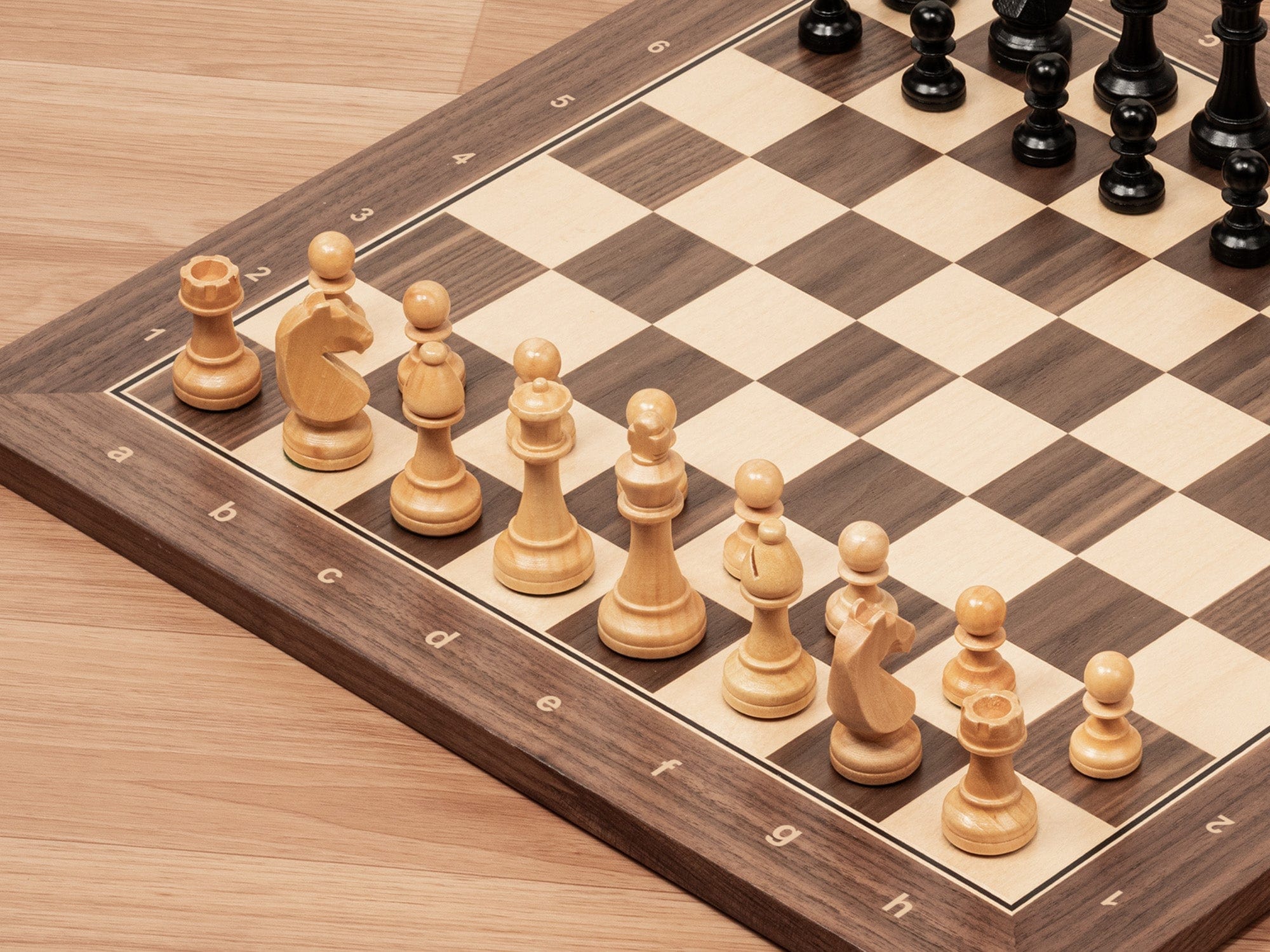
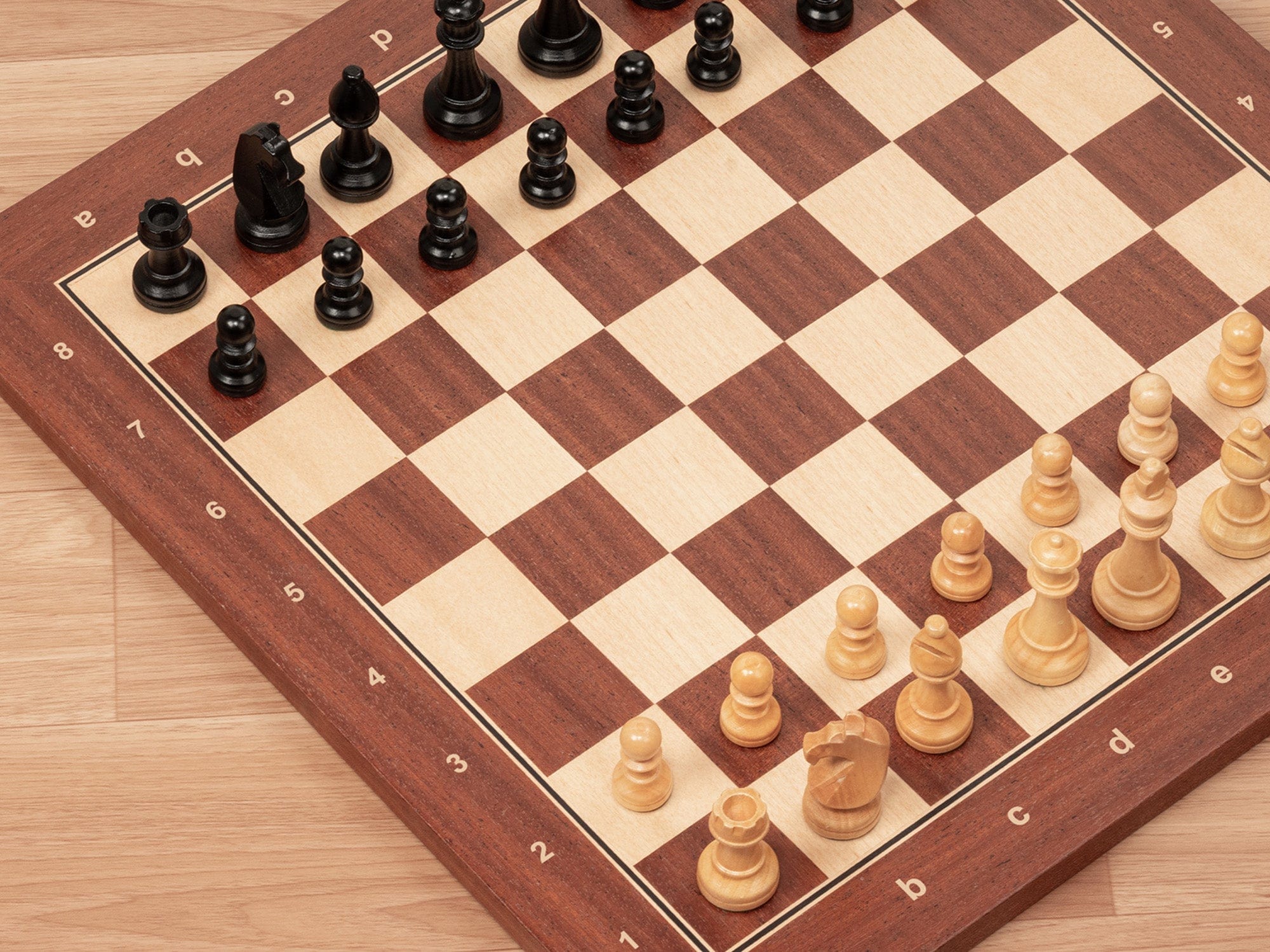
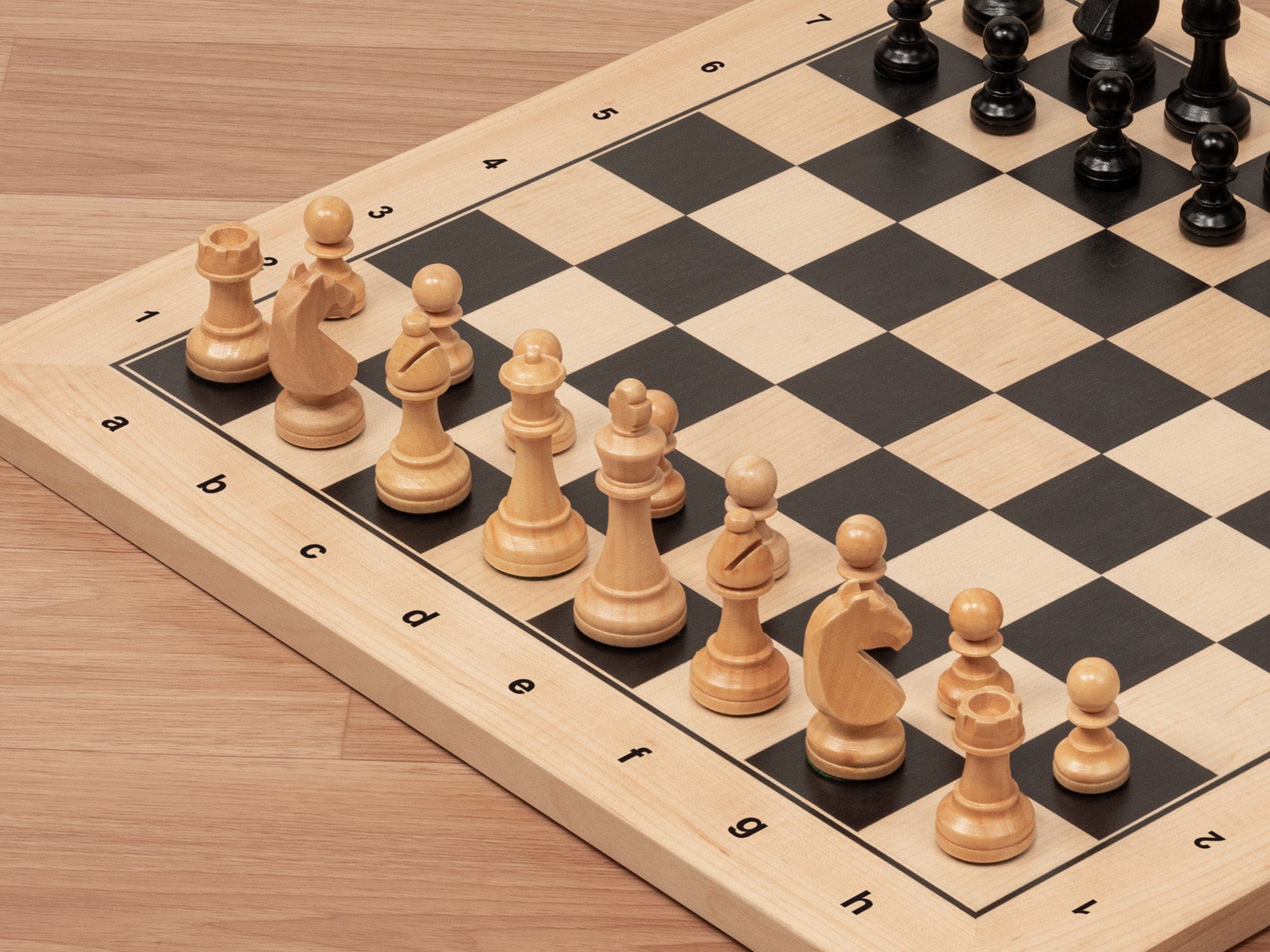
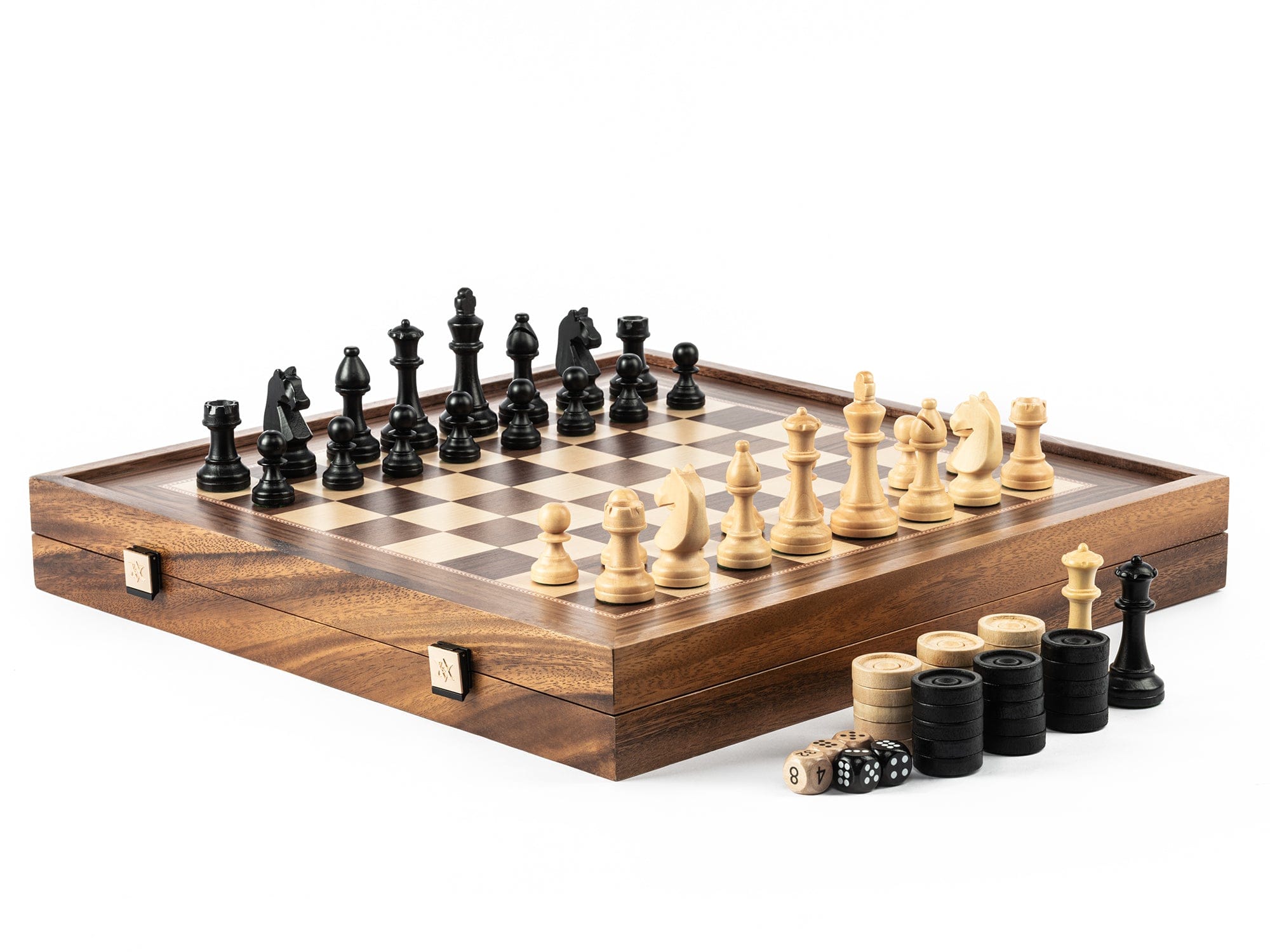
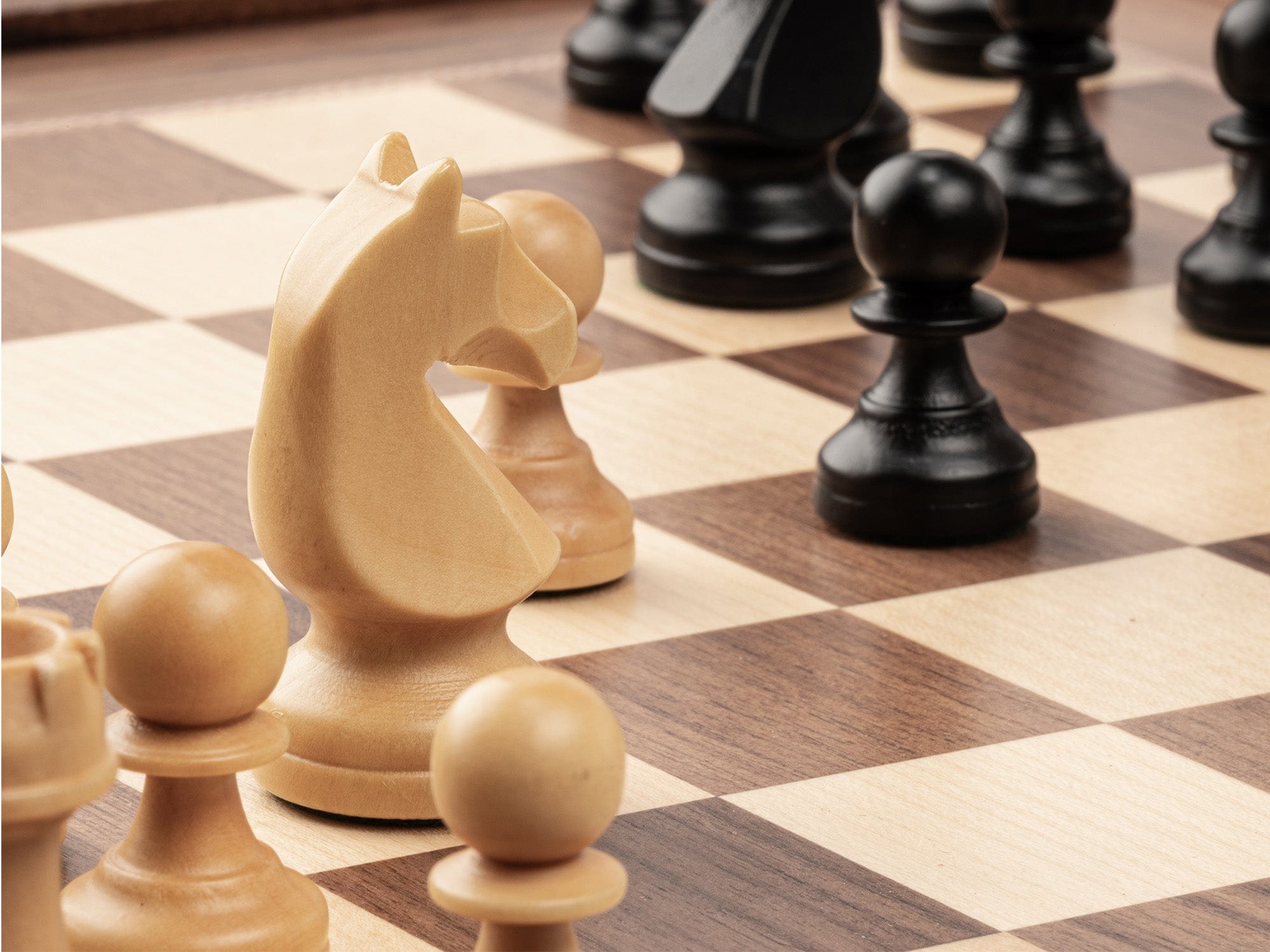
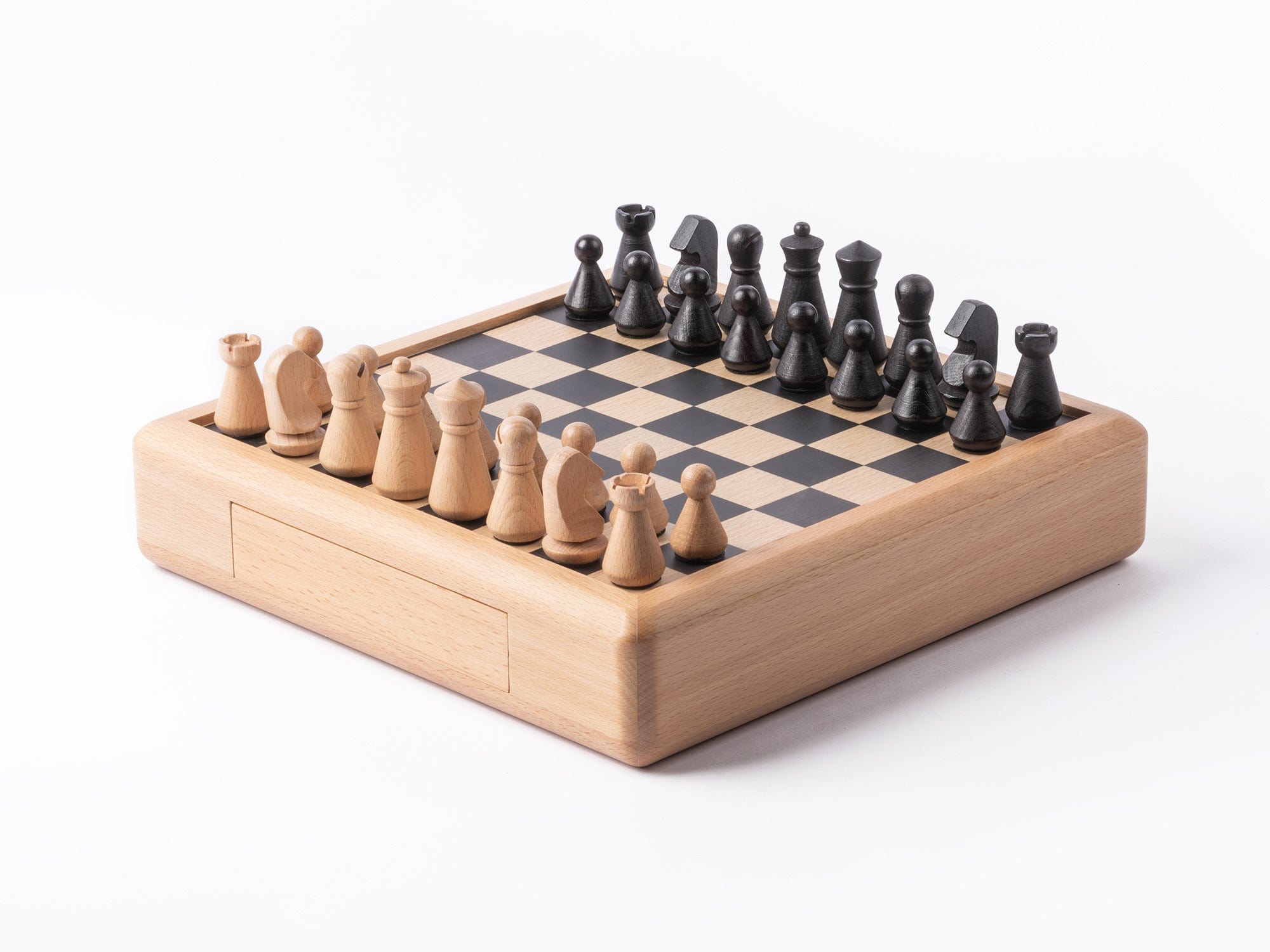
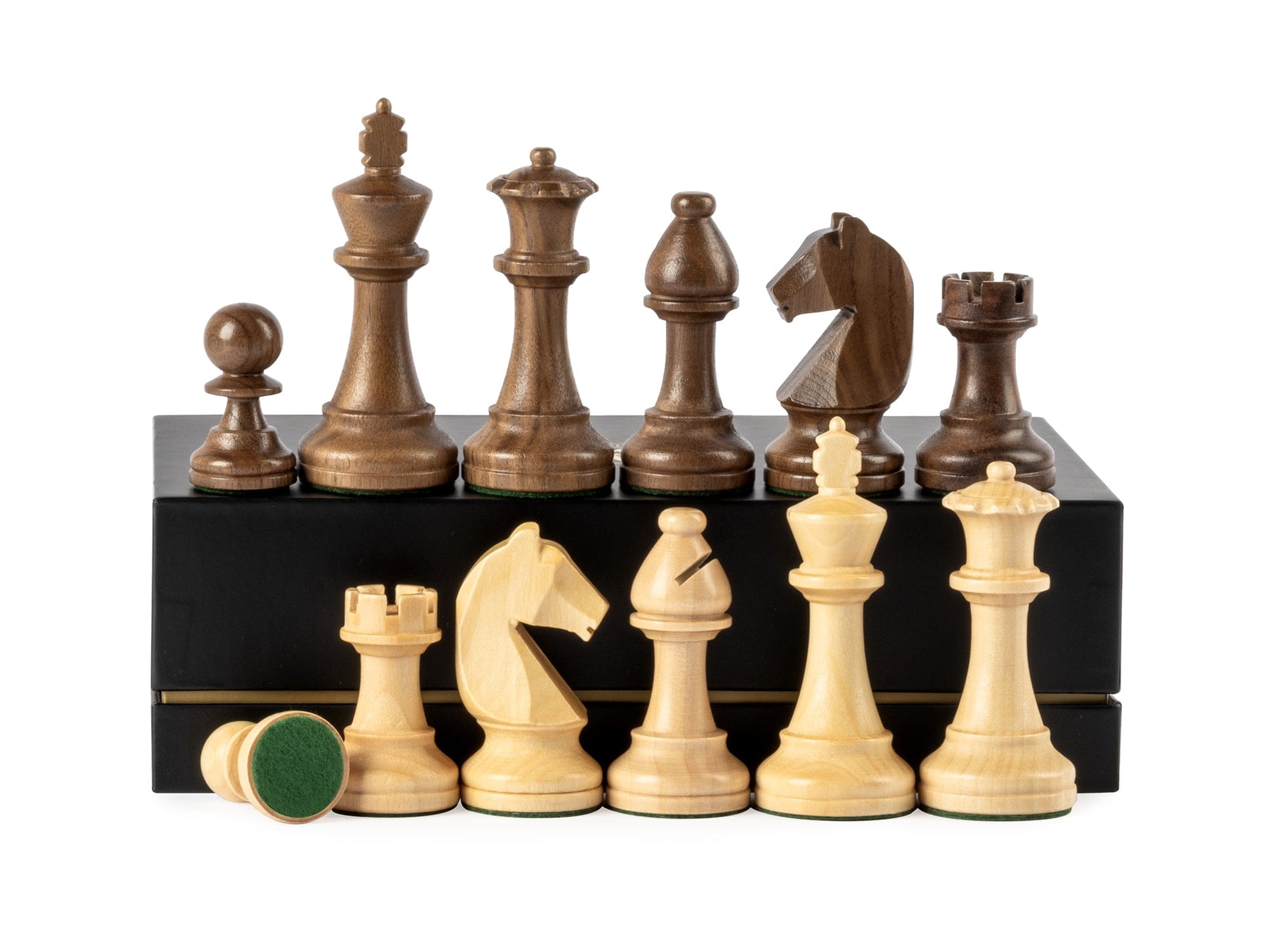
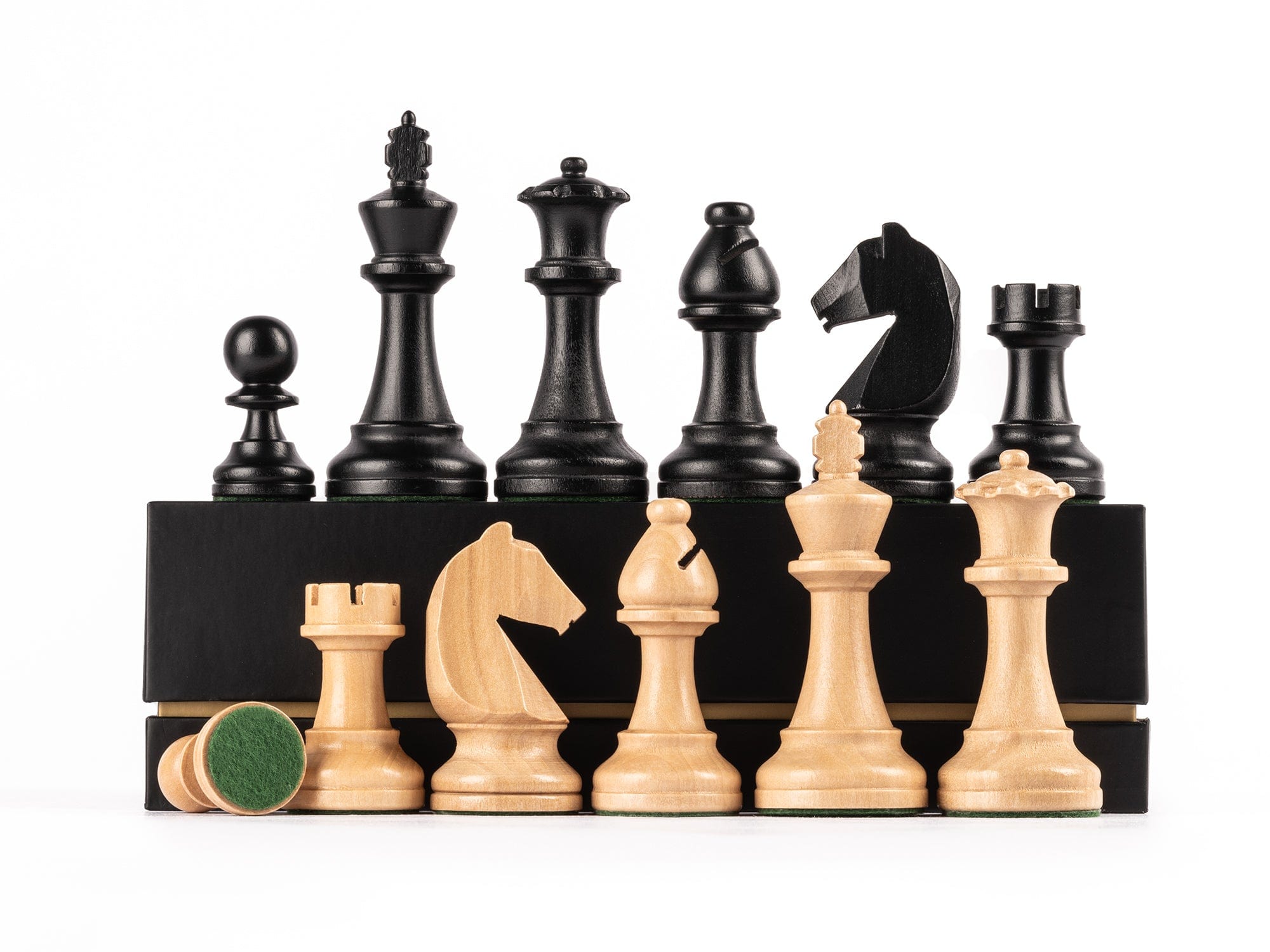
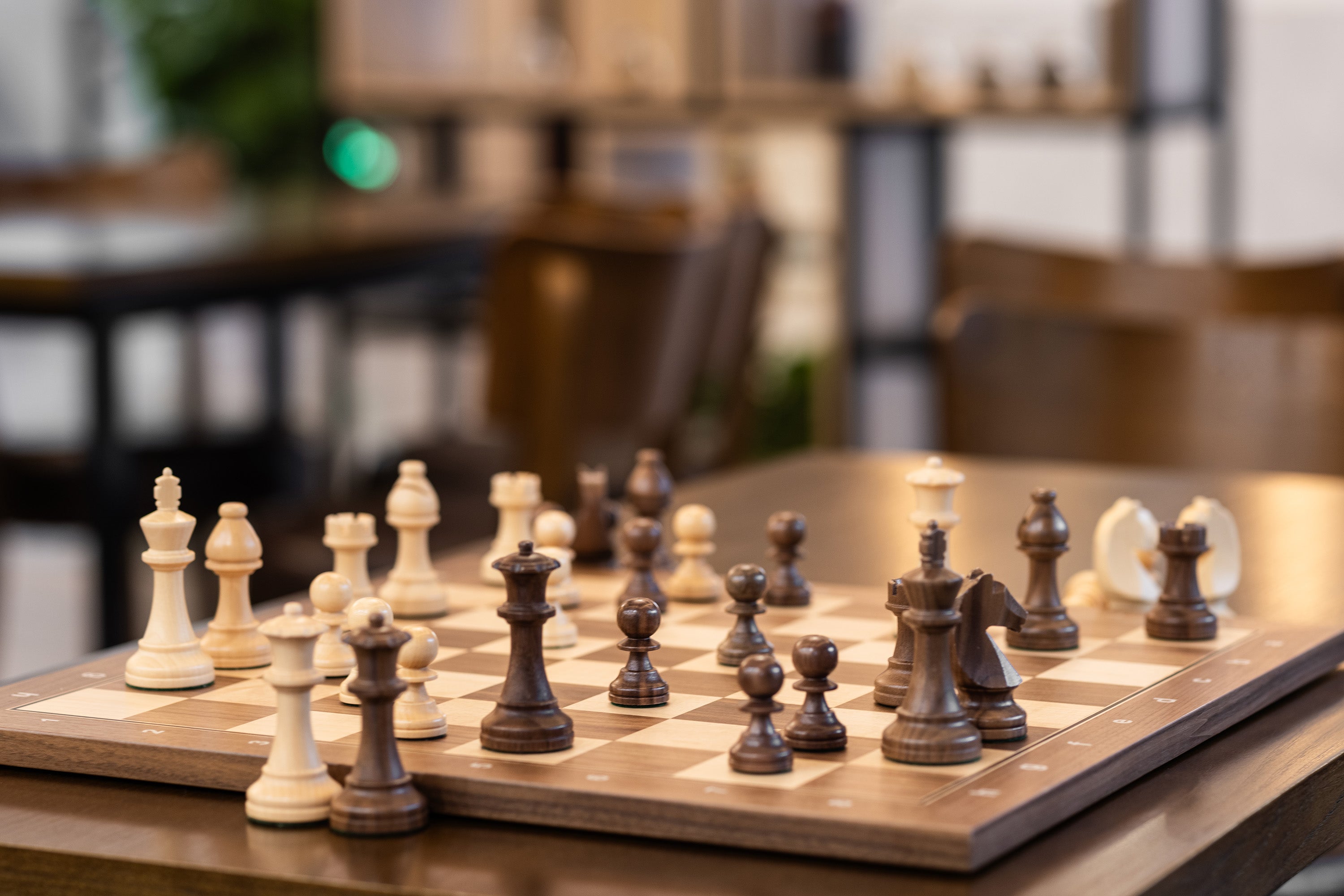
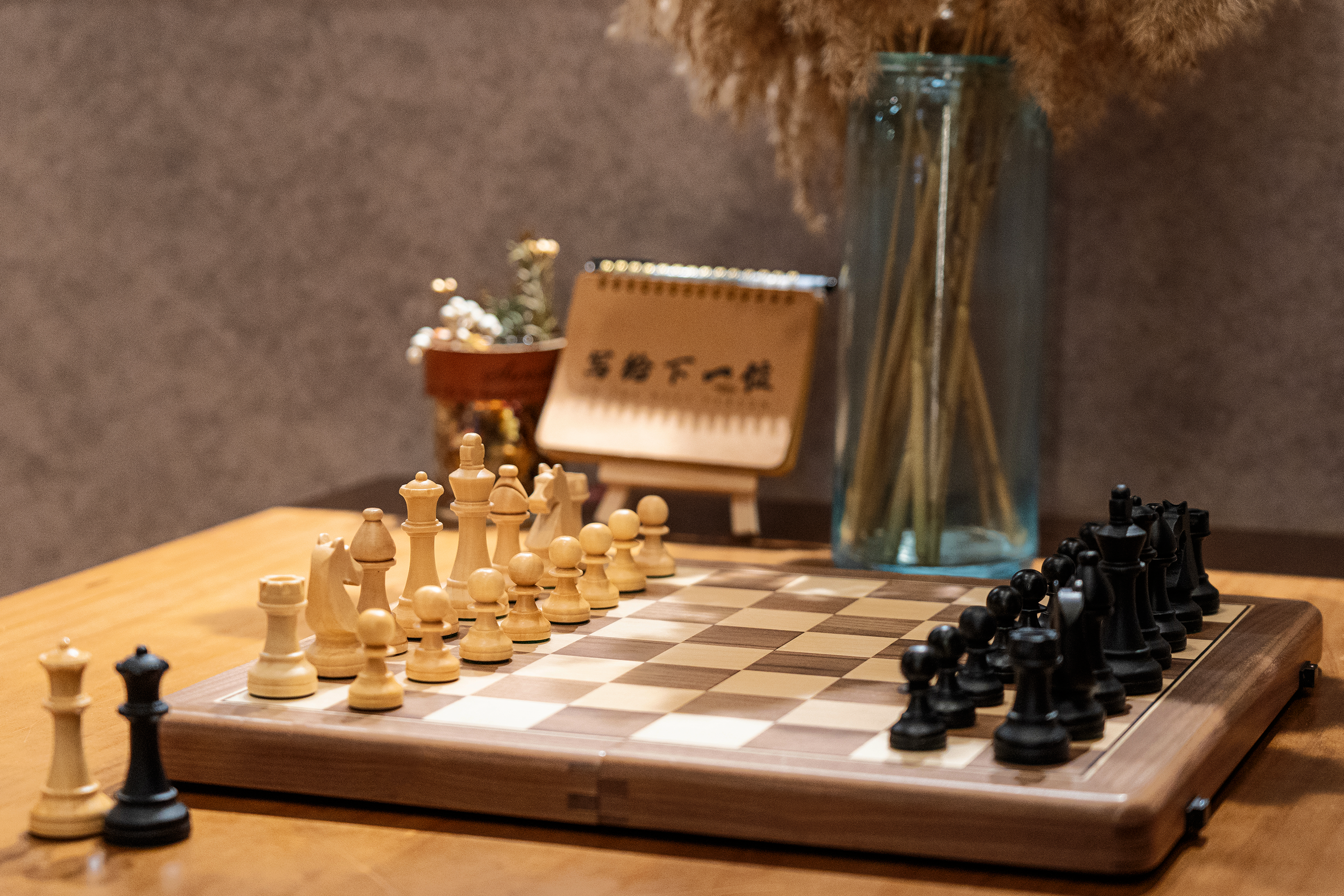
Every Staunton set follows the same structural logic. Each piece sits on a turned, weighted base for stability, and features a distinctive top motif that identifies its rank:
- King: The tallest piece, topped with a cross.
- Queen: Slightly shorter, crowned with small pearls or balls.
- Rook: A castellated tower shape.
- Bishop: A slender piece with a diagonal slit representing a bishop's mitre.
- Knight: A stylized horse head, facing left.
- Pawn: A simple, ball-topped piece on a narrow stem.
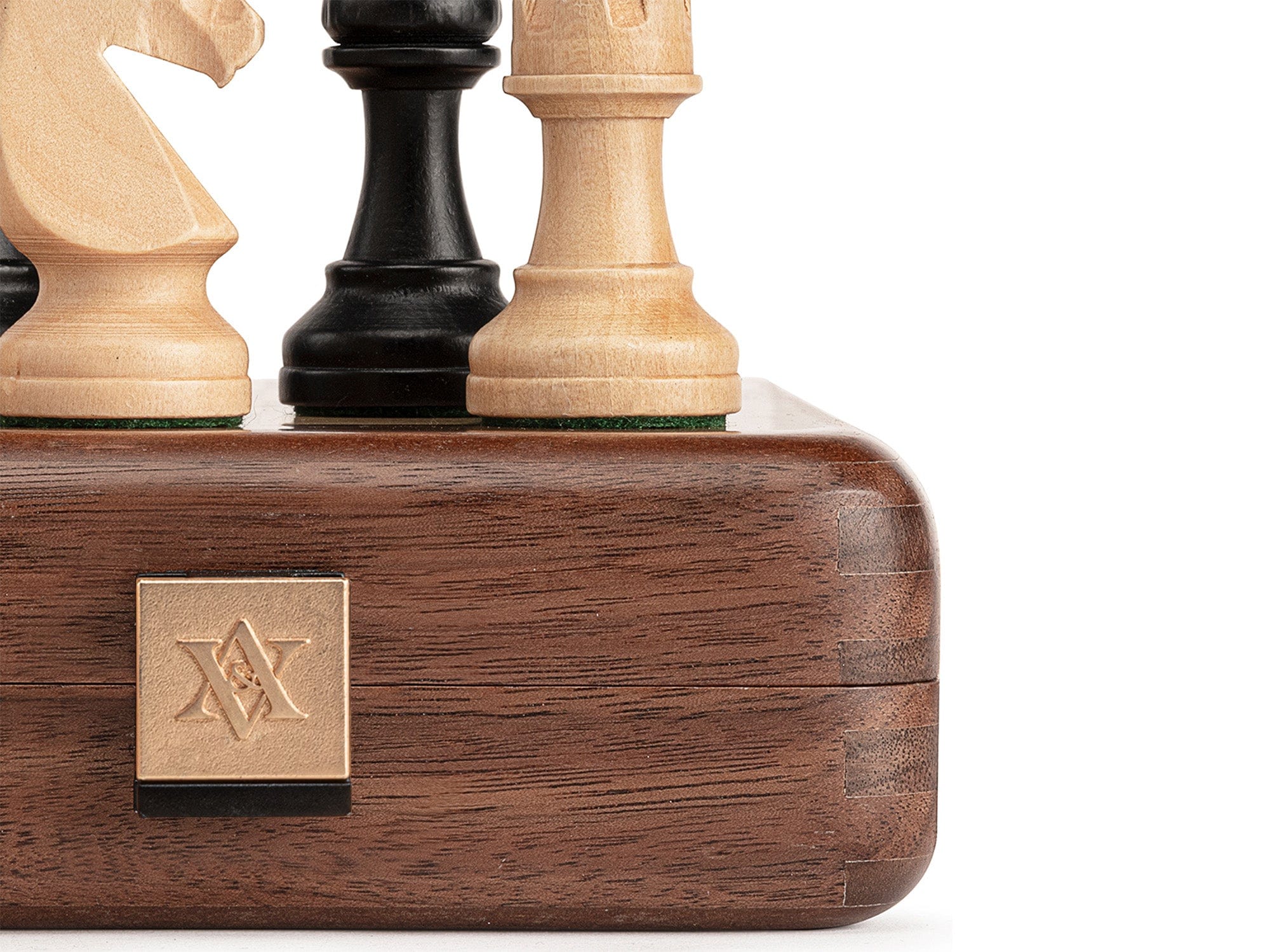
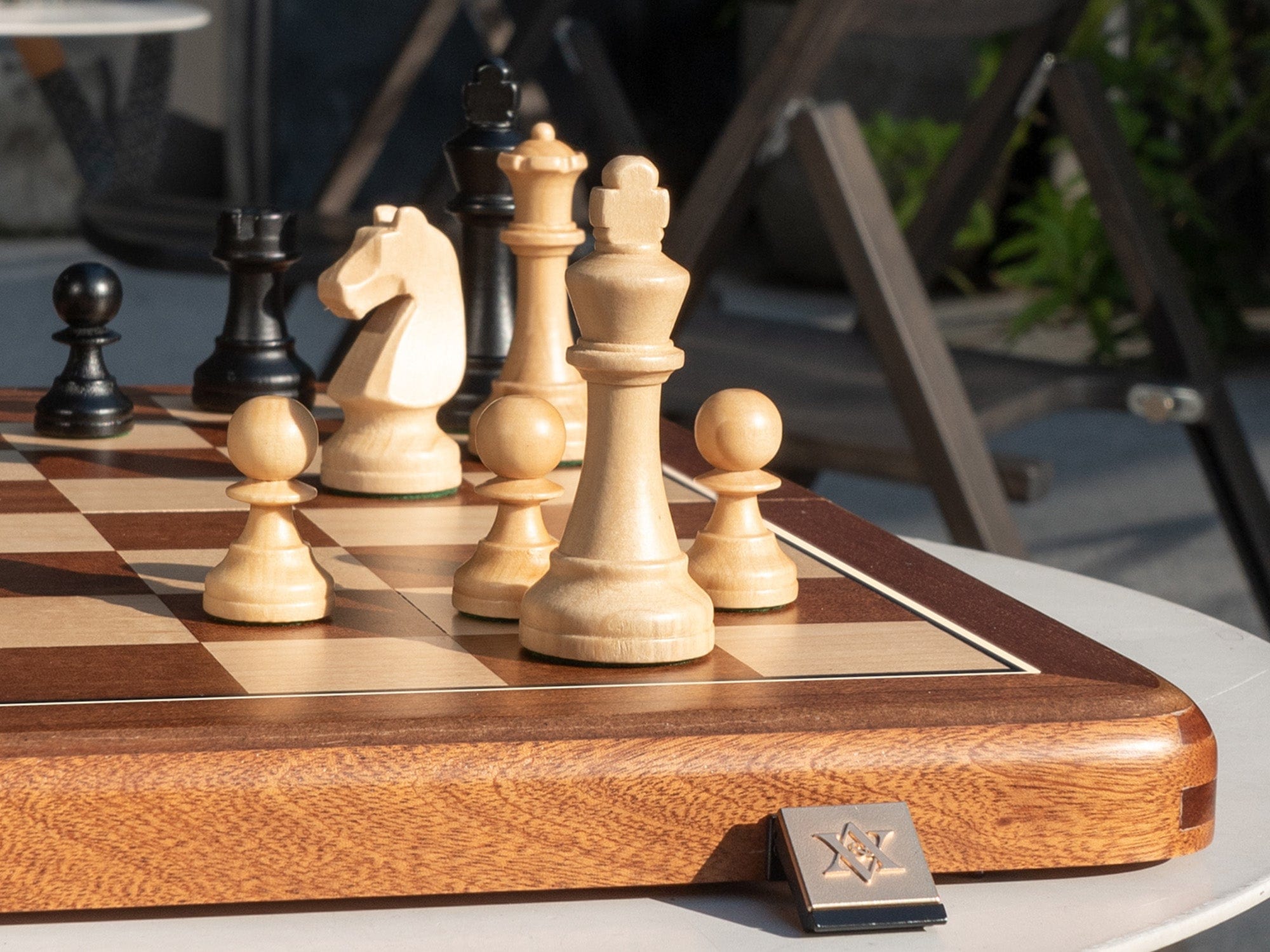
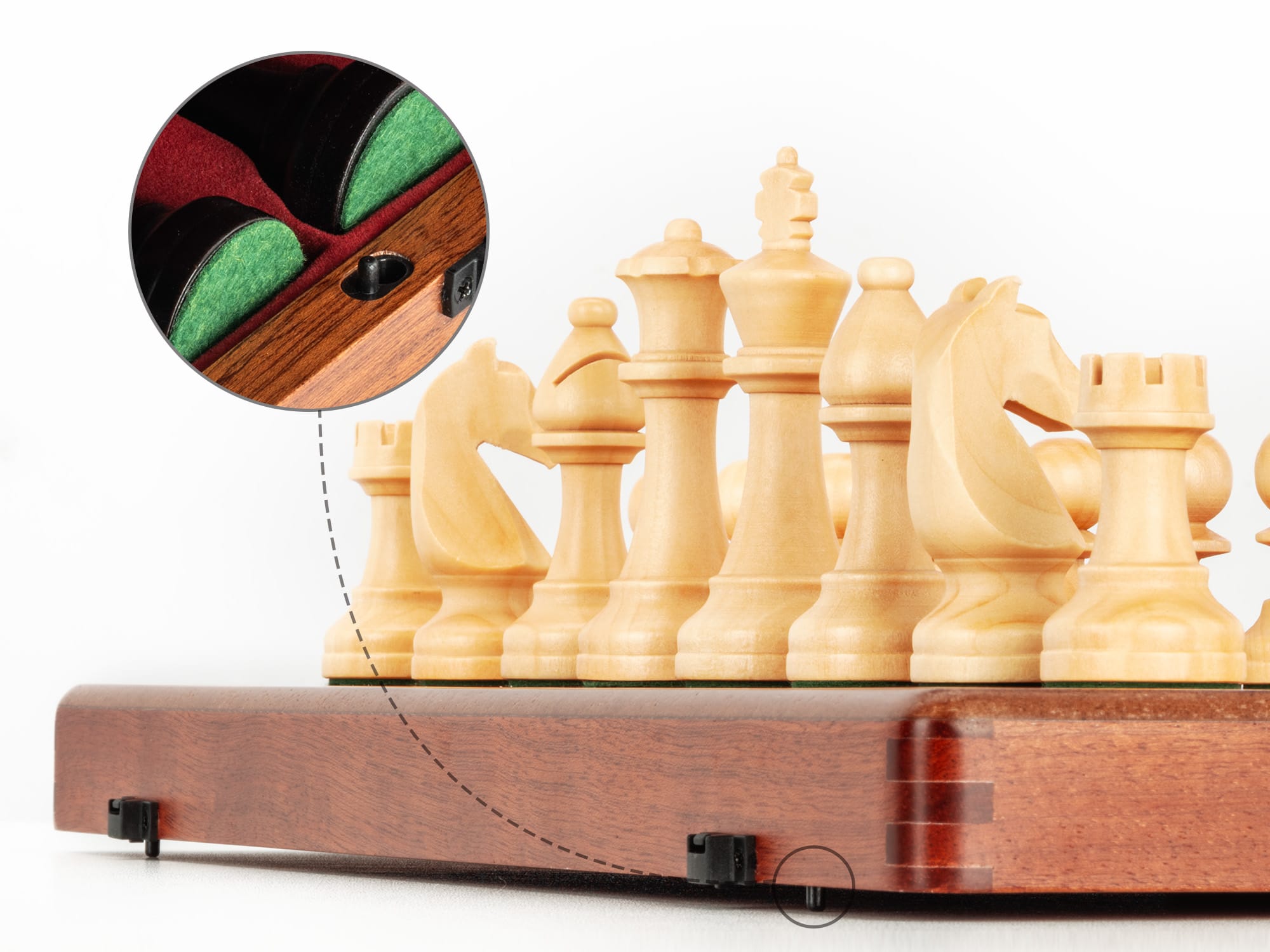
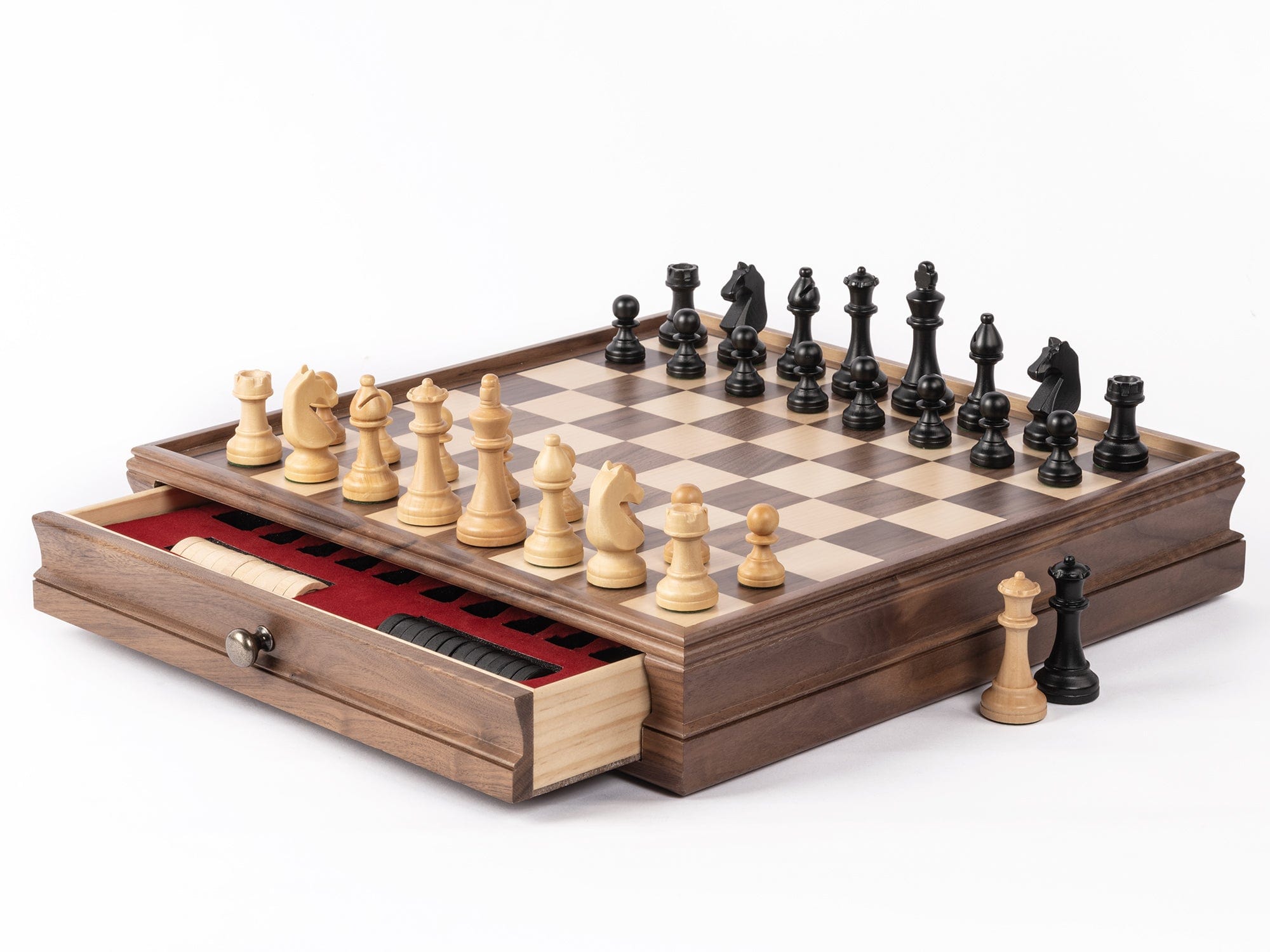
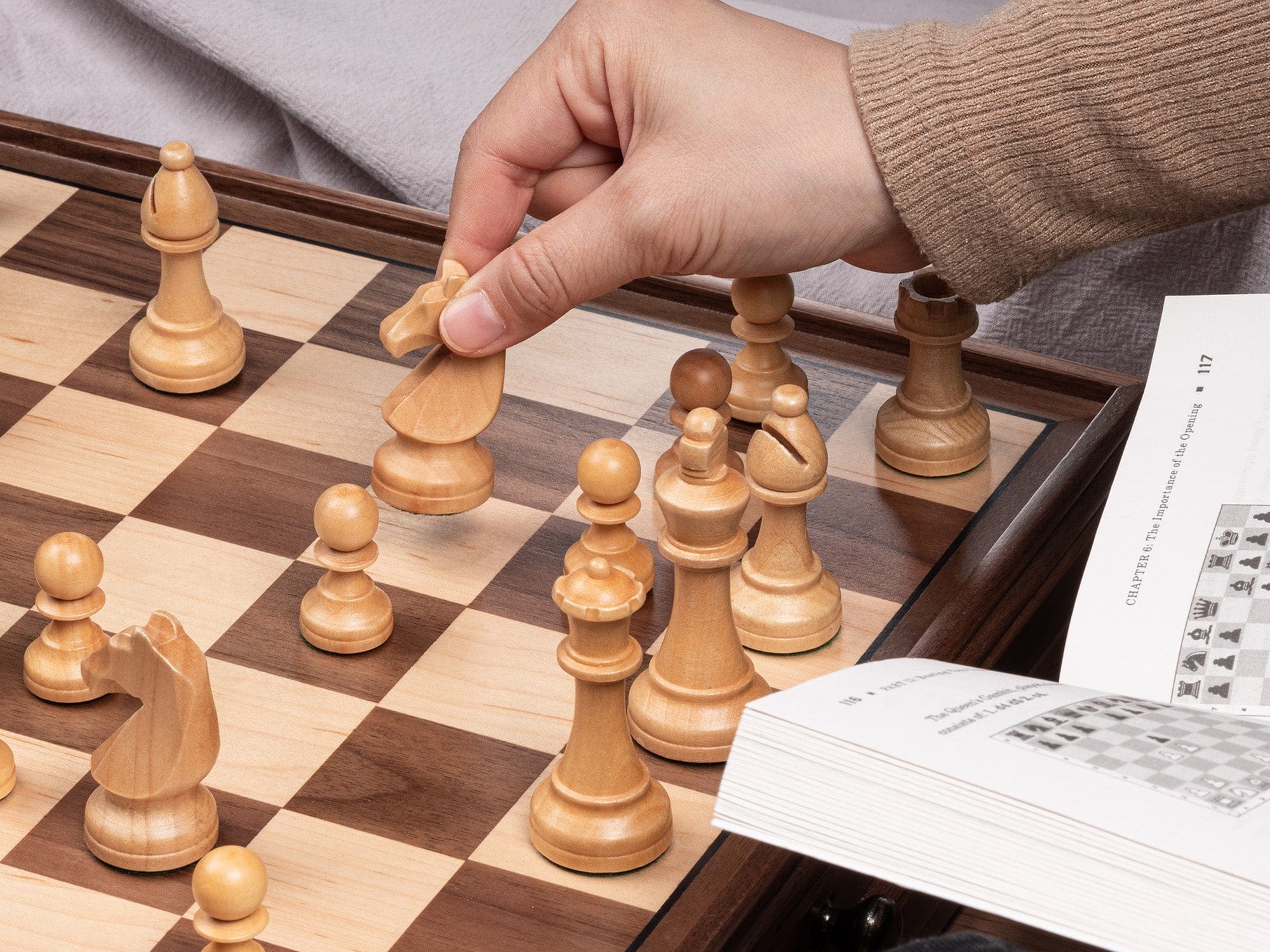
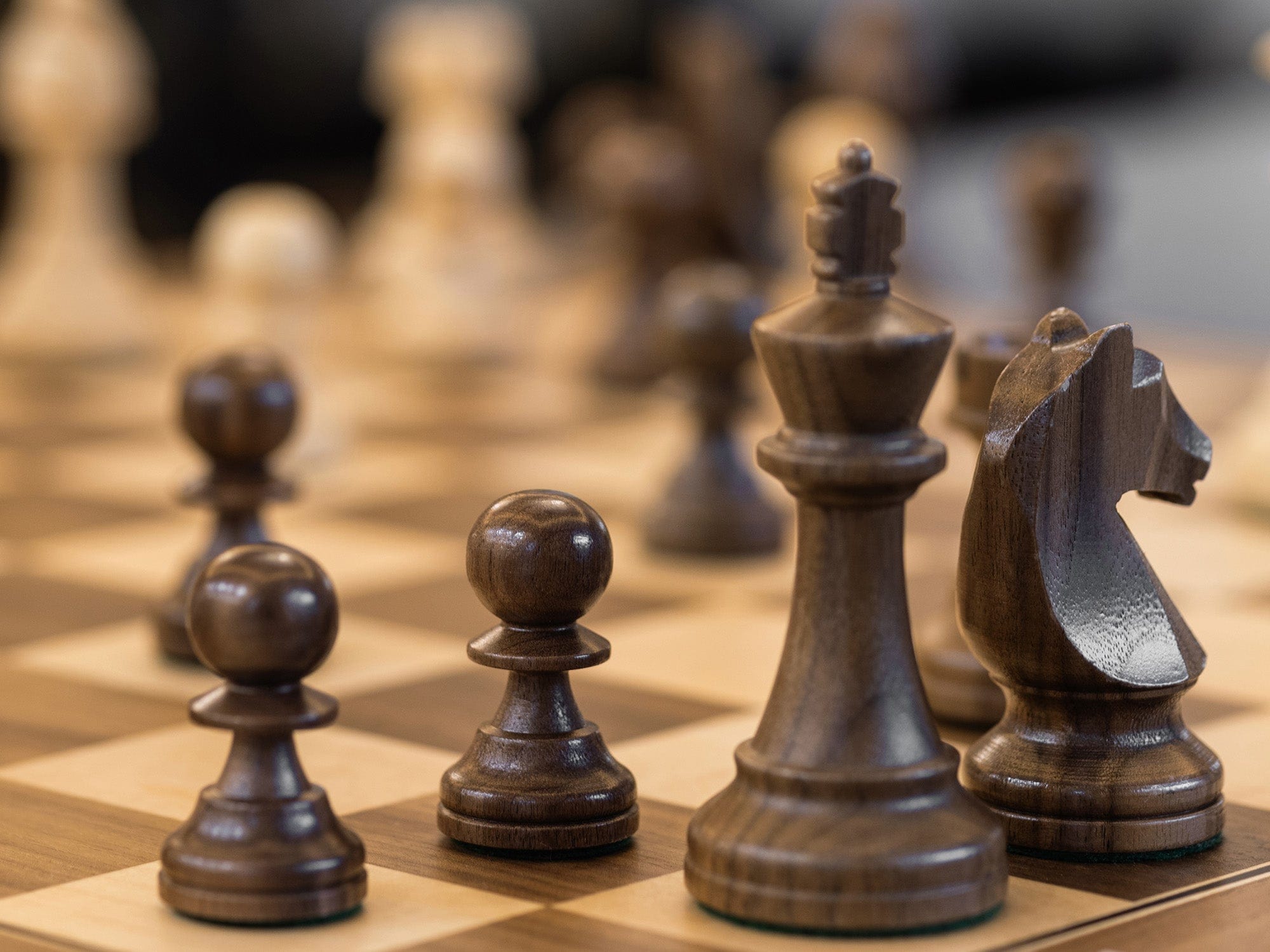
When you shop for beginner chess sets, look for these clean silhouettes. Well-crafted Staunton pieces should feel weighty in the hand, with a smooth felt base that glides silently across the board. At A&A CHESS, our premium wooden Staunton chess pieces are carefully turned and weighted to tournament specifications.
Understanding Chess Piece Sizes
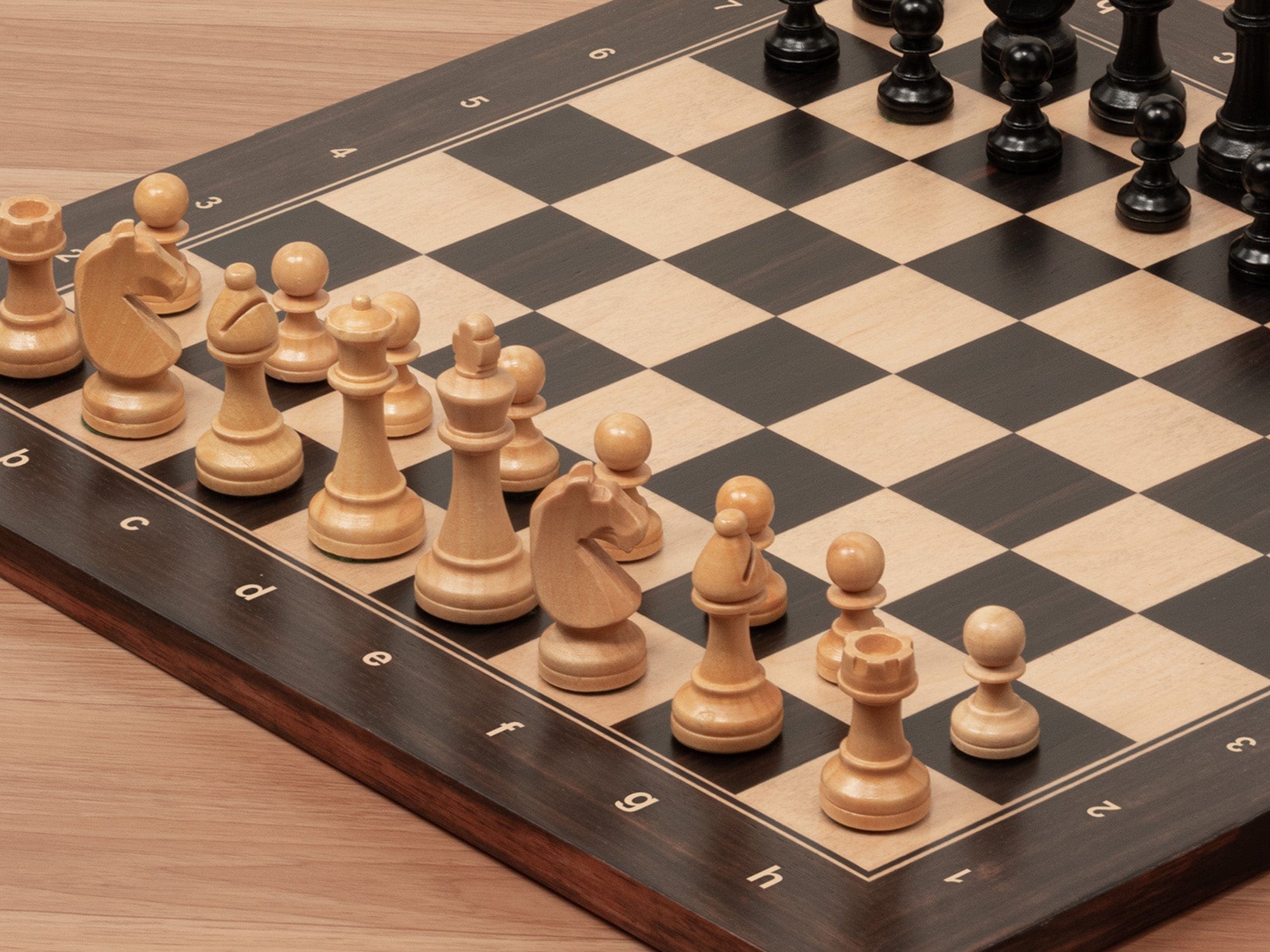
Staunton sets are categorized by the height of the King, measured in inches or centimeters. The most common sizes range from 2.5 inches (6.3 cm) for small travel sets to 4.5 inches (11.4 cm) for oversized display pieces. Tournament play typically requires a King between 3.5 and 3.75 inches, with a base diameter no more than 78% of the square size on the board.
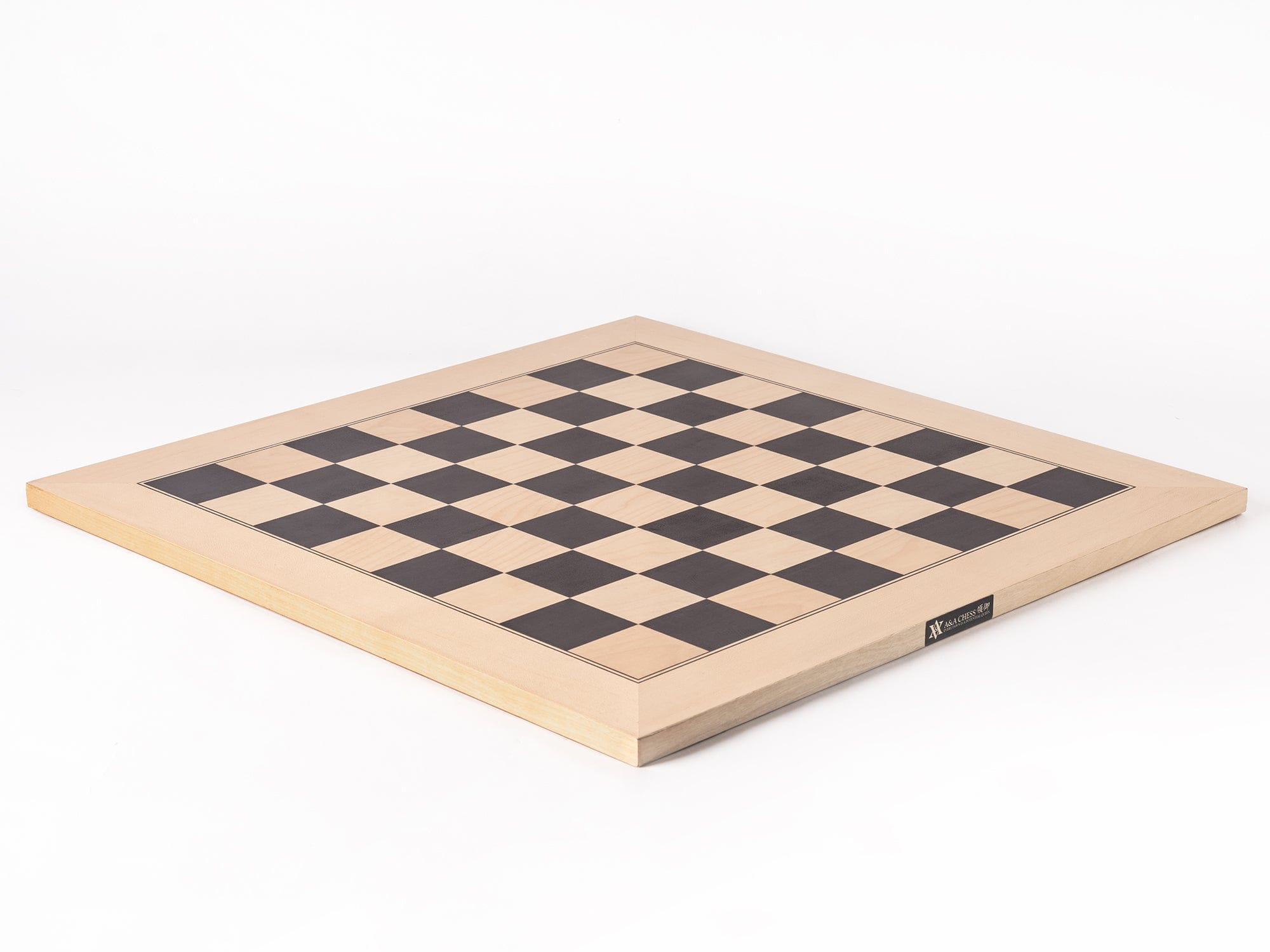
The relationship between piece size and board square size is critical. If the pieces are too large for the squares, they will crowd each other and make legal moves awkward. If they are too small, the board will look sparse and the pieces may tip over easily. As a rule of thumb, the King's base should occupy about 60–75% of the square. For a standard 2-inch square board, a 3.75-inch King with a 1.5-inch base is ideal.
Our walnut wood Staunton chess pieces feature a 3.75-inch King height, making them perfectly sized for standard 15 to 21-inch boards. If you are building a custom board, pairing them with one of our tournament-series chess boards gives you a competition-ready setup right out of the box.
Wood Types and Materials
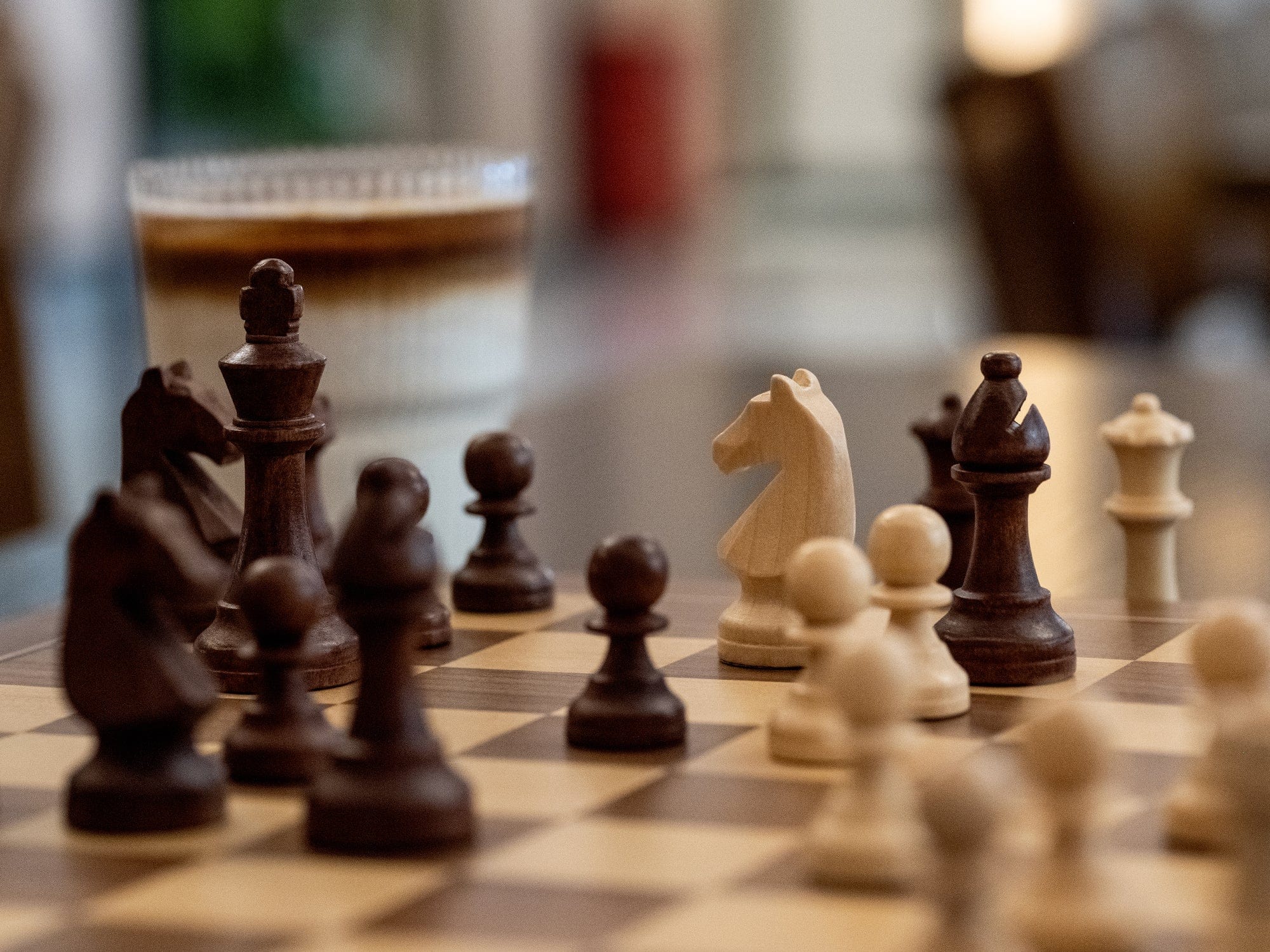
Traditional Staunton pieces are made from hardwoods. The dark pieces are typically carved from walnut, ebony, rosewood, or palisander, while the light pieces are made from boxwood, maple, or beech. Each wood has its own character:
- Ebony: Deep, nearly black wood with a fine, smooth grain. The most prestigious material for dark pieces.
- Walnut: Rich brown tones with visible grain patterns. Durable and affordable.
- Rosewood / Palisander: Warm reddish-brown streaks. A favorite of club players.
- Boxwood: Pale yellow, dense, and smooth. The classic choice for light pieces.
- Beech: Light-colored, hard, and resilient. Excellent for beginner and intermediate sets.
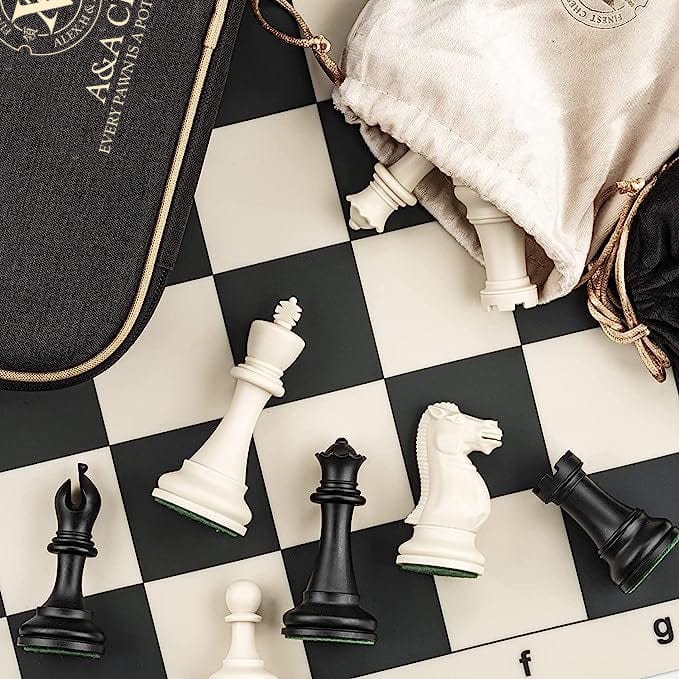
Budget-friendly Staunton-style pieces are also made from plastic or resin, which are durable and easy to clean. For most home players, a quality wooden set offers the best balance of feel, aesthetics, and longevity. You can explore our full range on the intermediate-series collection or learn more about the game on our chess learning guide.
Staunton Piece Size Comparison
| King Height | Base Diameter | Best For | Recommended Board Size |
|---|---|---|---|
| 2.5" (6.3 cm) | ~1.0" | Travel, pocket sets | 10"–12" board |
| 3.0" (7.6 cm) | ~1.2" | Children, casual play | 12"–14" board |
| 3.5" (8.9 cm) | ~1.4" | Club play, home use | 14"–17" board |
| 3.75" (9.5 cm) | ~1.5" | Tournament standard | 18"–21" board |
| 4.0"–4.5" | ~1.6"–1.8" | Display, gifts | 21"+ board |
How to Choose the Right Staunton Set
When shopping for Staunton chess pieces, consider these four factors:
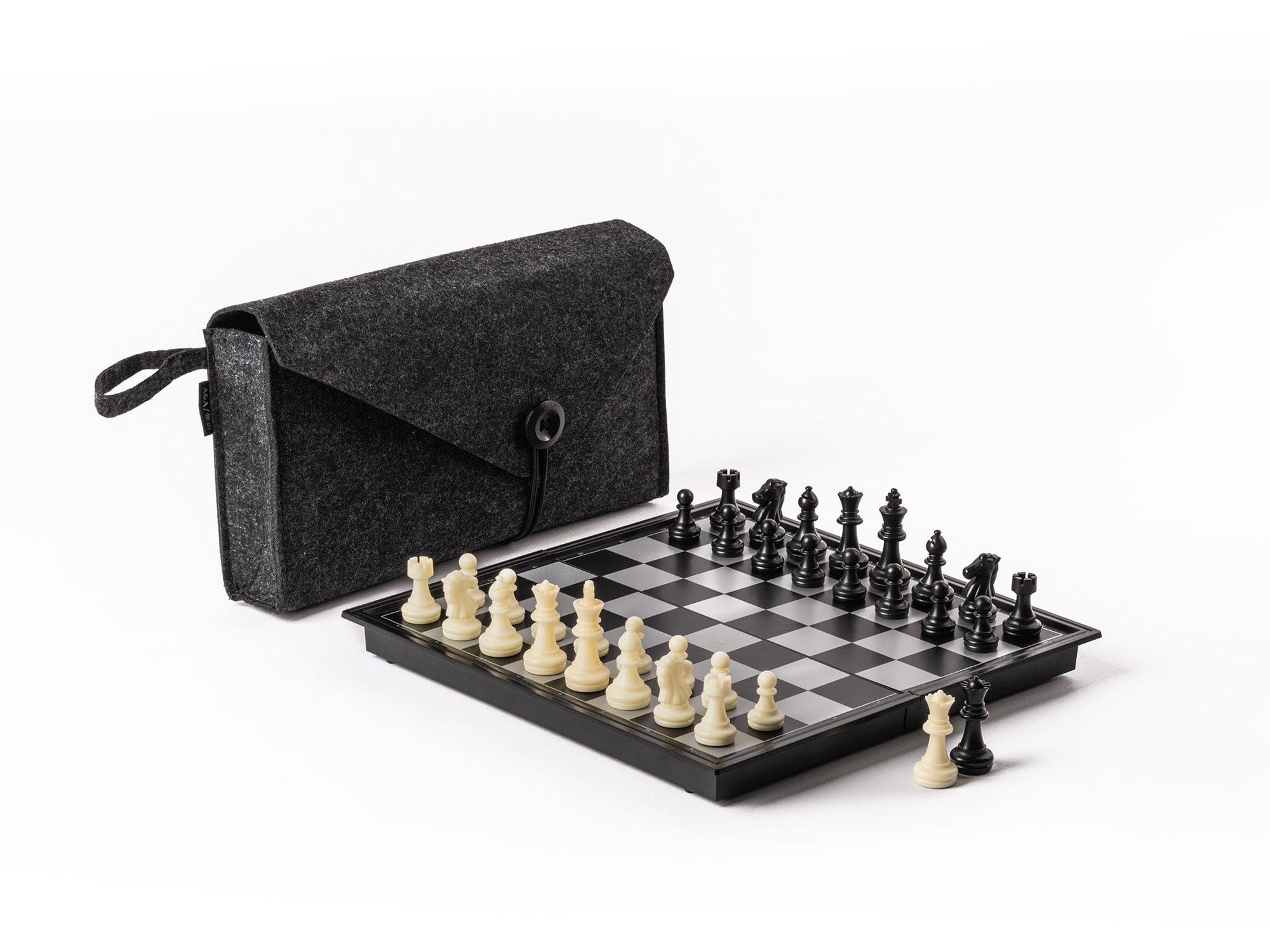
- Purpose: A travel set should be compact and magnetic; a home set can be larger and heavier. Tournament players need regulation-sized pieces with felt bases.
- Board compatibility: Measure your board's square size before buying pieces. The King's base should fit comfortably within a square.
- Weight and feel: Weighted pieces feel more premium and stay in place during play. Look for sets with iron or lead weights inside the base and a felt underside.
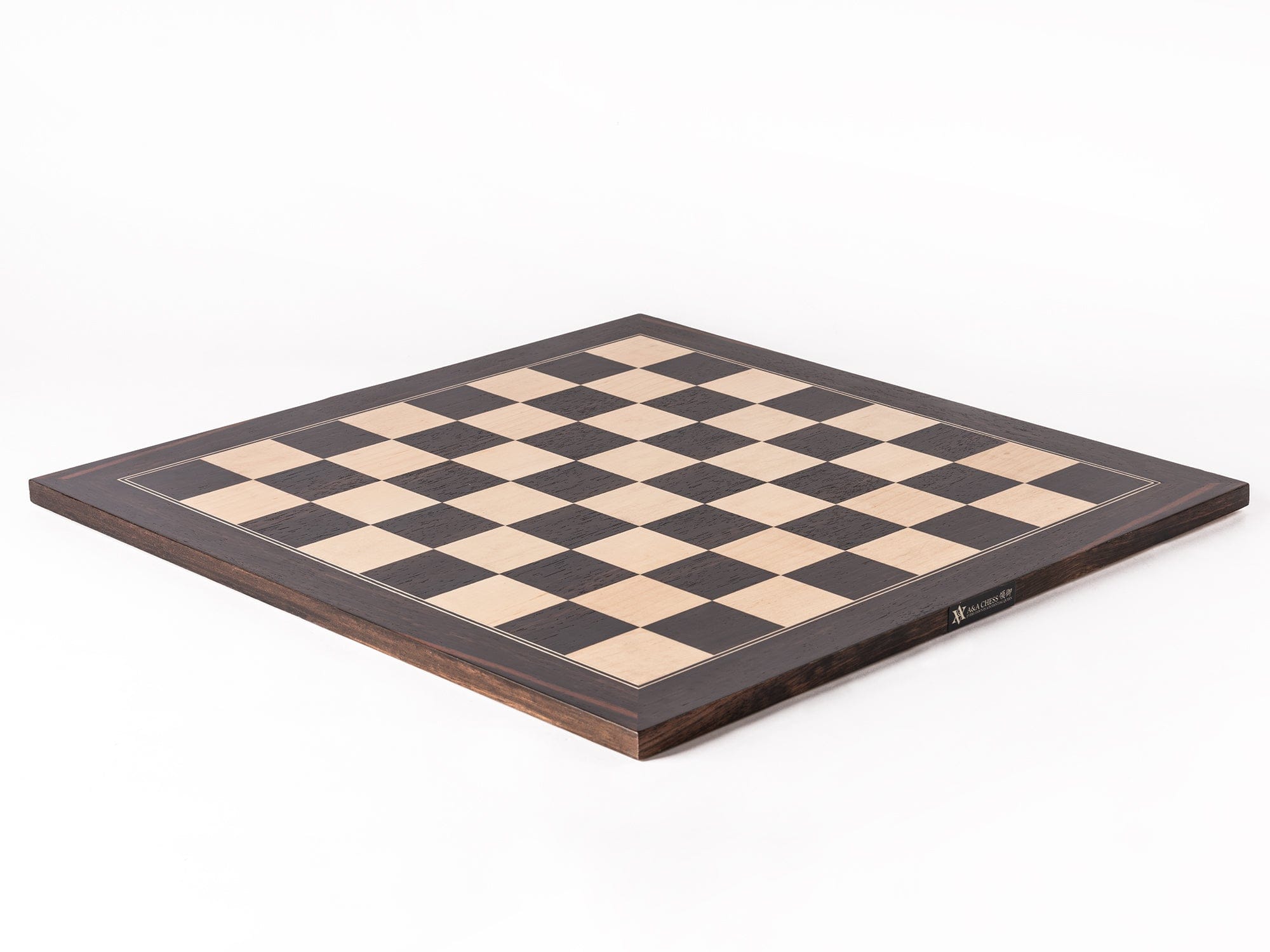
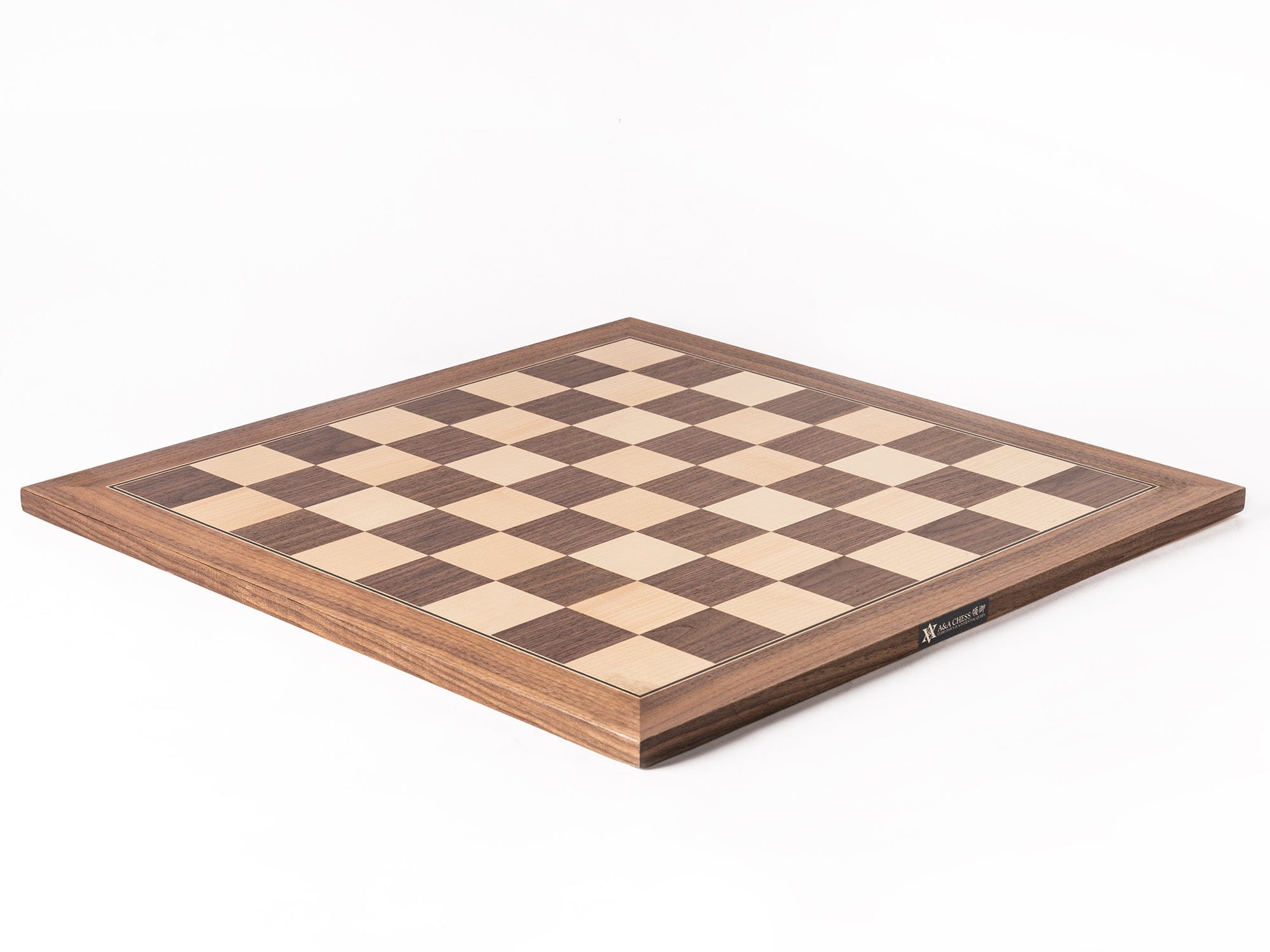
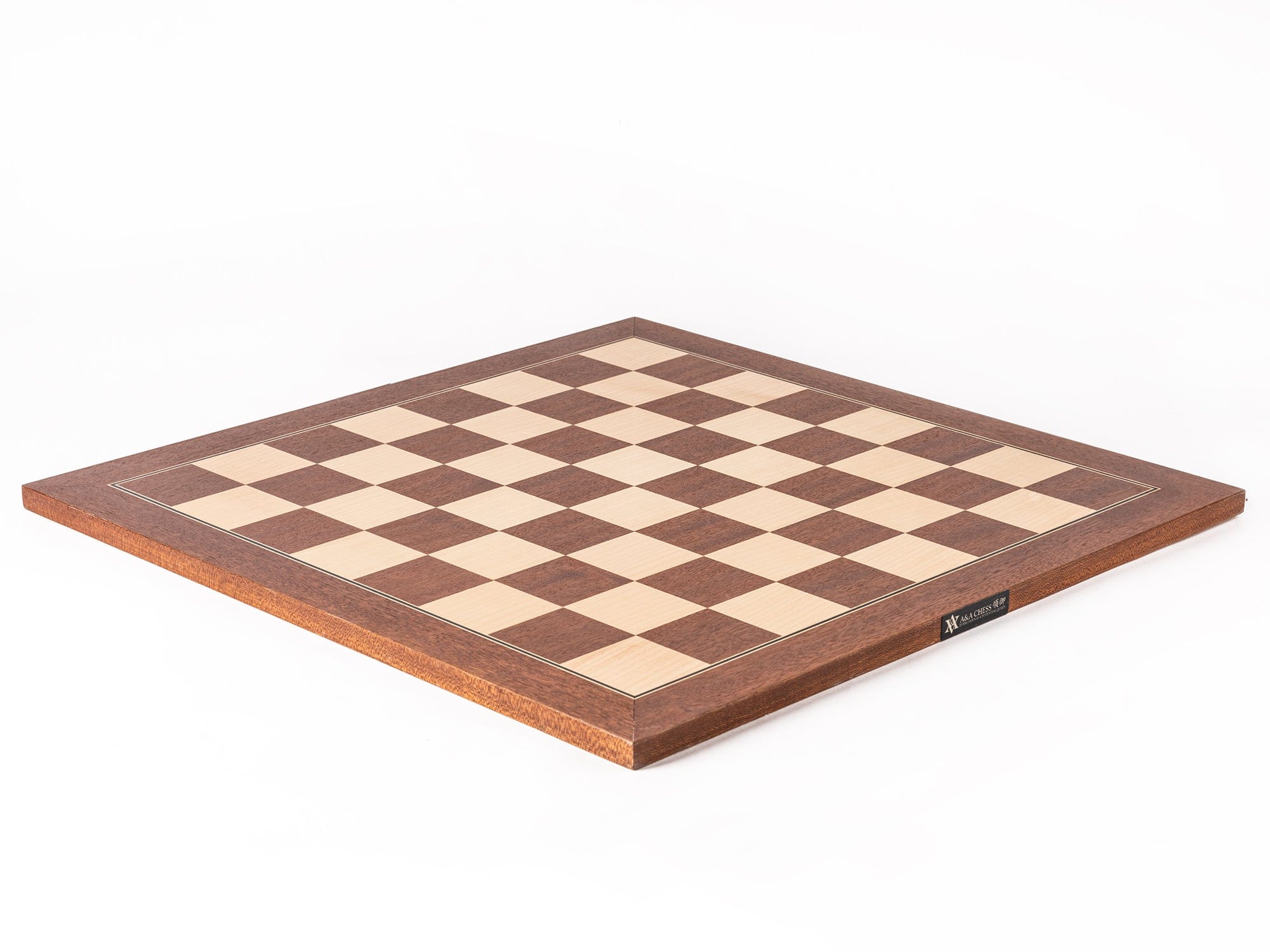
- Aesthetics: Choose woods that complement your board and personal taste. A walnut board pairs beautifully with either dark walnut or ebony pieces. Browse our mahogany and maple inlaid boards or our ebony and maple inlaid boards to find your ideal match.
Whether you are buying your first serious set or upgrading your tournament equipment, investing in genuine Staunton pieces means you will own equipment that looks and plays beautifully for decades. Explore the complete A&A CHESS range of Staunton chess pieces and find the set that is right for you.
Frequently Asked Questions
What is the difference between Staunton and traditional chess pieces?
Staunton pieces are a specific standardized design introduced in 1849, with each piece having a distinct, recognizable shape. Earlier "traditional" sets varied wildly by region and manufacturer, with ornate or figurative designs that were hard to distinguish during play. Staunton is now the official FIDE tournament standard.
What size chess pieces do I need for a tournament?
Most tournaments require a King between 3.5 and 3.75 inches tall, with a base diameter that fits within 2-inch squares. Our 3.75-inch walnut Staunton pieces meet these specifications and are a popular choice for club and tournament players.
Are weighted chess pieces better?
Yes. Weighted pieces feel more substantial, stay in place when the board is nudged, and slide more smoothly across squares. Quality sets add iron or steel weights inside the base and line the bottom with green or black felt to protect the board surface.
What wood is used for black and white chess pieces?
Dark pieces are commonly made from ebony, walnut, rosewood, or palisander. Light pieces are typically boxwood, maple, or beech. The combination is chosen for both visual contrast and durability.
Can I buy just the chess pieces without a board?
Absolutely. Many players already own a board and want to upgrade their pieces. At A&A CHESS, you can purchase our walnut Staunton pieces or premium Staunton pieces separately, then pair them with any board of your choice.



Leave a comment
This site is protected by hCaptcha and the hCaptcha Privacy Policy and Terms of Service apply.