








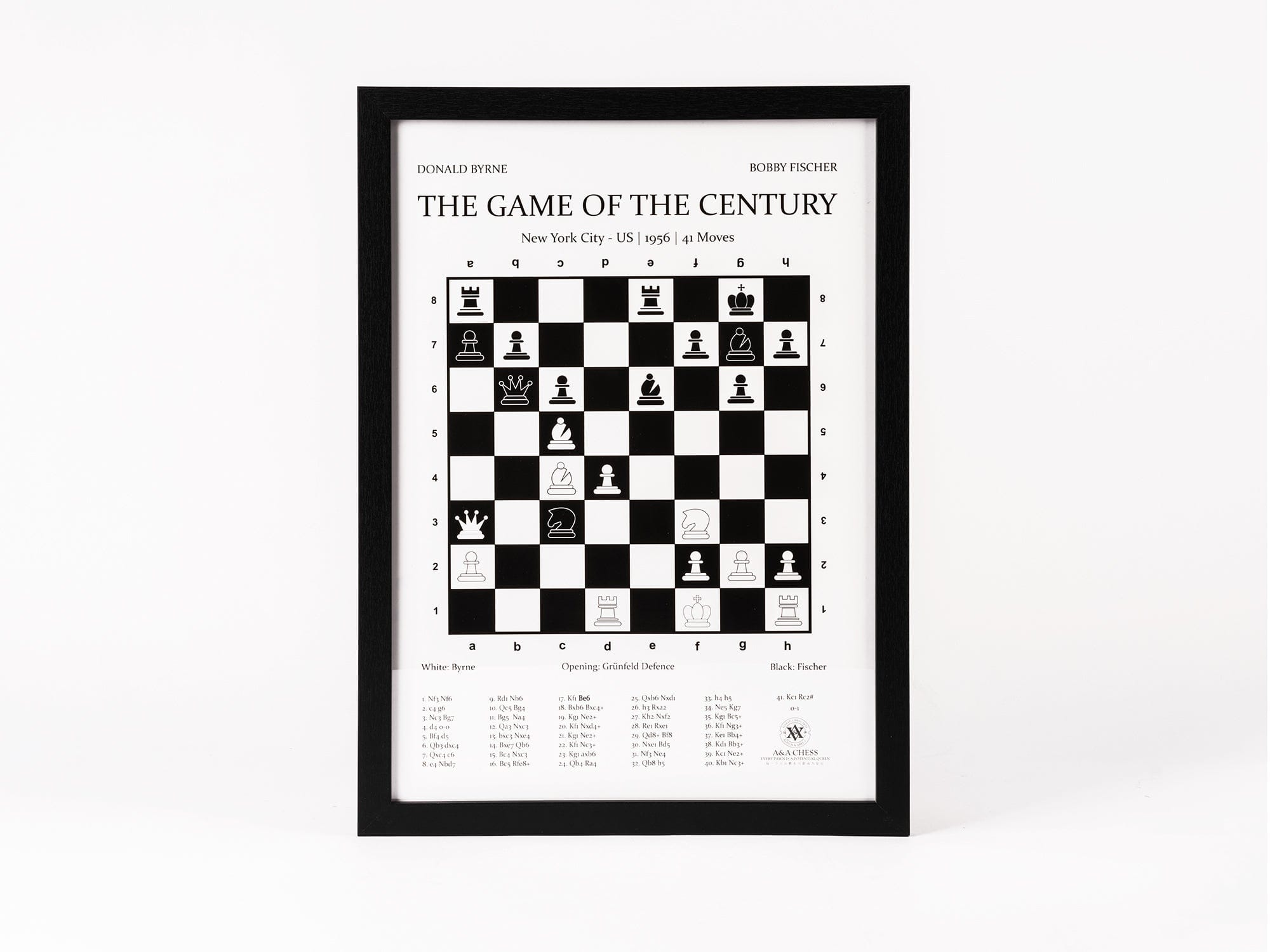
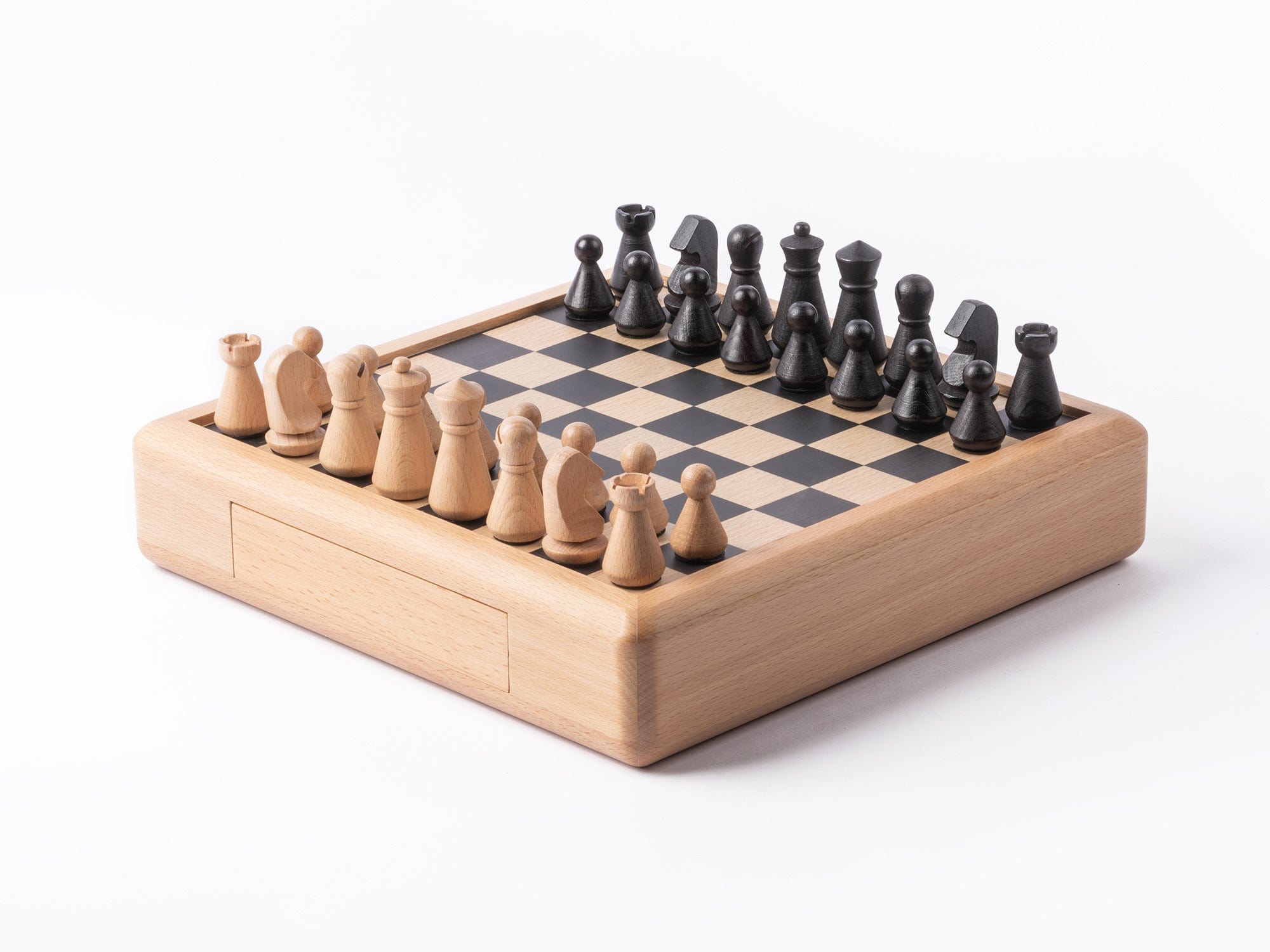
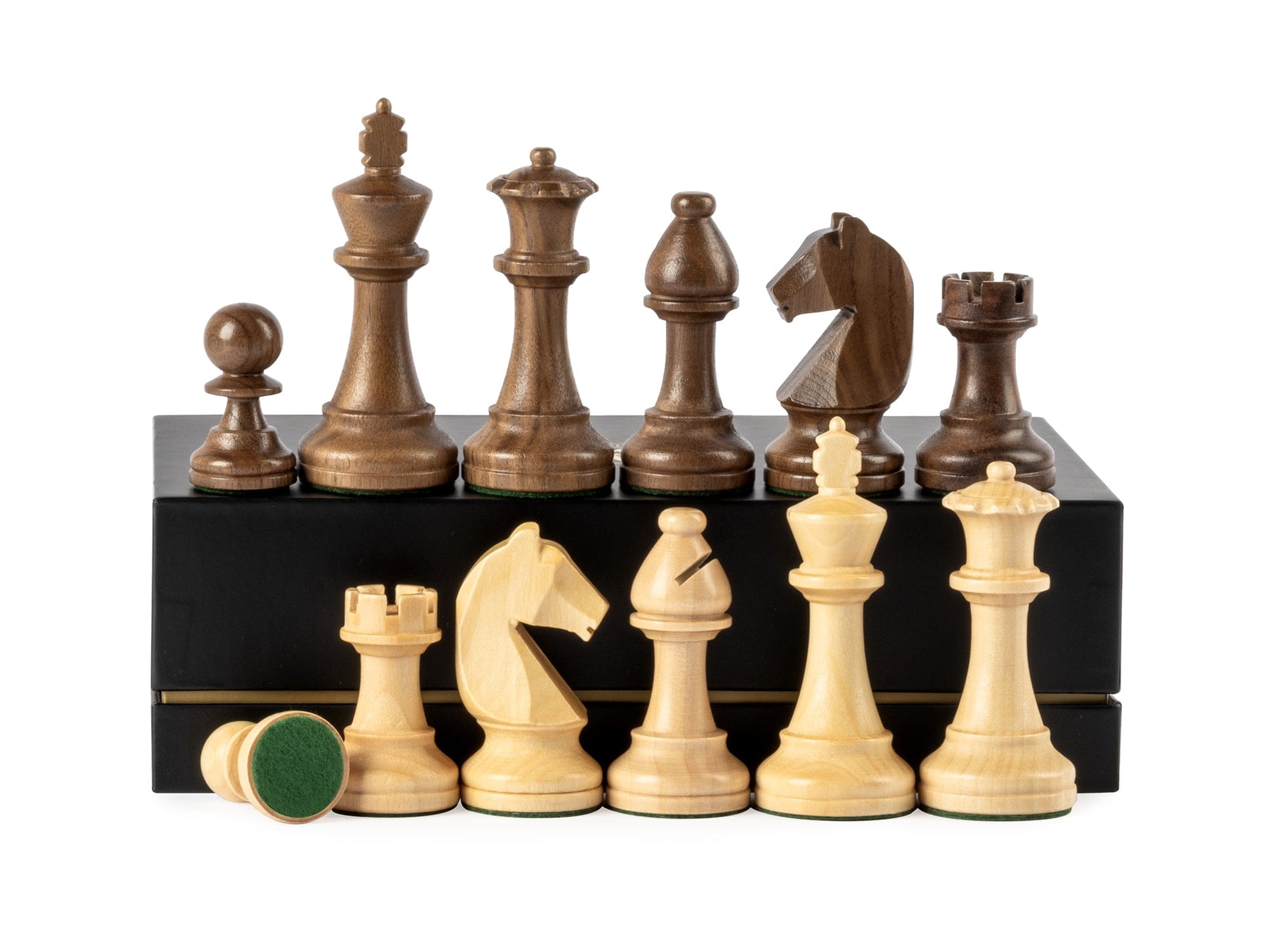

Chess training has changed dramatically. A player can now solve puzzles on a phone, play opponents from around the world, review a game with an engine, and study an opening without leaving home.
Yet many players discover an uncomfortable truth when they sit down at a real board: positions that looked clear on a screen suddenly feel unfamiliar.
This does not mean online chess is ineffective or that traditional board chess is outdated. Each format develops different skills.
Online chess provides speed, volume, instant feedback, and convenient access to opponents. Over-the-board chess develops spatial awareness, patience, calculation discipline, clock management, and the ability to remain focused without digital prompts.
The most effective approach is therefore not to choose one side. It is to combine both.
This guide explains the differences between online chess and board chess, identifies which training format works best for each skill, and provides a practical hybrid chess training routine for beginners, improving club players, and tournament competitors.
Table of Contents
- Why Online Chess and Board Chess Feel Different
- Online Chess vs. Board Chess: Full Comparison
- What Online Chess Trains Best
- What Physical Board Practice Trains Best
- The Best Hybrid Chess Training Routine
- Recommended Equipment for Better Practice
- Common Chess Training Mistakes
- Frequently Asked Questions
Why Online Chess and Board Chess Feel Different
A digital chessboard presents every piece from the same top-down angle. Legal moves may be highlighted, the clock is automatically managed, captured pieces disappear instantly, and the platform records every move.
These conveniences reduce mental workload and allow players to focus on rapid decision-making.
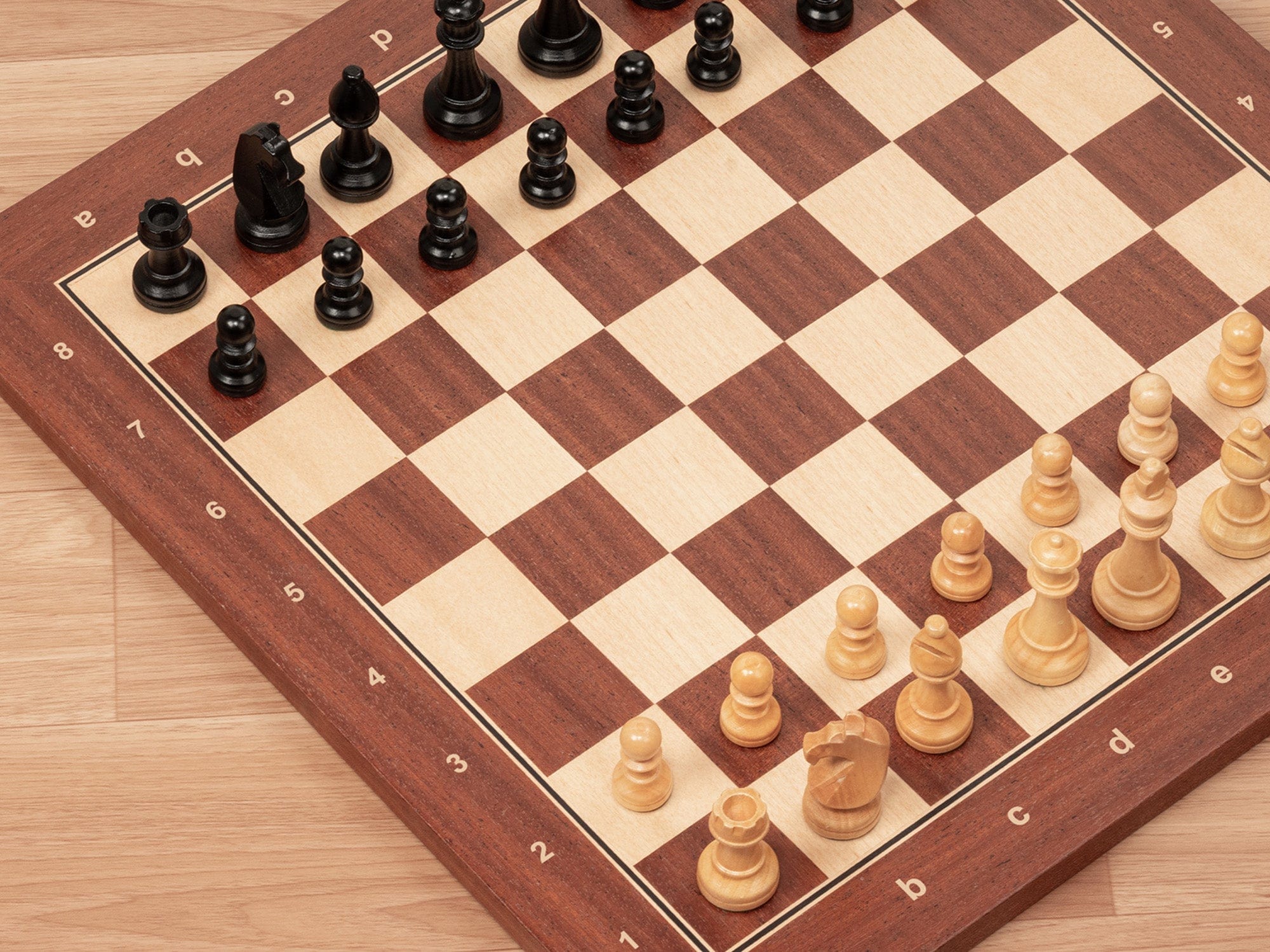
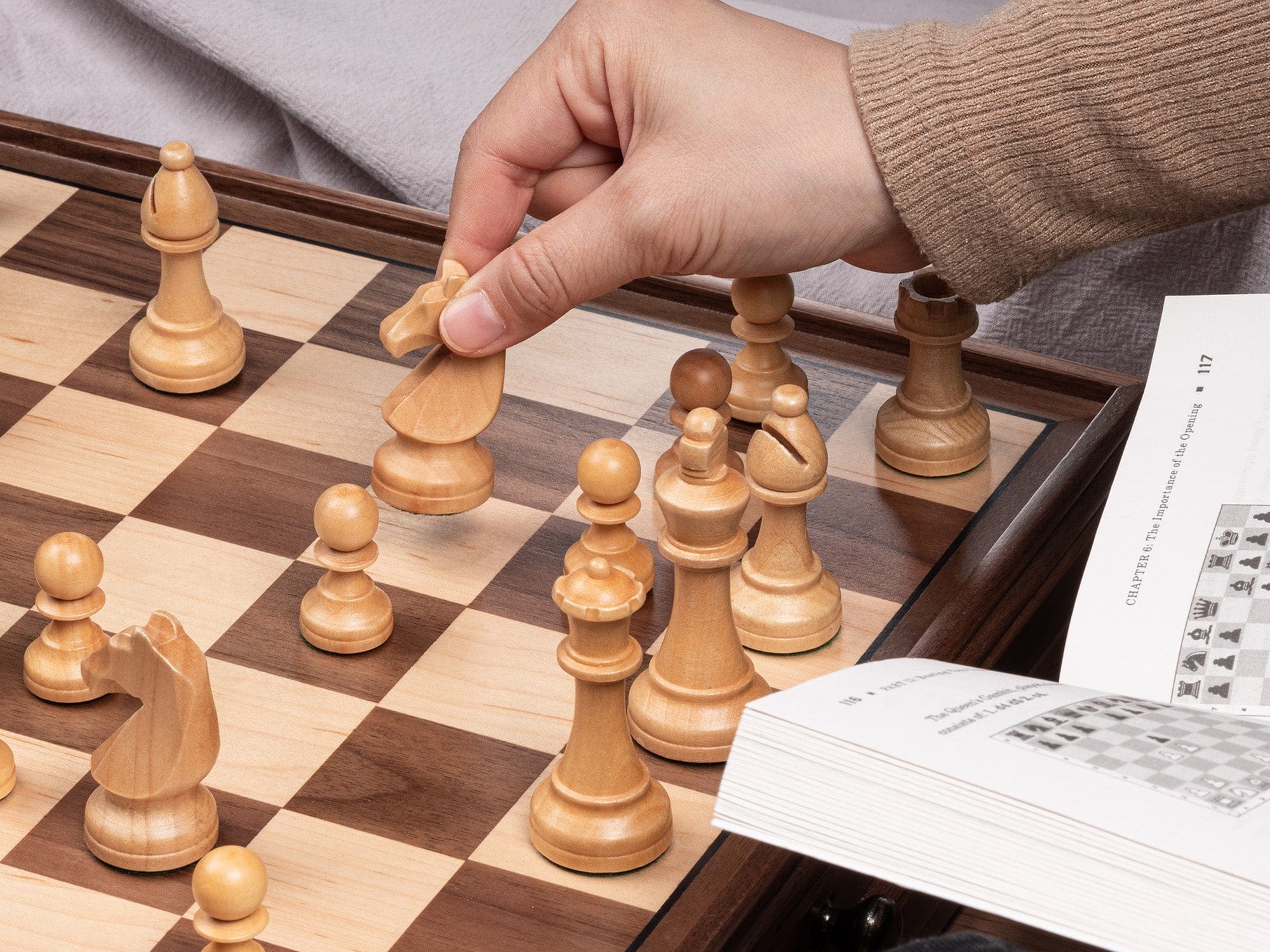
A physical chessboard requires more active attention. You must scan the entire position, recognize diagonals from a three-dimensional angle, press the clock correctly, record moves when required, and physically complete each move without losing concentration.
These small differences become extremely important in club and tournament games.
Screen-based practice also encourages speed. It is easy to play another blitz game immediately after losing. Physical board practice creates more friction, but that friction can be useful.
Setting up the pieces, replaying a position, and moving variations by hand often encourages slower and more deliberate thinking.
Players who want to improve consistently should use online chess for repetition and feedback, then use a physical board to transform that knowledge into reliable playing skill.
Online Chess vs. Board Chess: Full Comparison
| Training Area | Online Chess | Physical Board Chess |
|---|---|---|
| Convenience | Excellent; play almost anywhere | Requires a board, pieces, and playing space |
| Number of Games | Easy to play many games quickly | Usually fewer but longer games |
| Tactical Practice | Excellent for high puzzle volume | Better for deep calculation without hints |
| Game Analysis | Provides fast engine feedback | Encourages independent analysis first |
| Board Vision | Strong for screen-based play | Strong for real tournament conditions |
| Time Management | Automatic clock and move handling | Requires realistic clock technique |
| Concentration | More distractions and fast rematches | Encourages longer periods of focus |
| Social Experience | Global opponents and online communities | Face-to-face interaction |
| Tournament Preparation | Helpful but incomplete | Essential for over-the-board events |
| Travel Practice | Easy on a phone or laptop | Effective with a portable or magnetic set |
The comparison shows why a hybrid chess training routine works so well.
Online chess is efficient, while physical chess is realistic. One gives you more repetitions; the other improves the quality and transfer of your thinking.
What Online Chess Trains Best
1. Tactical Pattern Recognition
Online puzzle platforms make it possible to solve dozens of positions in a short session.
This repetition helps players recognize common tactical motifs, including:
- Forks
- Pins
- Skewers
- Discovered attacks
- Back-rank mates
- Double attacks
- Deflections
- Overloaded defenders
However, the goal should not simply be to guess the first correct move.
Before moving, identify the opponent’s threats, calculate forcing moves, and explain why the solution works. Five carefully solved puzzles are often more valuable than twenty rushed attempts.
2. Opening Repetition
Online games provide repeated exposure to opening positions. You can quickly learn which structures appear from your preferred openings and identify the moves that regularly cause problems.
Do not try to memorize endless computer-generated lines.
Instead, build a small opening file containing:
- Your main setup
- Typical pawn structures
- Common tactical ideas
- Important pawn breaks
- Frequent opponent mistakes
- Two or three model games
The objective is to understand the position after the opening, not merely survive the first ten moves.
3. Fast Feedback and Game Review
Digital platforms automatically save games, making it easy to revisit mistakes. However, engine analysis should come after your independent review.
First, identify the moments when you felt uncertain. Write down the candidate moves you considered and explain why you made your final decision.
Only then should you use an engine to check missed tactics or stronger alternatives.
This process turns computer feedback into actual learning. Looking only at the engine evaluation may tell you that a move was wrong, but it does not automatically correct the thinking process that produced it.
4. Playing Volume
Improvement requires experience. Online chess makes it easy to face different playing styles, openings, tactical situations, and endgames.
Rapid chess is especially useful because it provides enough thinking time while still allowing players to complete several serious games each week.
Blitz can improve pattern recognition and clock awareness, but it should not become the entire training plan. Players who only play blitz often repeat the same mistakes at a faster speed.
What Physical Board Practice Trains Best
1. Real Board Vision
Many online players experience “board blindness” during their first over-the-board events.
They may overlook long diagonals, misjudge distances, or fail to notice a piece located near the edge of the board. Regular physical board practice helps reduce this problem.
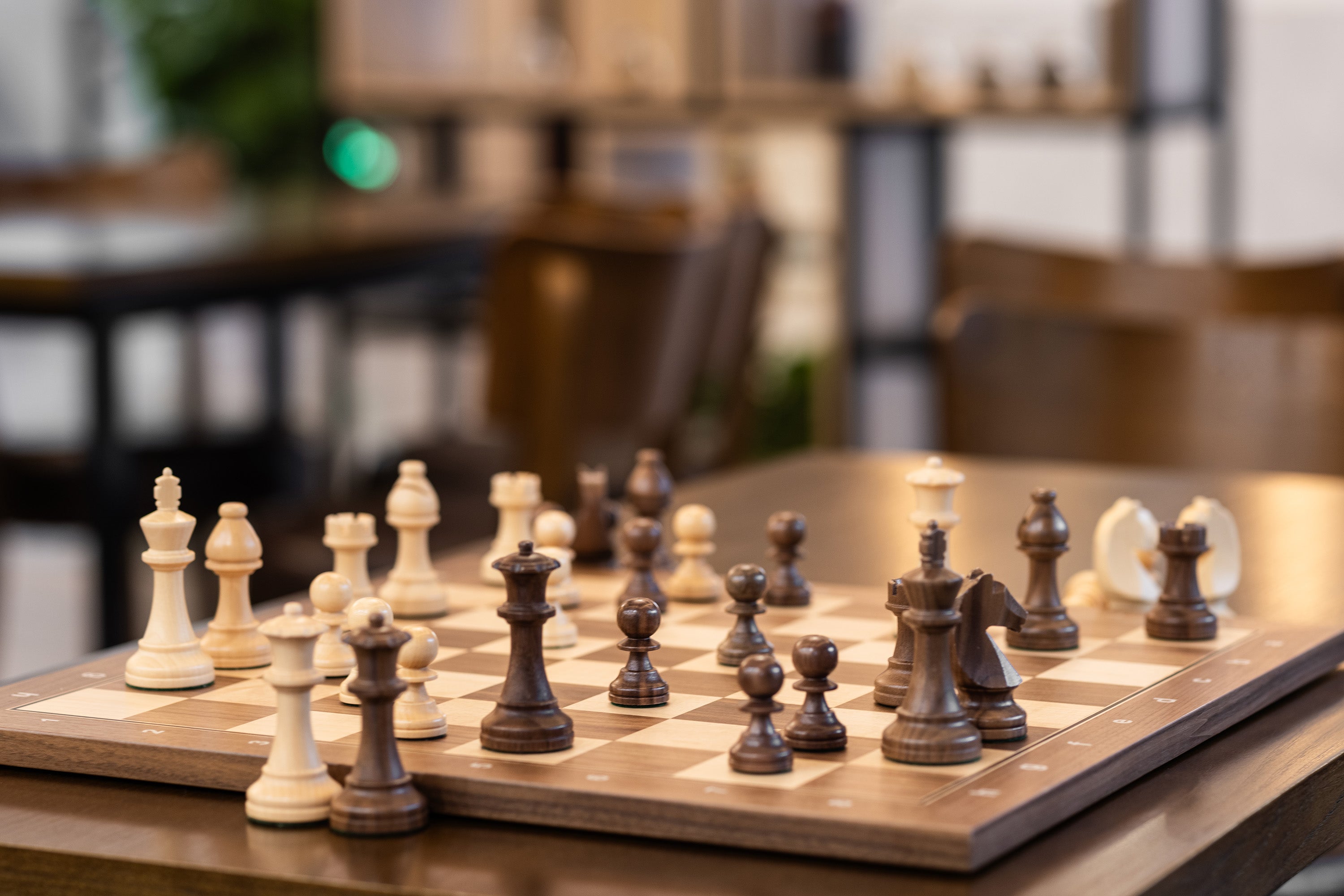
Set up tactical positions on a real board and calculate without touching the pieces. After choosing your solution, move the variation on the board to verify it.
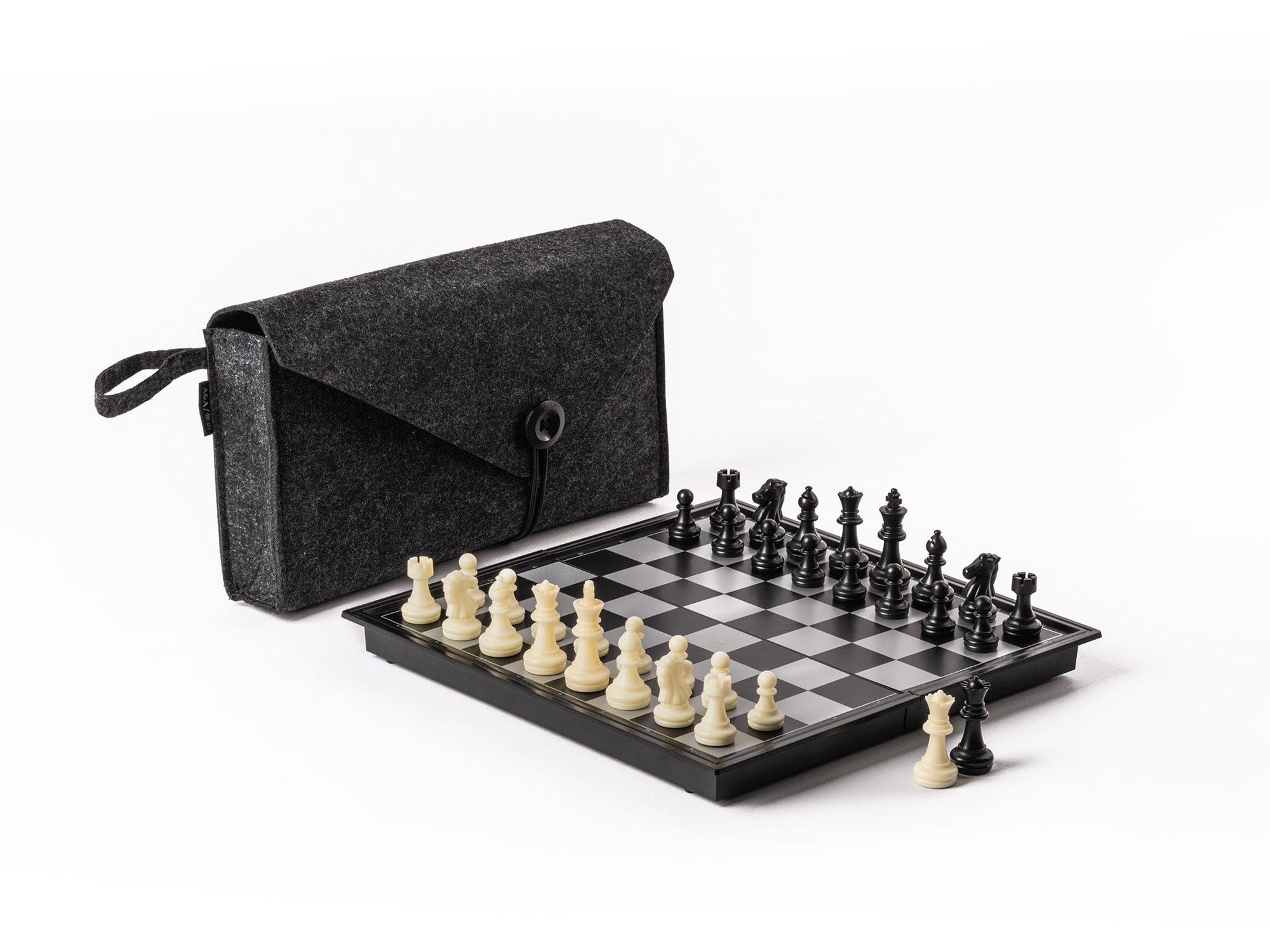
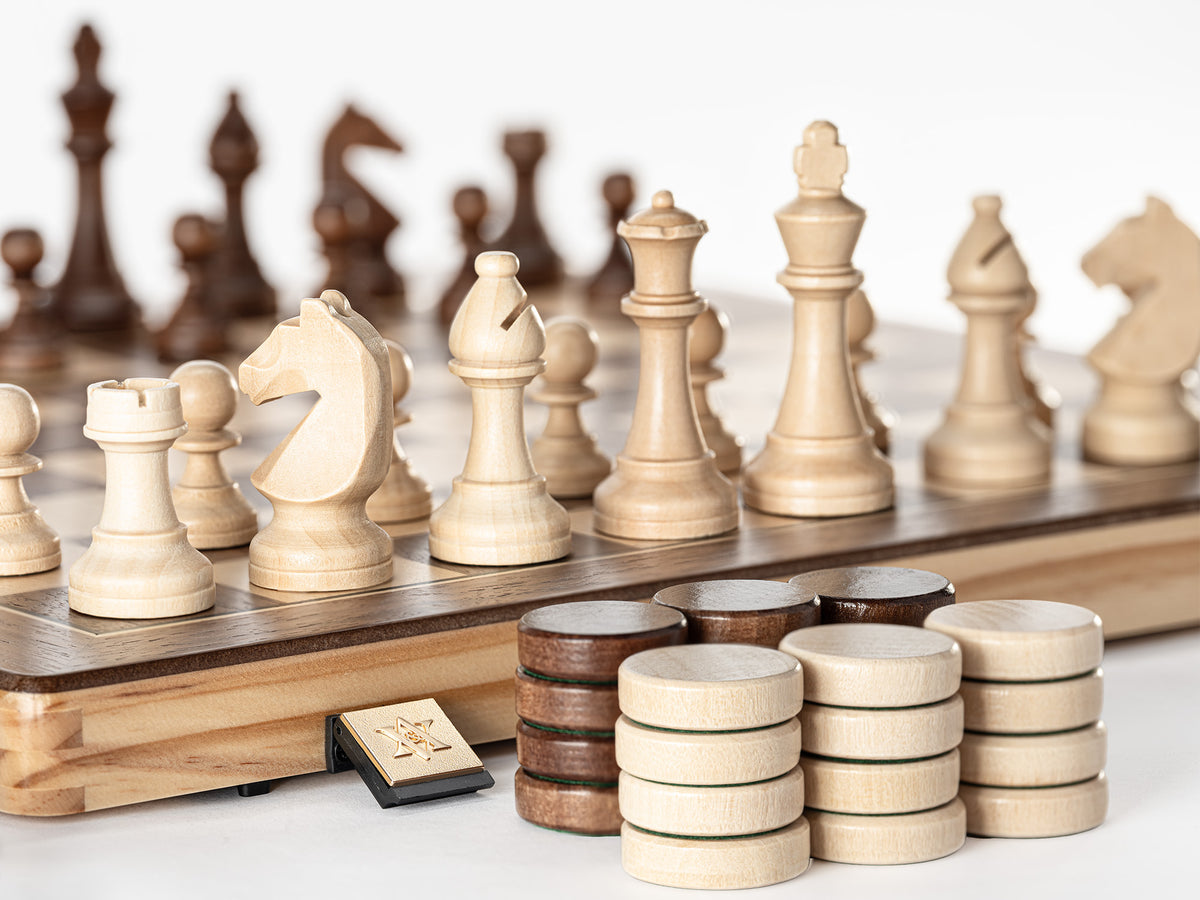
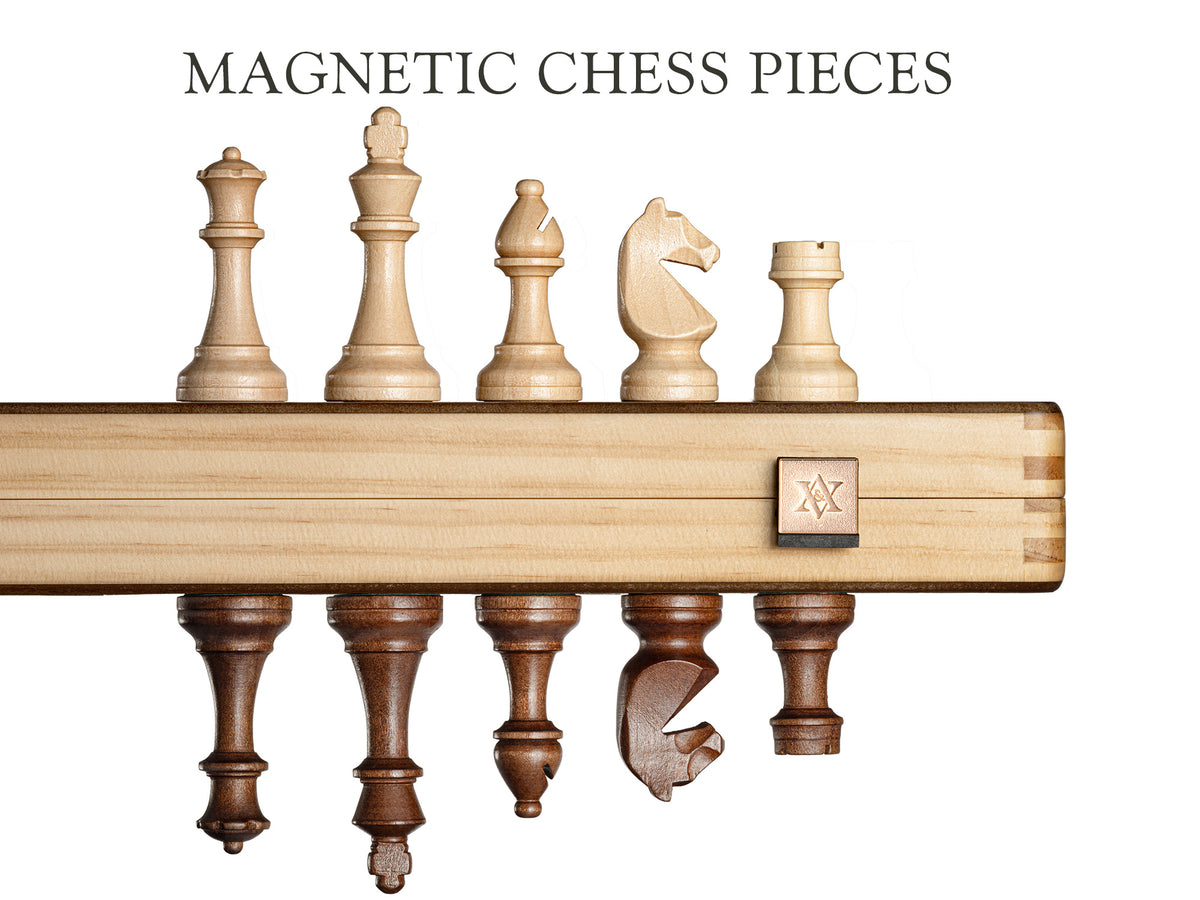
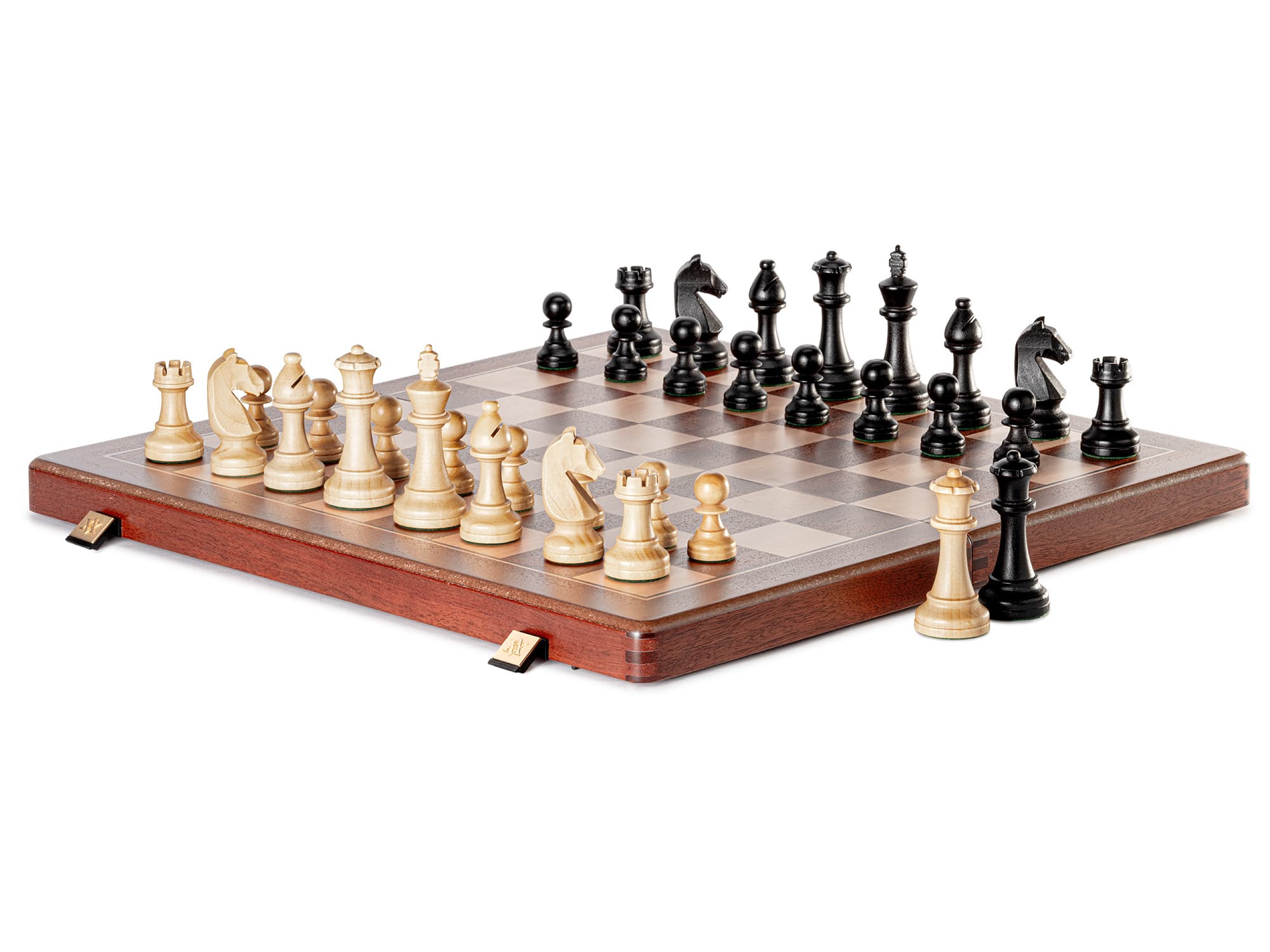
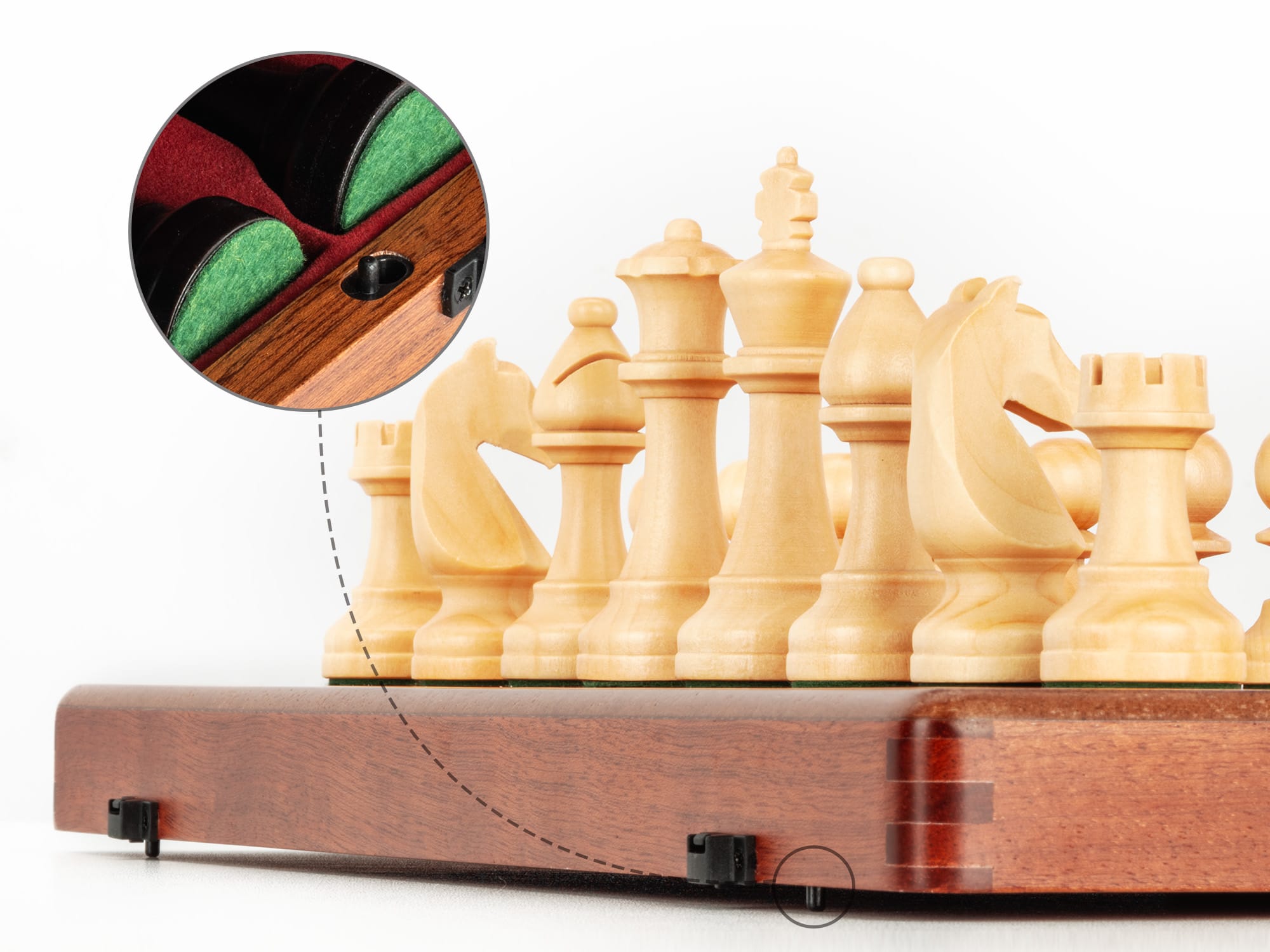
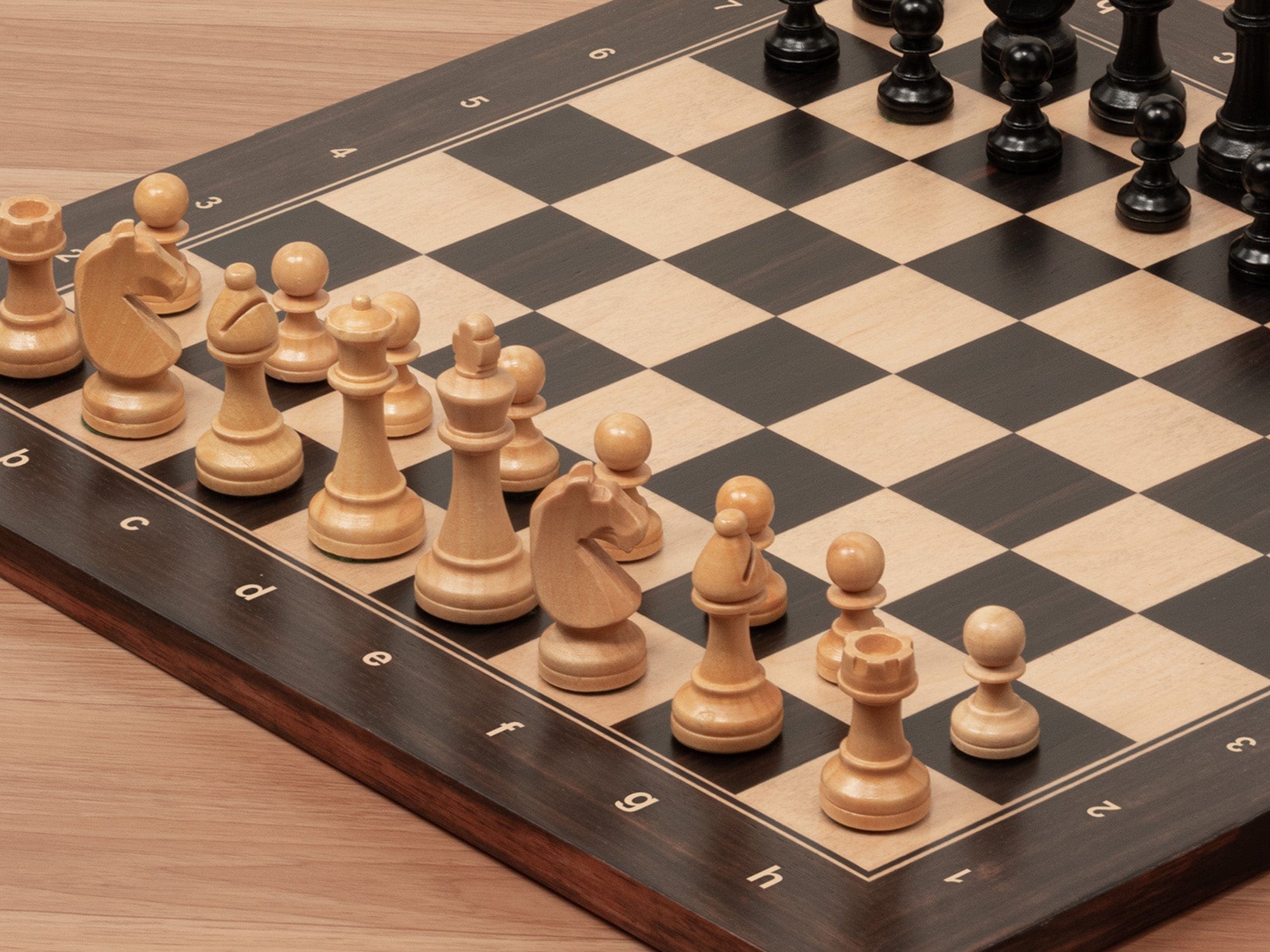
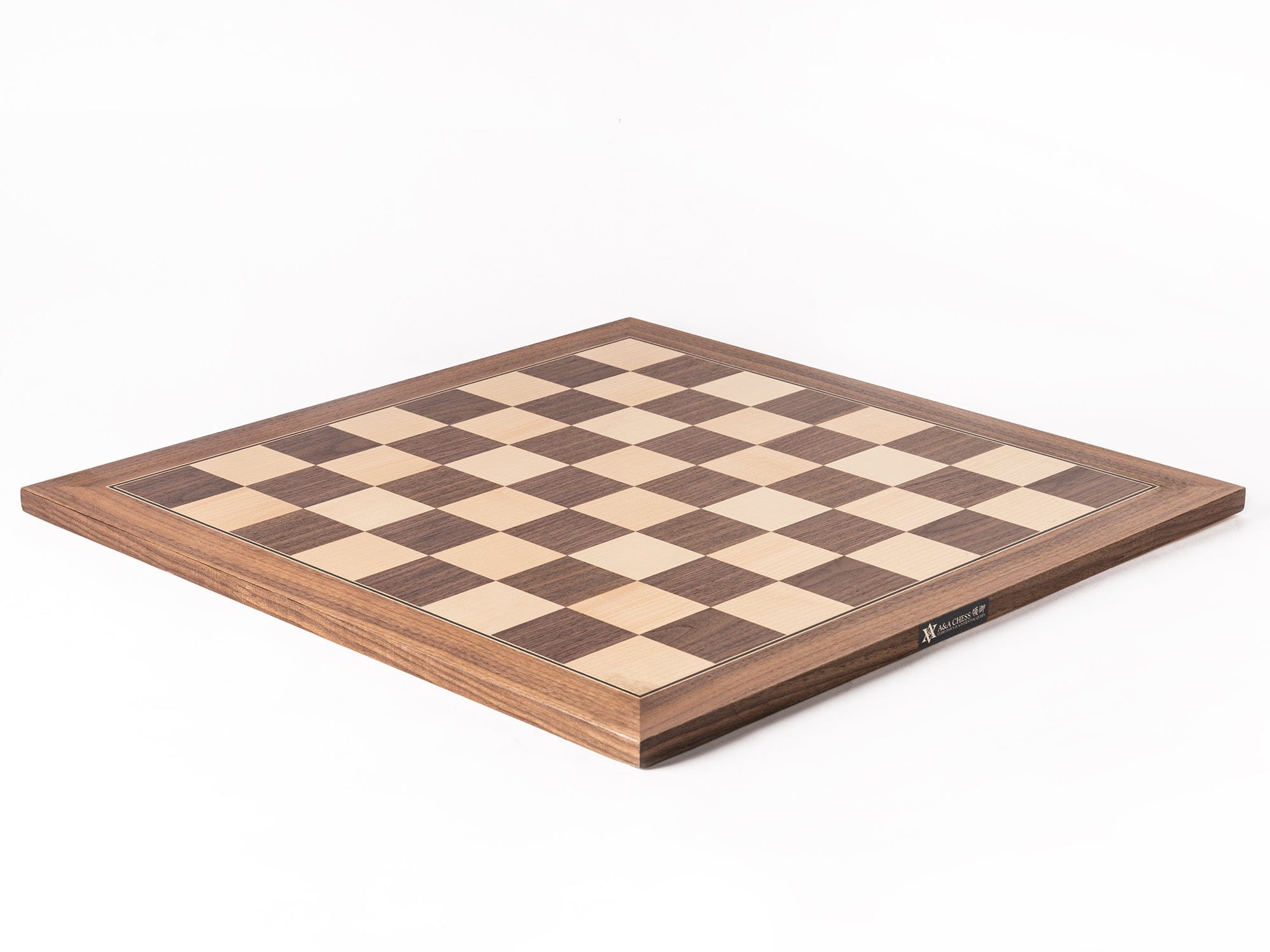
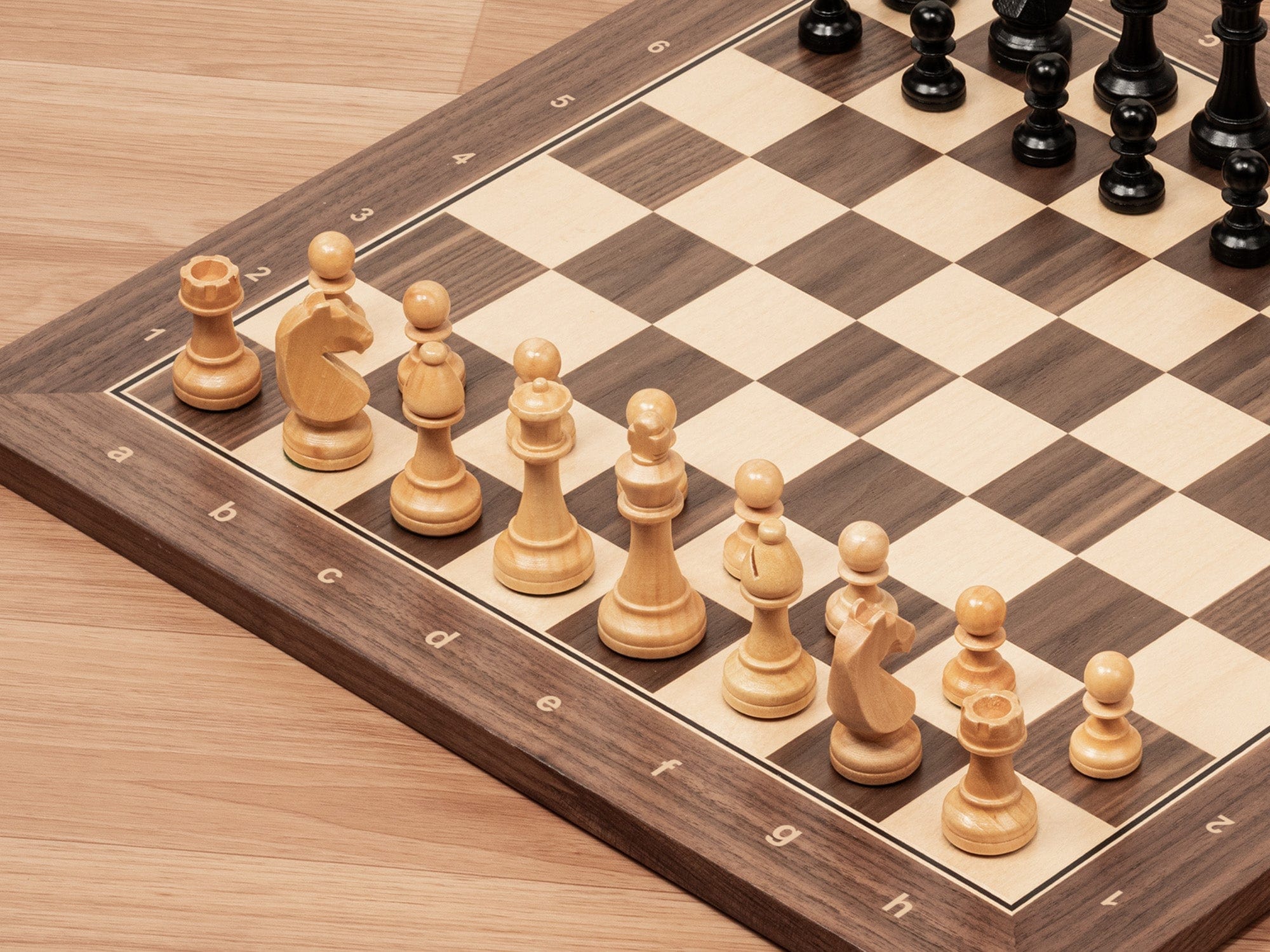
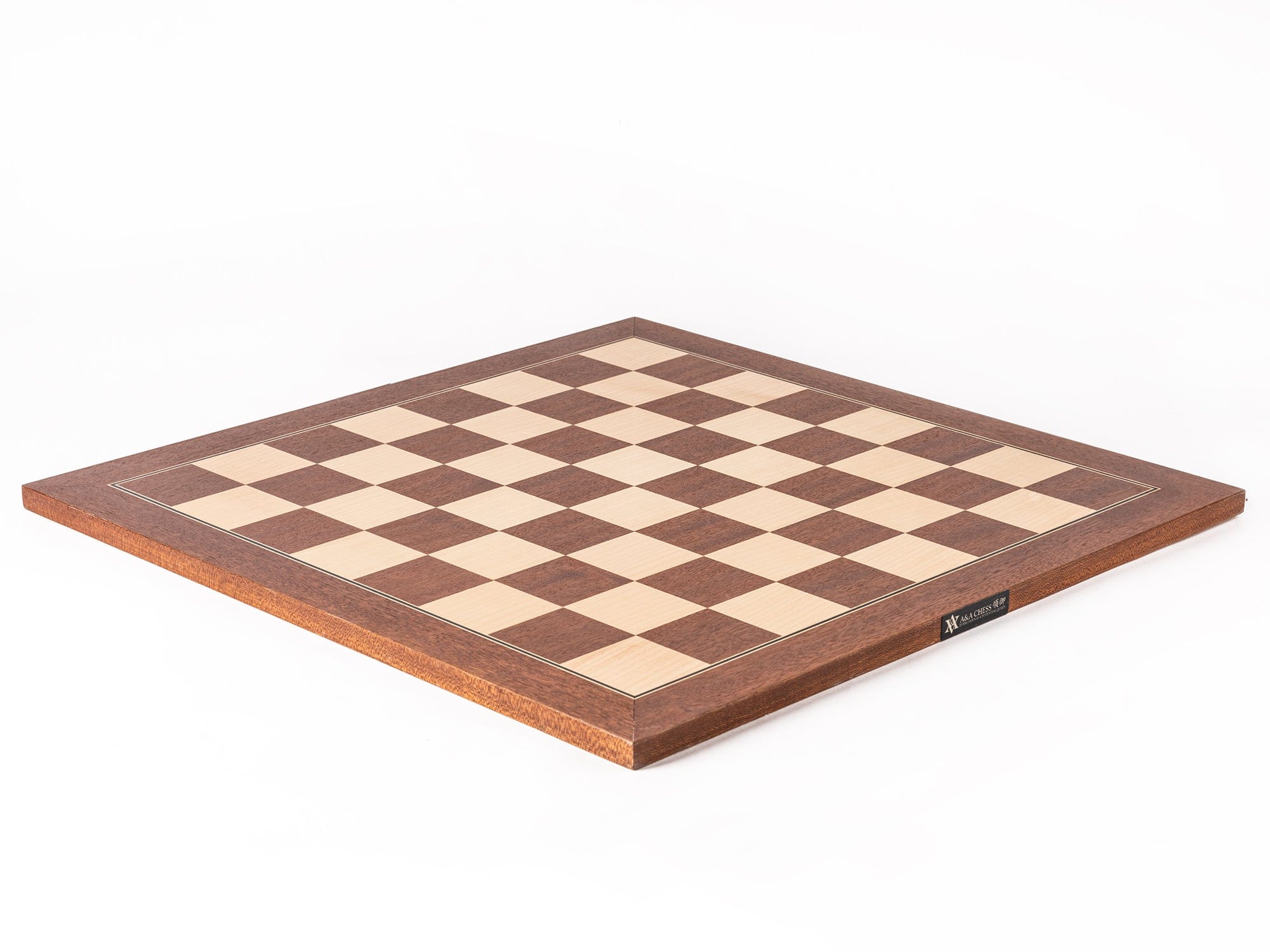
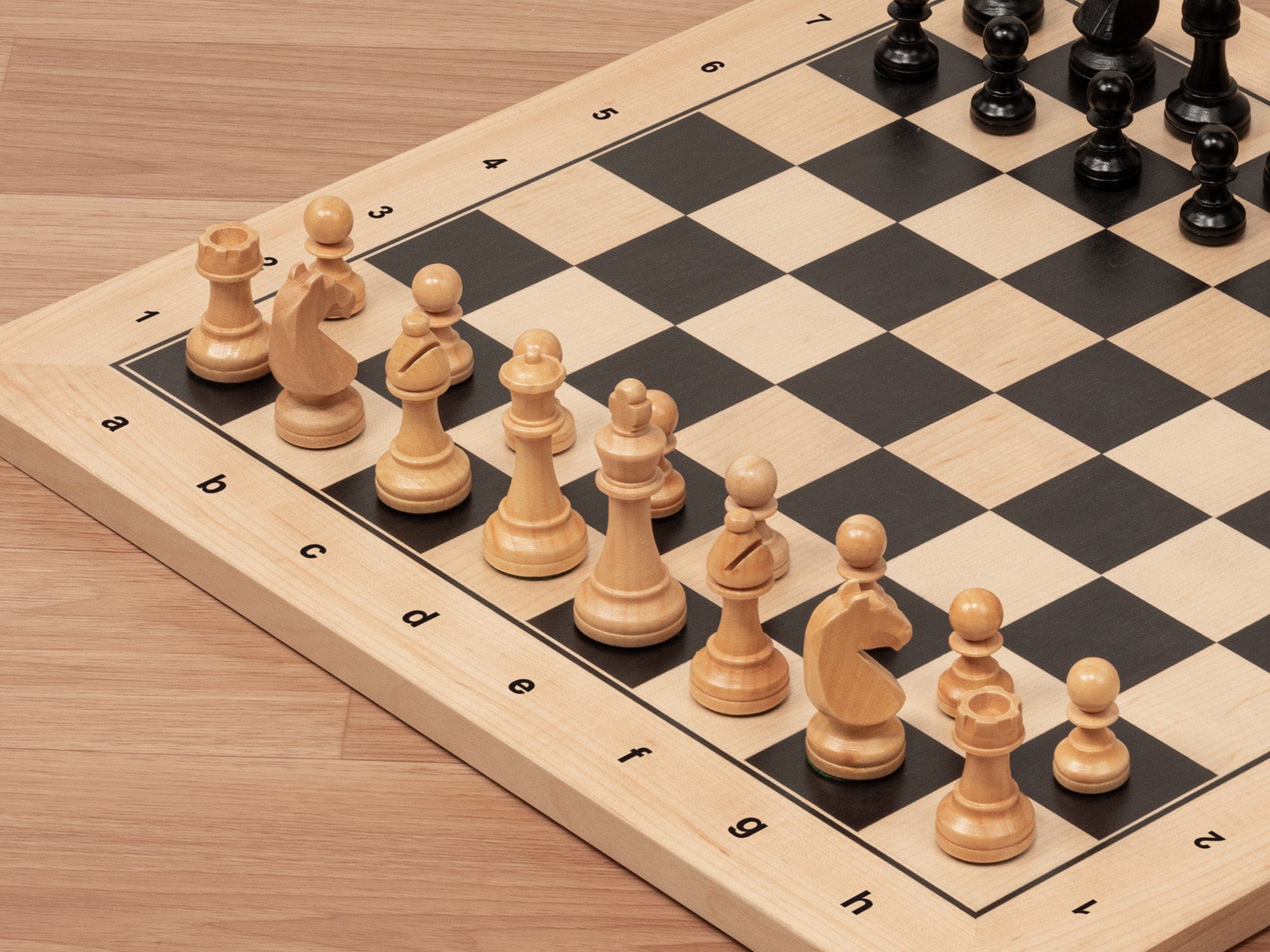
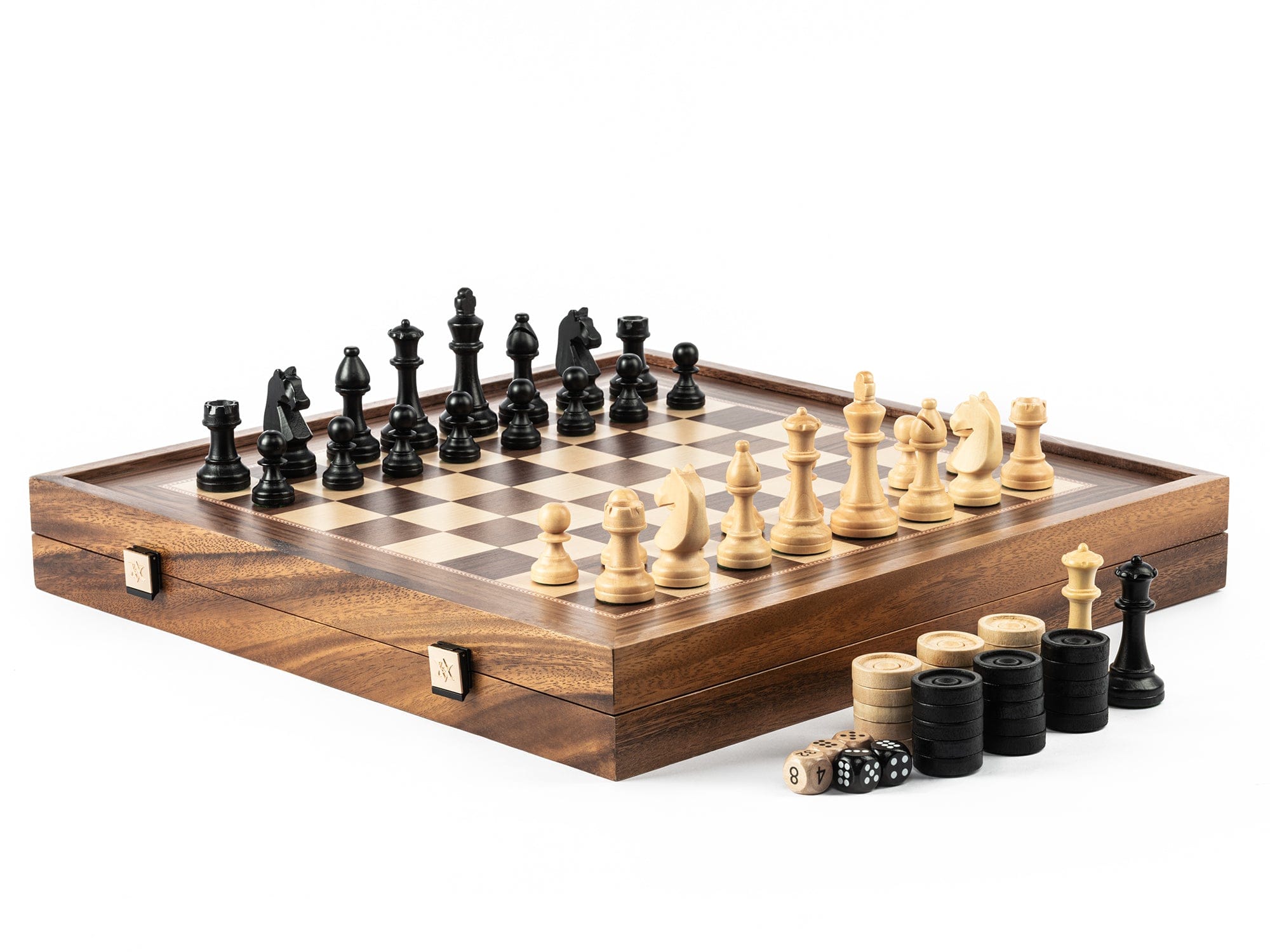
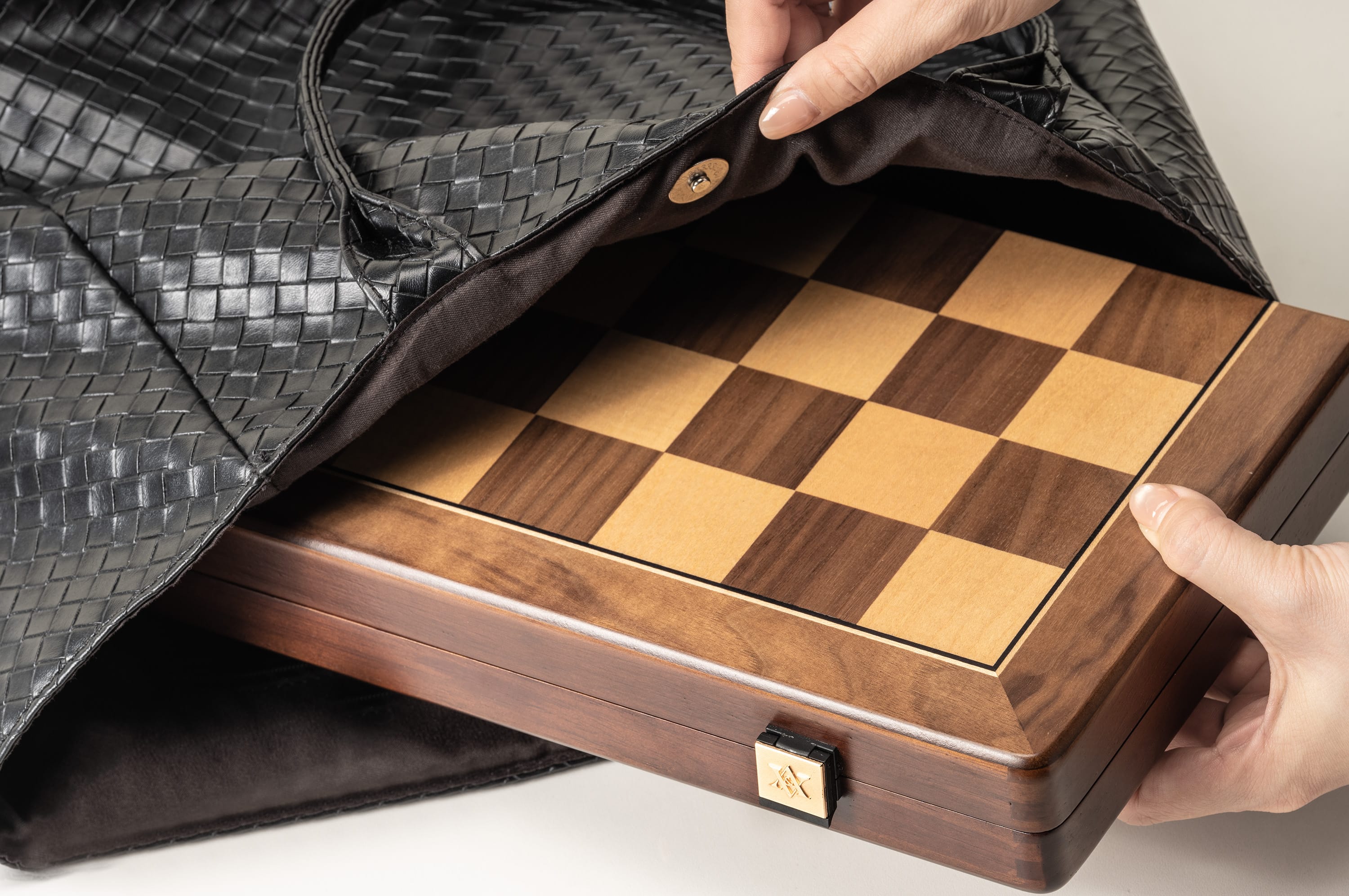
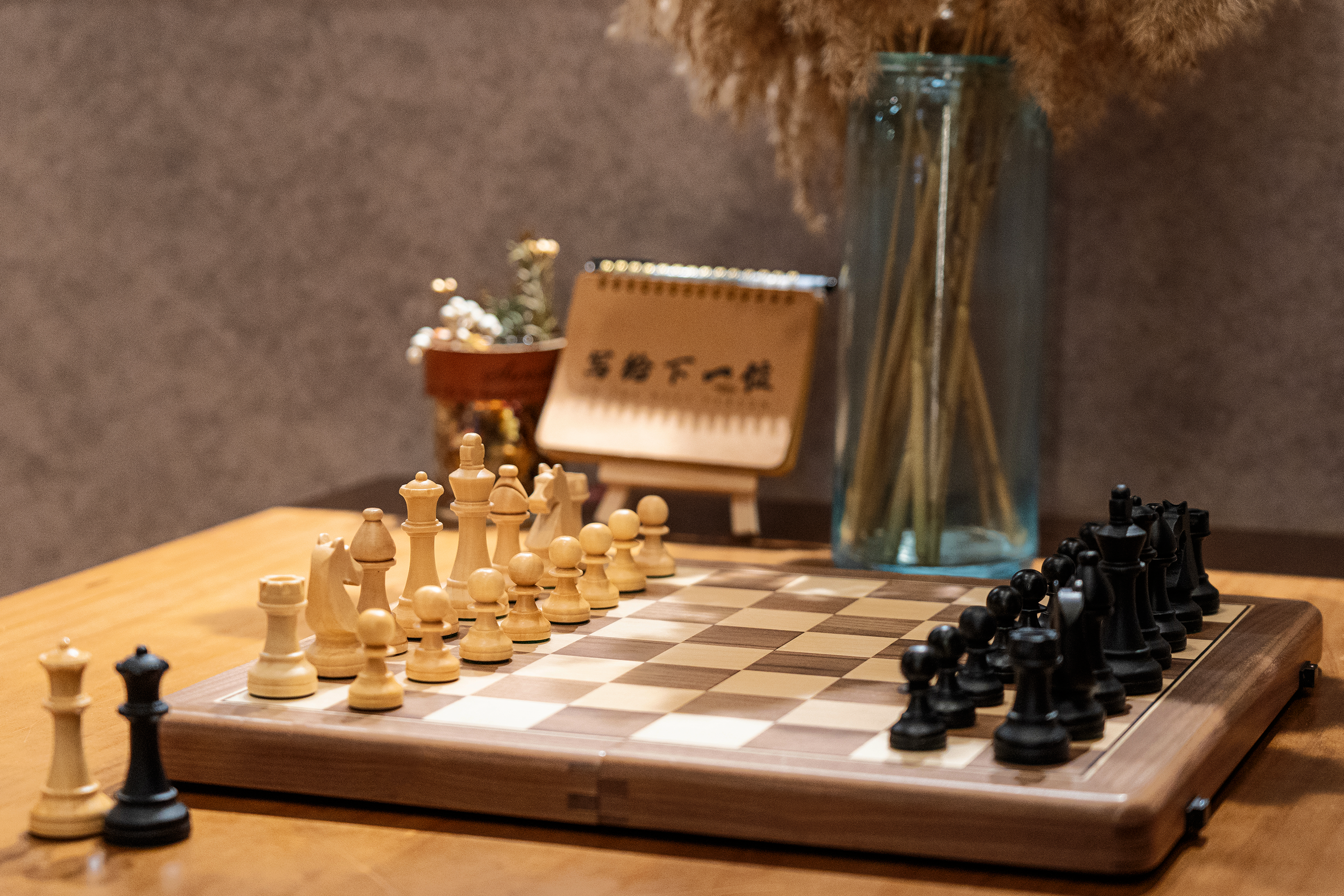
A stable set such as the A&A 15-inch Magnetic Wooden Folding Chess Set can be useful when you want the pieces to remain secure during analysis, home practice, or travel.
2. Deeper Calculation
A physical board naturally slows down the training process.
Choose a difficult position, set a timer for ten to fifteen minutes, and calculate several candidate moves. Try to visualize the final position before moving any piece.
This exercise develops calculation discipline.
Instead of reacting to the first attractive move, you learn to compare alternatives, identify tactical risks, and check the opponent’s strongest possible reply.
A useful calculation process is:
- Identify the opponent’s threat.
- List checks, captures, and direct threats.
- Create at least two candidate moves.
- Calculate the opponent’s best response.
- Compare the resulting positions.
- Perform a final blunder check.
3. Tournament Habits
Tournament chess includes practical skills that online platforms handle automatically.
Players may need to:
- Operate a chess clock
- Manage their remaining time
- Press the clock with the correct hand
- Record moves
- Recognize time-control changes
- Maintain concentration between moves
- Complete each move legally
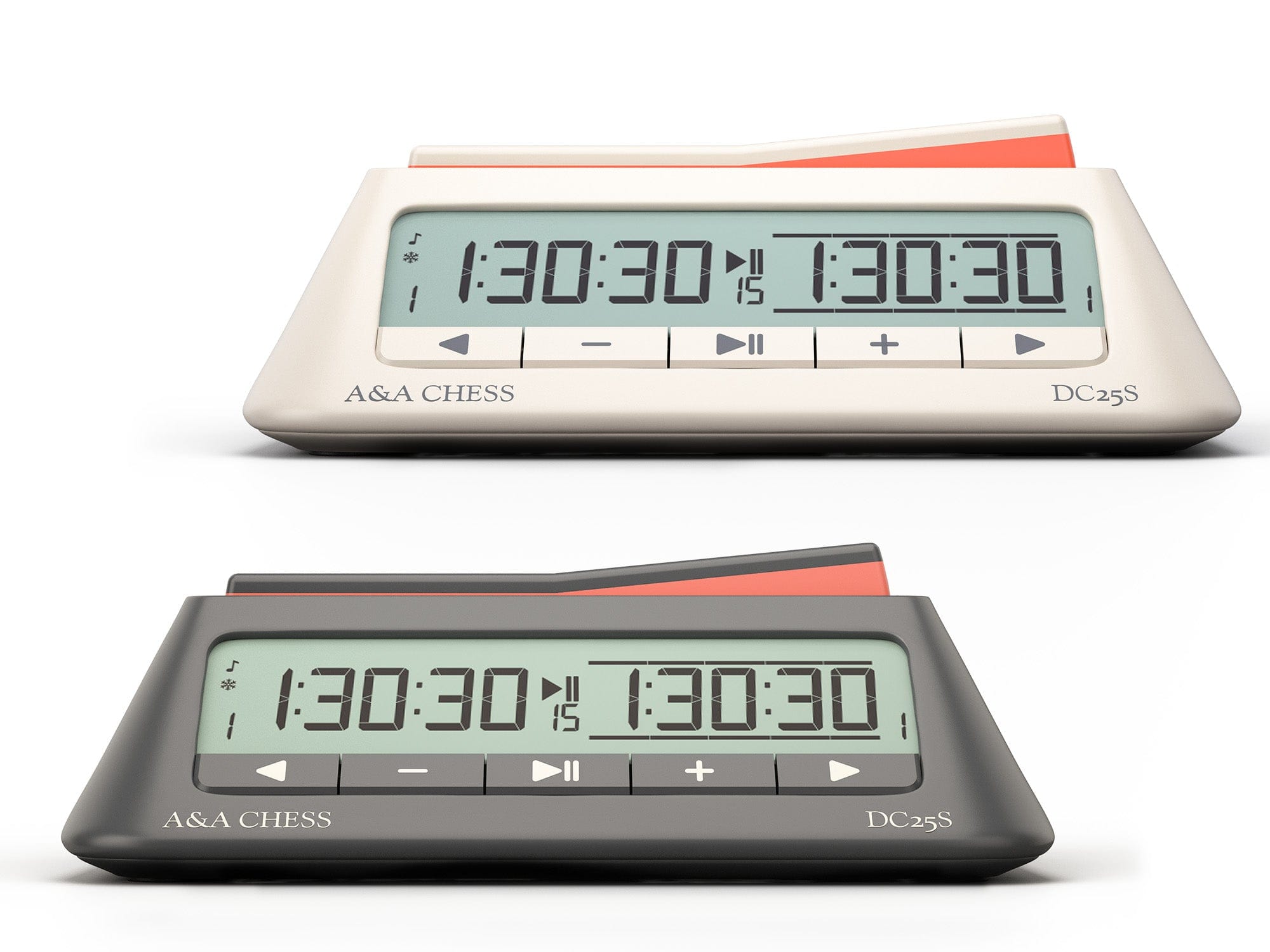
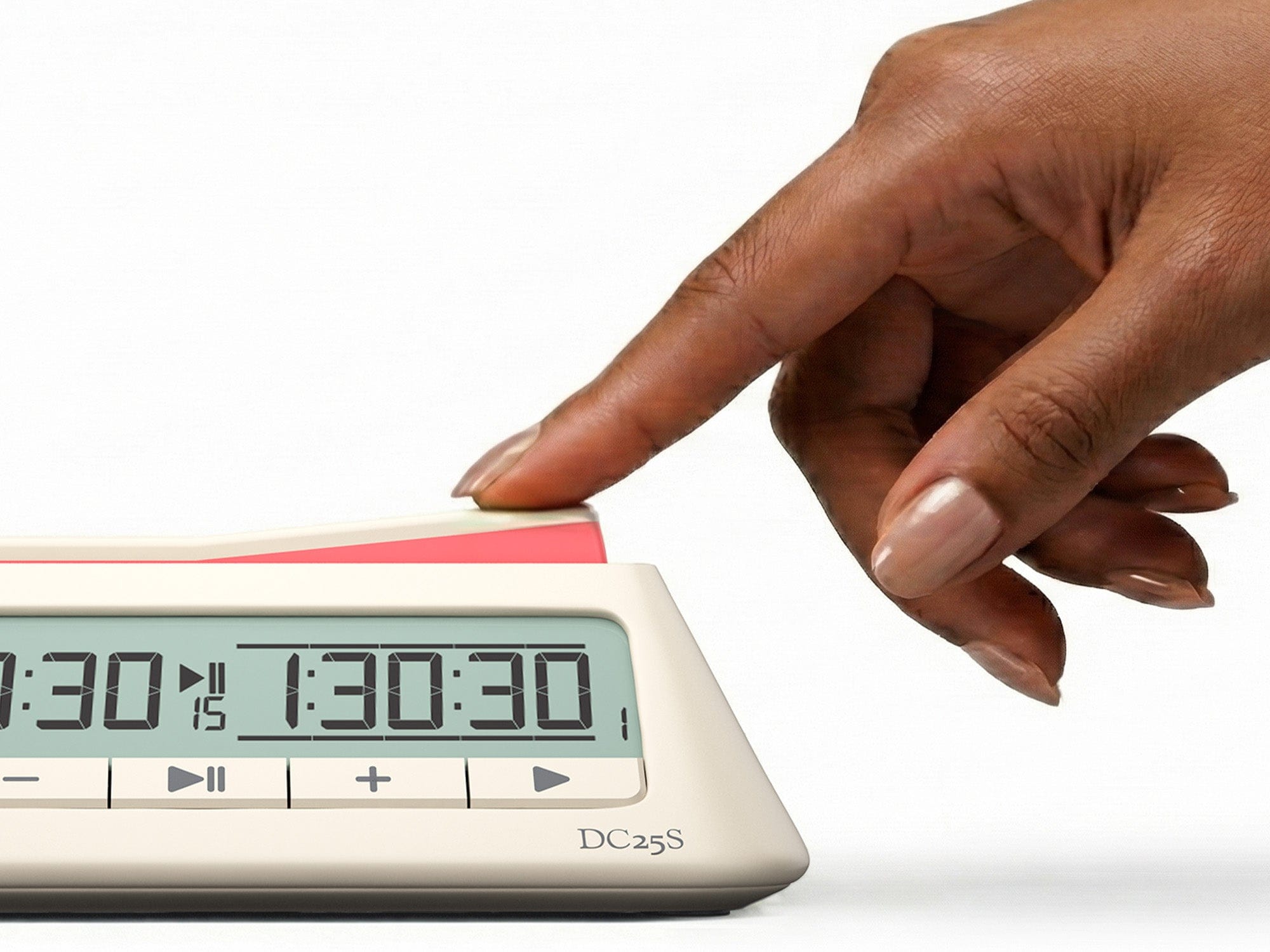
Timed practice with an A&A Professional Digital Chess Clock makes training more realistic.
Start with a comfortable rapid time control, such as 15 minutes with an increment, before moving to faster formats.
Players preparing for formal events can also explore the A&A Tournament Chess Sets collection.
4. Focus and Emotional Control
A physical game removes many digital distractions.
There are no notifications, instant rematch buttons, rating graphs, chat messages, or immediate engine evaluations. You must stay with the position and accept uncertainty.
This makes over-the-board chess valuable for emotional training.
You learn to recover after making a mistake, remain patient in quiet positions, and continue calculating when the result is unclear.
These abilities are difficult to develop when every online loss is followed immediately by another game.
The Best Hybrid Chess Training Routine
A good chess practice plan does not need to consume several hours every day. Consistency matters more than occasional marathon sessions.
The following weekly chess training routine can be completed in approximately five to seven hours.
Monday: Tactics and Board Visualization
Spend twenty minutes solving online chess puzzles slowly.
Then select two difficult positions and recreate them on a physical board. Calculate each position again without digital hints.
Finish the session by identifying:
- Every attacked piece
- Every undefended piece
- Every possible check
- Every open file
- Every long diagonal
- Every potential pawn break
This simple scanning exercise improves board awareness and reduces one-move blunders.
Tuesday: One Serious Online Game
Play one rapid game, ideally with at least ten minutes per side.
Avoid bullet and extremely short blitz games during this session.
After the game, review it without an engine. Identify:
- The first unfamiliar opening position
- The first important decision
- The first major mistake
- The most difficult calculation
- The moment when the position changed
- The amount of time used during critical moves
Use computer analysis only after completing your independent notes.
Wednesday: Opening and Model Game Study
Study one model game from an opening you currently play.
Set up the game on a physical board and guess each important move before revealing it.
Focus on plans rather than memorization. Ask:
- Which side wants to exchange pieces?
- Where should each pawn break occur?
- Which piece is badly placed?
- Which files and diagonals matter?
- What type of endgame could appear?
- Which side has more space?
- Where should the king be placed?
Beginners who are still learning movement, notation, and basic rules can review the A&A CHESS rules and game instructions.
They can also browse the Beginner Chess Sets collection for portable and beginner-friendly options.
Thursday: Endgame Practice
Choose one practical endgame topic each week.
Suitable topics include:
- King and pawn versus king
- Opposition
- Basic rook checkmates
- Queen checkmates
- Rook and pawn endings
- Minor-piece endings
- Creating a passed pawn
- Activating the king
Learn the main rule, then practice the position from both sides.
Physical pieces are particularly helpful in endgames because you can reset the position repeatedly and examine how a single-square change affects the result.
Improving players can browse the Intermediate Chess Sets collection for boards suited to regular home study.
Friday: Timed Calculation

Set up three difficult positions and give yourself ten minutes for each one.
Use a chess clock or timer, but do not move the pieces while calculating.
Write down your candidate moves and main variations. After the time expires, compare your answer with a reliable analysis source.
The purpose is not only to find the best move. The exercise is designed to create a repeatable thinking process under time pressure.
Record whether your mistake came from:
- Missing a tactical move
- Stopping the calculation too early
- Ignoring the opponent’s threat
- Choosing only one candidate move
- Evaluating the final position incorrectly
- Spending too much time on an unimportant decision
Weekend: One Over-the-Board Game
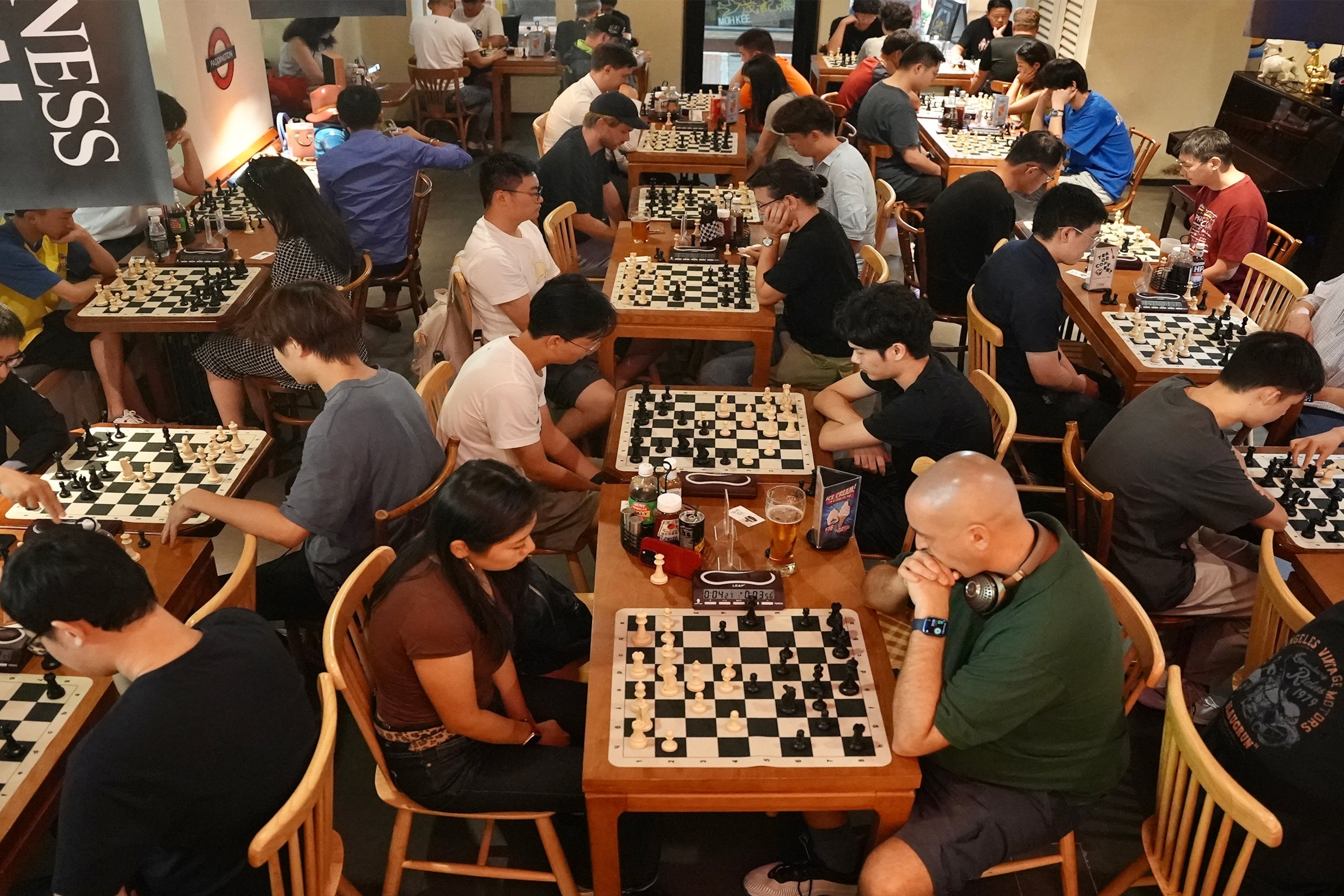
Play at least one longer physical game against a friend, family member, club player, or coach.
Use a clock and record the moves whenever possible.
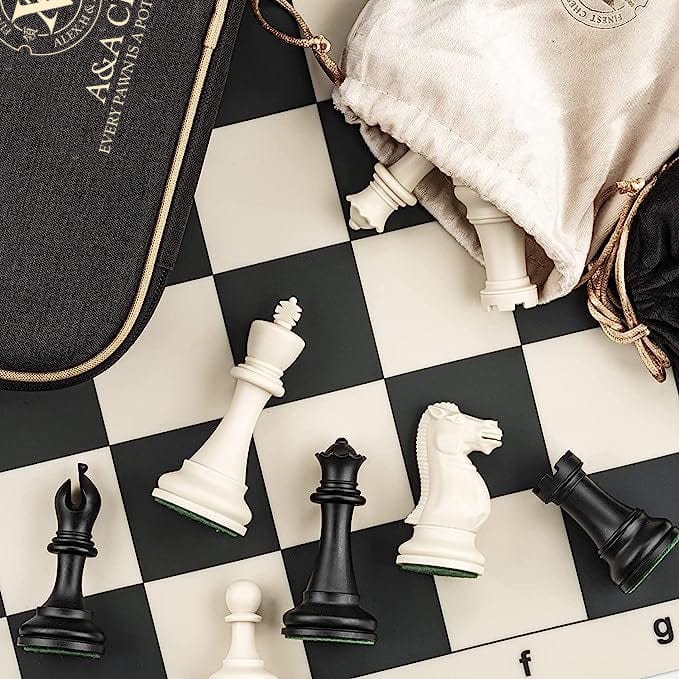
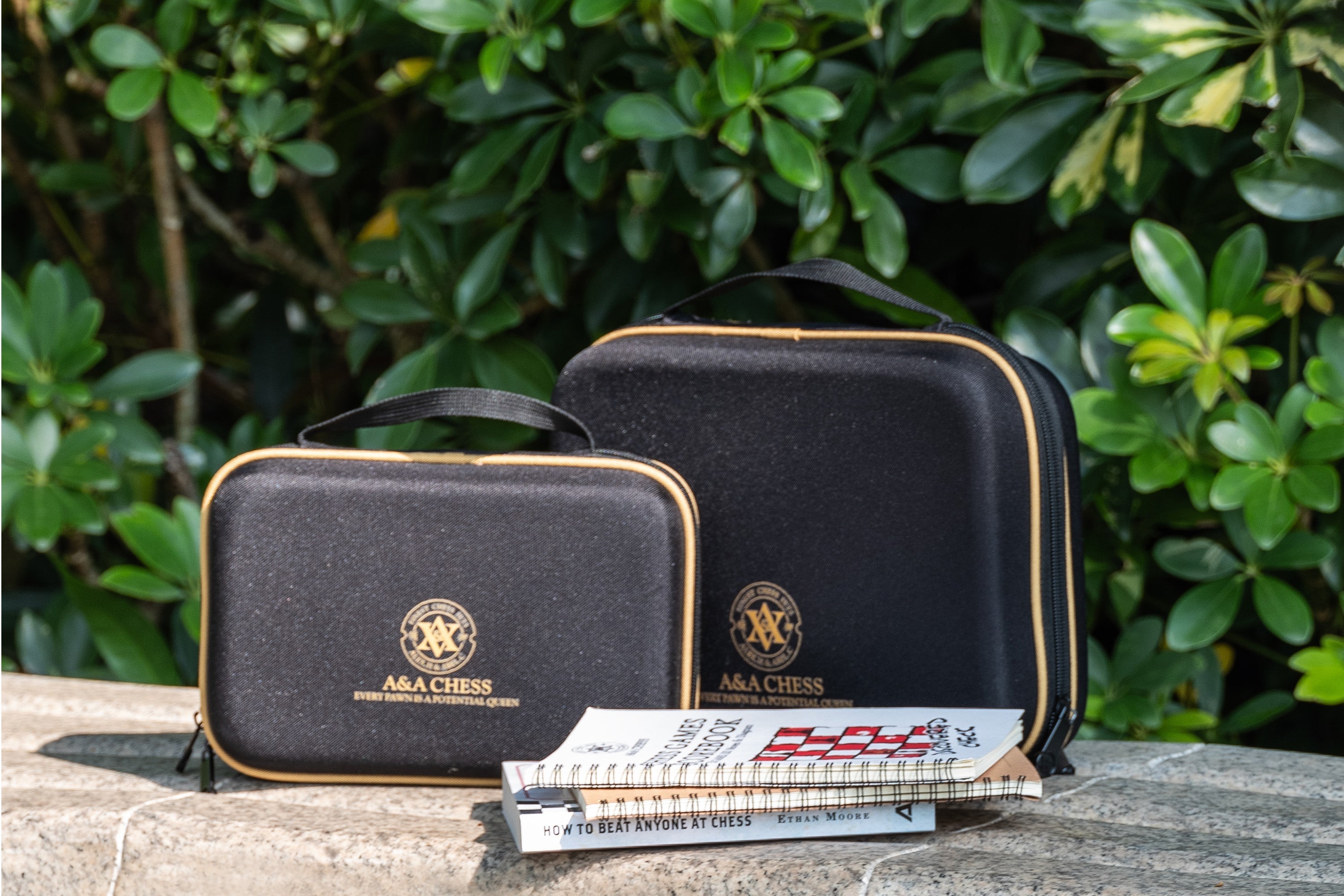
An A&A 20-inch Silicone Travel Chess Set is practical for clubs, parks, schools, road trips, and other locations where portability and easy setup are important.
After the game, discuss the critical moments with your opponent before checking an engine.
A useful post-game conversation may reveal strategic ideas that a numerical engine evaluation cannot explain clearly.
Recommended Equipment for Better Chess Practice
The best chess set for training is not necessarily the most expensive option. It should match where and how you normally practice.
For Beginners
A magnetic or compact folding set helps keep pieces organized and stable.
Beginners should prioritize:
- Clear piece shapes
- Visible board coordinates
- Stable pieces
- Convenient storage
- Comfortable board size
- Easy setup
For Regular Home Study
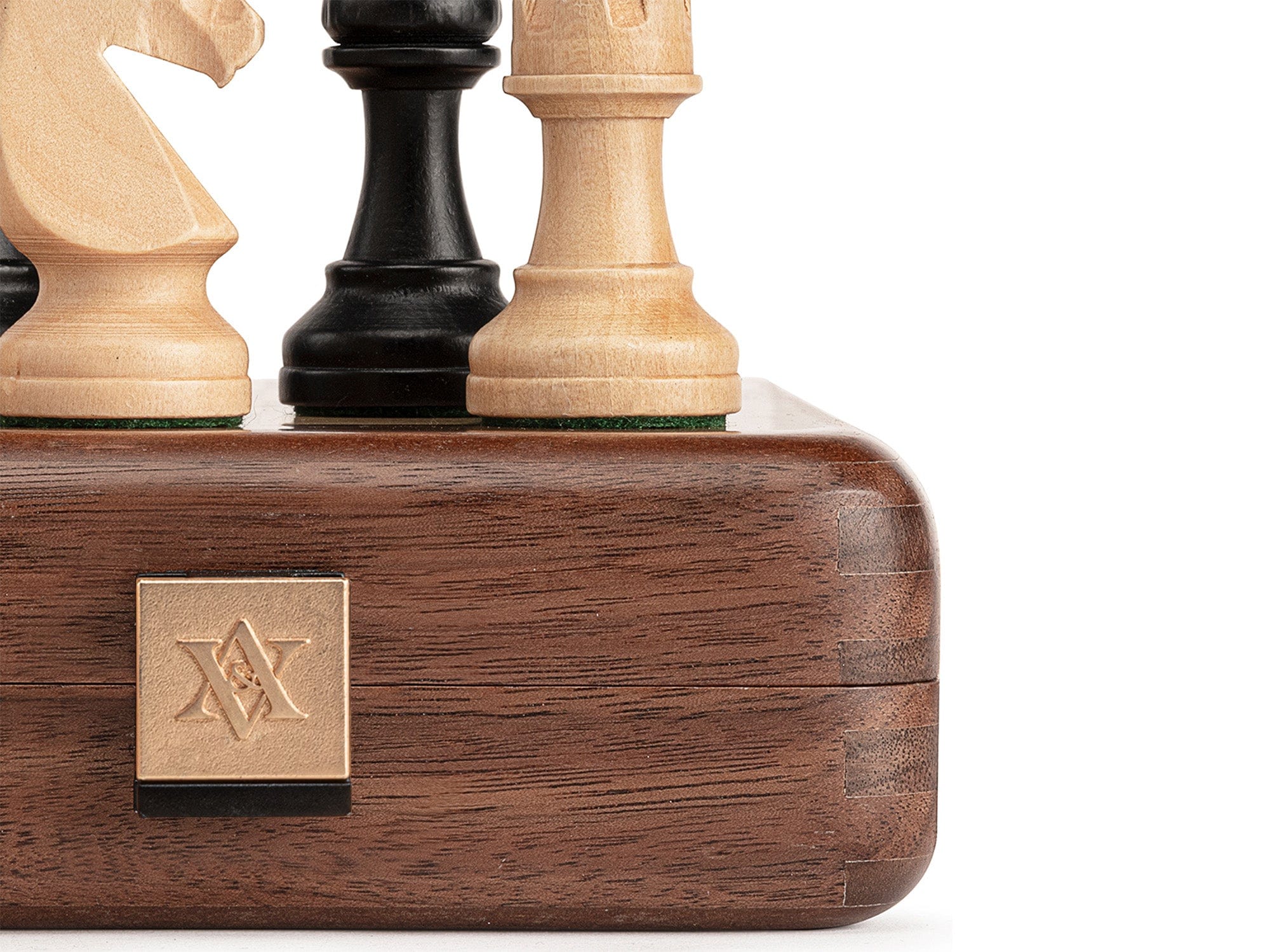
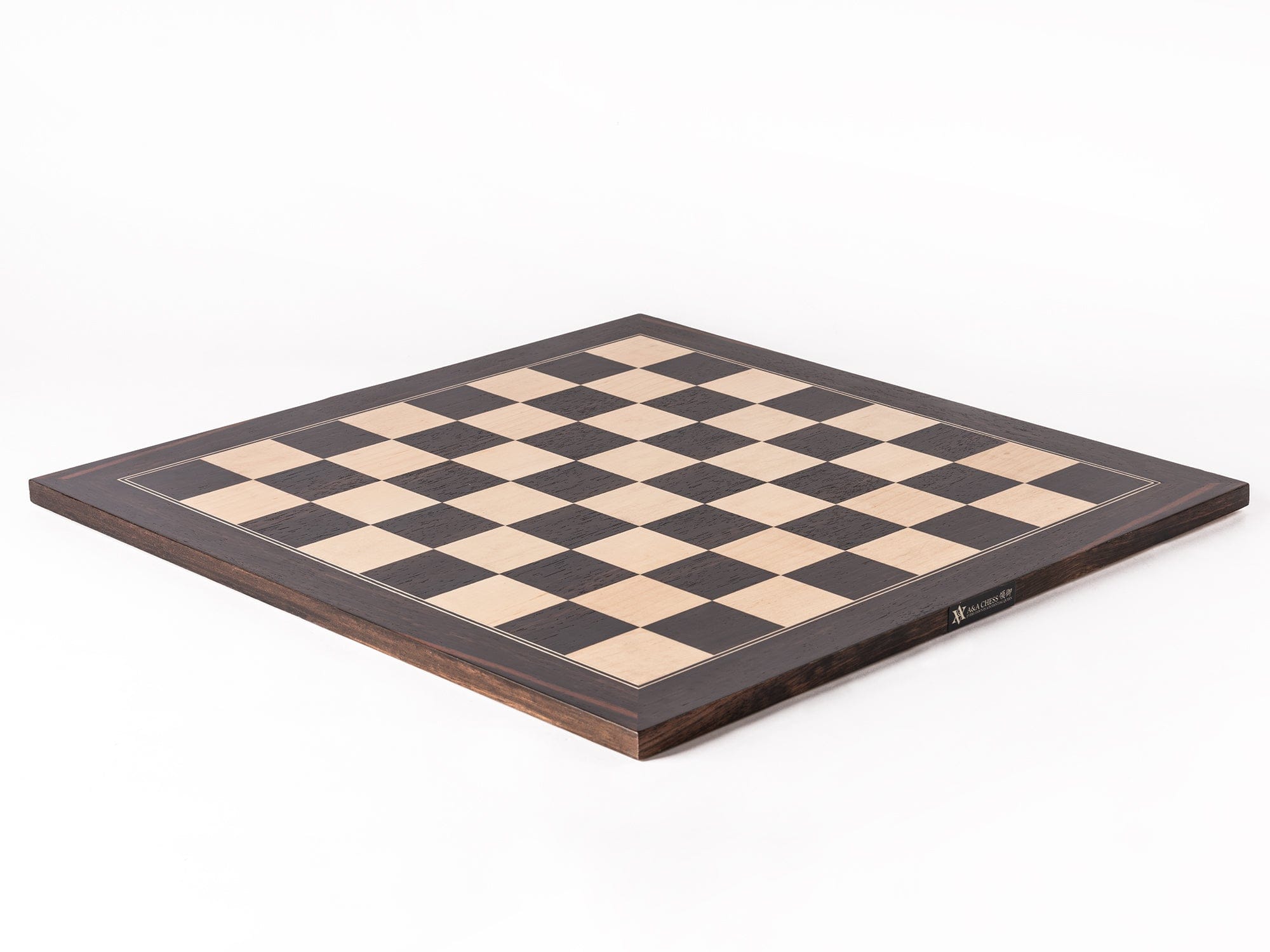
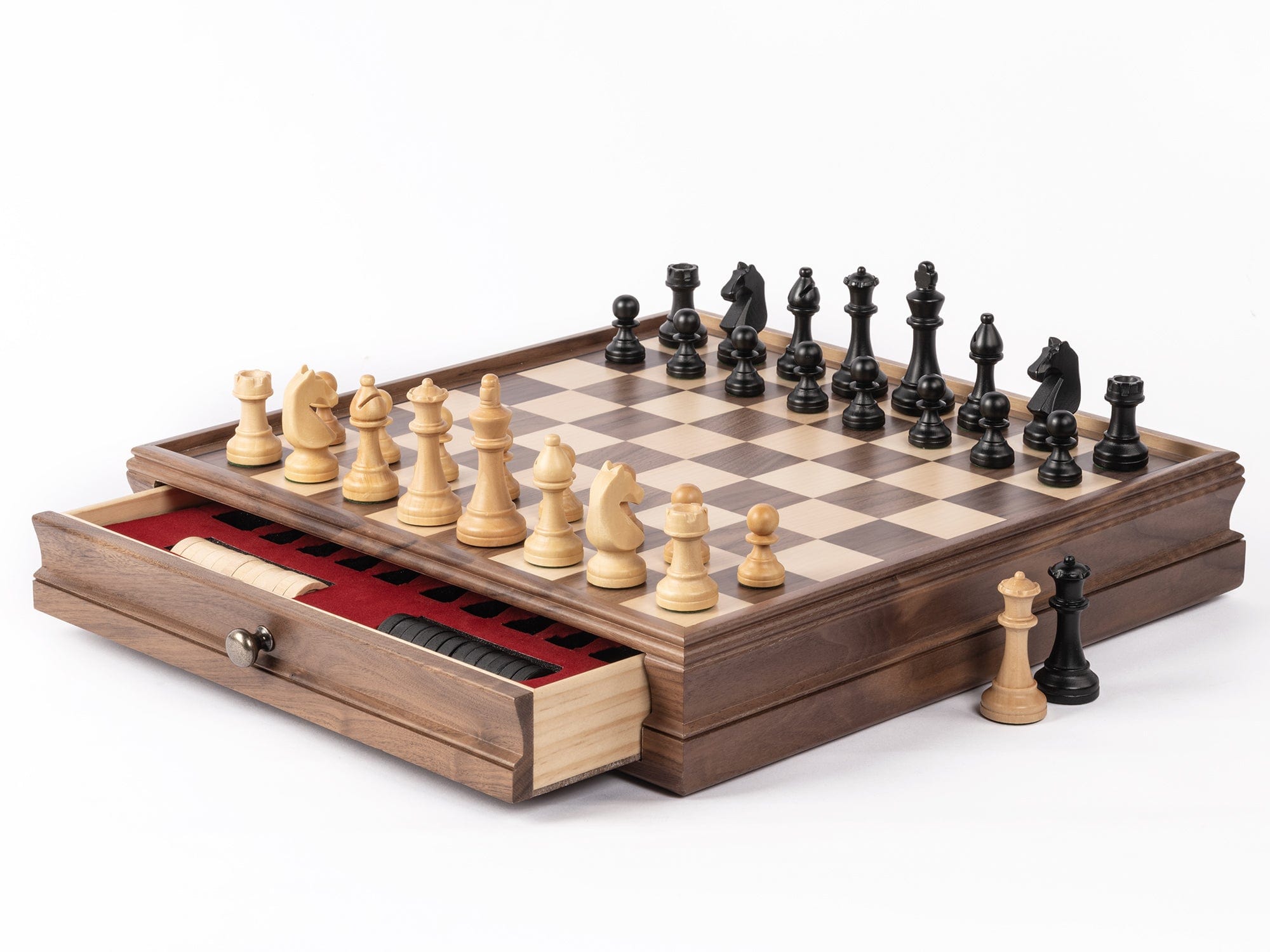
A wooden chess set provides a comfortable visual and tactile experience.
A board that remains ready on a table can also encourage more frequent practice. You can quickly set up a puzzle, replay a game, or study an endgame without opening an app.
For Tournament Preparation
Choose clear Staunton-style pieces, a suitably sized board, and a reliable digital clock.
Tournament players should practice with equipment that feels similar to what they will use during an event.
A&A CHESS organizes its products by playing level, including:
Players can also browse Chess Accessories for clocks, scorebooks, storage solutions, coordinate stickers, and additional training tools.
The objective is to remove excuses.
Keep one chess setup ready at home. When traveling frequently, place a portable set in your backpack or luggage.
The easier it is to begin a training session, the more likely you are to practice consistently.
Common Chess Training Mistakes

Playing Too Many Fast Games
The first mistake is playing too many fast games without reviewing them.
Game volume helps only when mistakes are identified and corrected. Twenty unreviewed blitz games may reinforce poor habits rather than eliminate them.
Using the Engine Too Early
The second mistake is relying on engine evaluations before attempting independent analysis.
A computer can show that a move is inaccurate, but improvement comes from understanding why you selected that move and what thinking habit produced the error.
Training Only on a Screen
The third mistake is training exclusively online before an over-the-board tournament.
Even strong online players need time to adjust to real pieces, physical clocks, longer concentration periods, and the viewing angle of a traditional board.
Studying Without a Clear Plan
Jumping randomly between opening videos, puzzles, livestreams, blitz games, and endgame articles creates activity without clear progress.
Choose one tactical theme, one opening problem, and one endgame topic each week.
Memorizing Without Understanding
Opening memorization can become useless when an opponent plays an unfamiliar move.
Learn why a move is played, what pawn structure it creates, and where the pieces normally belong.
Avoiding Serious Games
Do not replace playing with endless studying.
Chess knowledge must be tested in real games. A balanced week includes learning, calculation, competition, and review.
Frequently Asked Questions
Is online chess or board chess better for improvement?
Neither format is universally better.
Online chess is ideal for frequent games, puzzles, opening repetition, and fast analysis. Board chess is better for tournament preparation, spatial awareness, deep concentration, and realistic clock practice.
Combining both normally produces the strongest overall results.
Does playing on a physical board improve chess visualization?
Physical board practice can improve your ability to recognize three-dimensional board geometry and calculate from an over-the-board viewing angle.
This is especially important for players who compete in clubs, schools, leagues, or tournaments.
How many chess games should I play each week?
For many improving players, two or three serious rapid or classical games with full review are more useful than dozens of unreviewed blitz games.
Additional casual games are fine, but serious games should receive most of your analytical attention.
What time control is best for chess training?
Rapid time controls are a practical starting point.
Consider using:
- 10+5
- 15+10
- 25+10
- 30+20
These formats provide enough time to calculate while keeping the overall session manageable.
Tournament players should also practice using the same time control that will be used in their upcoming event.
What is the best chess set for daily training?
Choose a board with clearly distinguishable squares, stable Staunton-style pieces, and enough space to view the entire position comfortably.
A folding magnetic chess set works well for flexible home and travel practice. A larger tournament-style board is generally better for formal event preparation.
Should beginners play blitz chess?
Beginners can play some blitz for entertainment and pattern recognition, but it should not replace slower games.
Longer time controls give new players enough time to identify threats, calculate variations, and apply basic strategic principles.
How long should a daily chess training session be?
A focused session of thirty to sixty minutes can be enough when repeated consistently.
A balanced daily session might include:
- 15 minutes of tactics
- 20 minutes of game analysis
- 15 minutes of endgame or opening study
- 10 minutes of board visualization
Final Thoughts
The debate between online chess and board chess creates a false choice.
Online tools offer unmatched convenience, repetition, opponent access, and fast feedback. A physical board develops the concentration, visualization, and practical habits required for face-to-face play.
Use the screen to collect information and repetitions. Use the board to slow down, calculate, and transform ideas into dependable skill.
A simple weekly routine that combines puzzles, serious games, independent analysis, physical-board study, and timed practice will create more lasting progress than relying on any single training method.
Explore A&A CHESS to find chess sets and accessories that support your training at home, at school, while traveling, or while preparing for a tournament.
The right equipment will not replace disciplined practice, but it can make high-quality practice easier to begin and more enjoyable to maintain.



Commenta
Questo sito è protetto da hCaptcha e applica le Norme sulla privacy e i Termini di servizio di hCaptcha.