








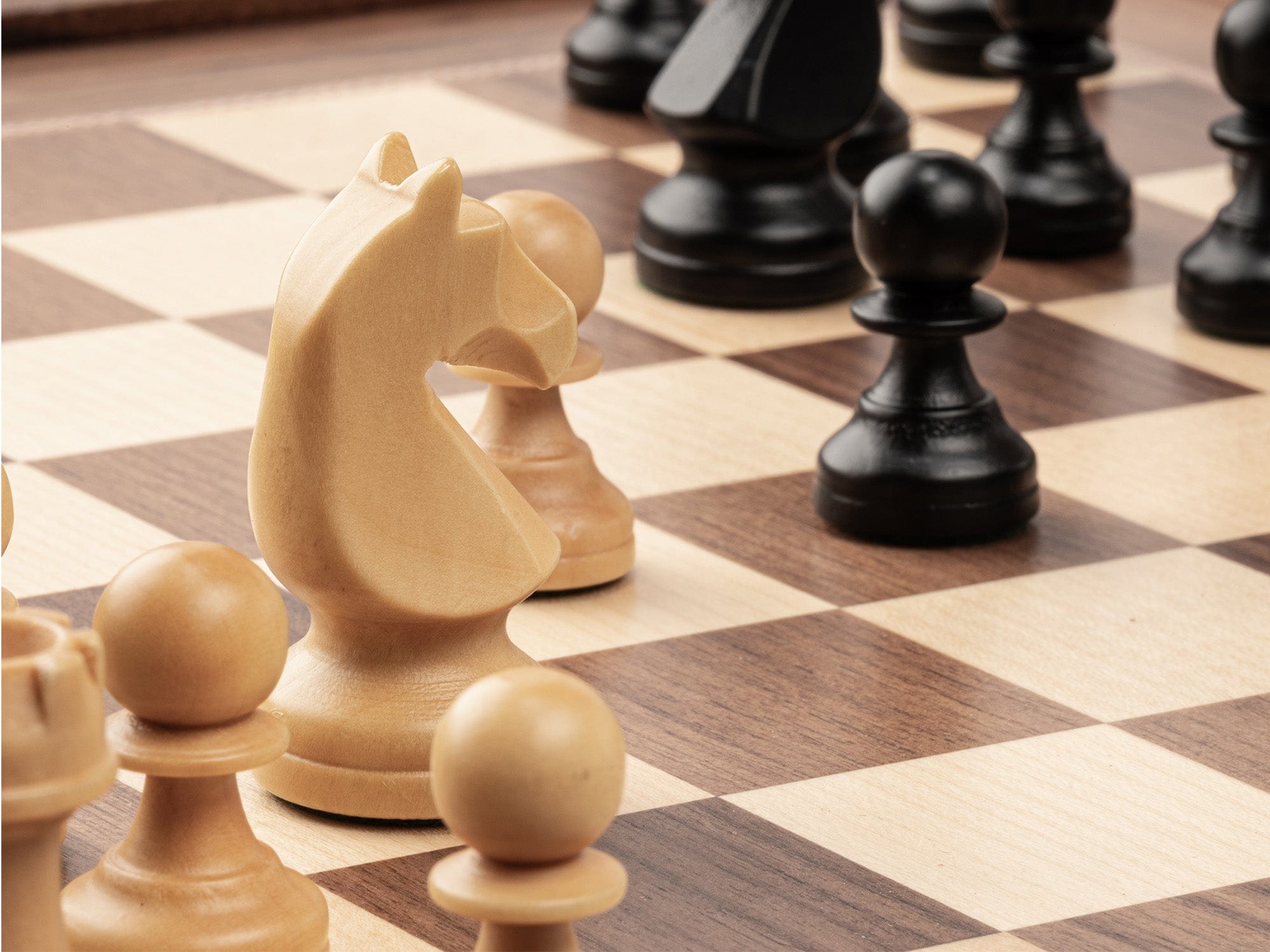
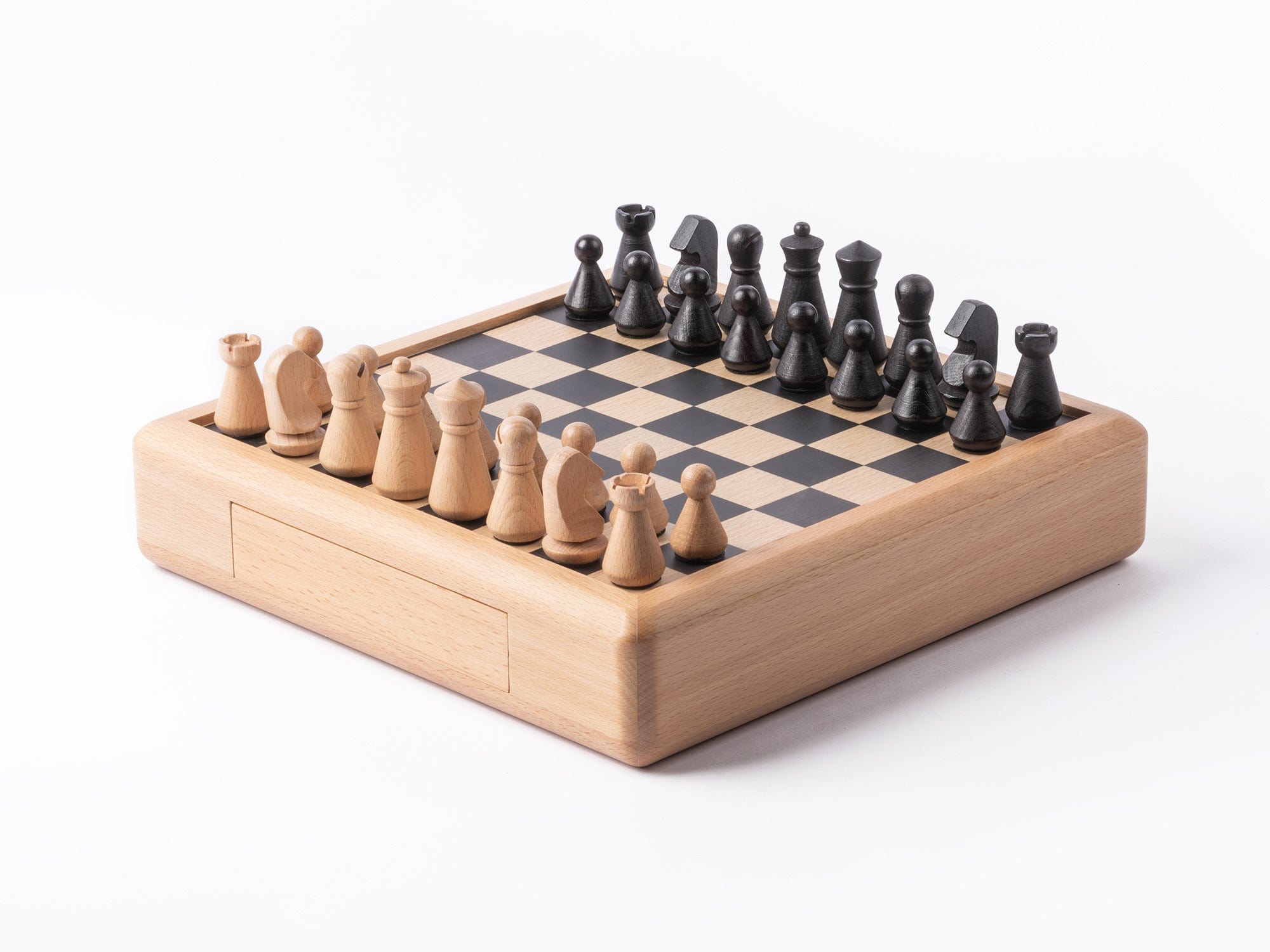

Chess may be played on a screen, but serious improvement still depends on the habits developed over a physical board: visualizing positions, recording moves, managing time, and staying focused while an opponent sits across from you. That is why choosing the right tournament chess set is not merely a shopping decision. It is part of building a reliable training environment.
This topic is especially relevant in 2026. Rapid and blitz chess continue to attract players who began online and now want a more authentic over-the-board experience. At the same time, the connection between digital chess and official over-the-board competition is becoming stronger.
Whether you are preparing for your first club event, equipping a school chess program, or upgrading your home setup, the right board, pieces, clock, and accessories can make practice feel closer to real competition.
This guide explains how to choose tournament-ready chess equipment, how board dimensions should match the pieces, when to select wood or silicone, and which A&A CHESS products fit different playing situations.
Table of Contents
- What Makes a Chess Set Tournament-Ready?
- Choose the Right Chessboard Size
- Select Stable Staunton Chess Pieces
- Add a Digital Chess Clock
- Wooden vs. Silicone Tournament Chess Sets
- Recommended A&A CHESS Tournament Setups
- How to Set Up and Maintain Your Equipment
- Frequently Asked Questions
What Makes a Chess Set Tournament-Ready?
A tournament chess set should help players concentrate on the position rather than the equipment.
The board must remain flat and stable. The squares need enough contrast to be seen clearly without creating glare. The pieces should be easy to distinguish, comfortable to move, and heavy enough to resist accidental tipping. A clock should support the time controls used in modern chess, while suitable storage should protect the complete setup between games.
For most players, a complete tournament setup includes:
- A regulation-style board with clearly defined light and dark squares
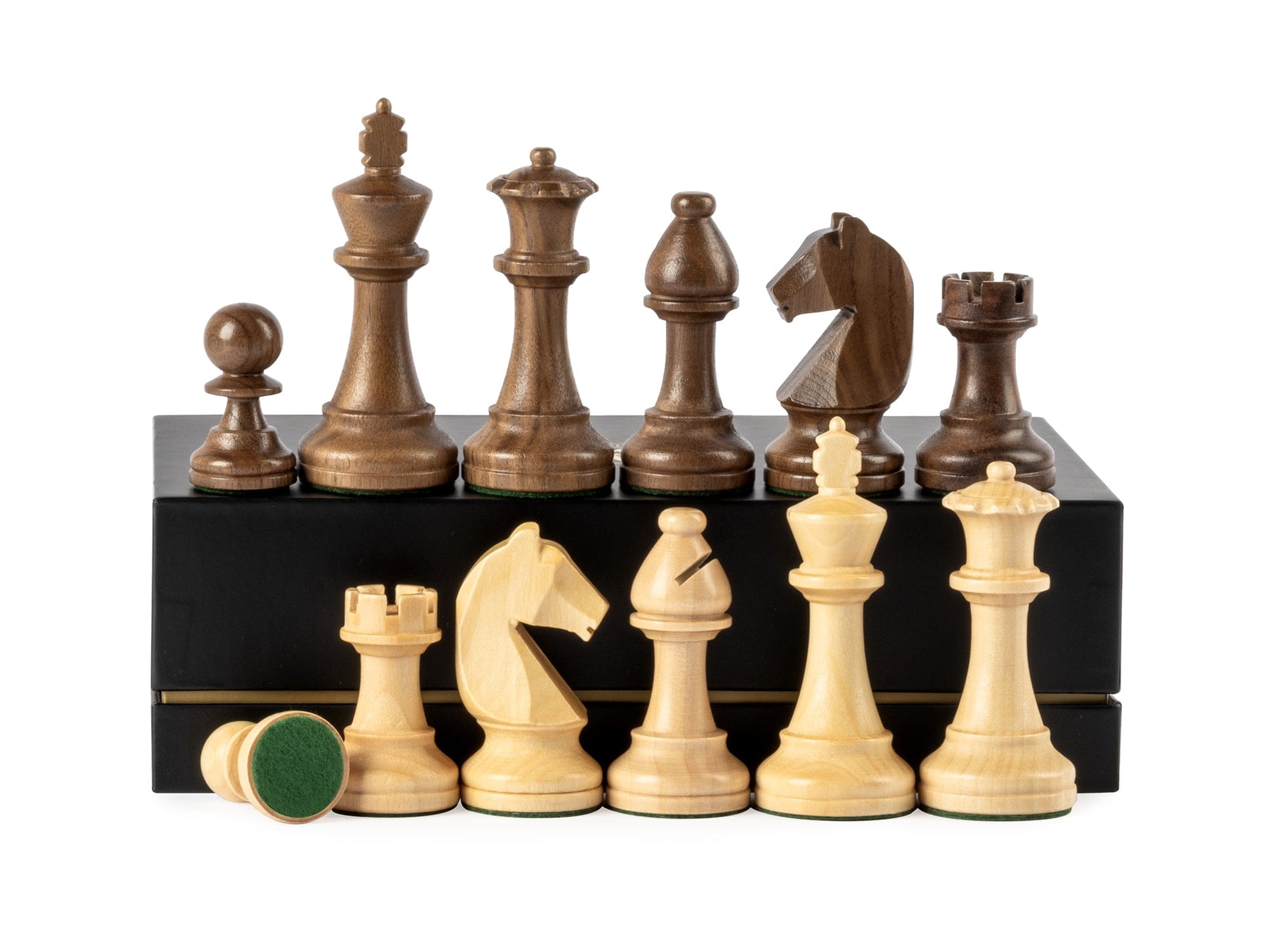
- Staunton-style chess pieces with a king around 3.75 inches high
- Weighted or well-balanced piece bases
- Extra queens for pawn promotion
- A digital chess clock with increment and delay modes
- A scorebook or scoresheets for recording games
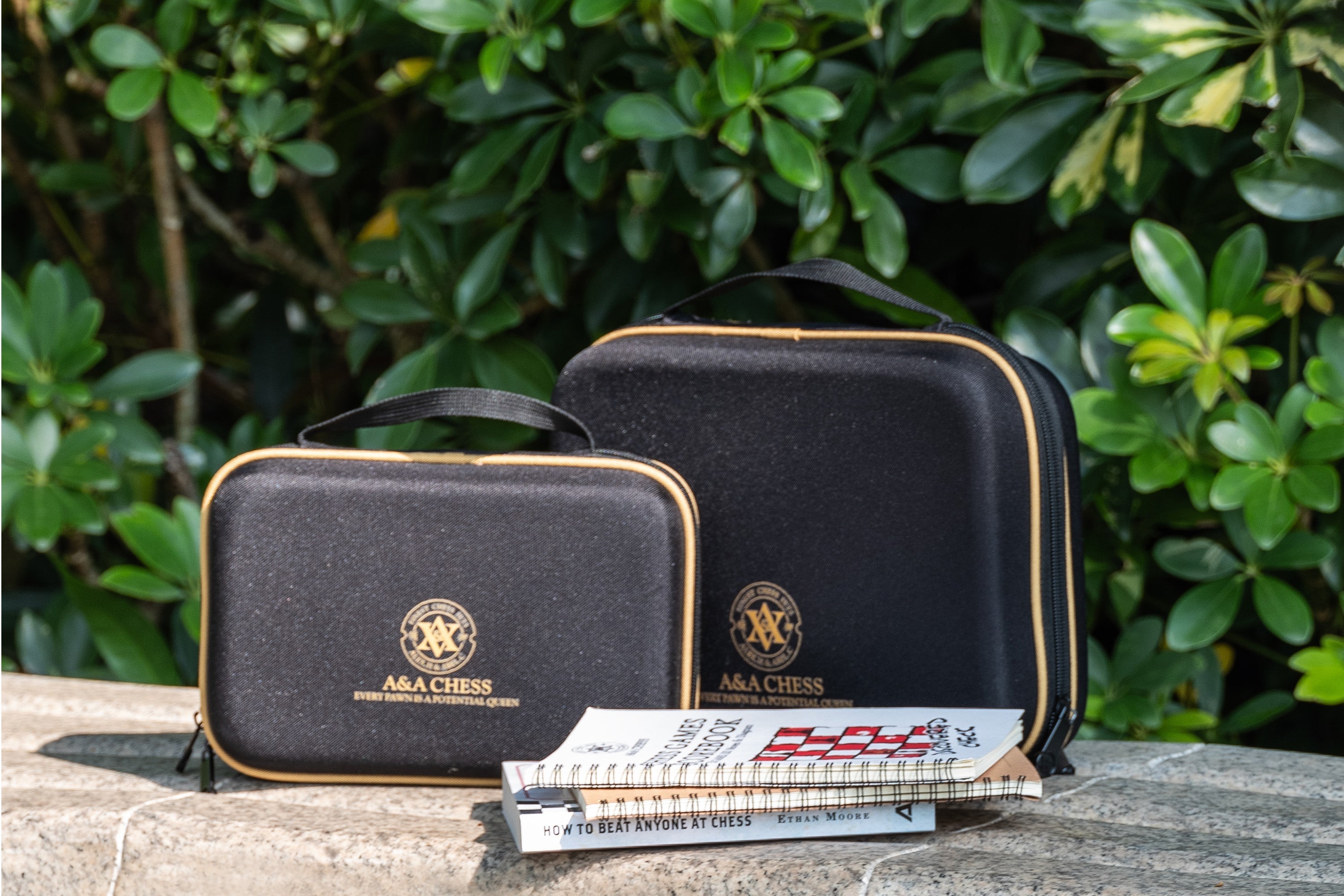
- A protective bag or case for transportation
You can explore A&A CHESS’s full range of tournament chess sets to compare complete sets, separate wooden boards, professional-size chess pieces, and travel-friendly equipment.
Unlike highly decorative chess sets, tournament equipment emphasizes clarity and consistency. Every piece should be instantly recognizable, and the dimensions should allow players to view the entire position without crowding.
This becomes especially important during rapid and blitz games. When players have only seconds to make a decision, unstable pieces, reflective squares, or an uneven board can create unnecessary distractions.
Choose the Right Chessboard Size

The relationship between the board and the pieces is more important than the overall board size printed on the product page.
A large board with small pieces feels empty, while oversized pieces placed on narrow squares make positions crowded and difficult to read. Proper proportions create a balanced playing area where every piece is easy to identify and move.
Current tournament equipment guidance generally uses squares measuring approximately 5 to 6 centimeters per side. A standard tournament-style king is about 9.5 centimeters, or 3.75 inches, tall.
These proportions provide enough space for comfortable movement while keeping the entire position easy to scan.
For a tournament-style home or club setup, look for board squares measuring approximately 2 to 2.25 inches. Then check the king’s base diameter. The base should fit comfortably inside one square without covering too much of the surrounding area.
Why Square Size Matters
Square size affects more than appearance.
When squares are too small, players may accidentally touch nearby pieces during fast games. Crowded pieces can also make complicated middlegame positions harder to understand.
When squares are excessively large, players must move their hands farther across the board, and the overall position can become less visually connected.
A correctly proportioned board improves:
- Piece recognition
- Board visualization
- Fast movement during blitz games
- Comfort during longer matches
- Accuracy when recording and replaying positions
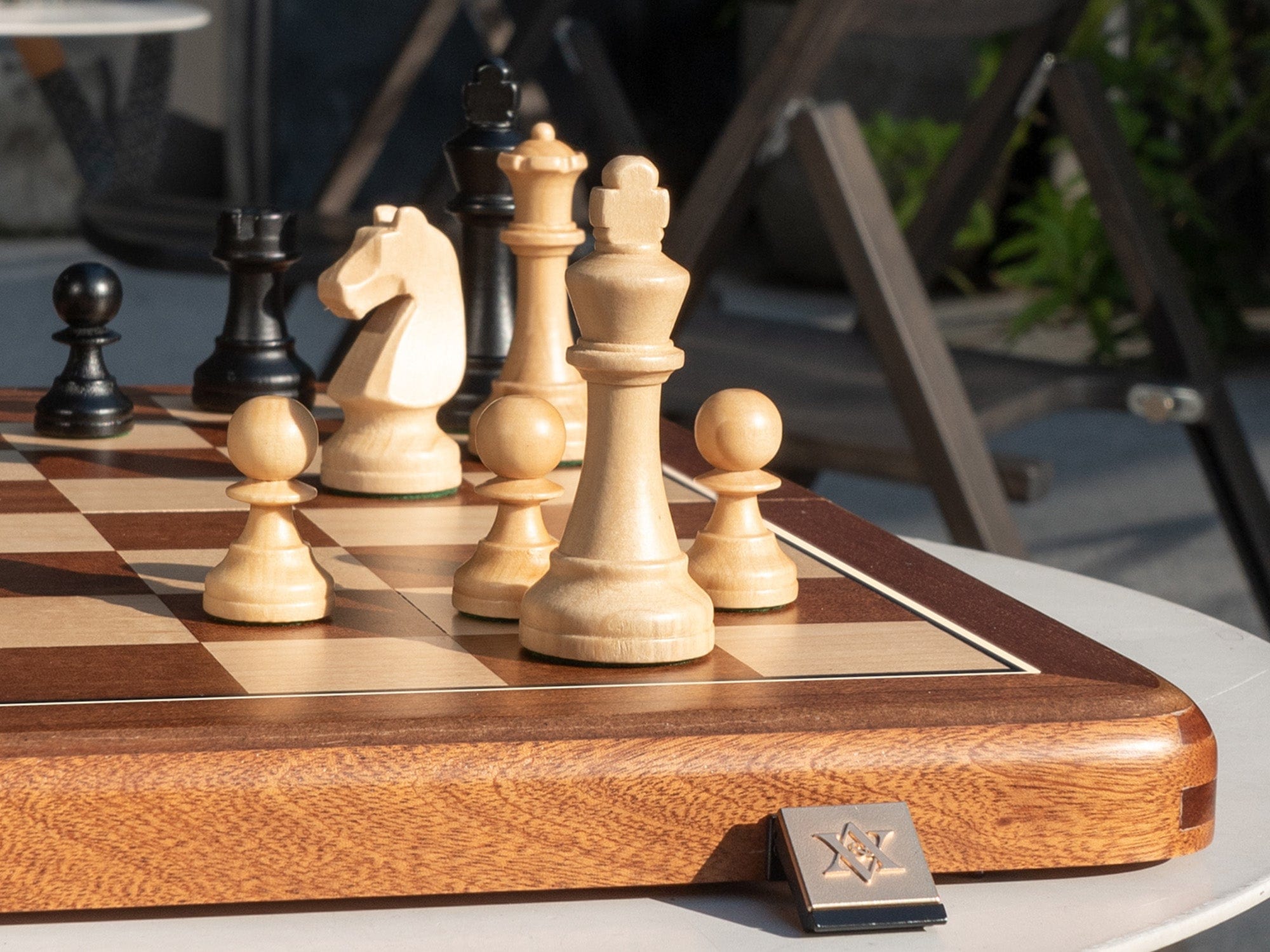
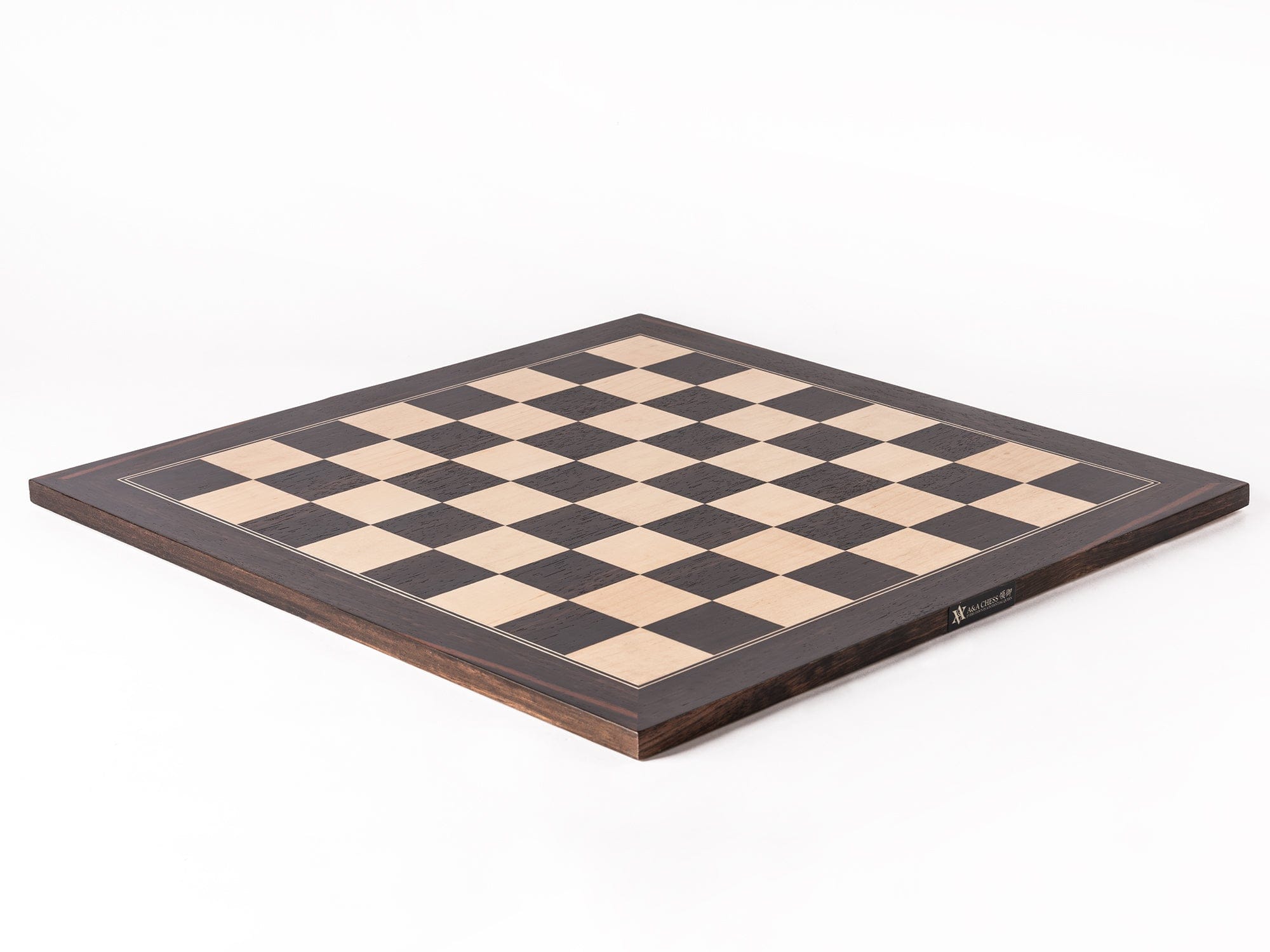
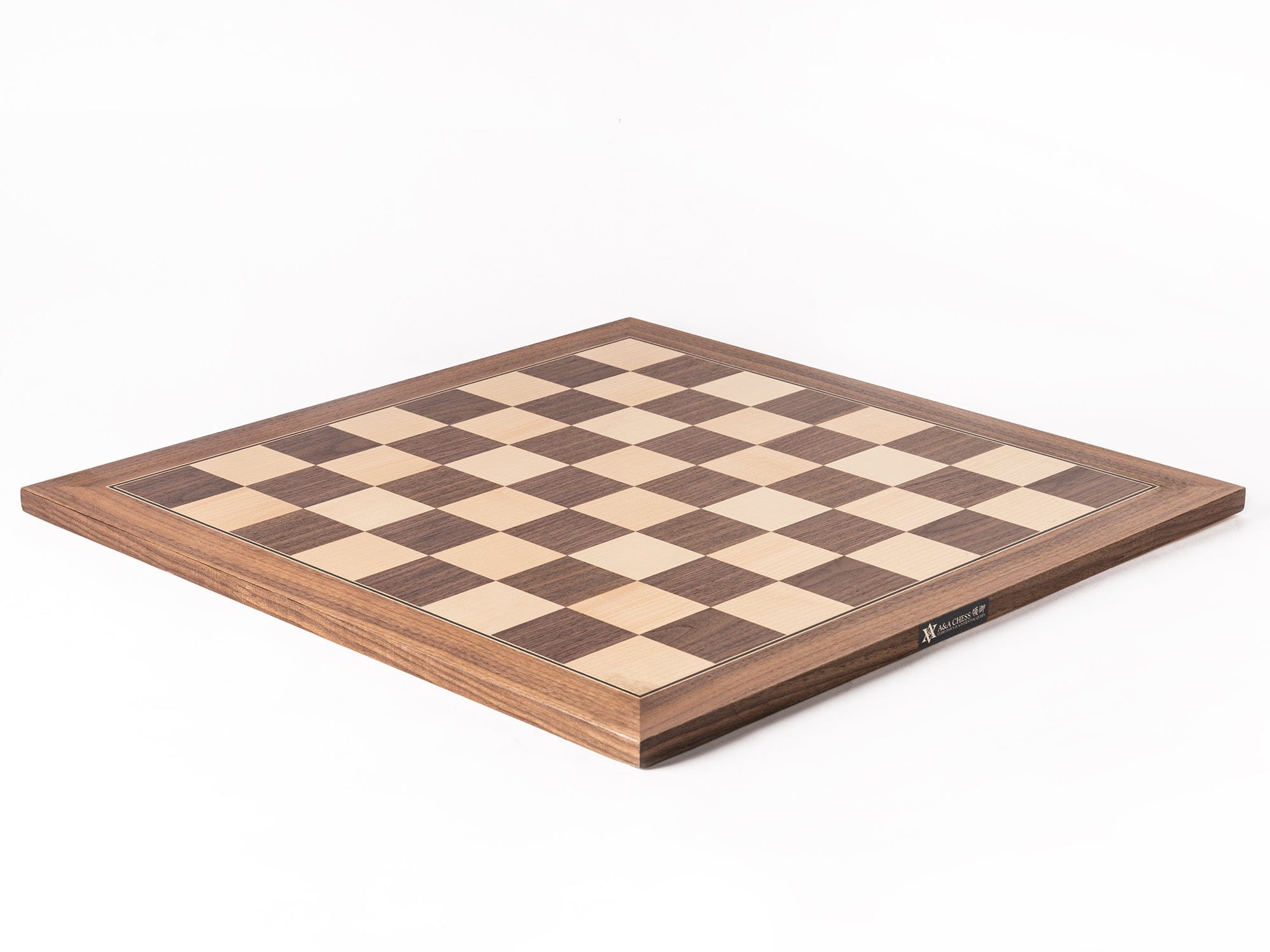
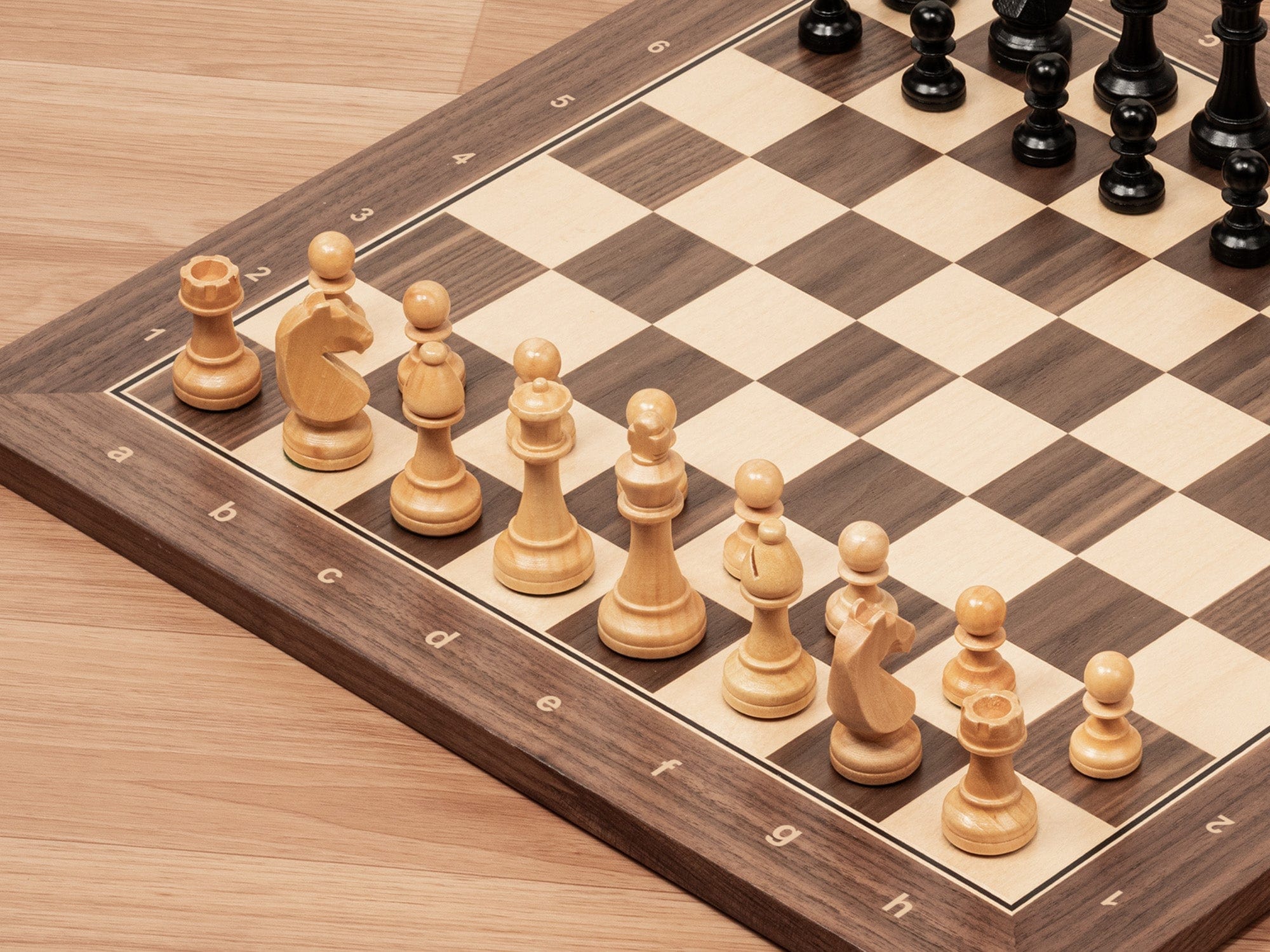
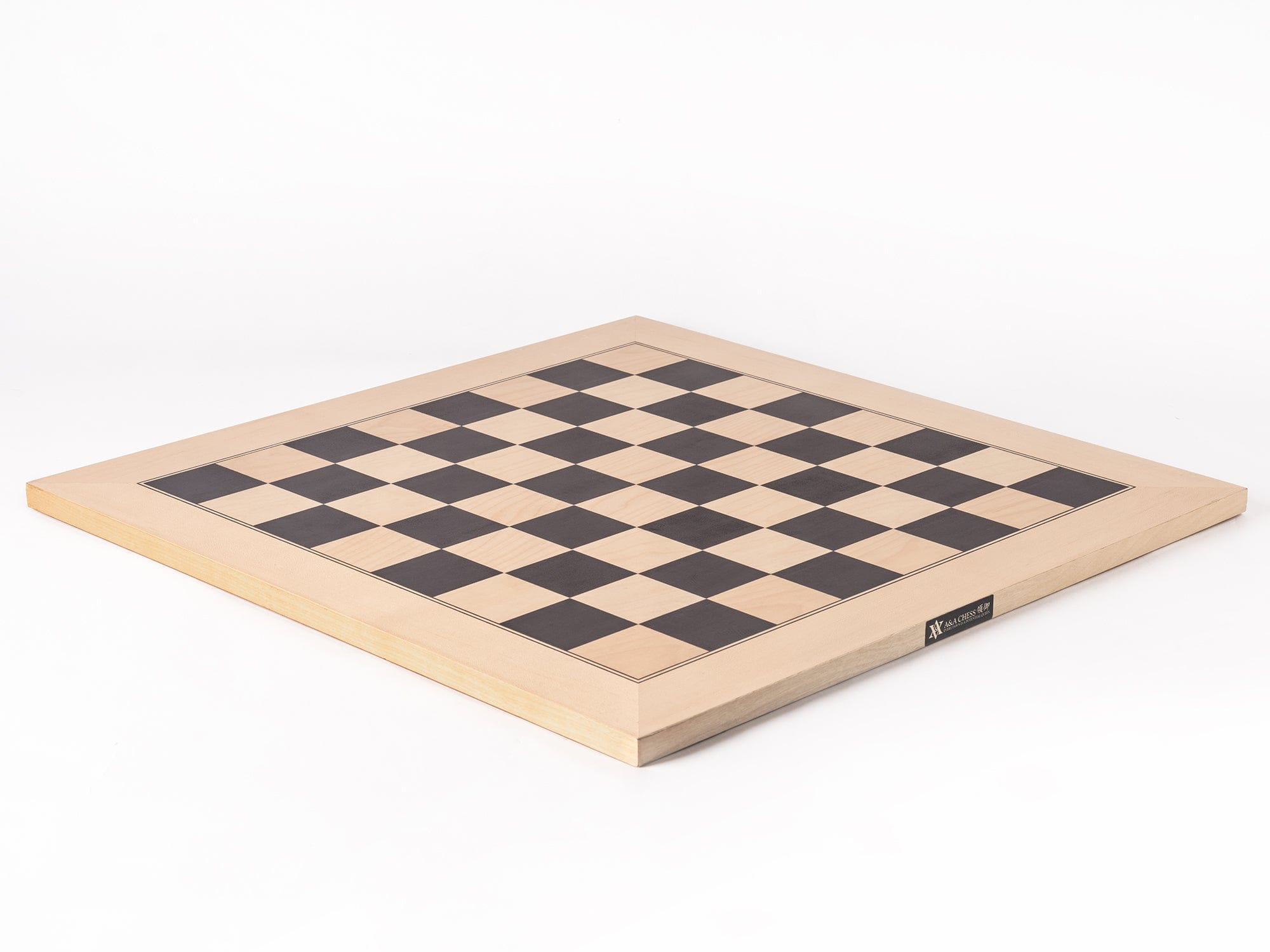
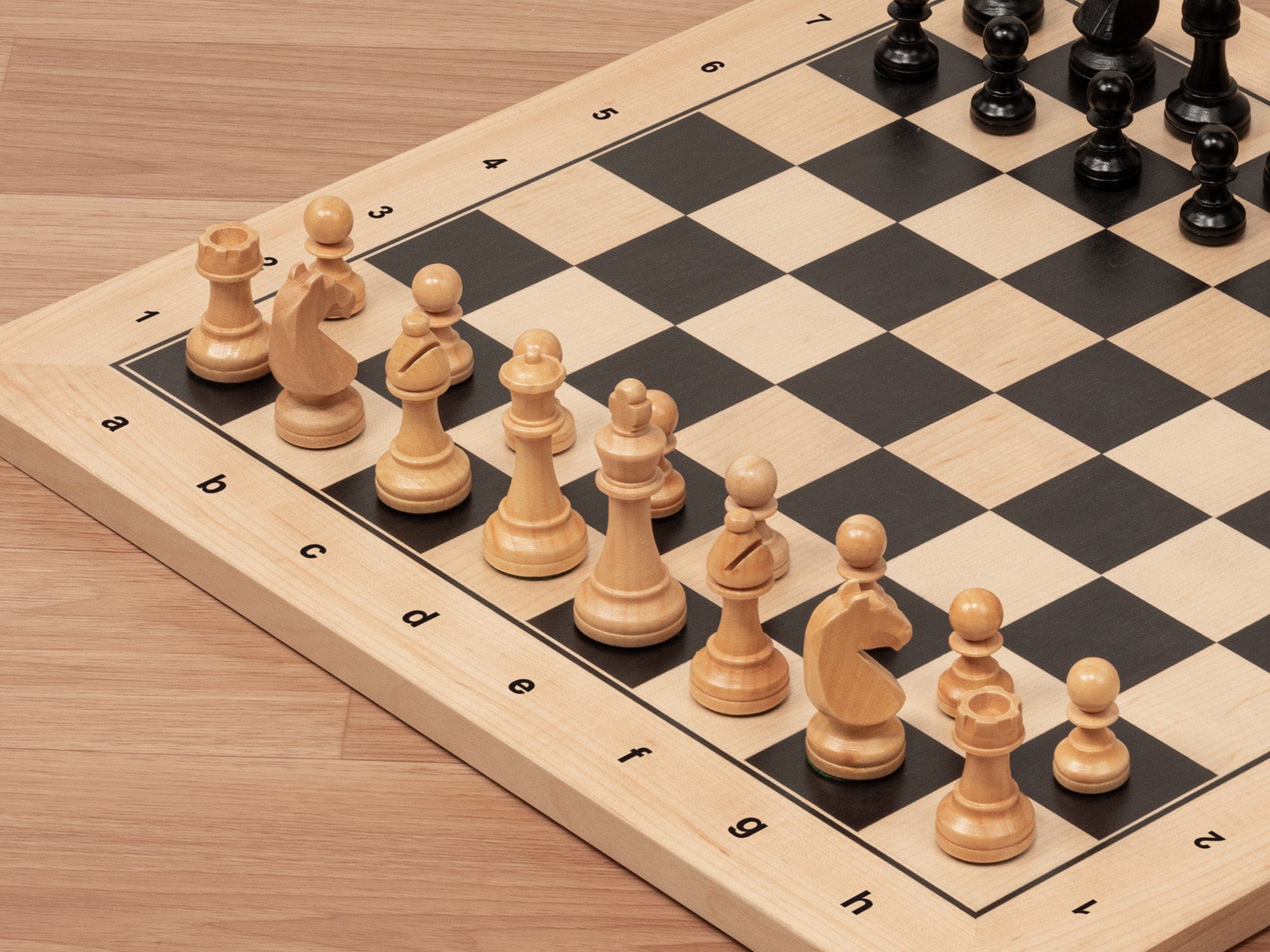
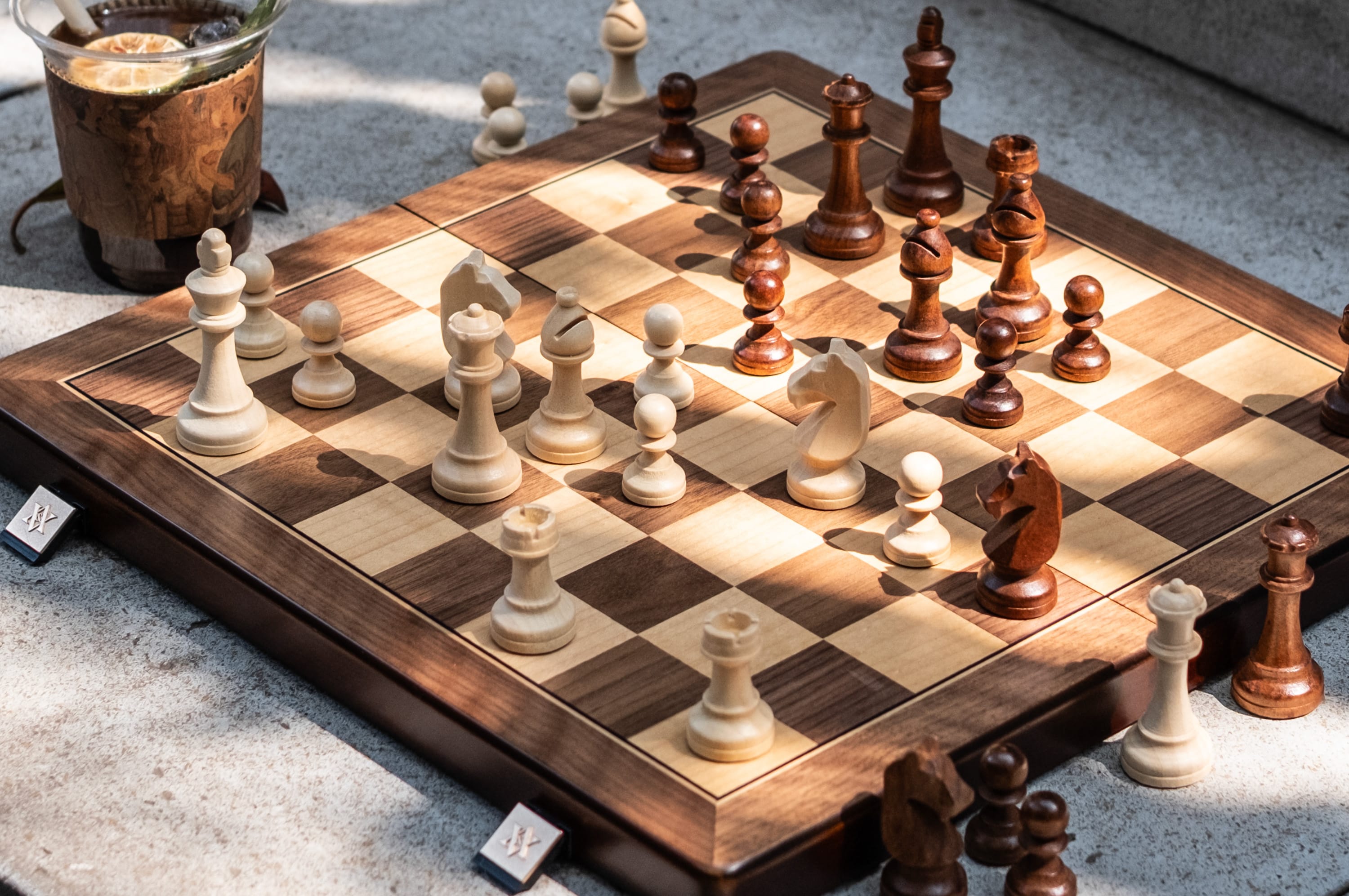
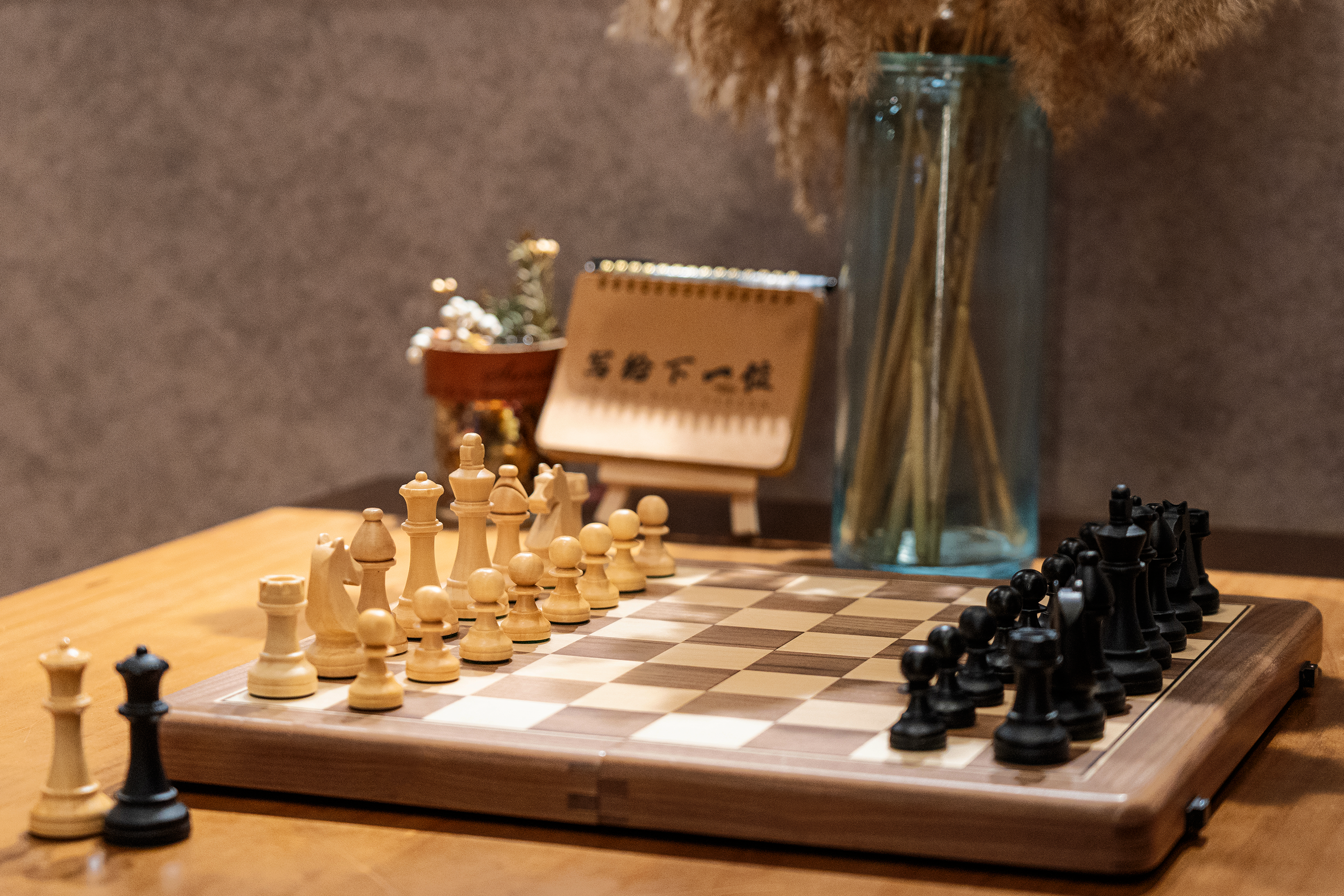
A separate board is a good choice for players who want to select their preferred pieces. The walnut and maple inlaid wooden chess board is available in multiple sizes.
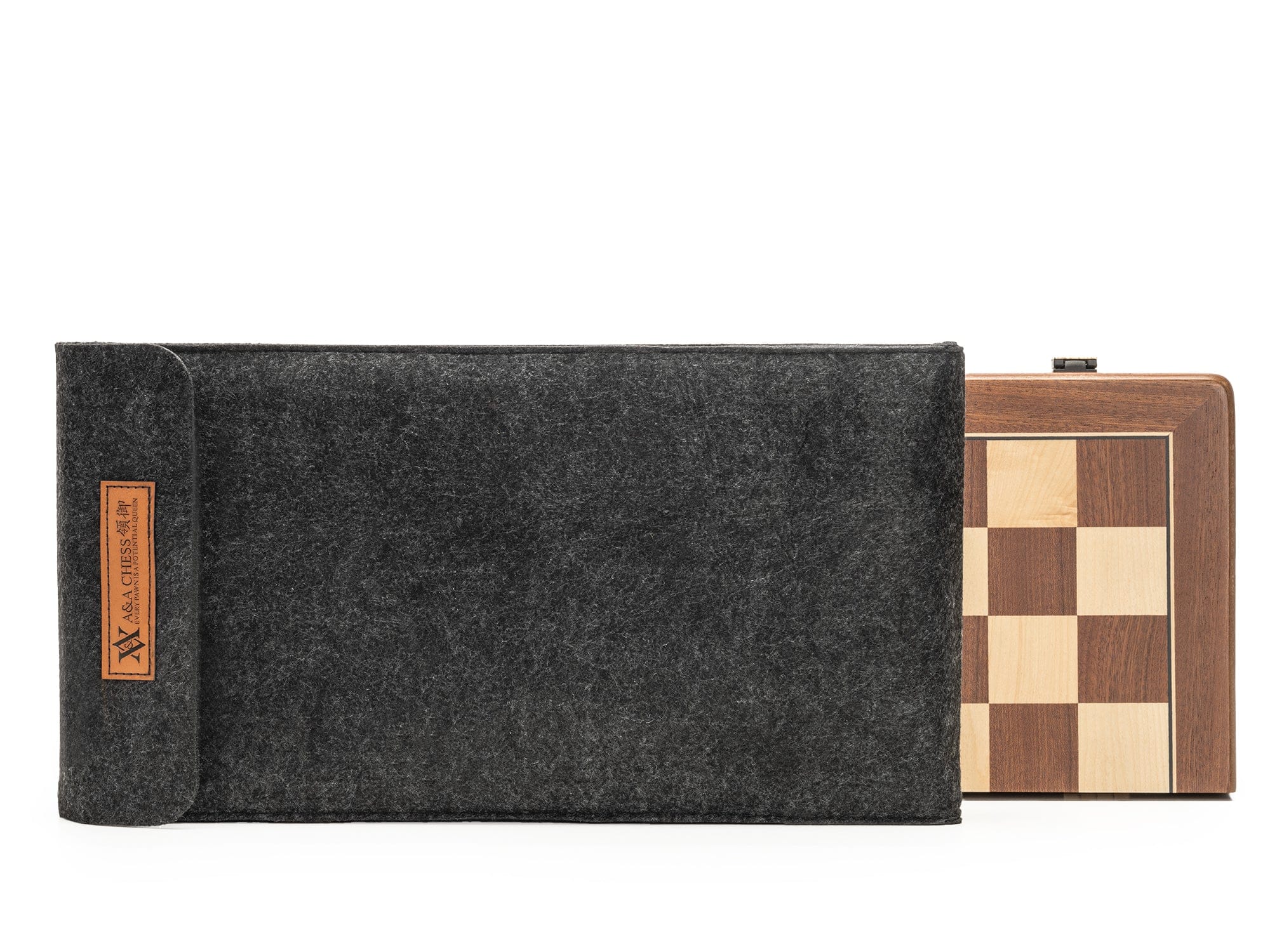
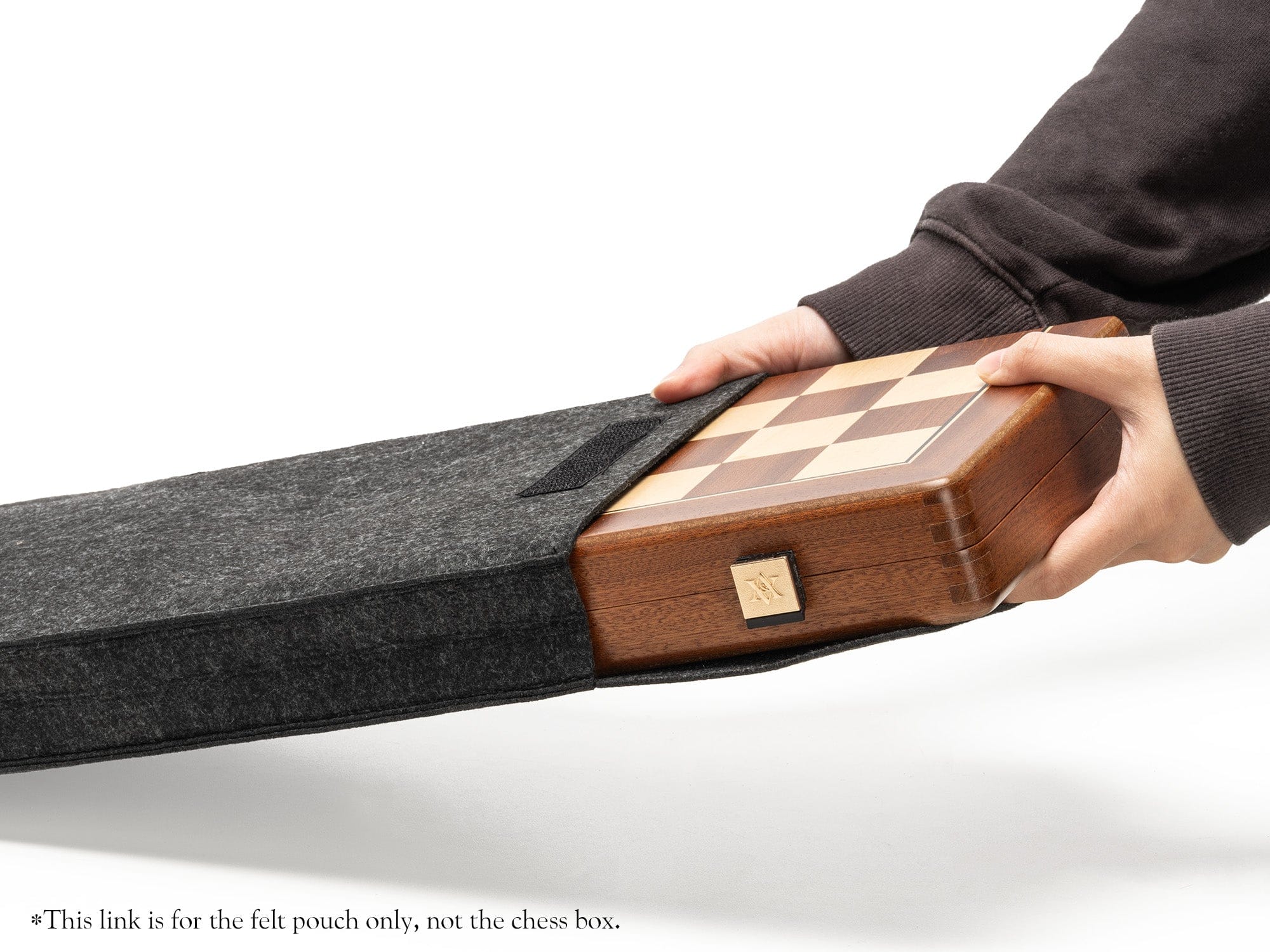
Its larger options include 5.2-centimeter and 5.7-centimeter squares, which pair well with full-size Staunton chess pieces. Felt pads under the board help reduce movement and protect the table, while an included padded storage bag supports club and tournament transportation.
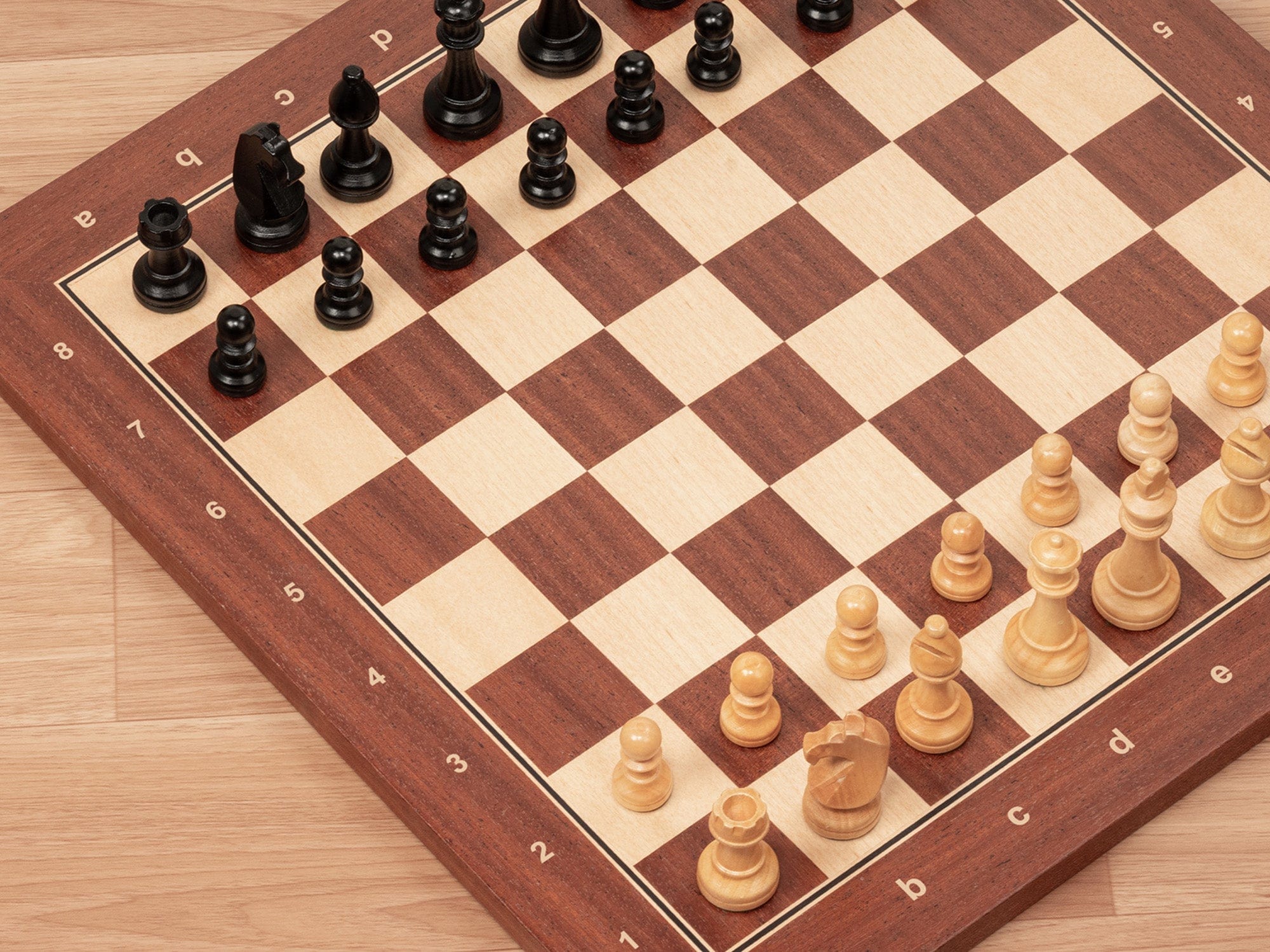
Coordinates or No Coordinates?
Coordinates are another practical consideration.
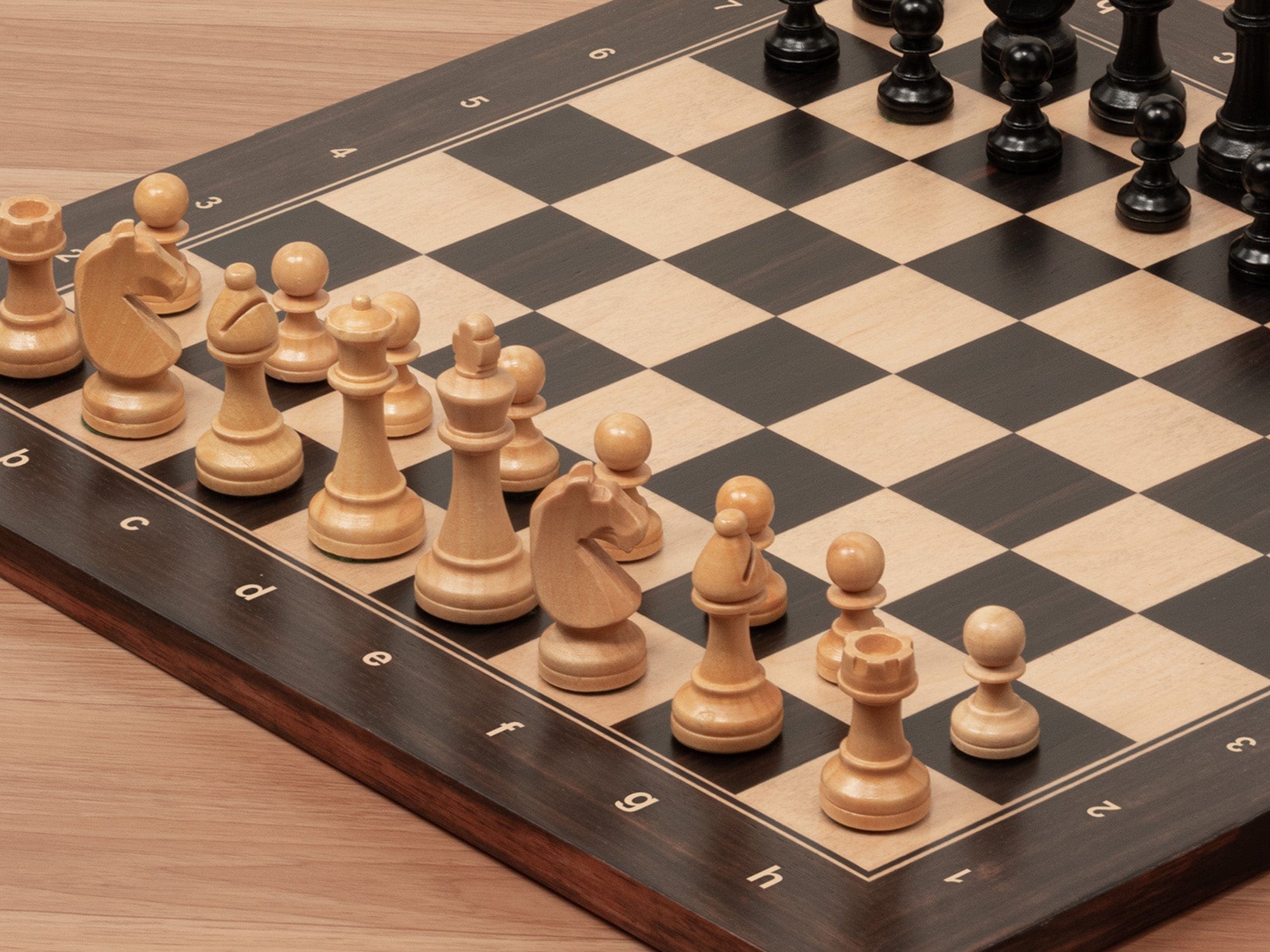
Boards with letters and numbers are useful for:
- Students learning algebraic chess notation
- Coaches explaining positions
- Players recording tournament games
- Parents teaching children
- Chess clubs conducting group lessons
Boards without coordinates provide a cleaner visual appearance and may be preferred for display, photography, home decoration, or advanced practice.
For most beginners and club players, a board with coordinates offers greater practical value.
Select Stable Staunton Chess Pieces
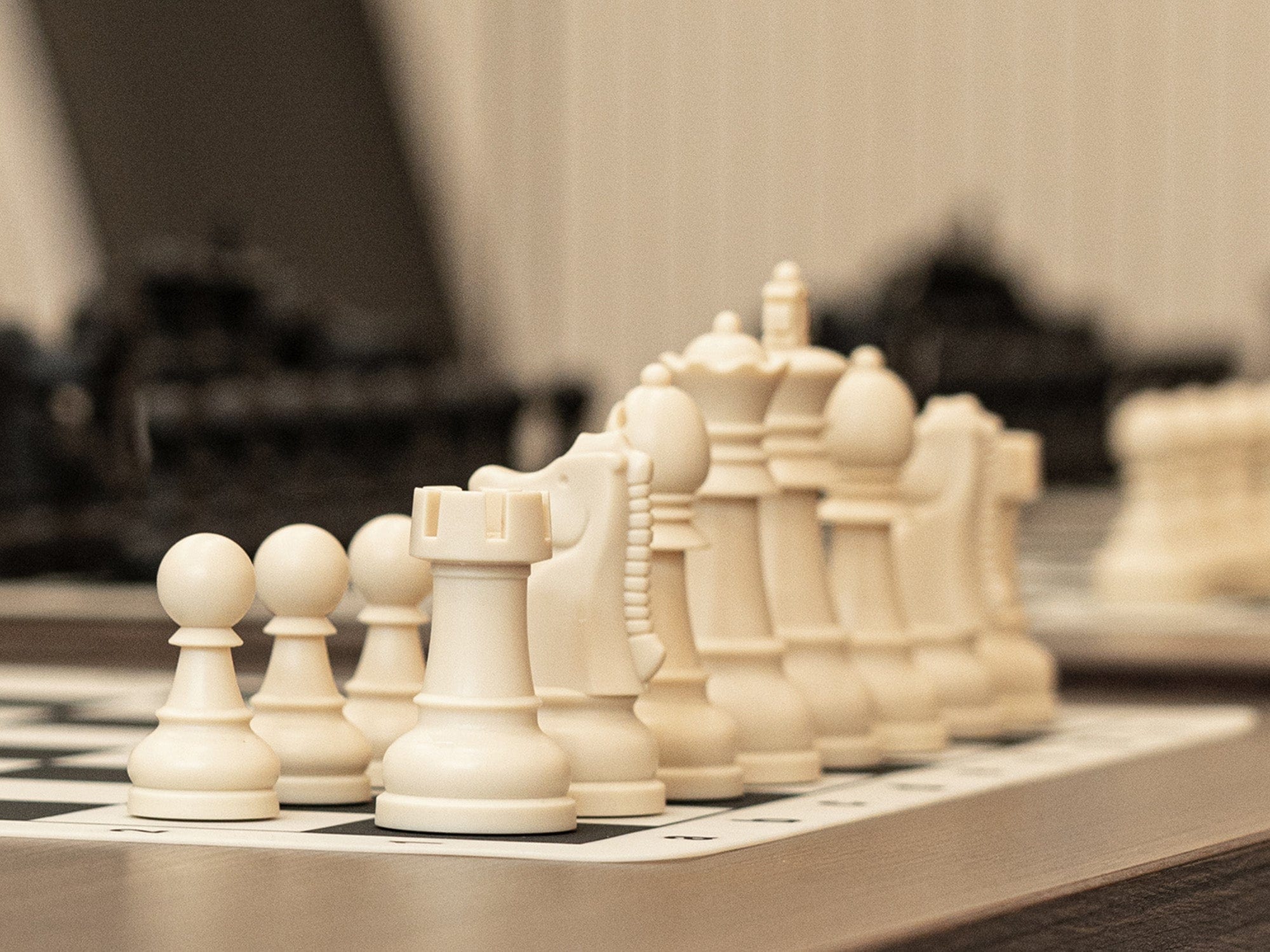
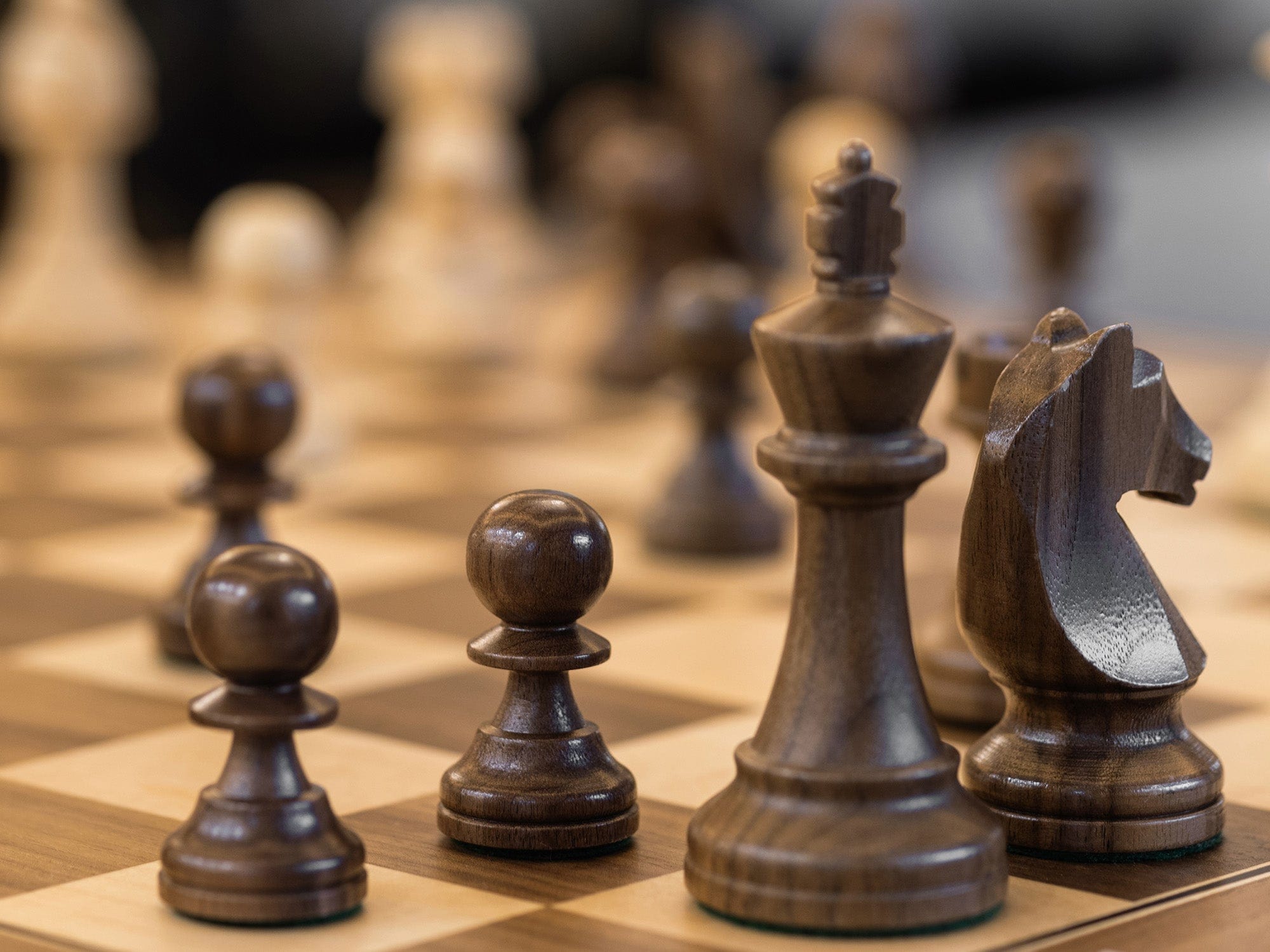
The Staunton design remains the international standard because every piece is immediately recognizable.
In a competitive game, players should never need to pause to identify a bishop, queen, rook, or king. Clear silhouettes reduce visual confusion and make the complete position easier to evaluate.
A tournament-style piece set should have:
- A clearly distinguishable king and queen
- Bishops with recognizable tops
- Knights with consistent shapes
- Stable rooks with visible castle-style tops
- Pawns that are proportional to the major pieces
- Strong contrast between the two colors
Why Piece Weight Matters
Weight is especially important during rapid and blitz games.
Lightweight pieces can slide, rotate, or fall when moved quickly. Weighted pieces provide a more controlled feeling and remain stable when the table is touched.
A weighted base can also make physical chess feel more deliberate. Each move has a clear beginning and ending, which can help players develop better over-the-board habits.
Felted bases are equally useful. They allow pieces to move quietly across the board and help protect wooden surfaces from scratches.
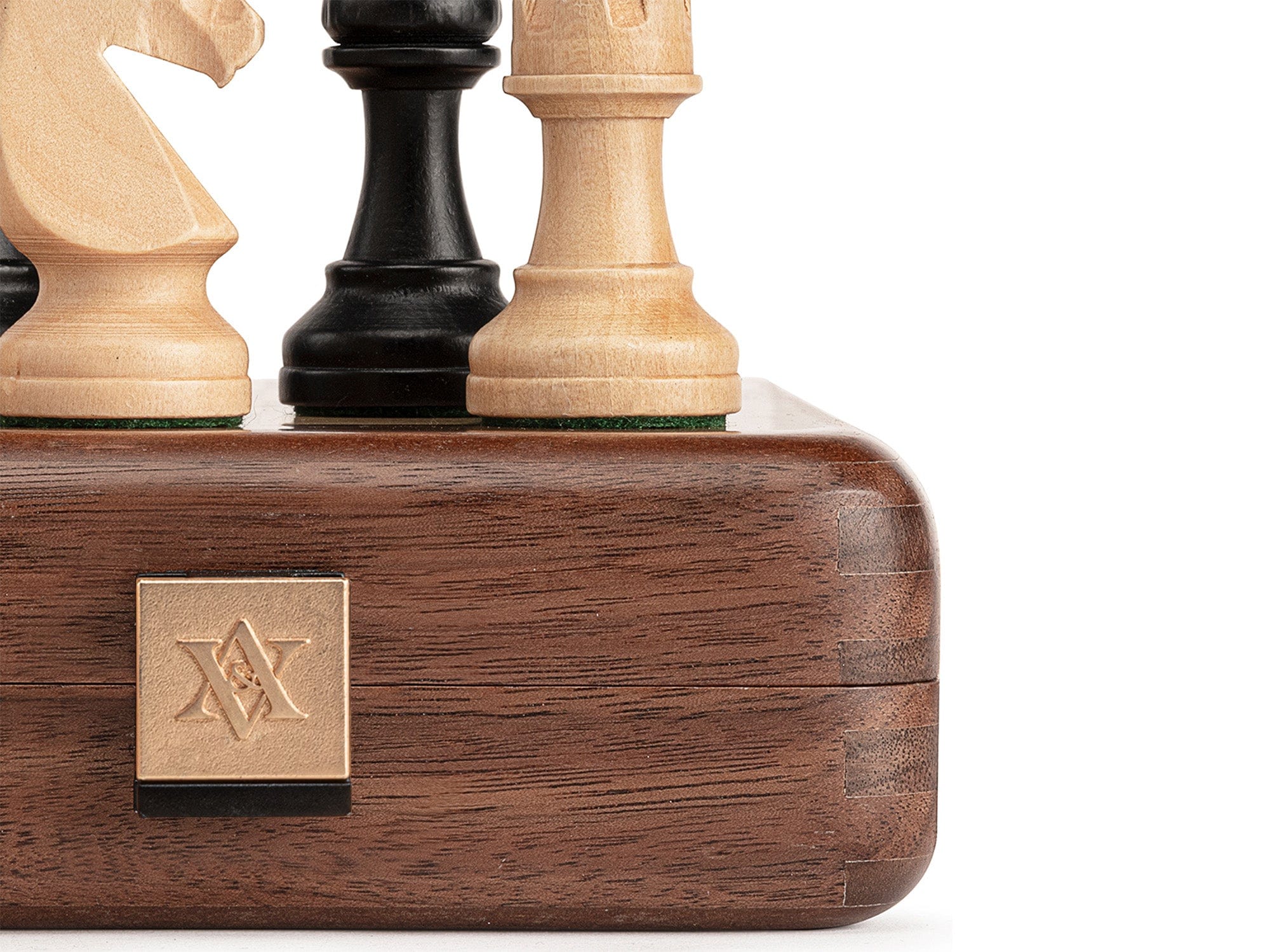
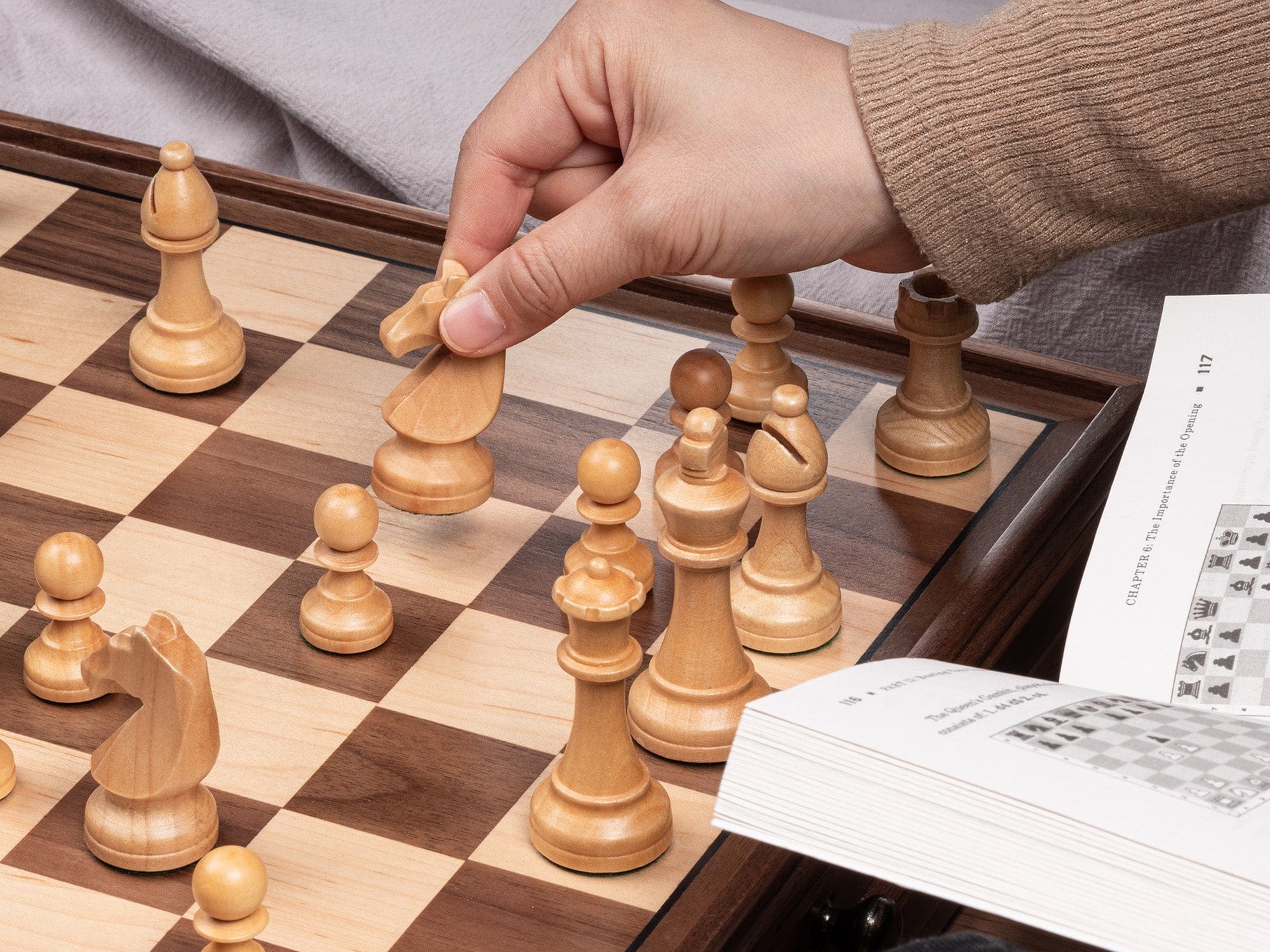
The walnut wood Staunton chess pieces feature a 3.75-inch king, solid walnut construction, felt-padded bases, and protective velvet bags.
Their tournament-style proportions make them suitable for pairing with a board that has approximately 2- to 2.25-inch squares.
When comparing chess pieces, check the following details:
- King height
- King base diameter
- Total set weight
- Individual piece stability
- Extra queens for promotion
- Felt or soft base pads
- Contrast between light and dark pieces
- Storage bags or fitted compartments
- Availability of replacement pieces
A visually impressive set is useful only when it also performs well. For regular training and competition, stability and readability should come before highly decorative shapes.
Add a Digital Chess Clock
A chess clock changes the nature of practice.
Without time pressure, players may spend too long on familiar decisions and fail to build practical calculation habits. A digital chess clock allows you to train opening speed, middlegame time management, endgame technique, and decision-making under pressure.
The most popular modern formats include classical chess, rapid chess, and blitz chess.
Many competitions also use increment, where time is added after each move, or delay, where the main clock does not begin counting down immediately.
A useful tournament clock should support these formats without requiring complicated programming before every game.
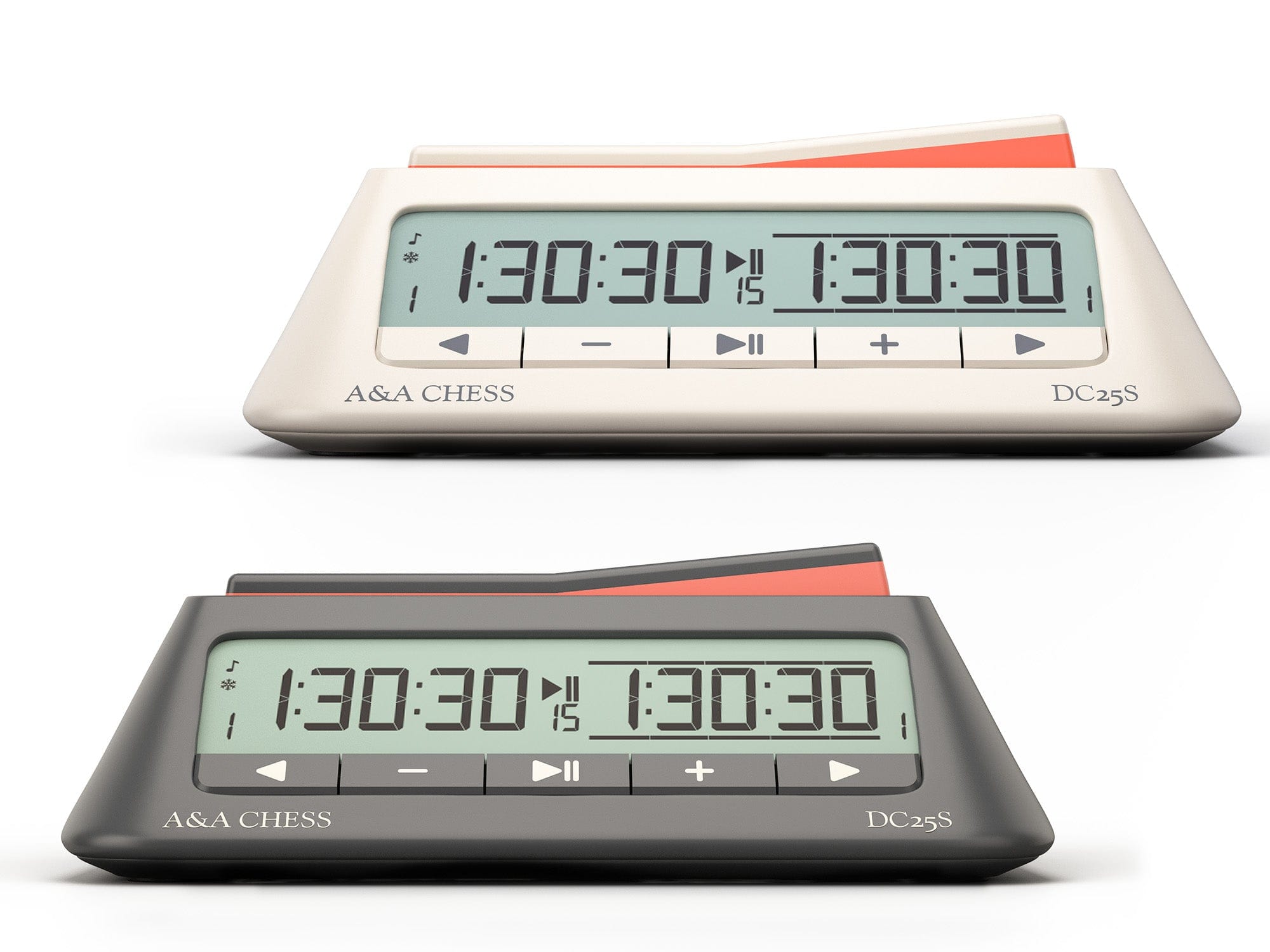
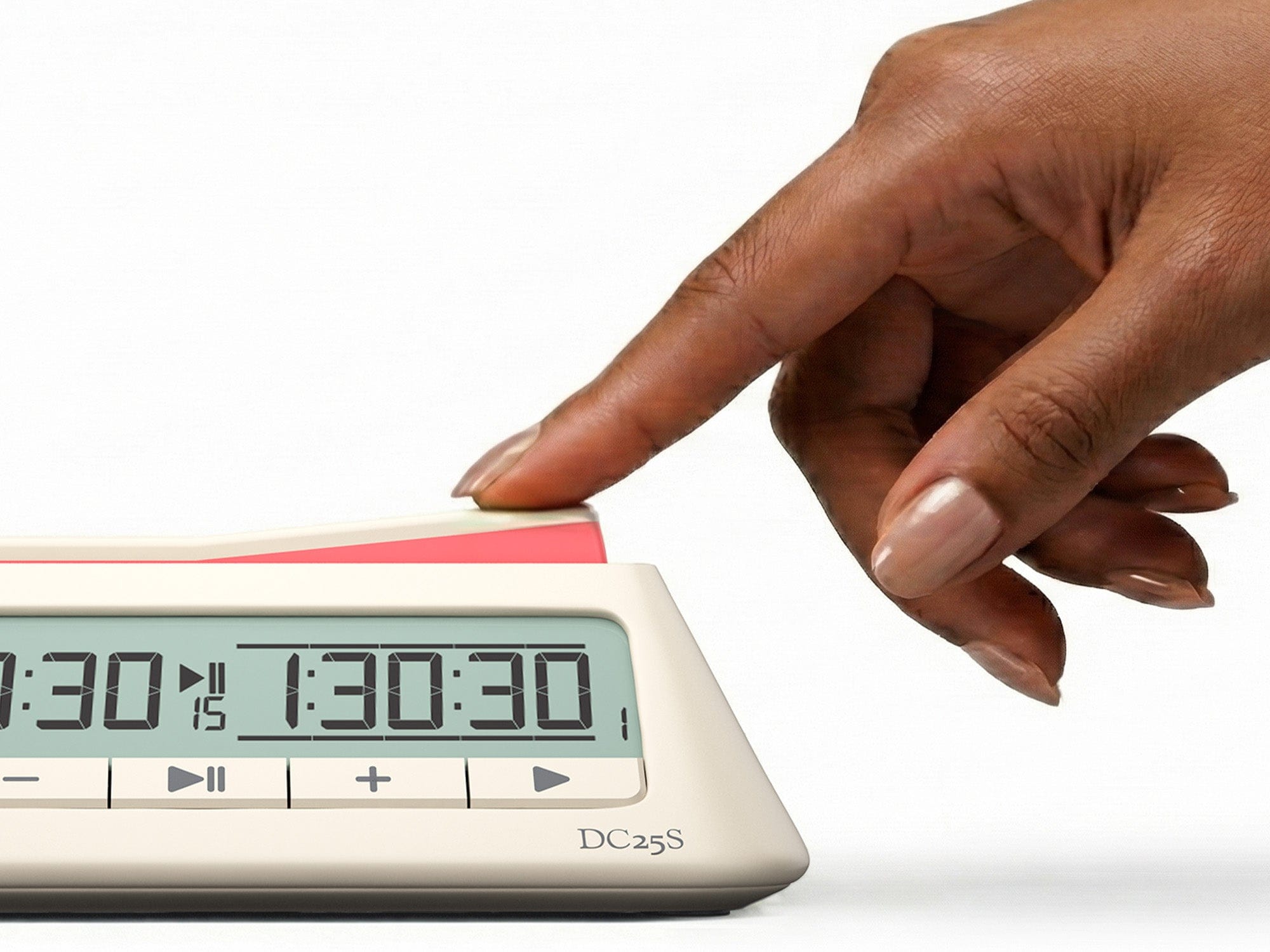
The A&A Professional Digital Chess Clock includes 36 preset timing modes covering Fischer increment, delay, blitz, rapid, and traditional formats.
Its compact body is designed for club sessions and tournament travel, and it operates with two AAA batteries.
Popular Chess Time Controls
Common practice formats include:
15+10 Rapid
Each player begins with 15 minutes and receives 10 additional seconds after every move. This format provides enough time for calculation while still requiring practical time management.
10+5 Rapid
Each player starts with 10 minutes and receives a five-second increment. It is useful for club practice and online-to-board training.
5+3 Blitz
Each player has five minutes with a three-second increment. This format rewards tactical awareness, pattern recognition, and quick decision-making.
3+2 Blitz
Each player receives three minutes plus two seconds per move. It is fast but still allows technically accurate play when players manage their time well.
No-Increment Blitz
Formats such as five minutes with no increment create intense time pressure. They can be entertaining, but they should not replace slower training games.
How to Use a Chess Clock for Training
Do not use the clock only for speed chess. Try structured exercises such as:
- Play a 15+10 rapid game and record every move.
- Replay the same opening at 5+3 to test pattern recognition.
- Practice a technical endgame with limited time.
- Review where most of your time was spent.
- Identify moves that were played too quickly.
- Repeat the position and compare the quality of your decisions.
This approach turns the clock into a training tool rather than a simple countdown device.
Wooden vs. Silicone Tournament Chess Sets
Both wooden and silicone chess sets can be suitable for tournament practice, but they serve different needs.
Wooden Chess Sets
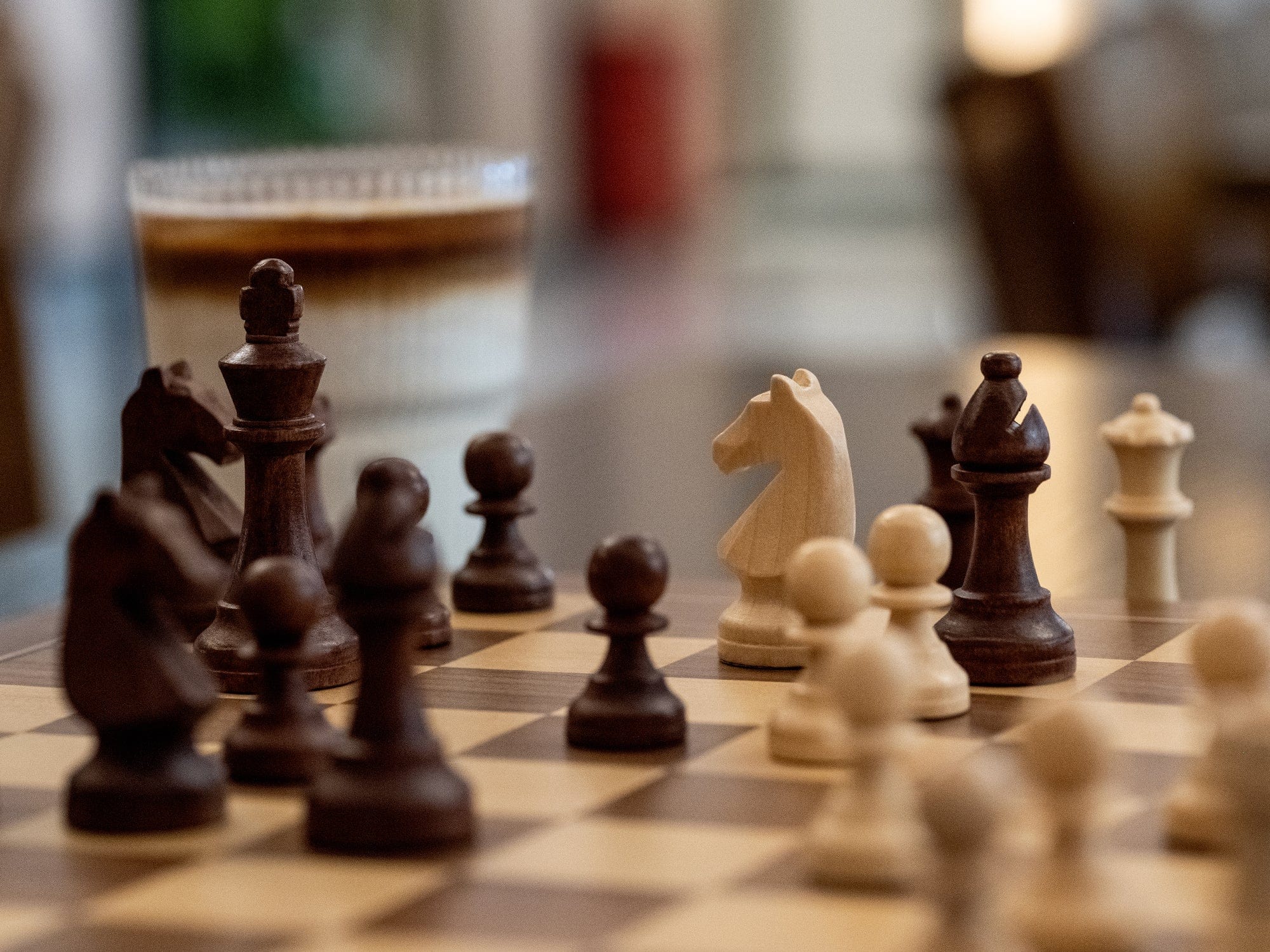
A wooden chess set offers a traditional appearance, a solid playing surface, and a premium tactile experience.
It is ideal for:
- Home study
- Chess rooms
- Offices
- Libraries
- Permanent club spaces
- Premium gifts
- Decorative display
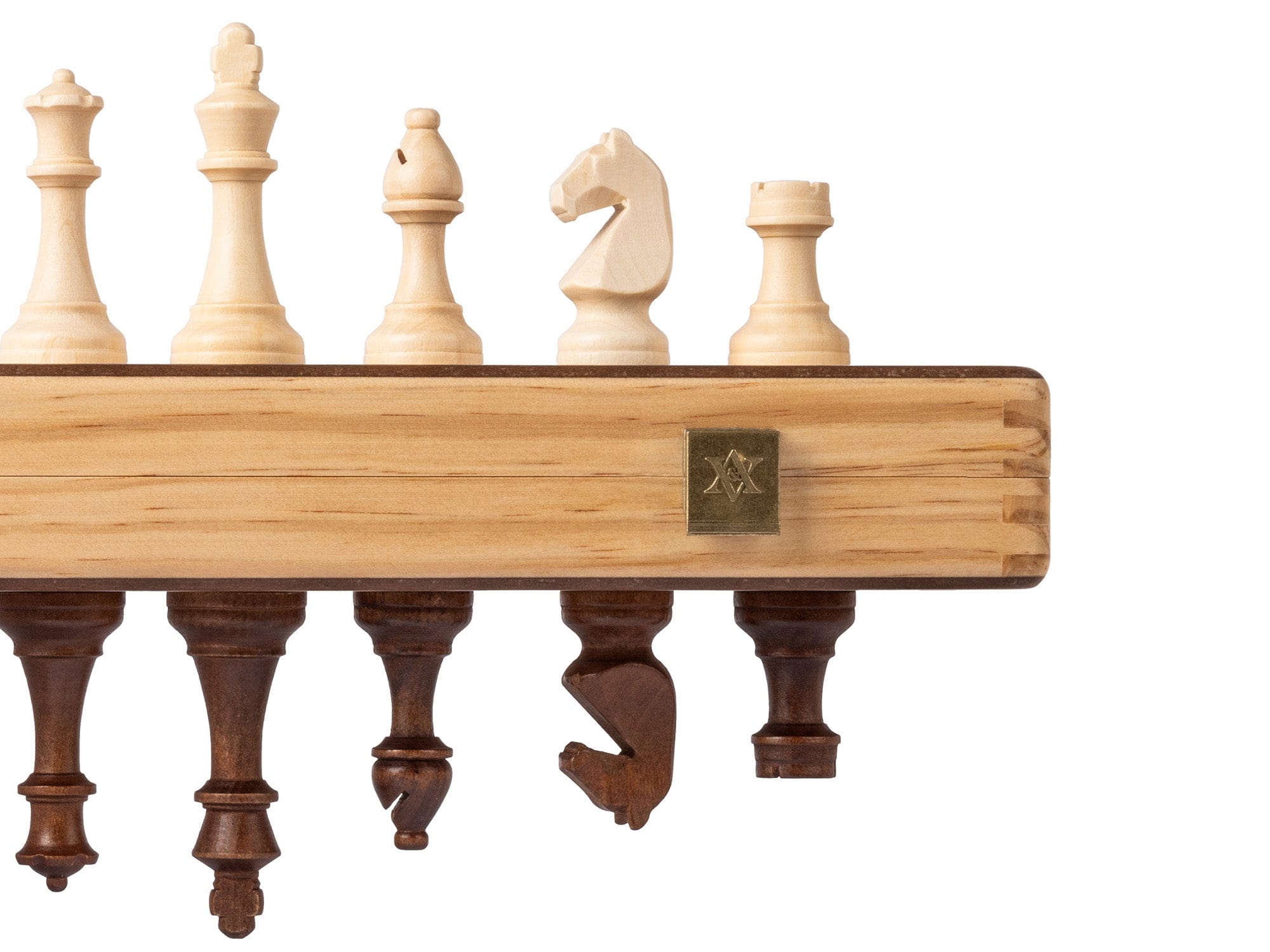
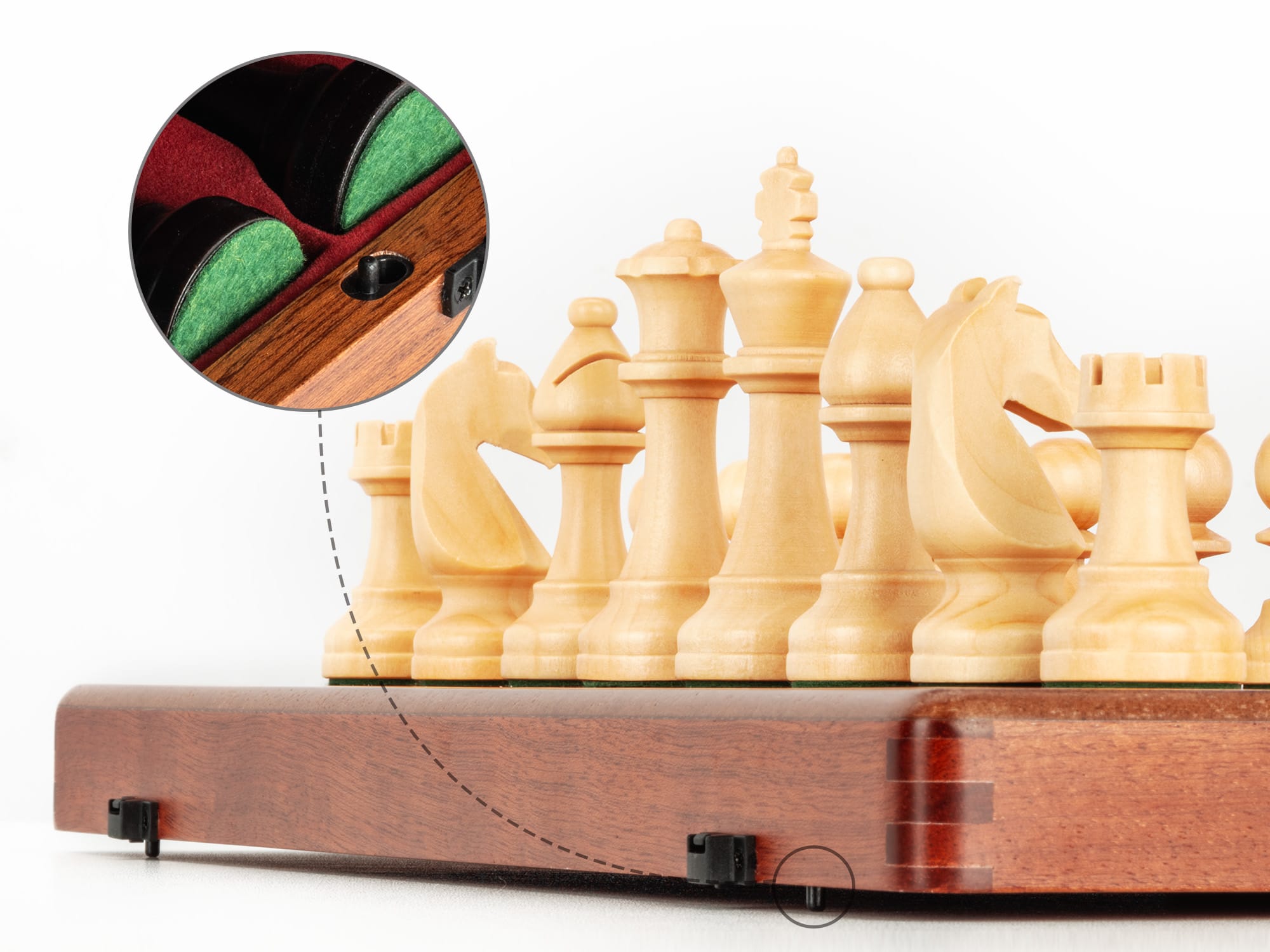
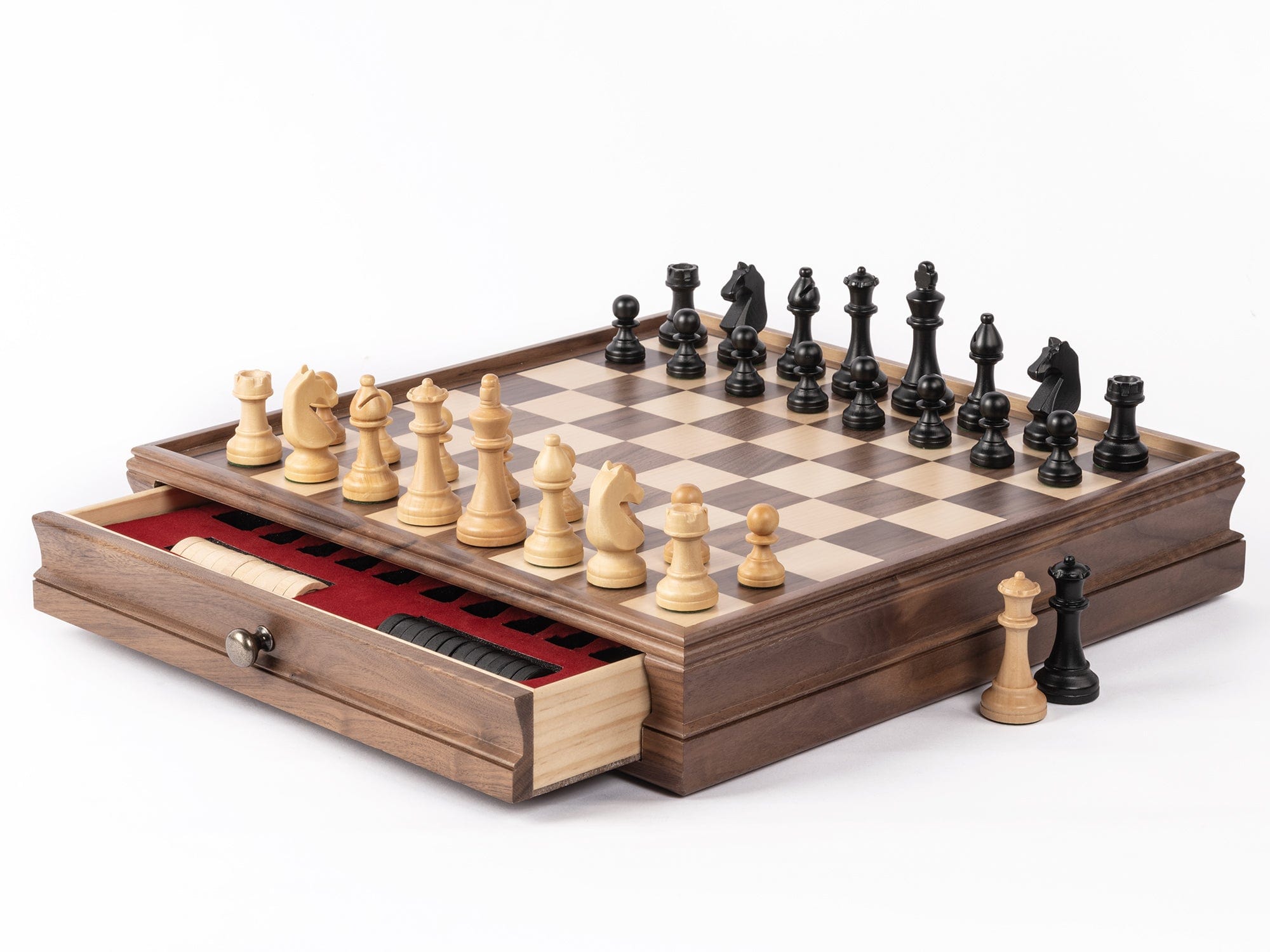
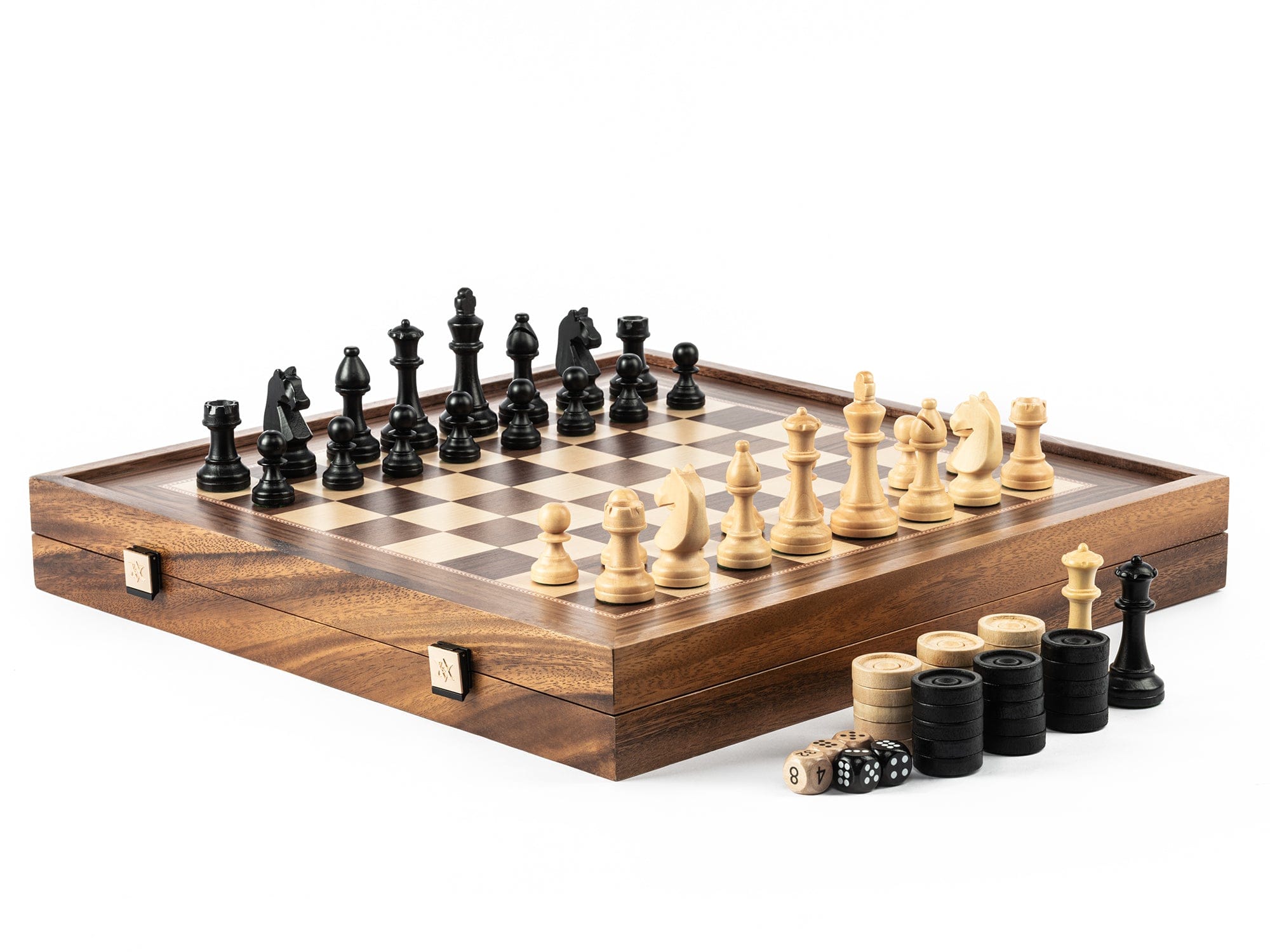
A well-designed folding wooden board also provides internal piece storage, making it easier to keep the complete set organized.
Wood requires slightly more care than silicone. It should be kept away from excessive moisture, direct heat, and prolonged sunlight.
Players who travel frequently should use a padded storage bag or choose a folding model with protected internal compartments.
Silicone Chess Sets
Silicone chessboards are flexible, washable, water-resistant, and easy to roll for transportation.
They work well for:
- Schools
- Chess clubs
- Outdoor games
- Camps
- Group lessons
- Frequent tournament travel
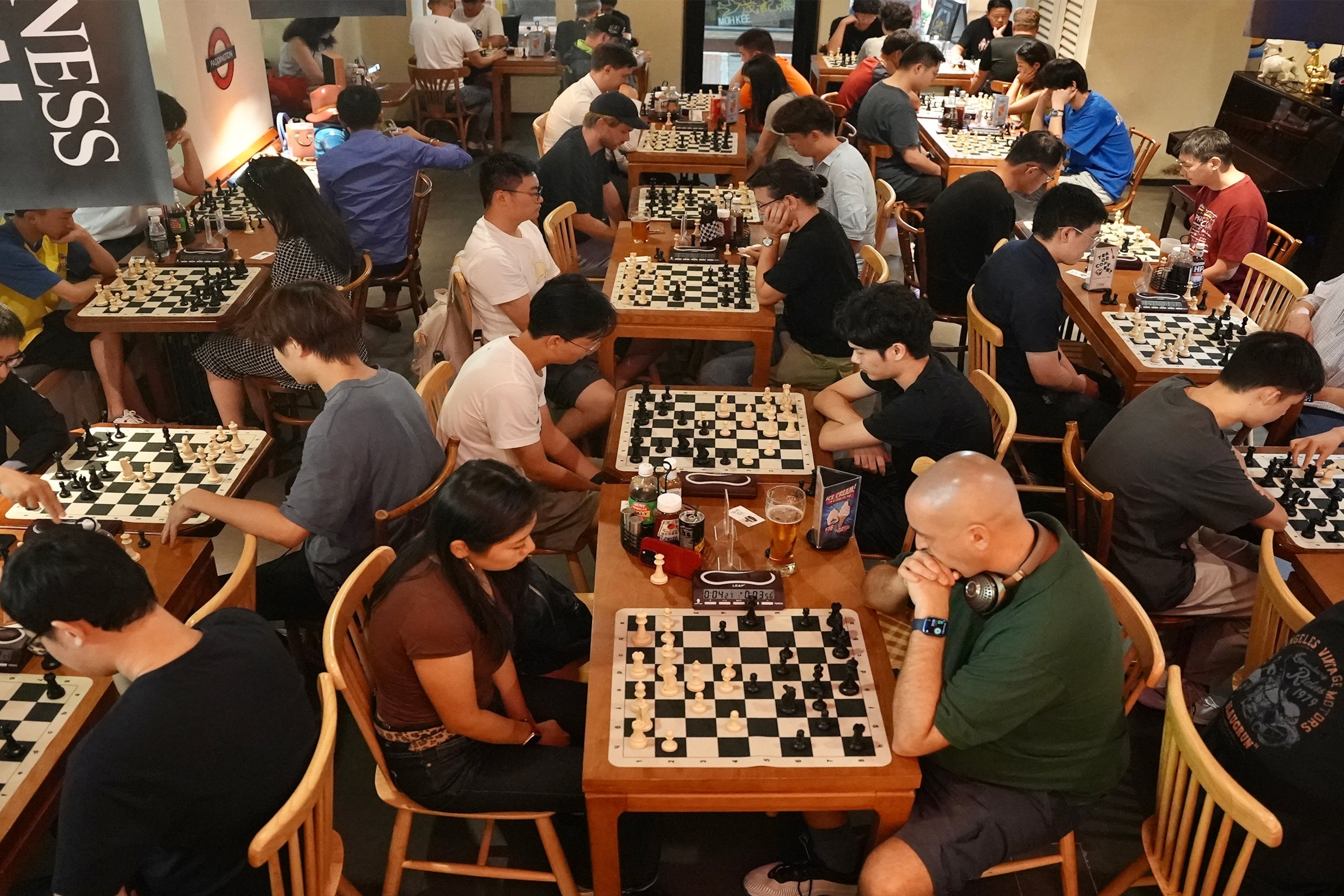
- Rapid and blitz events
A quality silicone board should lie flat, resist permanent creasing, and use a matte surface to reduce glare.
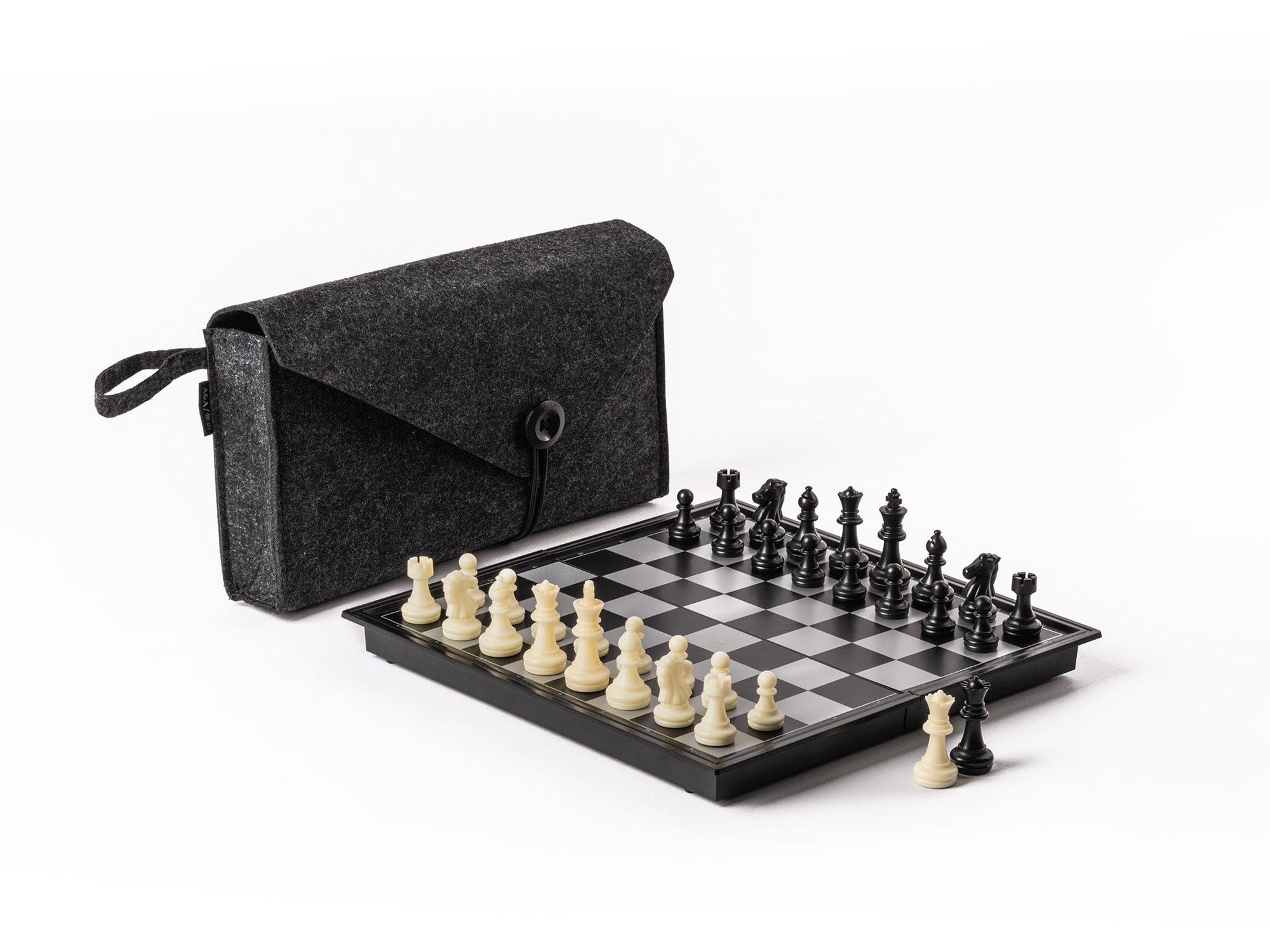
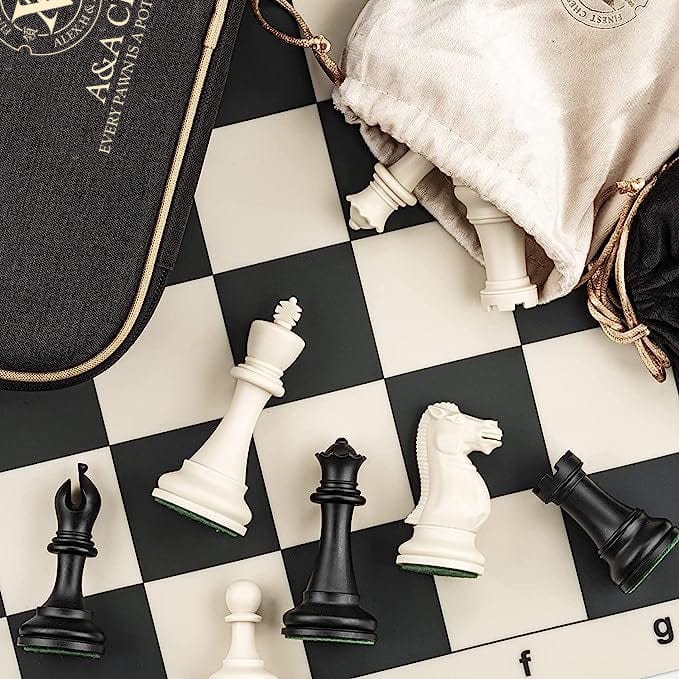
The 20-inch silicone and plastic travel chess set combines a 20-inch non-slip board with 2.24-inch squares and a 3.75-inch king.
It includes quadruple-weighted Staunton-style pieces, two extra queens, velvet piece bags, and a carrying case. These dimensions make it especially suitable for players seeking a portable, regulation-style practice setup.
Which Material Should You Choose?
Choose wood when you value presentation, long-term home use, and a refined playing feel.
Choose silicone when portability, easy cleaning, and frequent transportation are the main priorities.
Many serious chess players eventually own both:
- A wooden chess set for home study and display
- A roll-up silicone chess set for club nights and tournaments
Players still developing basic skills may compare beginner chess sets, while improving club players can browse intermediate chess sets before moving to a full tournament configuration.
Recommended A&A CHESS Tournament Setups
The ideal setup depends on where you play, how often you travel, and whether you prefer an all-in-one set or separate components.
1. Best Portable Tournament Setup
Start with the 20-inch silicone travel set.
Its full-size board, weighted pieces, extra queens, velvet bags, and carrying case provide the essential equipment for club play, outdoor practice, and tournament travel.
Add a professional digital chess clock and a scorebook from the chess accessories collection to create a complete portable tournament kit.
This setup is best for:
- Club players who travel every week
- Students attending scholastic events
- Coaches carrying equipment between classes
- Rapid and blitz players
- Outdoor chess groups
- Casual tournament organizers
The flexible board can be rolled and transported more easily than a solid wooden board. The carrying case also helps keep all components together between games.
2. Best Premium Folding Wooden Setup
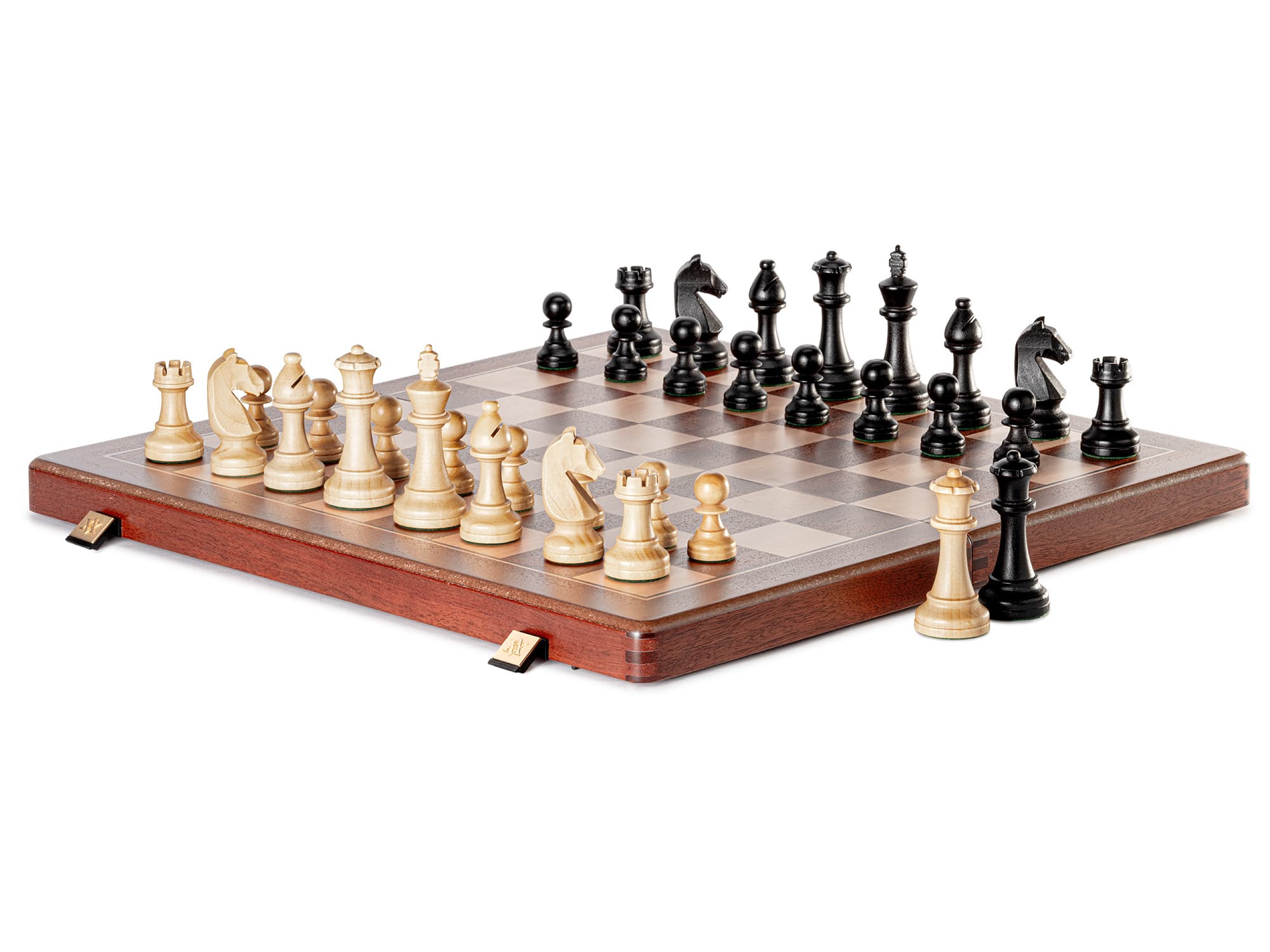
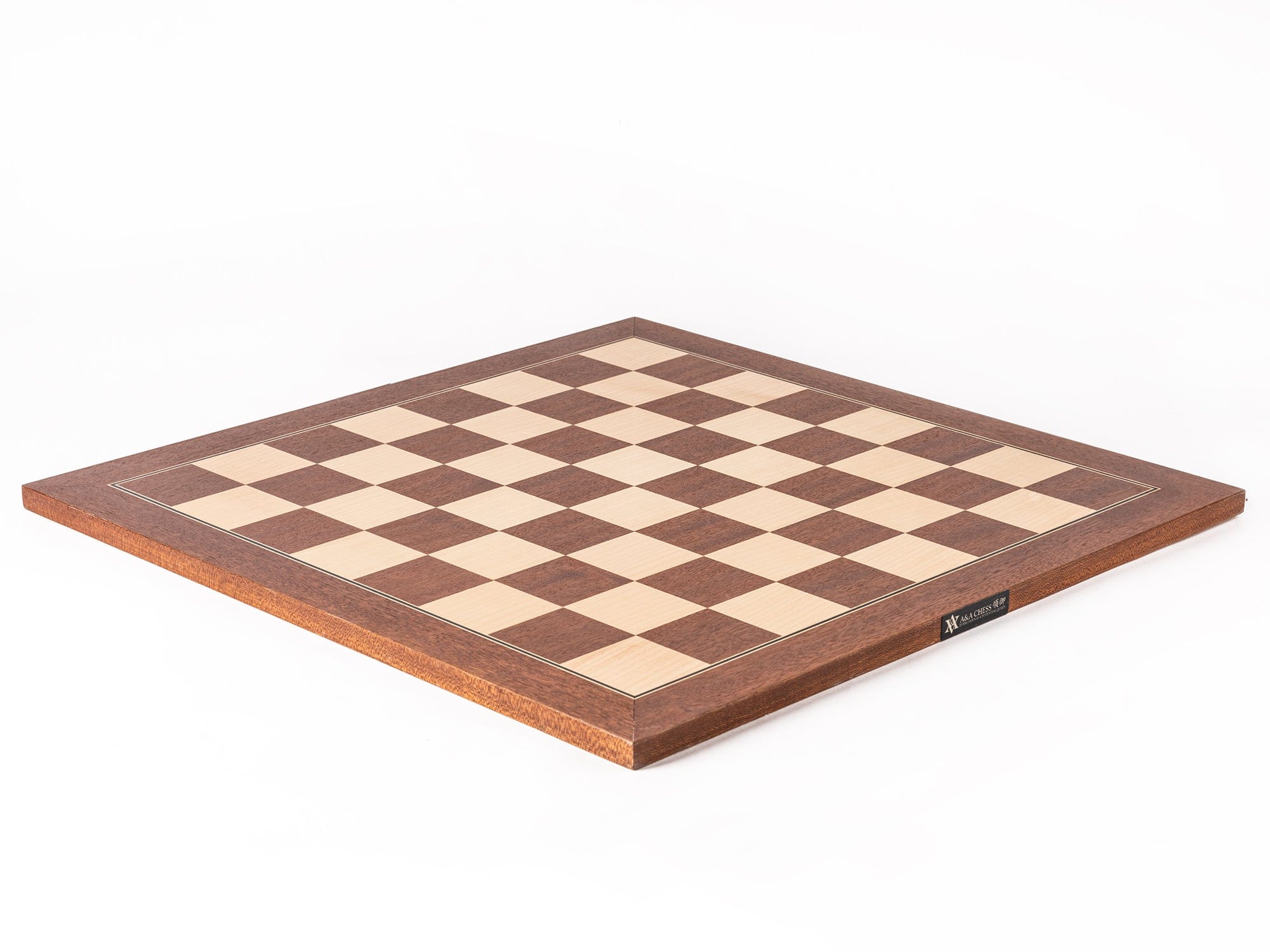
The 19-inch mahogany wood folding chess set combines 2-inch squares with a 3.75-inch king.
Its solid wood pieces are triple weighted and felted, while individual internal storage slots keep the chess pieces organized.
A support mechanism beneath the folding board helps the playing surface remain flat and prevents the center hinge area from interfering with play.
This setup is best for:
- Home tournament practice
- Adult chess enthusiasts
- Premium chess gifts
- Offices and libraries
- Permanent chess rooms
- Players who want storage built into the board
The folding design creates a useful balance between traditional wooden presentation and practical storage.
3. Best Custom Wooden Tournament Setup
Pair a larger wooden tournament chess board with the 3.75-inch walnut Staunton chess pieces.
This option allows you to select the board size, coordinate style, and wood appearance independently.
Add a digital clock, scorebook, and protective storage from the chess accessories category.
This modular approach is ideal for players who want to upgrade individual components over time. For example, you can keep the same wooden board while changing the pieces, or add a newer clock without replacing the entire set.
4. Best Setup for Schools and Chess Clubs

Schools and clubs should prioritize durability, storage efficiency, and easy cleaning.
A practical group setup may include:
- Multiple roll-up silicone boards
- Weighted plastic pieces
- Coordinate markings
- Digital clocks for advanced players
- Scorebooks for tournaments
- Carrying bags for storage
Silicone boards are particularly useful because they can be cleaned easily and stored in compact spaces. Wooden boards can then be reserved for demonstration tables, finals, or permanent chess rooms.
How to Set Up and Maintain Your Equipment
Place the board so that each player has a light-colored square in the lower-right corner.
Arrange the pieces with rooks in the corners, followed by knights and bishops. The queens begin on their matching colors: the light queen on the light square and the dark queen on the dark square. The kings occupy the remaining central squares.
New players can review the multilingual chess game instructions before beginning timed practice.
Caring for a Silicone Chessboard
To maintain a silicone board:
- Wipe it with a soft damp cloth.
- Allow it to dry completely before storage.
- Roll it loosely instead of folding it.
- Avoid placing heavy objects on a folded board.
- Store it away from sharp objects.
- Keep pieces in separate bags to prevent scratches.
Caring for a Wooden Chess Set
To protect a wooden board and pieces:
- Remove dust with a dry microfiber cloth.
- Avoid strong chemical cleaners.
- Keep the set away from excessive humidity.
- Do not leave it in direct sunlight for long periods.
- Use fitted compartments or velvet bags.
- Lift the board carefully rather than dragging it.
- Store the board inside a padded bag when traveling.
Maintaining a Digital Chess Clock
Before an important game:
- Install fresh batteries.
- Confirm the selected time control.
- Test both clock buttons.
- Reset the display.
- Verify whether increment or delay is active.
- Keep spare batteries in the equipment bag.
Remove the batteries if the clock will remain unused for an extended period.
Good maintenance improves consistency. A board that lies flat, pieces that remain clean and stable, and a clock that is ready to use remove unnecessary distractions from training.
Frequently Asked Questions
What size chess set is best for tournament practice?
A board with squares between approximately 2 and 2.25 inches works well with a 3.75-inch king. This provides a familiar tournament-style scale without making the position feel crowded.
The overall board usually measures approximately 19 to 21 inches, depending on the size of the border and coordinate area.
Are wooden chess sets allowed in tournaments?
Yes. Wooden boards and Staunton-style wooden pieces are commonly used for serious play.
The exact equipment accepted at an event depends on the organizer, so players should always check the tournament regulations before bringing their own set.
Is a silicone chessboard good for competitive chess?
Yes. A quality silicone board is portable, non-slip, washable, and resistant to permanent creasing.
It is particularly practical for clubs, schools, outdoor play, and players who travel frequently.
Do I need a digital chess clock as a beginner?
A digital chess clock is not necessary for the first few lessons, but it becomes valuable once a beginner understands the rules and can complete a full game.
Start with longer rapid time controls, such as 15+10, before moving to blitz.
What is the difference between increment and delay?
With increment, a fixed amount of time is added to a player’s clock after every move.
With delay, the main time does not begin decreasing until a short delay period has passed.
Both systems reduce the chance that a technically winning position will be lost only because a player has a few seconds remaining.
Why should a tournament chess set include extra queens?
A pawn can promote to a queen after reaching the opposite side of the board.
Because the original queen may still be on the board, an extra queen allows the promoted pawn to be represented correctly without using an upside-down rook or another temporary object.
Should I buy a complete chess set or separate board and pieces?
Choose a complete set for convenience, matched proportions, and built-in storage.
Choose separate components when you want a specific wood, board size, piece weight, coordinate style, or visual appearance.
Are magnetic chess sets suitable for tournaments?
Magnetic chess sets are useful for travel, children, and outdoor play because the pieces remain in position when the board is moved.
However, many players prefer non-magnetic weighted pieces for formal tournament practice because they provide a more traditional playing feel.
How can I choose a chess set for a school or club?
Prioritize durability, visible coordinates, weighted pieces, easy cleaning, and compact storage.
Roll-up silicone sets are efficient for large groups, while wooden sets work well for permanent chess rooms and demonstration tables.
How should I choose a chess set as a gift?
Consider the recipient’s playing level and where the set will be used.
A beginner may prefer coordinates and included instructions. A club player may value regulation-style dimensions and a digital clock. An experienced adult player may appreciate natural wood, weighted pieces, and refined craftsmanship.
The hot-selling chess sets collection can help identify popular options suitable for different recipients.
Does A&A CHESS provide support for damaged or missing pieces?
A&A CHESS provides product warranty and replacement support according to its current policies.
Review the A&A CHESS FAQ and the individual product page for the latest warranty, replacement, shipping, and return terms.
Final Thoughts
The best tournament chess set is not necessarily the most expensive set. It is the one that supports clear thinking, accurate movement, consistent time management, and regular practice.
For maximum portability, choose a full-size silicone set with weighted pieces and a carrying case.
For a traditional home setup, select a flat wooden board with well-proportioned Staunton pieces.
For rapid and blitz training, add a digital clock that supports increment and delay.
Finally, protect the equipment with suitable storage so it remains ready for the next game.
A reliable physical chess setup helps transform online knowledge into over-the-board skill. It encourages players to calculate without arrows, manage their own clock, record moves accurately, and remain focused across the board from a real opponent.
Explore A&A CHESS to compare tournament equipment, wooden chess sets, portable boards, digital clocks, and accessories designed for meaningful face-to-face play.




Zostaw komentarz
Ta strona jest chroniona przez hCaptcha i obowiązują na niej Polityka prywatności i Warunki korzystania z usługi serwisu hCaptcha.