
















Table of Contents
- Introduction: Why the Right Chess Set Matters
- Anatomy of a Chess Set: Key Terms Explained
- Wood Types: Which One Is Right for You?
- Board Sizes & Official Standards (FIDE / USCF)
- Chess Pieces: Staunton, Weighting & Feel
- Solid Board vs. Folding Board: The Great Debate
- Construction Quality: What to Inspect Before Buying
- Matching a Set to Your Use Case
- Caring for Your Wooden Chess Set
- Top A&A CHESS Recommendations by Scenario
- Final Checklist Before You Buy
1. Introduction: Why the Right Chess Set Matters
A chess set is one of the few purchases you make that can genuinely last a lifetime. The board you buy today may sit on your table for thirty years, witness thousands of games, and eventually be passed down to a child or grandchild. That kind of longevity makes the buying decision far more important than the price tag suggests.
Yet most people buy their first chess set with almost no research. They grab the cheapest option on Amazon, only to discover months later that the board warps, the pieces feel hollow, the squares are too small, or the folding hinge creates a ridge that makes every move at the center feel unstable.
This guide exists to prevent that mistake. We will walk through every decision that matters — wood type, board size, official standards, piece weighting, construction methods, and use-case matching — so that when you click "buy," you know exactly what you are getting and why it is the right choice for you.
2. Anatomy of a Chess Set: Key Terms Explained

Before diving into choices, let us establish the vocabulary you will encounter in every product listing:
- Board — the checkered playing surface, typically 8x8 squares.
- Square size — the dimension of one square, measured in inches or millimeters. This is the single most important number for compatibility.
- King height — the height of the king piece, measured from base to cross top. This determines whether pieces fit the board properly.
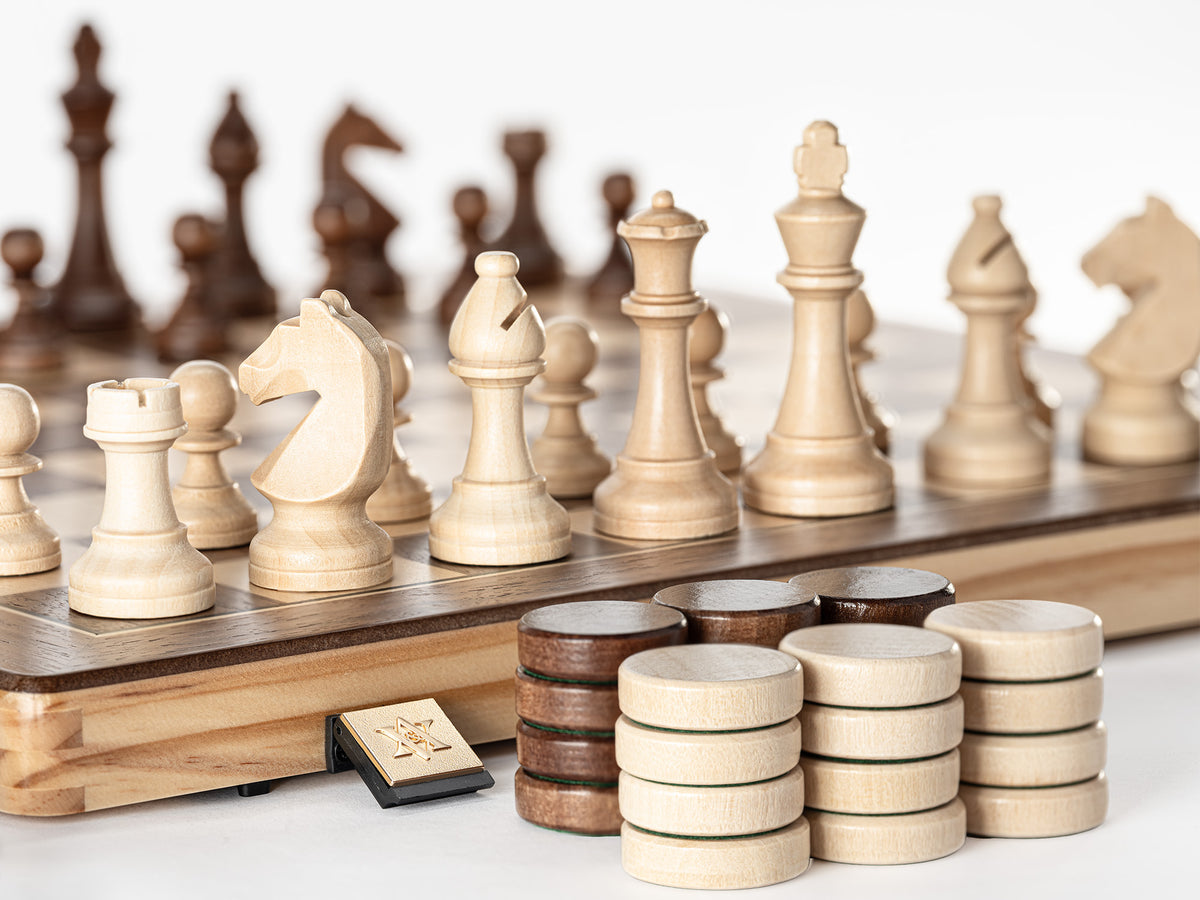
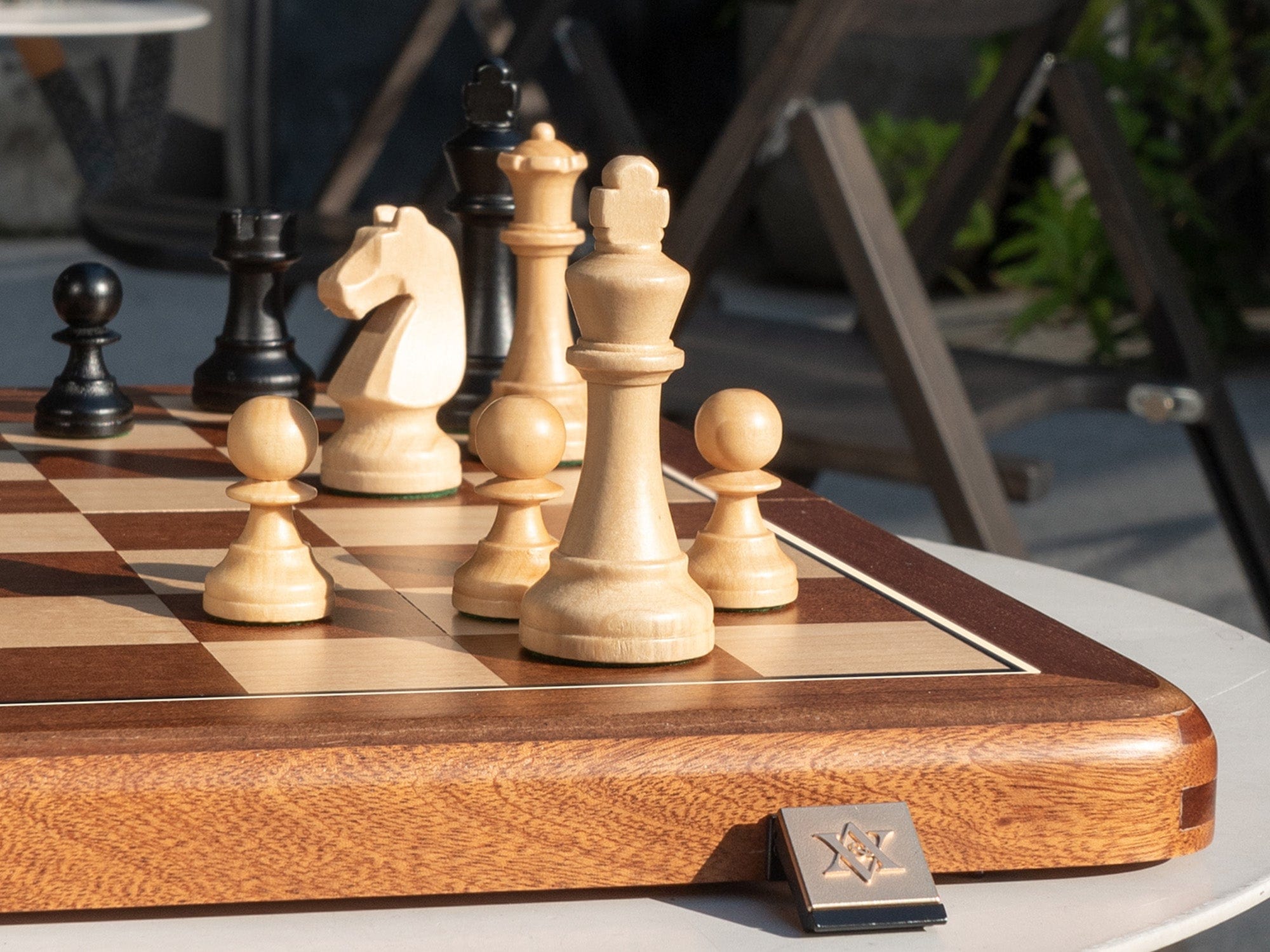
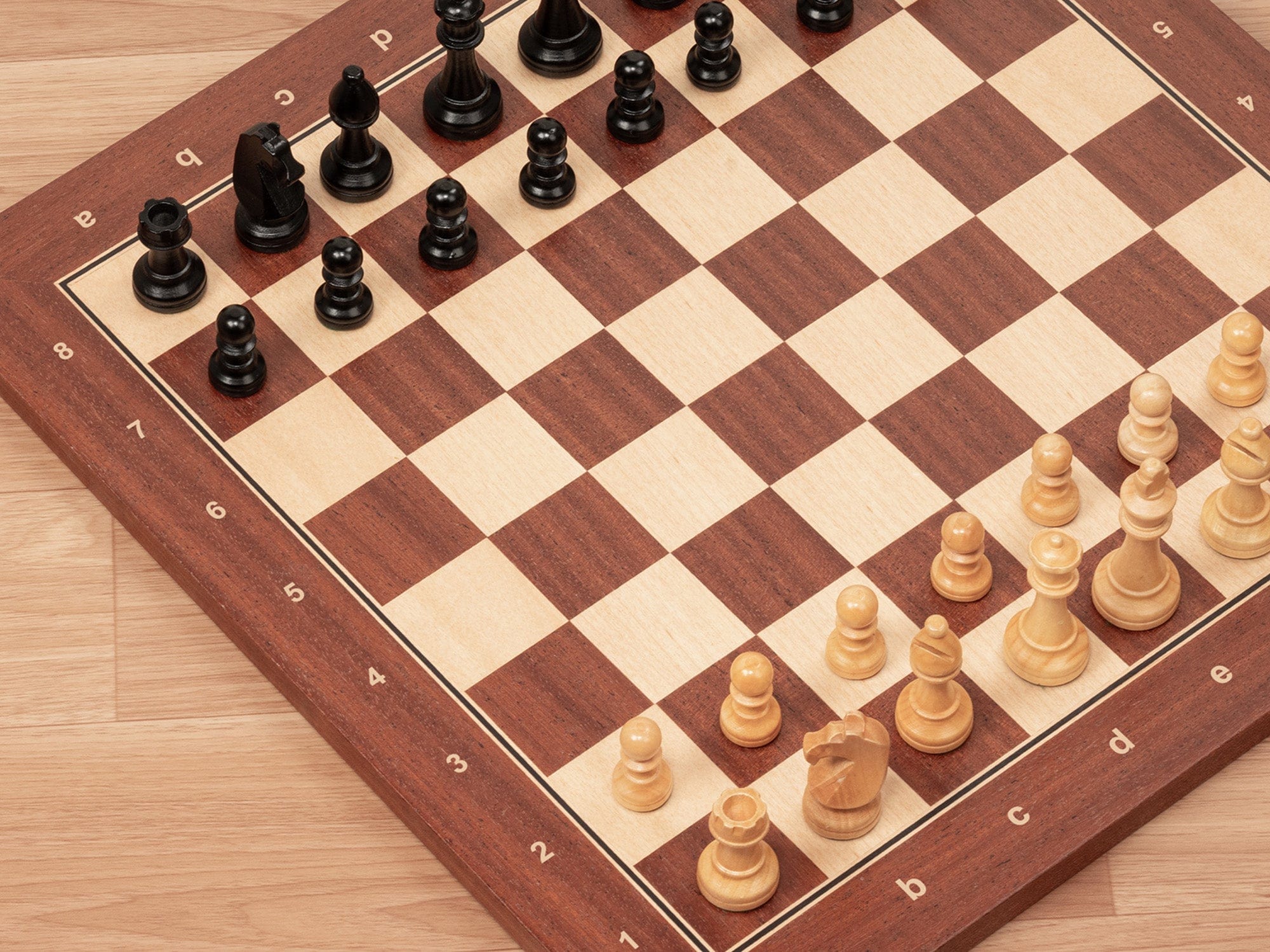
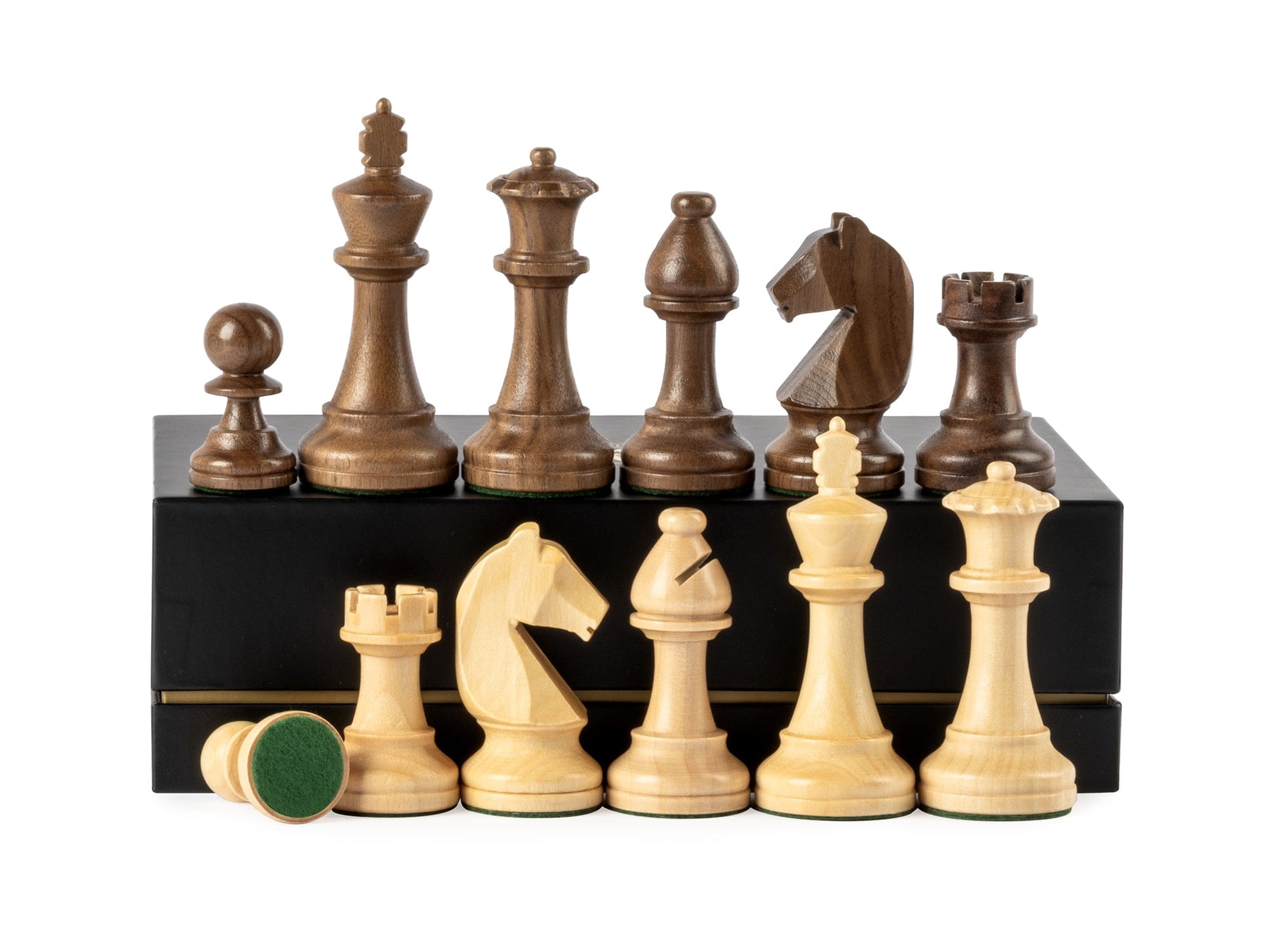
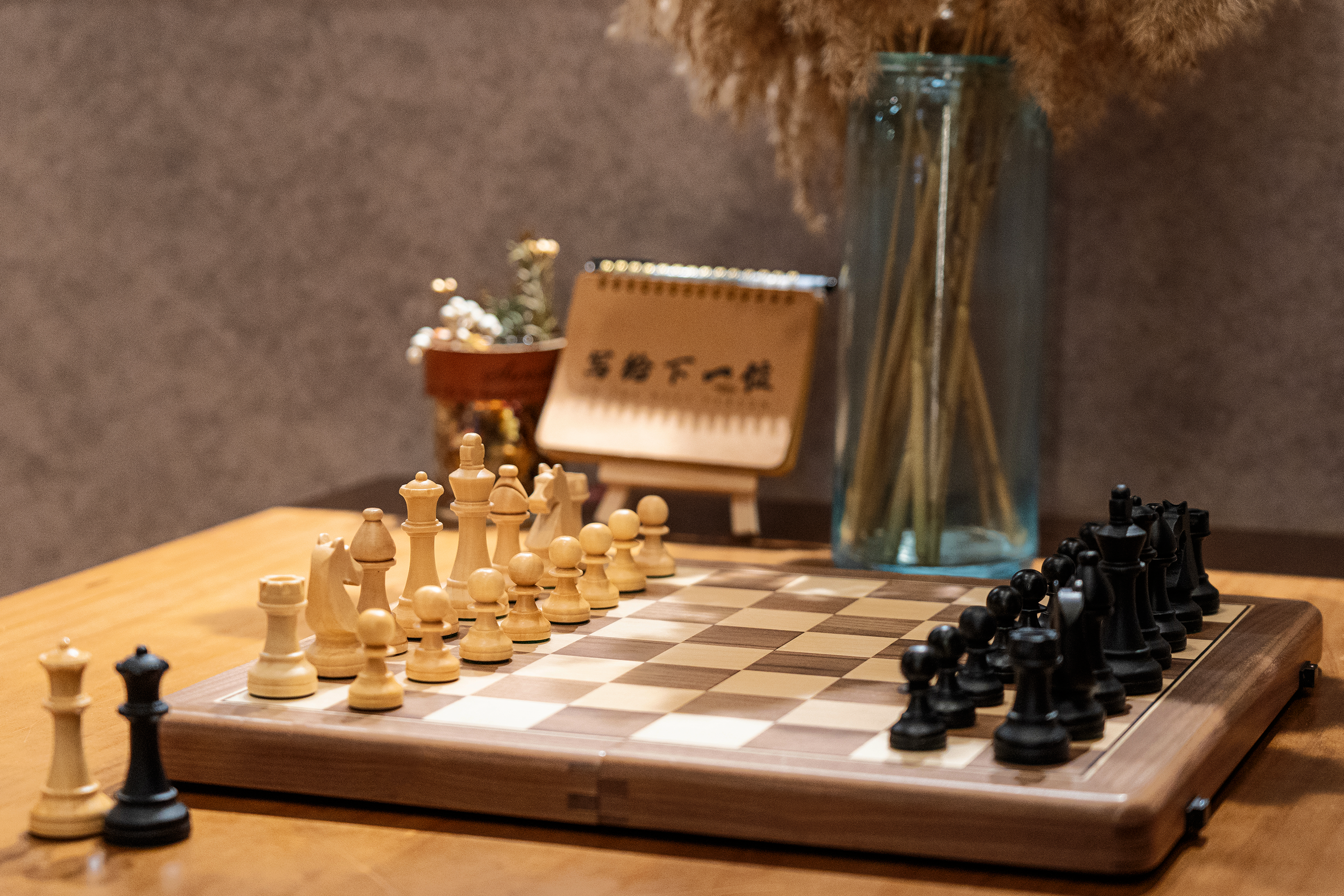
- Staunton — the standard piece design introduced in 1849, required for all serious tournament play. Staunton pieces are universally recognizable: a cross-topped king, coroneted queen, slit-crowned bishop, horse-head knight, castle-shaped rook, and simple pawn.
- Weighted pieces — pieces with metal or heavy material added to the base for a solid, stable feel. Quality sets always use weighted pieces.
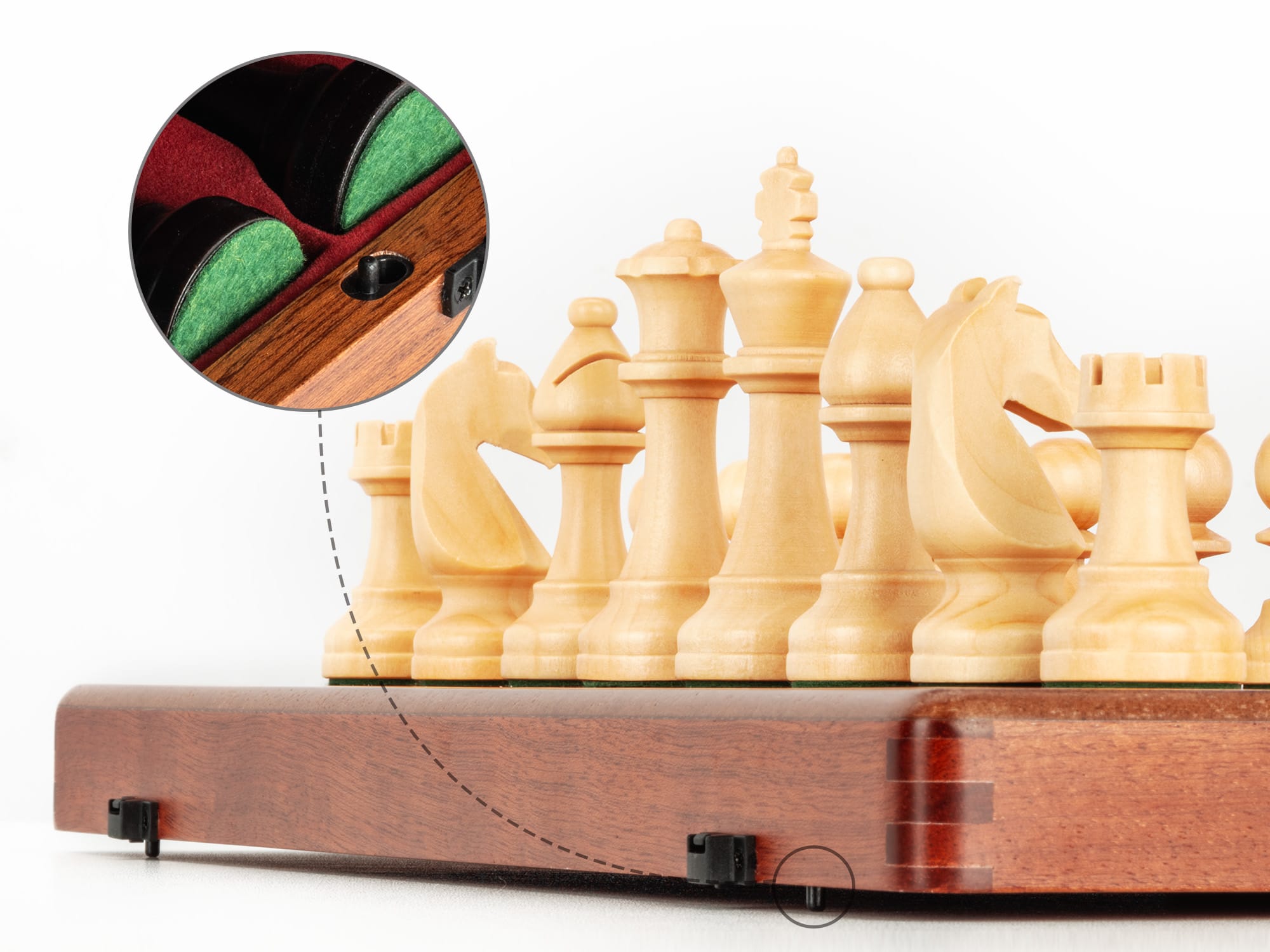
- Felt base — soft material glued to the bottom of each piece to protect the board and reduce noise.
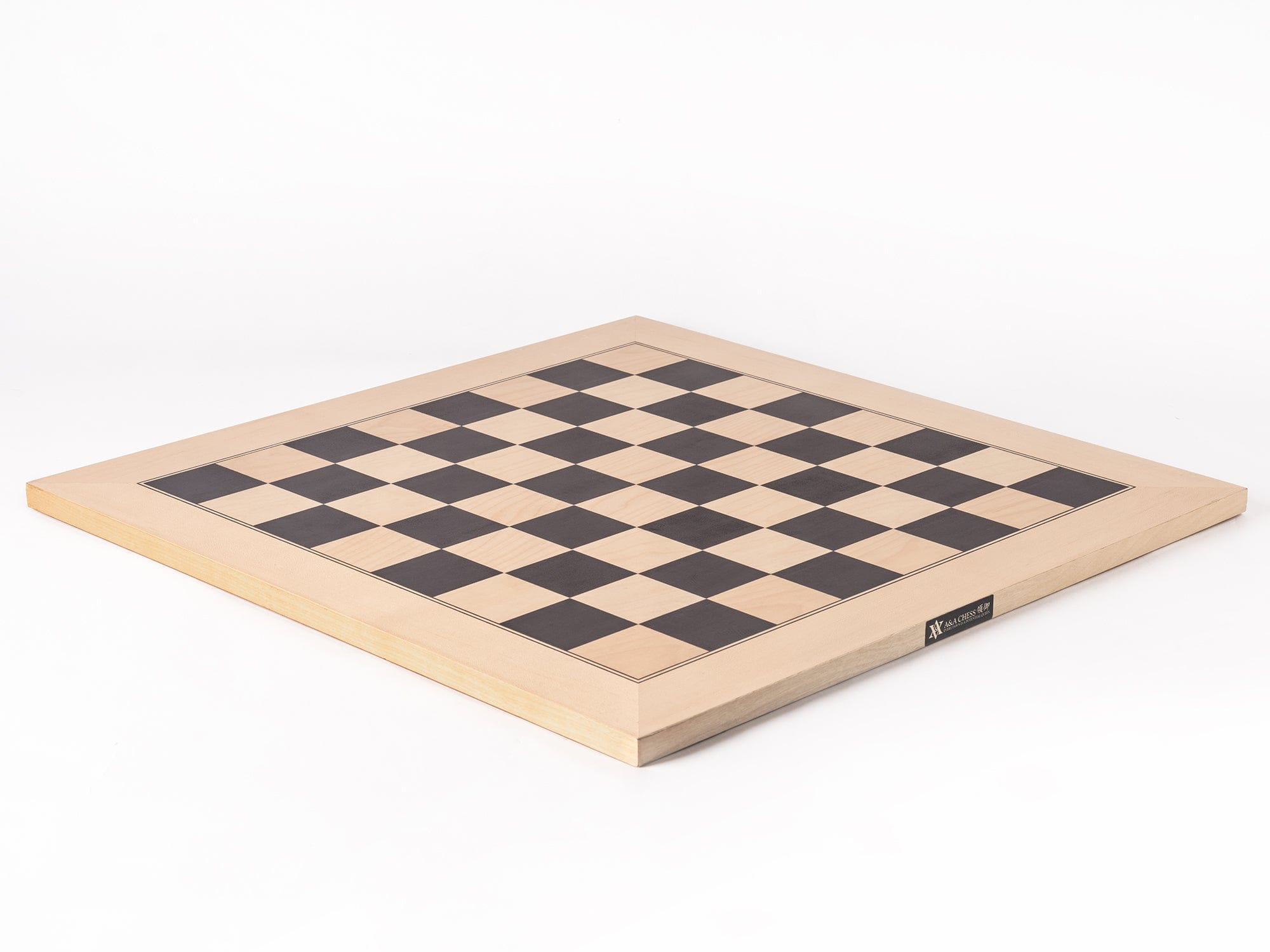
- Inlaid board — a board where dark and light squares are cut from different woods and fitted together, rather than printed or painted. Inlay is the mark of a quality wooden board.
- Mortise-and-tenon joinery — a traditional woodworking technique where boards interlock without glue or nails, creating a stronger and more durable frame.
3. Wood Types: Which One Is Right for You?
The wood you choose affects appearance, weight, durability, and price. Here is a breakdown of the most common options:
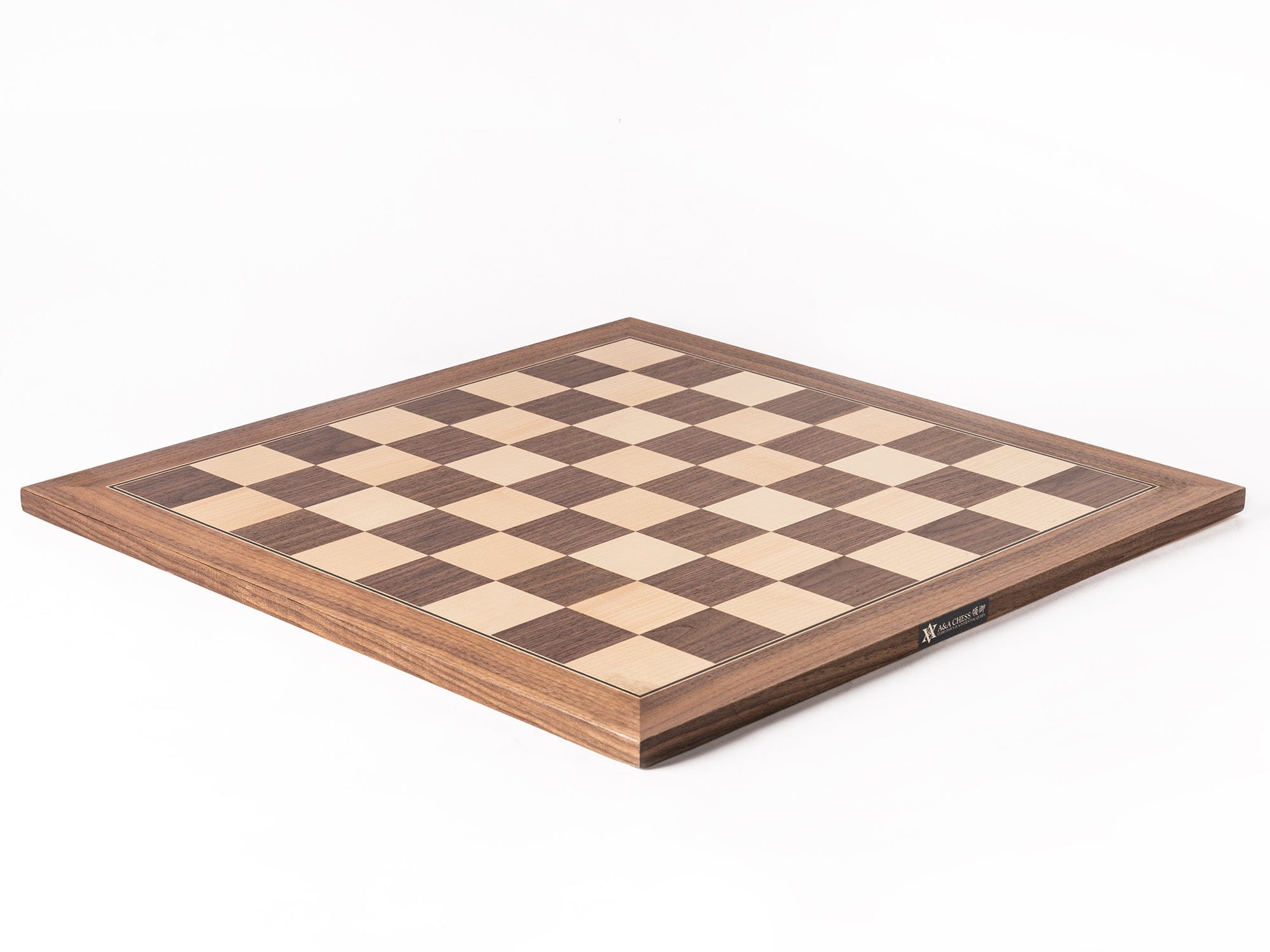
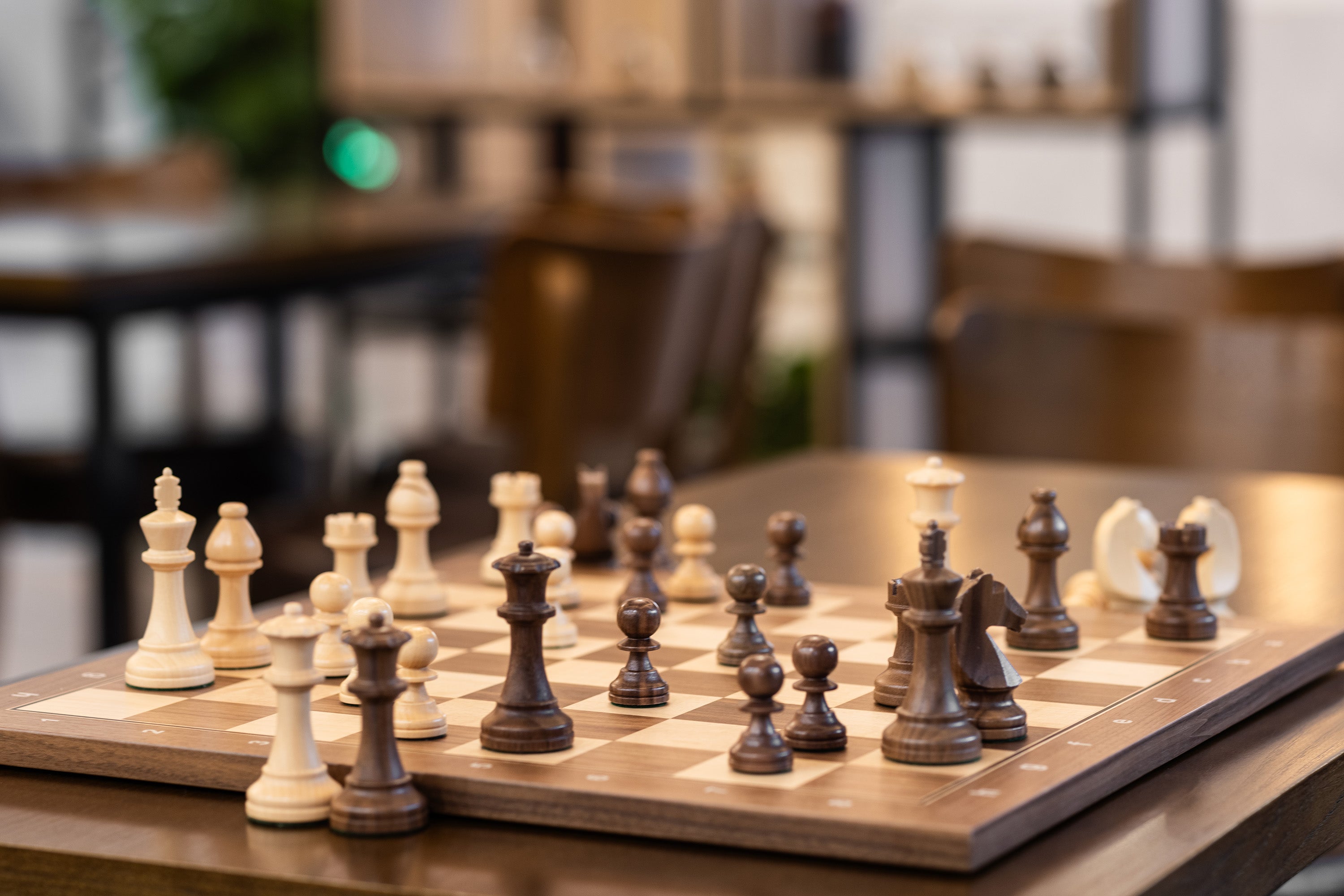
Walnut — Walnut is the classic choice for dark squares. Its rich chocolate-brown grain pairs beautifully with maple, creating the iconic traditional chessboard look. Walnut is dense, durable, and ages gracefully. It is the most popular choice for mid-range and premium sets, and it strikes an ideal balance between beauty and affordability. Best for: all-purpose home and family play.
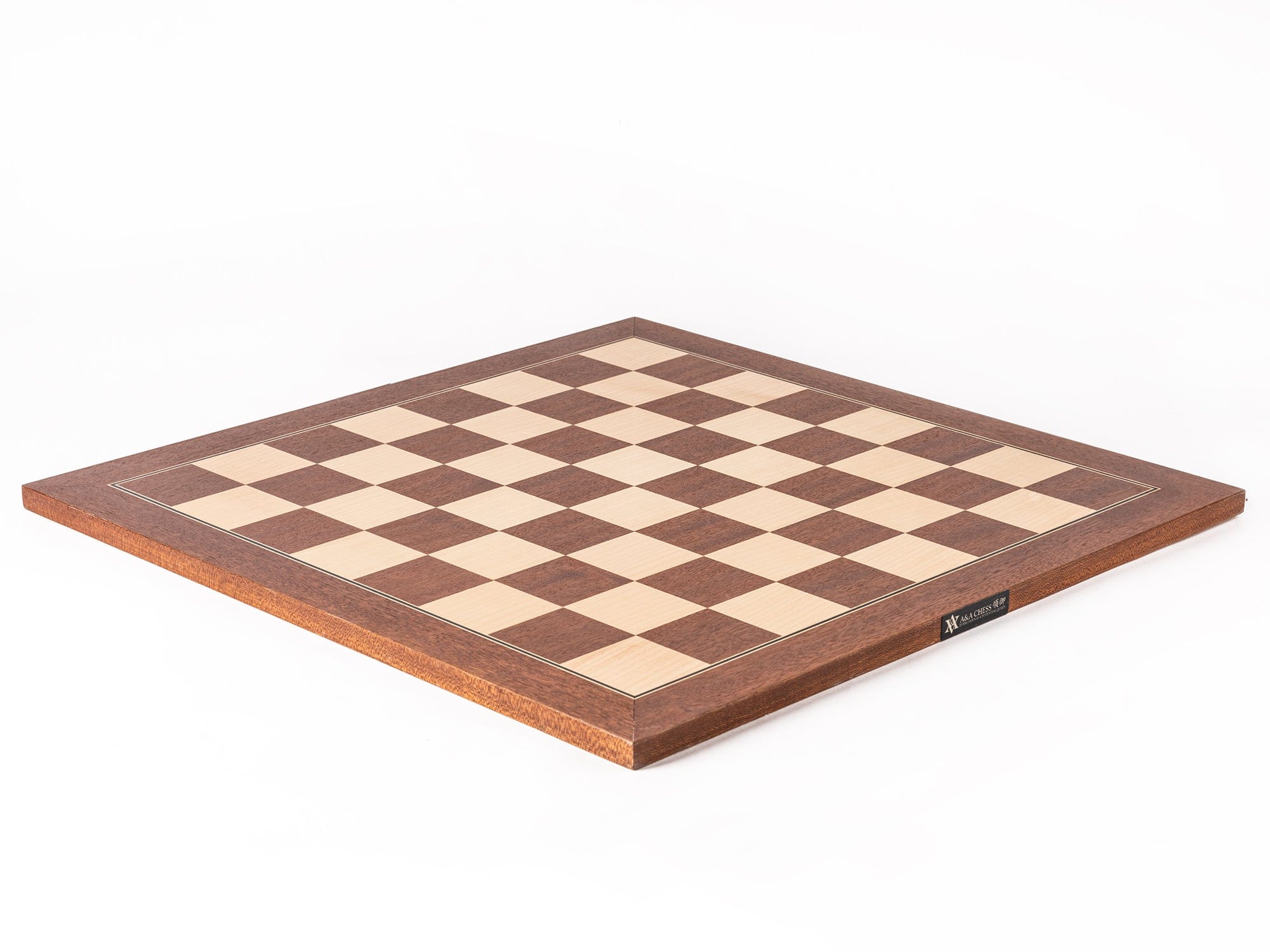
Mahogany — Mahogany offers a warmer, reddish-brown tone with a smoother, more uniform grain than walnut. It is slightly softer than walnut but still very durable. Mahogany boards have a distinctive elegance that works well in traditional or classic interiors. Best for: gift-giving and display in living rooms or studies.
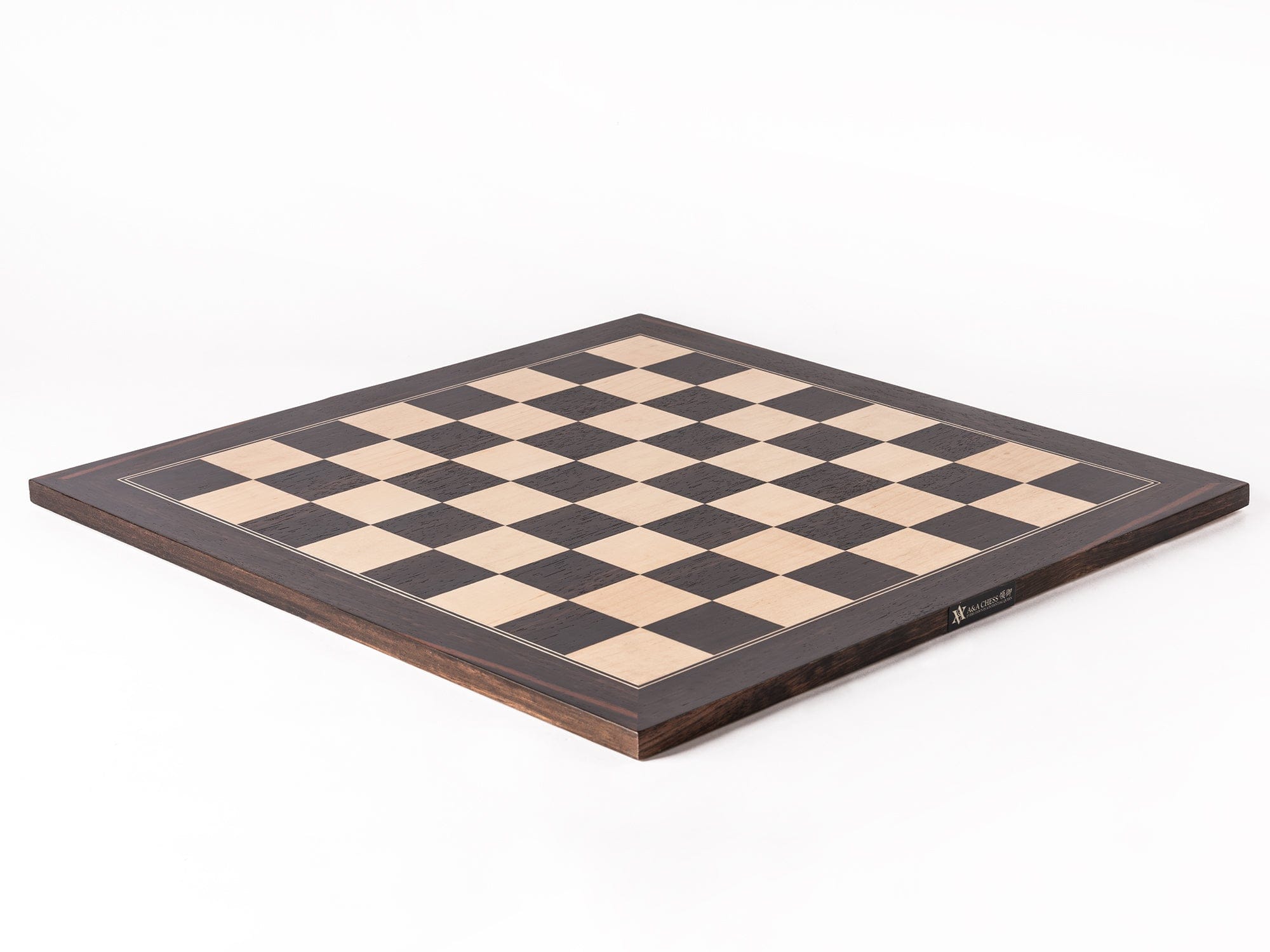
Ebony — Ebony is a dense, near-black hardwood prized for its deep color and smooth finish. It is the gold standard for high-end chess boards, but it is also the most expensive and increasingly regulated due to sustainability concerns. Quality ebony boards are investment pieces. Best for: collectors and serious enthusiasts.
African Palisander — Palisander (also known as rosewood) offers a dark, richly grained appearance similar to ebony at a more accessible price. It is dense, durable, and responsibly sourced when FSC-certified. Palisander has become a popular ethical alternative to ebony. Best for: players who want a luxury look without ebony pricing.
Maple — Maple is the standard light-square wood. Its pale, creamy color and subtle grain provide the contrast that makes dark woods pop. Hard maple is durable and takes a smooth finish. Best for: pairing with any dark wood — it is the universal light square.
Beech — Beech is a cost-effective hardwood that delivers good durability and a clean, light finish. It is commonly used in entry-level to mid-range wooden sets. While not as prestigious as maple, it offers solid value. Best for: budget-conscious buyers who still want real wood.
Critical tip: Always verify that a board uses solid wood inlay, not MDF or particle board with a printed wood-grain veneer. Quality brands like A&A CHESS specify the exact material in every product description. If a listing does not clearly state "solid wood inlay," assume it is not.
4. Board Sizes & Official Standards (FIDE / USCF)
One of the most common mistakes is buying a board and pieces that do not match. Here is how to get the sizing right.
The Golden Rule: The king's base diameter should be about 75–80% of the square size. This ensures pieces fit comfortably without crowding.
表格
| Board Type | Square Size | King Height | Best For |
|---|---|---|---|
| Small / Travel | 1.25"–1.5" (32–38mm) | 2.5"–3" (64–76mm) | Travel, kids, compact spaces |
| Standard / Club | 1.75"–2" (45–51mm) | 3.25"–3.75" (83–95mm) | Home play, clubs, most players |
| Tournament / FIDE | 2"–2.36" (51–60mm) | 3.75"–4.25" (95–108mm) | Official competition, serious training |
| Large / Display | 2.5"+ (64mm+) | 4.5"+ (114mm+) | Decorative display, collector pieces |
FIDE Standards: The International Chess Federation recommends square size of 5–6cm (approx. 2"–2.36") and king height of 8.5–10.5cm (approx. 3.35"–4.13"). A&A CHESS's 9.5cm king height falls squarely within FIDE recommendations.
USCF Standards: The United States Chess Federation requires king height between 3.375" and 4.5", king base diameter at least 40% of king height, and clearly distinguishable Staunton design.
The "Four Pawns Test": A practical compatibility check — four pawns should fit comfortably within a single square when placed side by side. If they do not, the pieces are too large for the board.
5. Chess Pieces: Staunton, Weighting & Feel
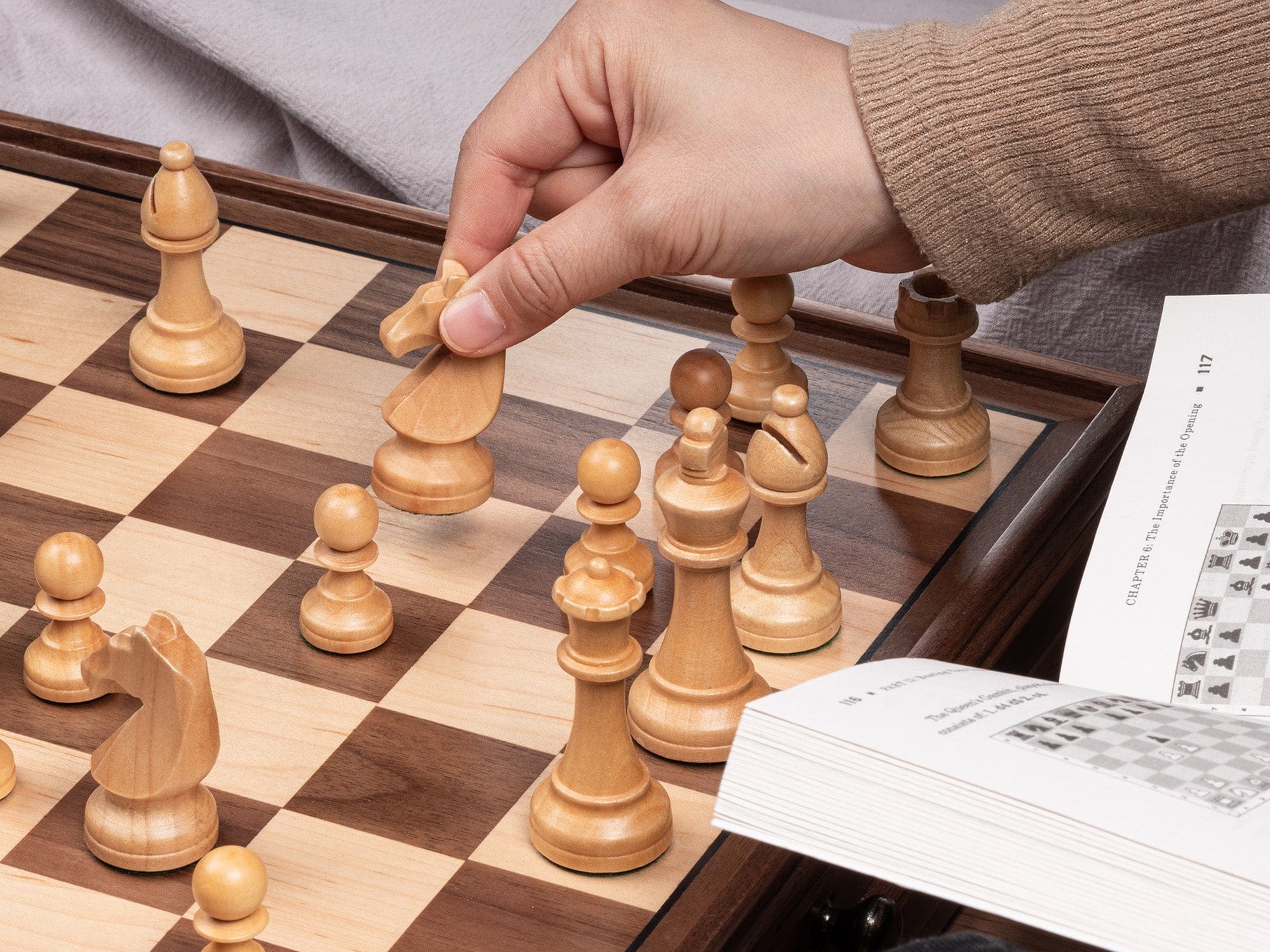
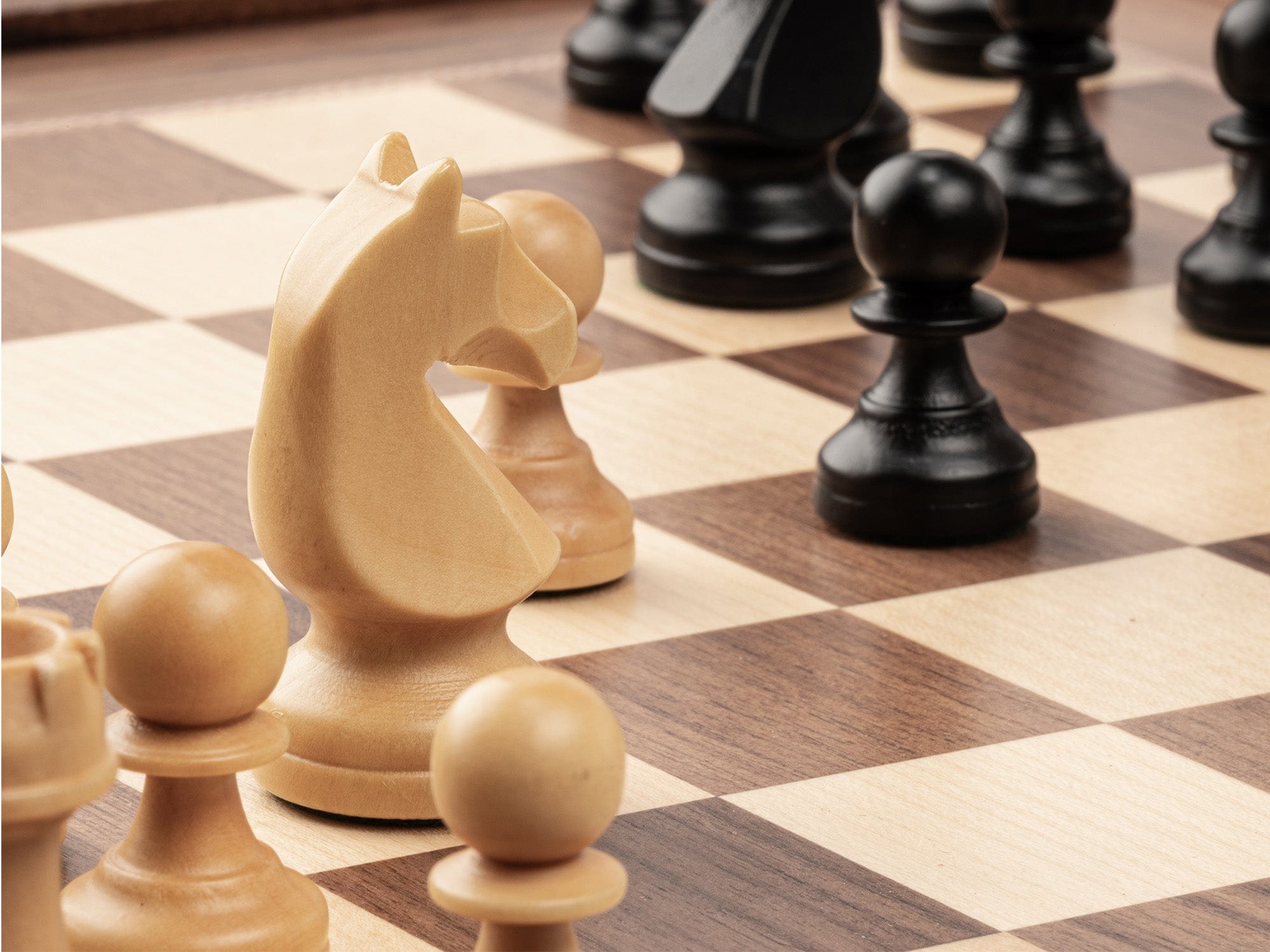
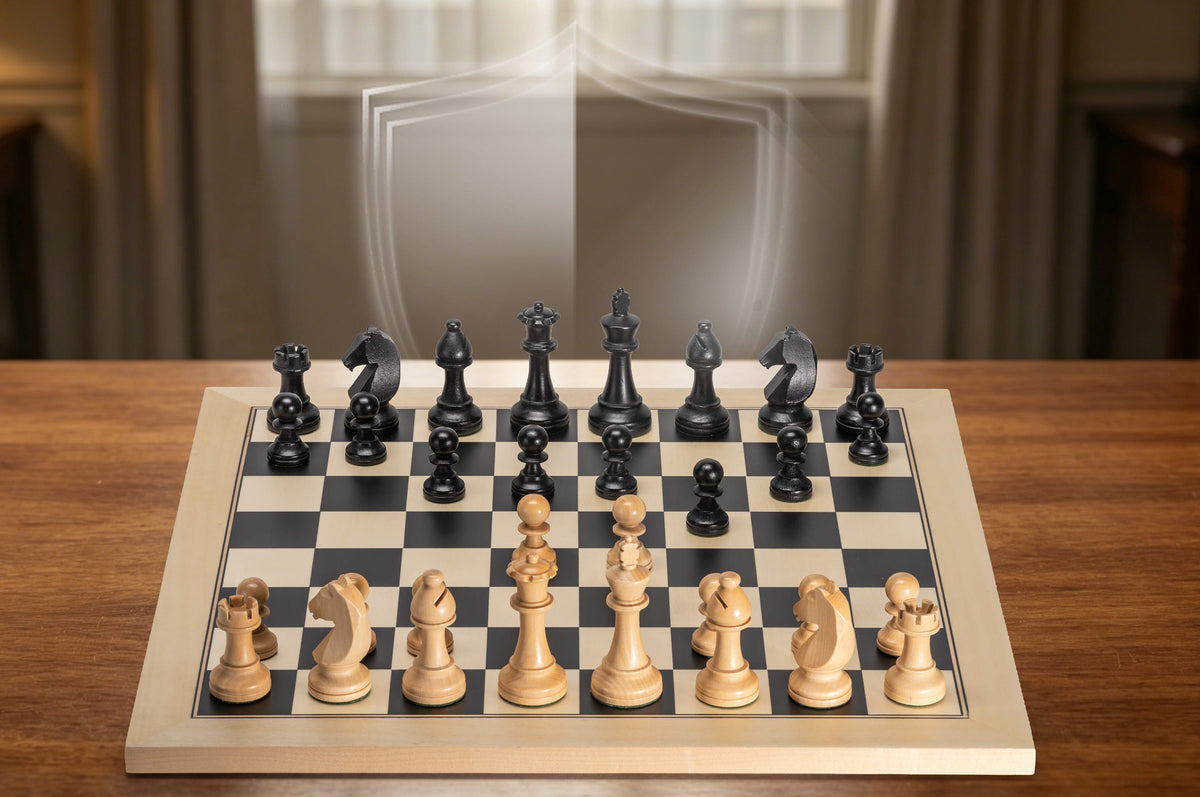
Why Staunton Is Non-Negotiable — The Staunton pattern, introduced by Jaques of London in 1849, is the only design accepted for serious tournament play. Every piece is instantly distinguishable from every angle. Themed or decorative sets may look beautiful on a shelf, but during a fast blitz game, you need to recognize a bishop from a pawn at a glance. For anything beyond casual display, always choose Staunton.
Weighted vs. Unweighted — Pick up a cheap plastic chess piece and it feels hollow: light, tinny, and prone to tipping. A quality weighted piece has a satisfying heft that makes every move feel deliberate. Weighting is achieved by inserting metal into the piece's base. A well-weighted king should feel substantial in the hand and sit firmly on the board without wobbling. Always choose weighted pieces.
Felt Bases — Felt (or velvet) bases protect the board surface from scratches and eliminate the sharp clacking noise. Every quality set should have felted bases.
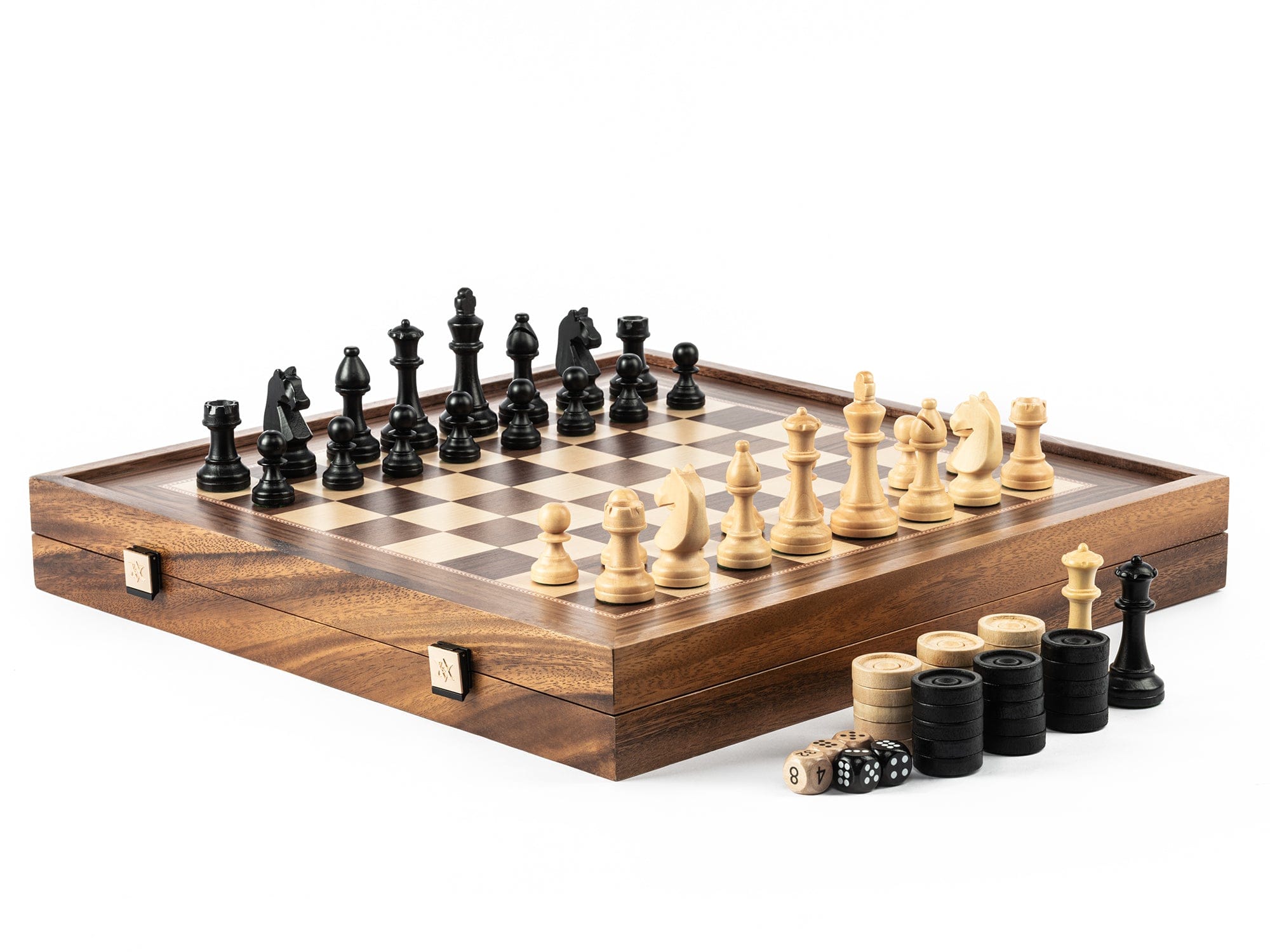
Spare Queens — Pawn promotion happens frequently. When a pawn reaches the eighth rank, it can become a queen, and you suddenly need a second queen on the board. Most sets ship with exactly 32 pieces, forcing you to use an upside-down rook. Premium sets like A&A CHESS include dual spare queens — a small detail that makes a big difference during actual play.
6. Solid Board vs. Folding Board: The Great Debate

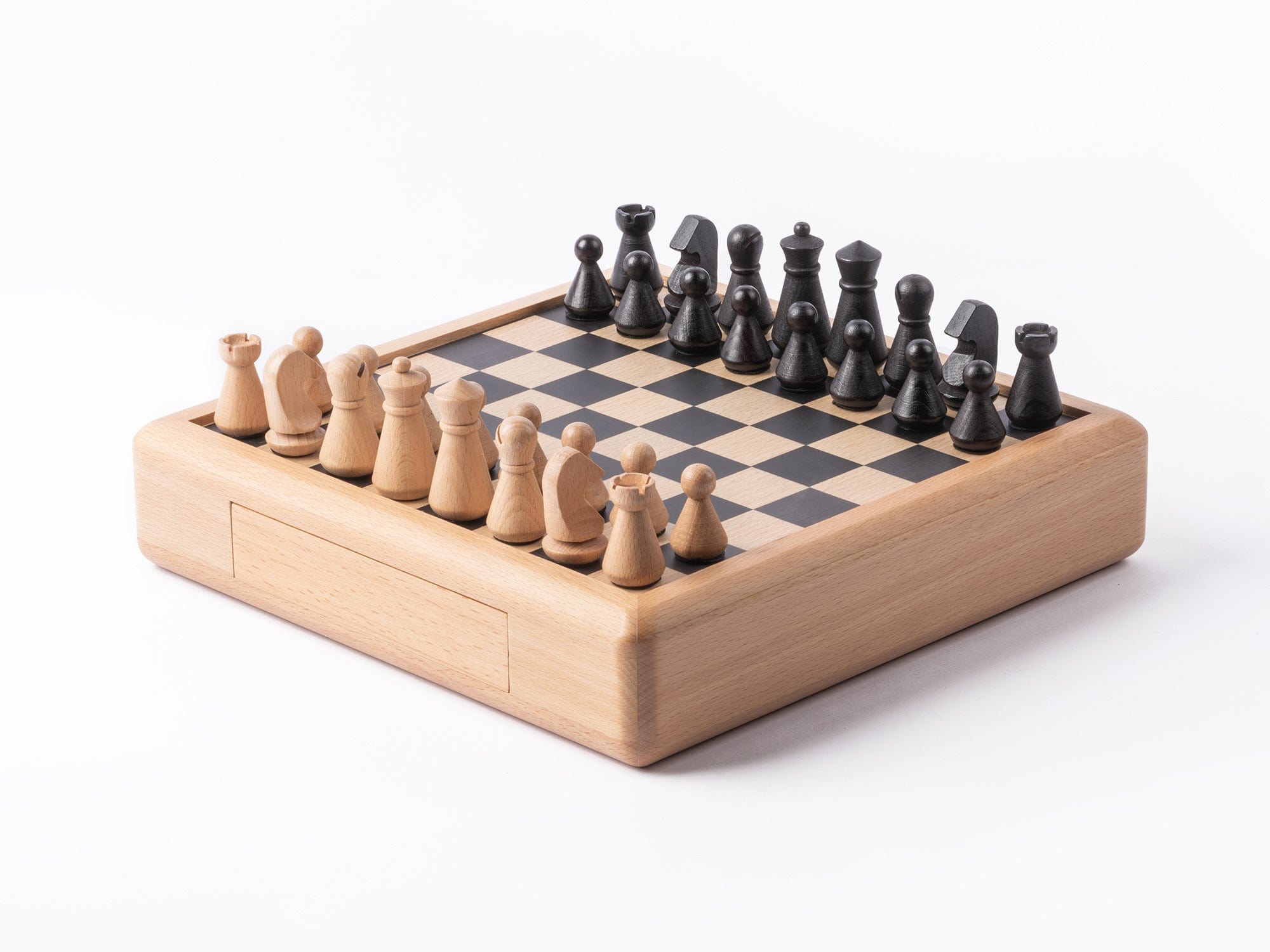
Solid Boards offer a perfectly flat playing surface with no seam, maximum stability, and a more substantial premium feel. The downside: they take up more storage space and are less portable.
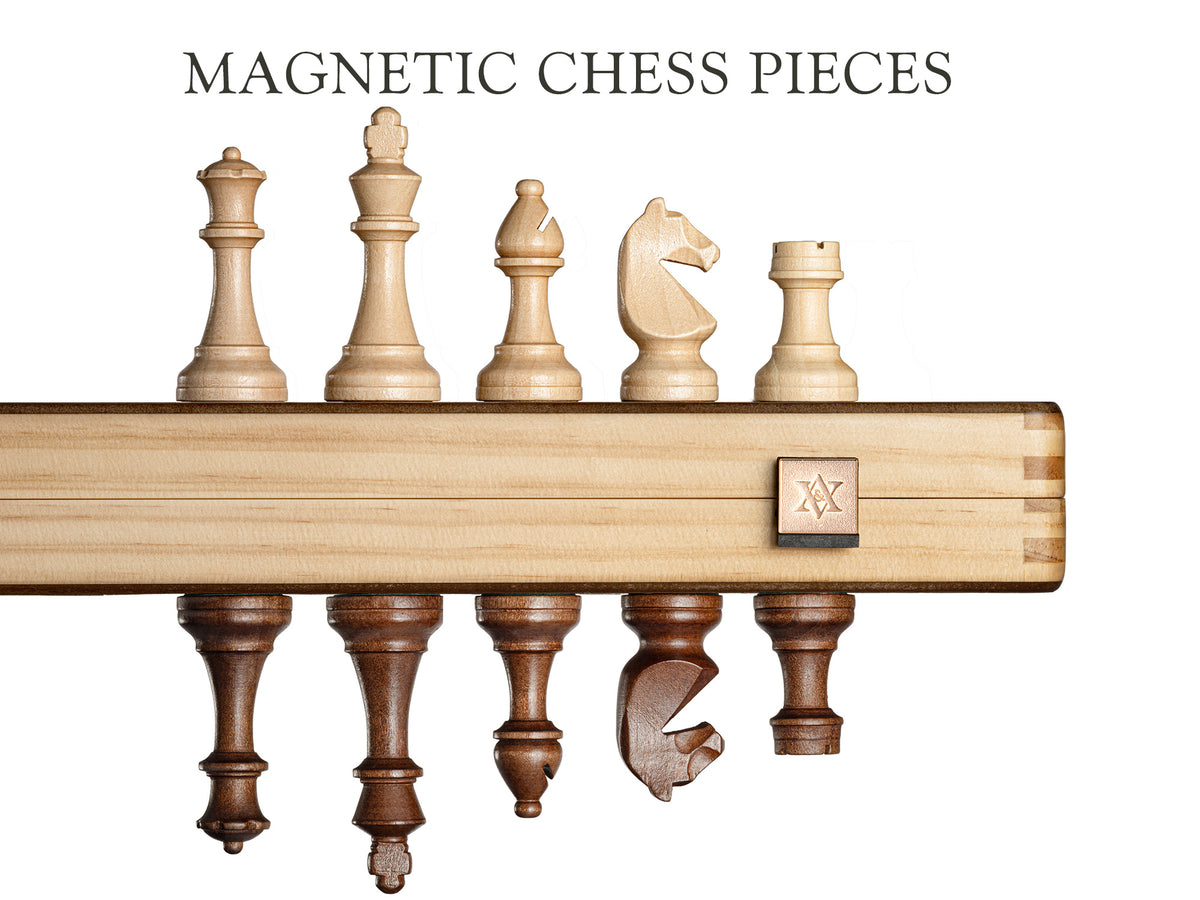
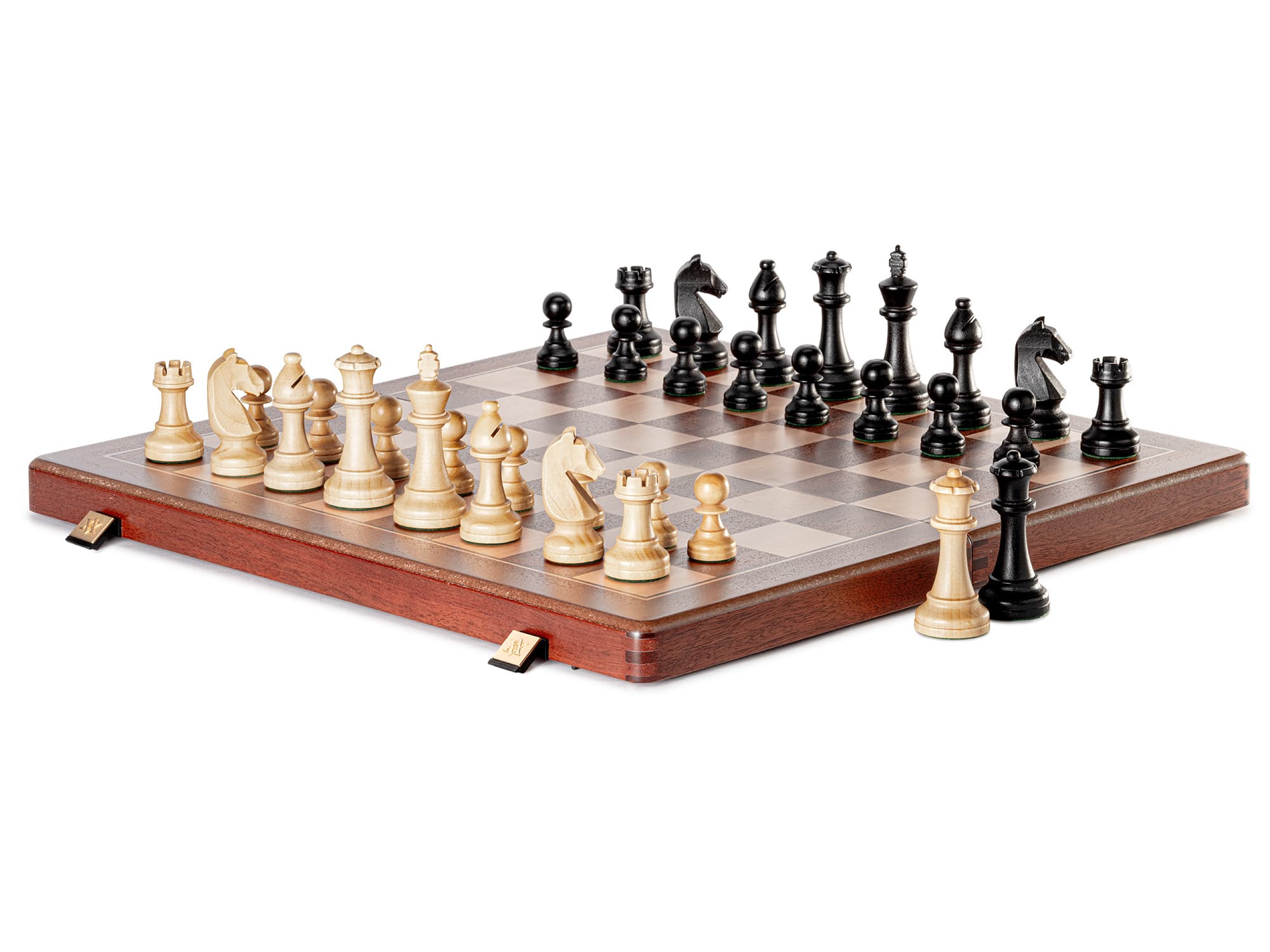
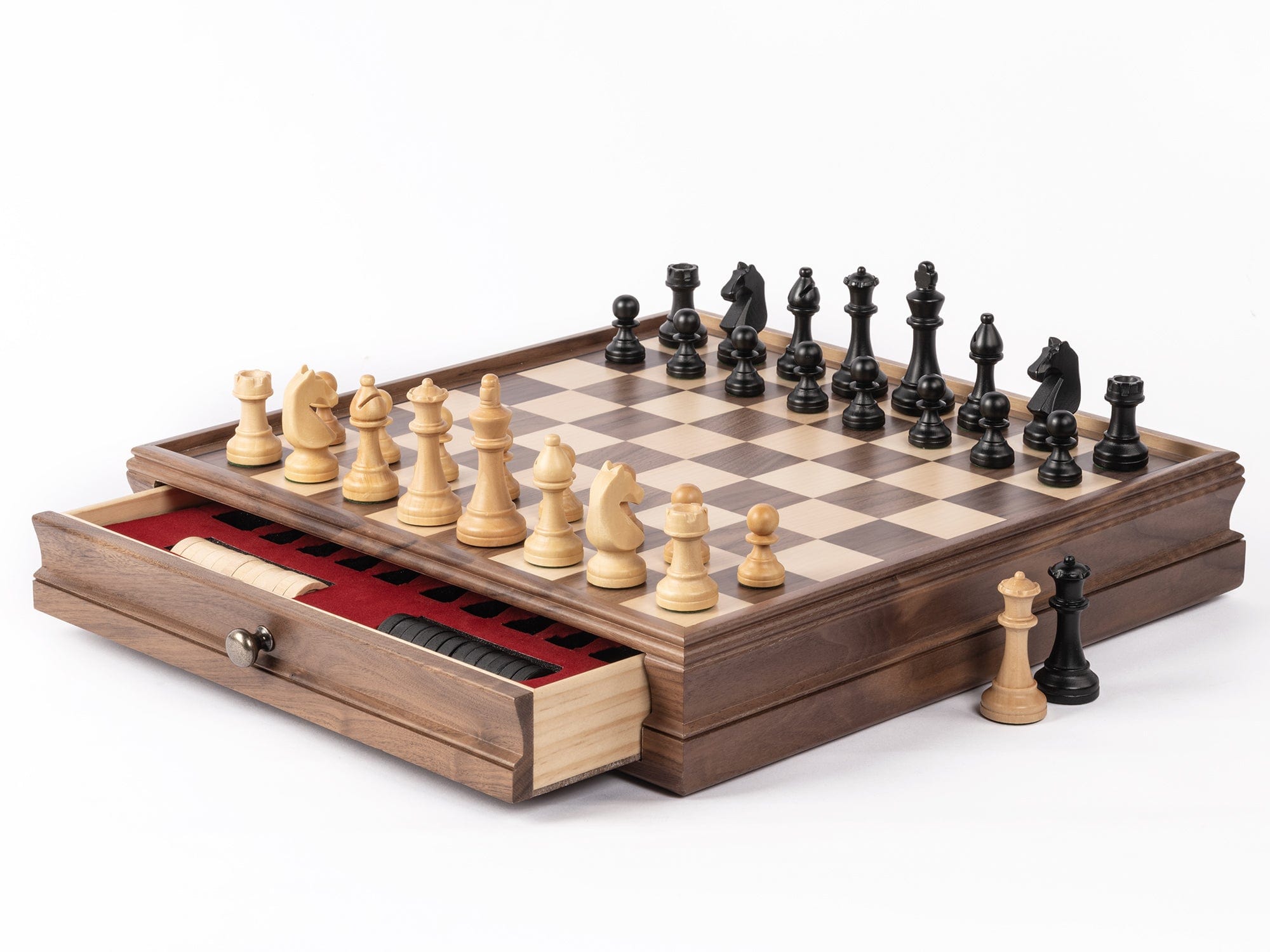
Folding Boards hinge in the middle, often with internal storage for pieces. They offer compact storage and portability. The traditional downside is the center ridge where pieces can wobble — but modern designs like A&A CHESS's patented support-foot structure have largely solved this by reinforcing the hinge area.
Which to choose? Pick solid if the board will live permanently on a table. Pick folding if you need storage, travel, or want to put the set away between games. A quality folding board with reinforced hinges is nearly indistinguishable from a solid board during play.
7. Construction Quality: What to Inspect Before Buying
- Inlay vs. Printing — Quality boards use wood inlay (individual squares cut from different woods and fitted together). Budget boards print the pattern, which wears off. Always choose inlaid.
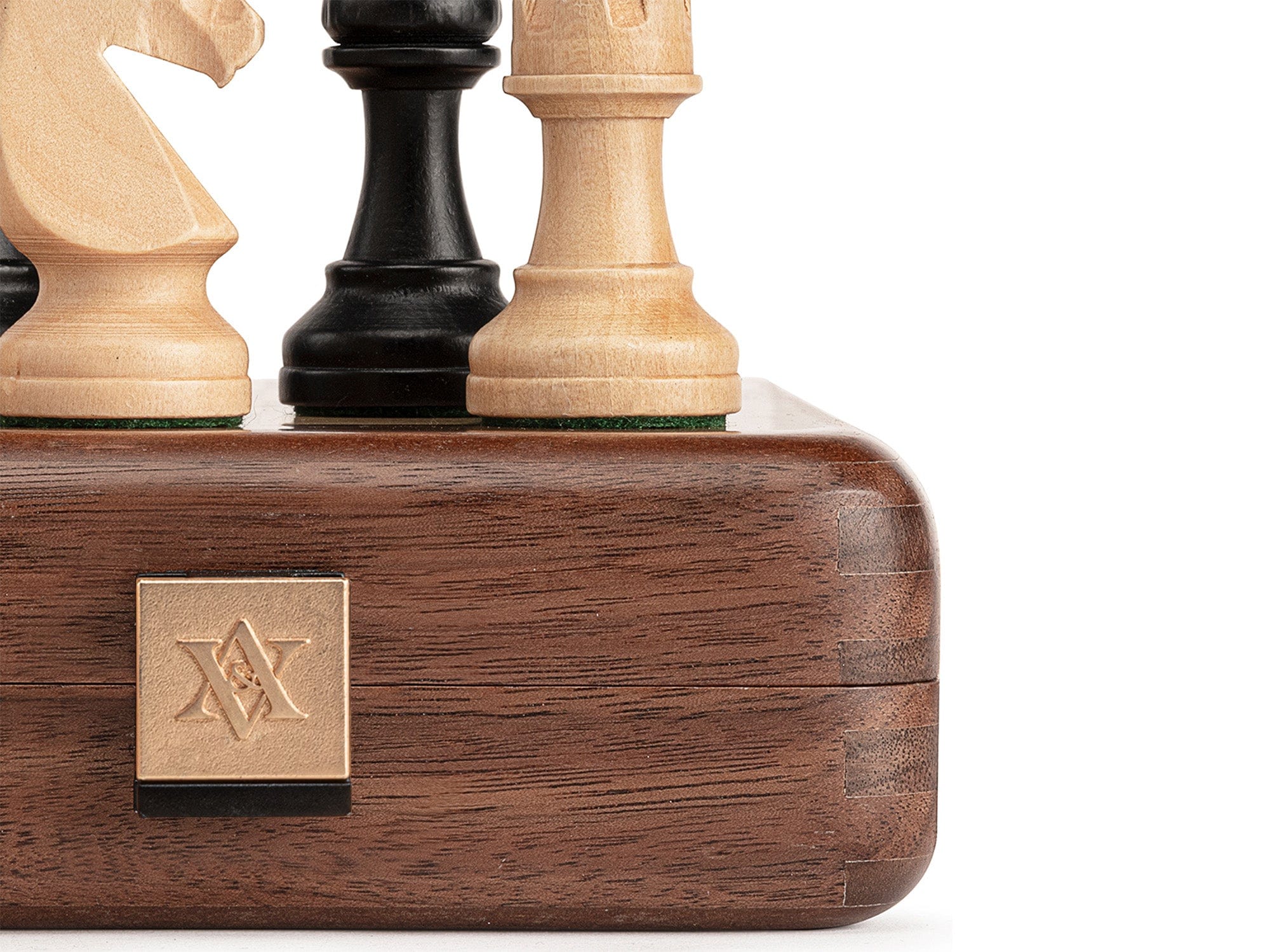
- Joinery — Look for mortise-and-tenon joinery in the board frame. This interlocks wood without glue or nails, creating a frame that stays rigid for decades.
- Finish — A quality board has a smooth, even finish that enhances the grain without obscuring it. Avoid thick, glossy coatings that look plastic. A matte or satin oil finish is ideal.
- Piece Consistency — All pieces of the same type should be identical in size, shape, and weight. The knights are the most complex — check that both are mirror images and well-carved.
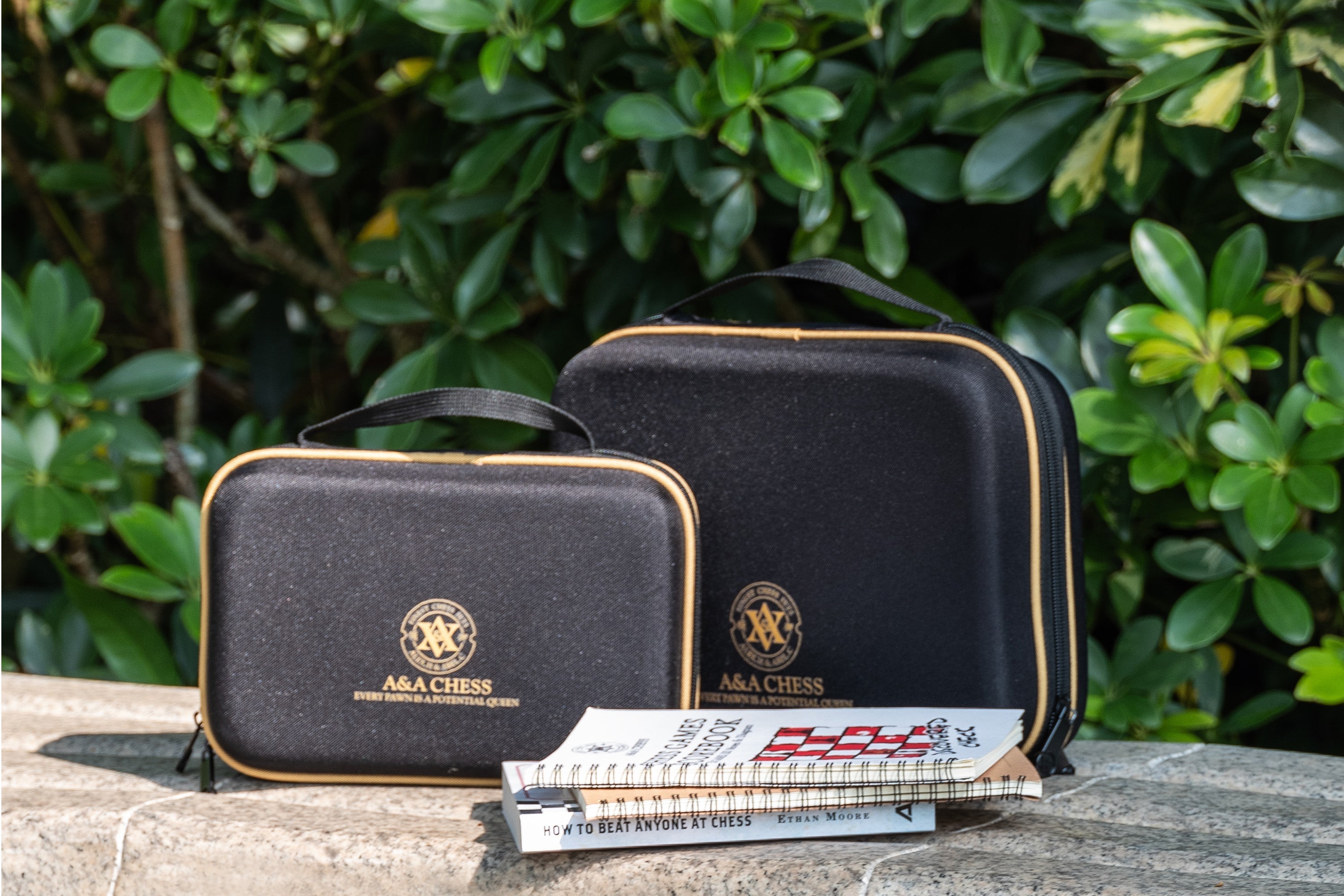
- Storage Quality — For folding sets, look for felt-lined, individually shaped compartments that hold each piece securely. Avoid sets where pieces rattle in a single open compartment.
8. Matching a Set to Your Use Case
For Complete Beginners — Start with a quality folding wooden set in standard size (1.75"–2" squares, 3.25"–3.75" king). Look for weighted Staunton pieces, felt bases, and a beginner guide. A&A CHESS's 15" Walnut Folding Set at $34.90 is an exceptional starting point.
For Family & Home Play — Choose a standard-size solid or folding board in walnut or mahogany with maple. Durable enough for frequent use, attractive enough to leave on display.
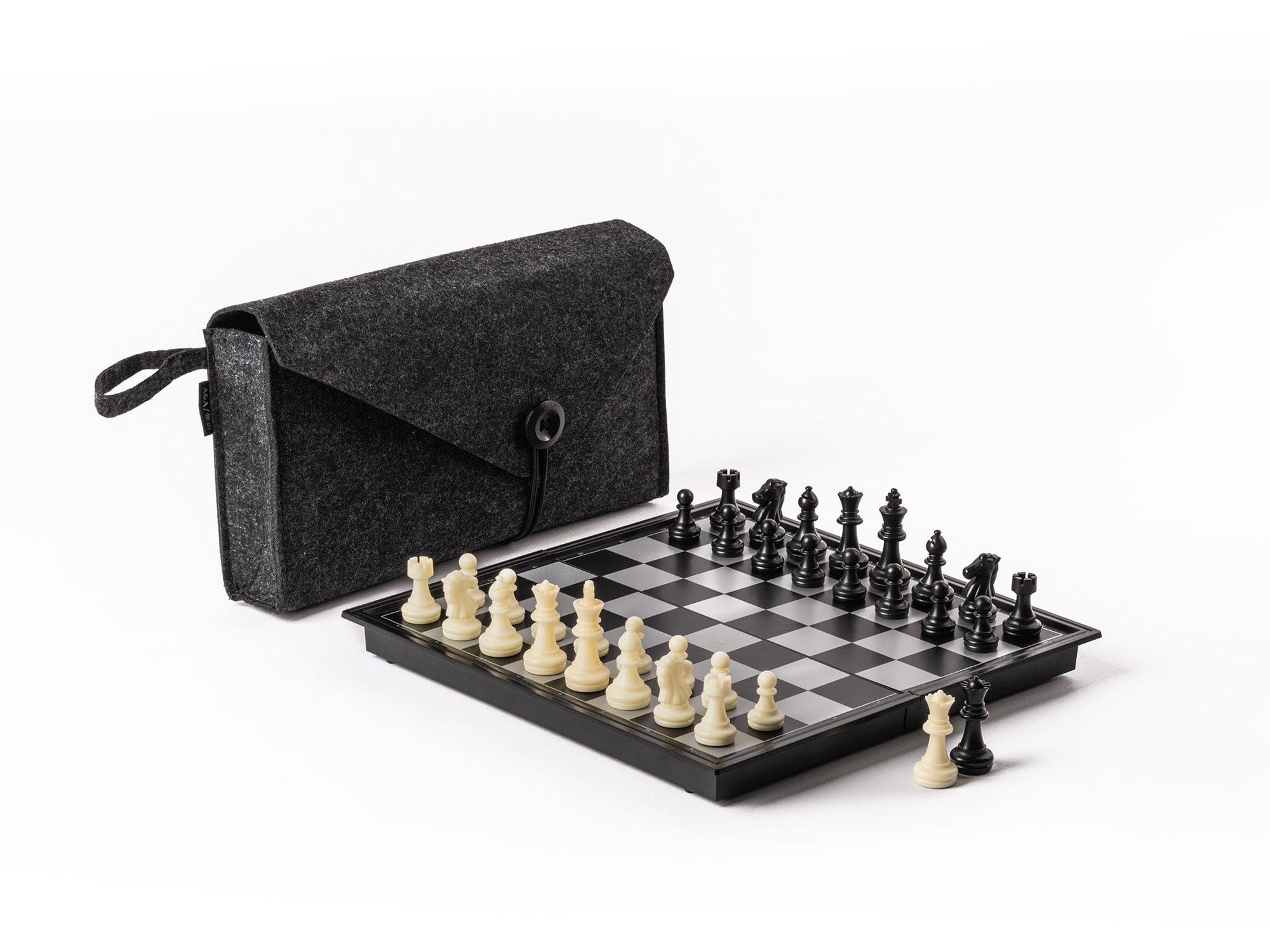
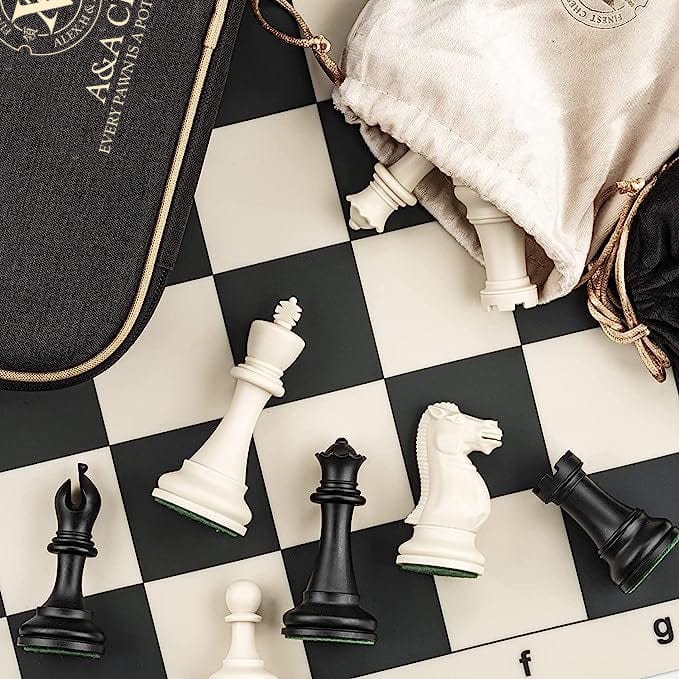
For Travel — Prioritize a folding or roll-up design with a protective storage bag. Silicone boards are the best travel option — waterproof, crease-resistant, and lay flat instantly. A&A CHESS's crease-free silicone travel sets solve the biggest complaint about travel boards: permanent wrinkles.
For Tournament & Club Play — You need FIDE/USCF-compliant equipment: 2"–2.36" squares, 3.75"–4.25" king height, Staunton design, weighted pieces.
For Gifting — A chess set is one of the most meaningful gifts you can give — intellectual, timeless, and built to last. Choose a set with attractive packaging and a multi-language guide. Mahogany or walnut folding sets make excellent gifts.
For Collection & Display — Look for solid inlaid boards in premium woods (ebony, palisander) with large squares (2.36"+) and artisan-carved pieces.
9. Caring for Your Wooden Chess Set
- Climate Control — Keep your set in a room with stable humidity (40–60% RH). Avoid radiators, fireplaces, air conditioners, or direct sunlight.
- Cleaning — Dust regularly with a soft, dry microfiber cloth. For deeper cleaning, use a slightly damp cloth and dry immediately. Never use harsh chemicals or silicone-based polish.
- Piece Care — Keep pieces in fitted storage compartments. Check felt bases periodically and re-glue any that loosen.
- Board Maintenance — For oil-finished boards, apply a thin coat of food-safe wood oil (beeswax or tung oil) once or twice a year.
- Long-Term Storage — Keep the board flat (never leaning on edge) and store pieces in their compartments. Add a silica gel packet if the environment is humid.
10. Top A&A CHESS Recommendations by Scenario
表格
| Scenario | Recommended Product | Price | Key Reason |
|---|---|---|---|
| Beginner / First Set | 15" Walnut Folding Chess Set | $34.90 (sale) | Real wood, weighted Staunton, spare queens, unbeatable value |
| Family / Home | Mahogany & Maple Inlaid Board | From $64.80 | Warm classic look, mortise-and-tenon joinery, FSC certified |
| Travel / On-the-Go | 20" Silicone Travel Set | $48.80 | Crease-free silicone, storage bag, waterproof, tournament size |
| Premium Display | Ebony & Maple Inlaid Board | From $64.80 | Deep luxury look, solid inlay, eco-certified |
| Gift Giving | 15" Walnut Folding Set w/ Packaging | $34.90 | Presentation-ready, multi-language guide, spare queens |
| Serious Training | African Palisander & Maple Board | From $64.80 | Ebony alternative, FIDE-compliant sizing, durable |
All A&A CHESS sets include: dual spare queens, weighted felt-bottomed Staunton pieces, FSC-certified wood, multi-language beginner guides, 365-day warranty, and free global shipping.
11. Final Checklist Before You Buy
- Solid wood inlay — not printed or veneer-over-MDF
- Staunton design — required for anything beyond display
- Weighted pieces — for a solid, stable feel
- Felt or velvet bases — to protect the board
- Correct size match — king base 75–80% of square size, four pawns fit per square
- FIDE/USCF compliant — if you plan to play competitively
- Spare queens included — for pawn promotion
- Quality joinery — mortise-and-tenon preferred over glue-only
- Fitted storage — felt-lined compartments for folding sets
- Safety certifications — ASTM F963, EN71, or equivalent
- Eco-certified wood — FSC certification where possible
- Warranty & replacement policy — at least 1 year, with piece replacement
- Shipping cost — factor international shipping into total price
A chess set is an investment in decades of games, conversations, and memories. Take the time to choose well — and the board you buy today will still be bringing people together long after the screens have faded.




Zostaw komentarz
Ta strona jest chroniona przez hCaptcha i obowiązują na niej Polityka prywatności i Warunki korzystania z usługi serwisu hCaptcha.