












Phones, tablets, streaming services, video games, and social media have made entertainment more accessible than ever. However, they have also made it harder for families to spend uninterrupted time together.
A screen-free family game night offers a simple alternative. It creates a regular space where parents, children, grandparents, siblings, and friends can sit around the same table, talk face to face, and enjoy an activity that does not depend on notifications, batteries, subscriptions, or internet access.
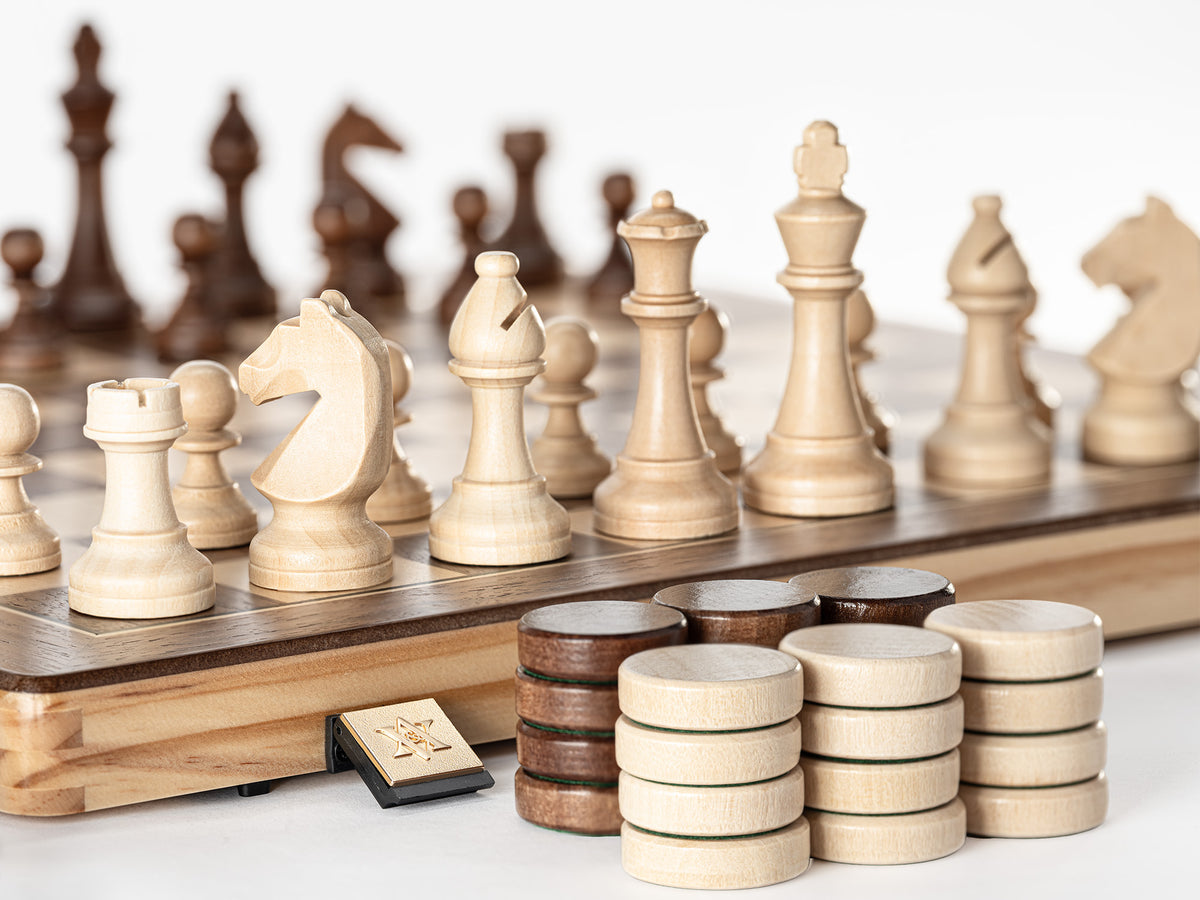
Chess is especially suitable for this type of family evening. It can be learned gradually, played at different levels, and enjoyed by people of different ages. A complete family setup can also include checkers or backgammon, giving younger players and casual guests more ways to participate.
In this guide, we explain how to organize a successful screen-free family game night, choose the right family chess set, introduce chess to beginners, and turn one evening of play into a lasting family tradition.
Table of Contents
- Why Families Are Returning to Screen-Free Activities
- Why Chess Works So Well for Family Game Night
- How to Choose the Best Family Chess Set
- Magnetic, Folding, or Drawer Storage?
- How to Teach Chess Without Making It Feel Like Homework
- Seven Family Chess Night Formats
- Recommended A&A CHESS Family Setups
- How to Create a Comfortable Game-Night Space
- Frequently Asked Questions
Why Families Are Returning to Screen-Free Activities
A screen-free evening does not require families to reject technology. The purpose is simply to create a limited period when attention is directed toward the people in the room.
This makes screen-free family activities particularly relevant to modern households. Parents may be answering work messages, children may be switching between entertainment platforms, and teenagers may be communicating through several applications at once. Even when everyone is physically together, their attention can remain divided.
A physical board game changes the environment.
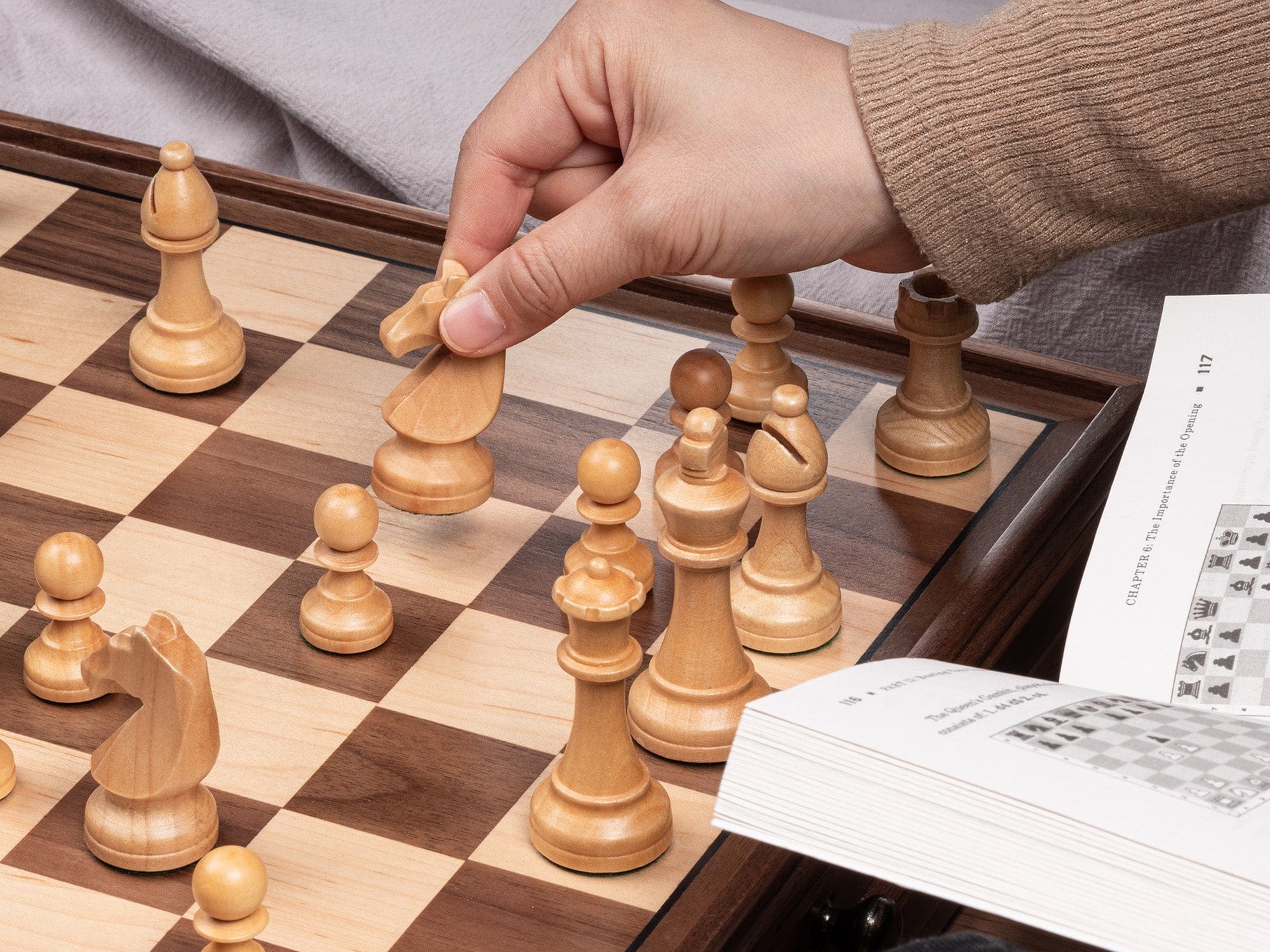
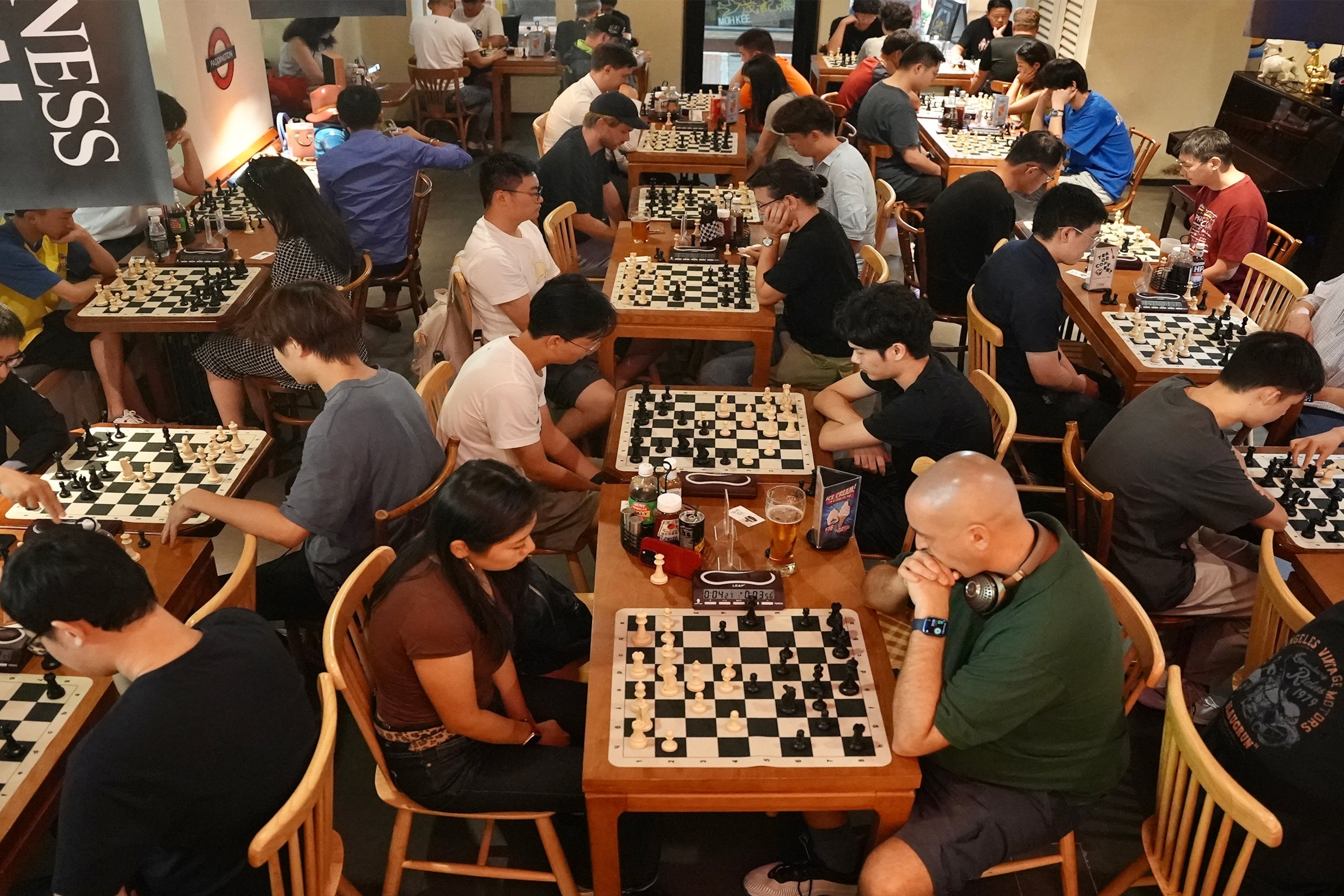
The board becomes a shared focal point. Every player can see the same position, respond to the same move, and participate in the same conversation. Unlike individual screen entertainment, chess encourages players to notice what another person is thinking and doing.
A family chess night can also become a repeatable routine. It does not need to be a major event. One game after dinner, a weekend mini-tournament, or a thirty-minute lesson between a parent and child can be enough.
The most important element is consistency.
Why Chess Works So Well for Family Game Night

Chess has a low entry barrier but an extremely high skill ceiling.
A beginner can learn how the pieces move in one evening, while an experienced player can continue studying strategy for a lifetime. This allows chess to grow with the family.
A child may begin by learning how a rook moves. Later, the same child can practice checkmate patterns, play timed games, join a school club, or teach a younger sibling.
Chess also provides several advantages for family play.
It Supports Different Ages
Young children can begin with simplified games using only a few pieces. Teenagers may enjoy rapid games or tactical challenges. Adults can play complete matches, while grandparents can share familiar strategies and stories.
It Encourages Conversation
Players naturally discuss legal moves, plans, mistakes, and possible alternatives. Even after a game ends, the position can remain on the board for analysis.
It Does Not Require Constant New Content
The same board creates a different game every time. Families do not need to purchase new levels, expansion passes, or monthly subscriptions to continue playing.
It Can Be Competitive or Cooperative
Chess is normally a two-player game, but families can also solve positions together, play adults against children, organize team consultation games, or help one beginner analyze a position.
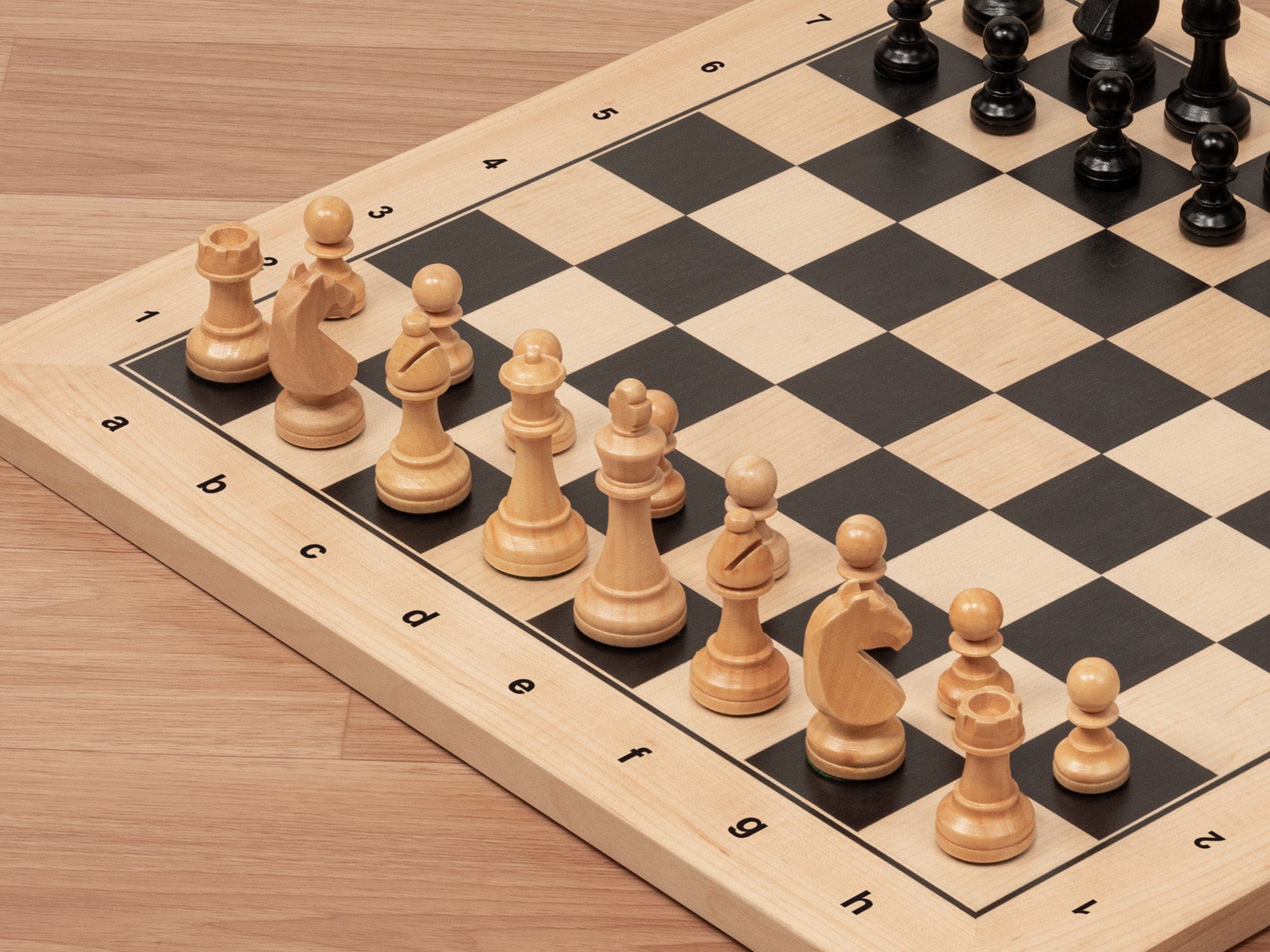
Families starting from the beginning can use the illustrated basic rules of chess to learn the initial setup, piece movements, and basic board orientation.
How to Choose the Best Family Chess Set
The best family chess set is not always the largest, most expensive, or most decorative option. It should match the age of the players, available table space, storage needs, and frequency of use.
Before choosing a set, consider five factors.
1. Board Size
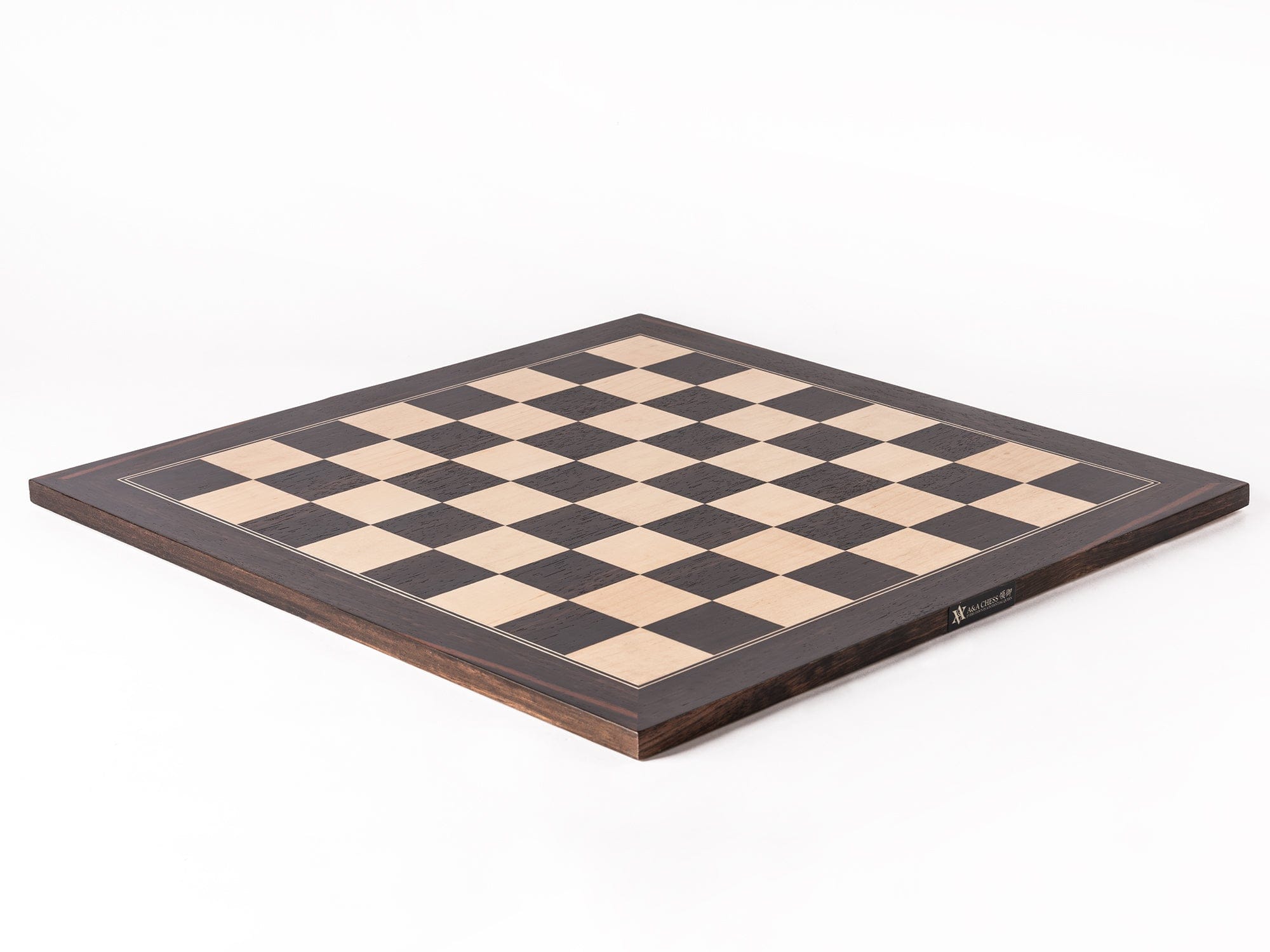
A board should be large enough for pieces to remain visually clear but compact enough to fit comfortably on the family table.
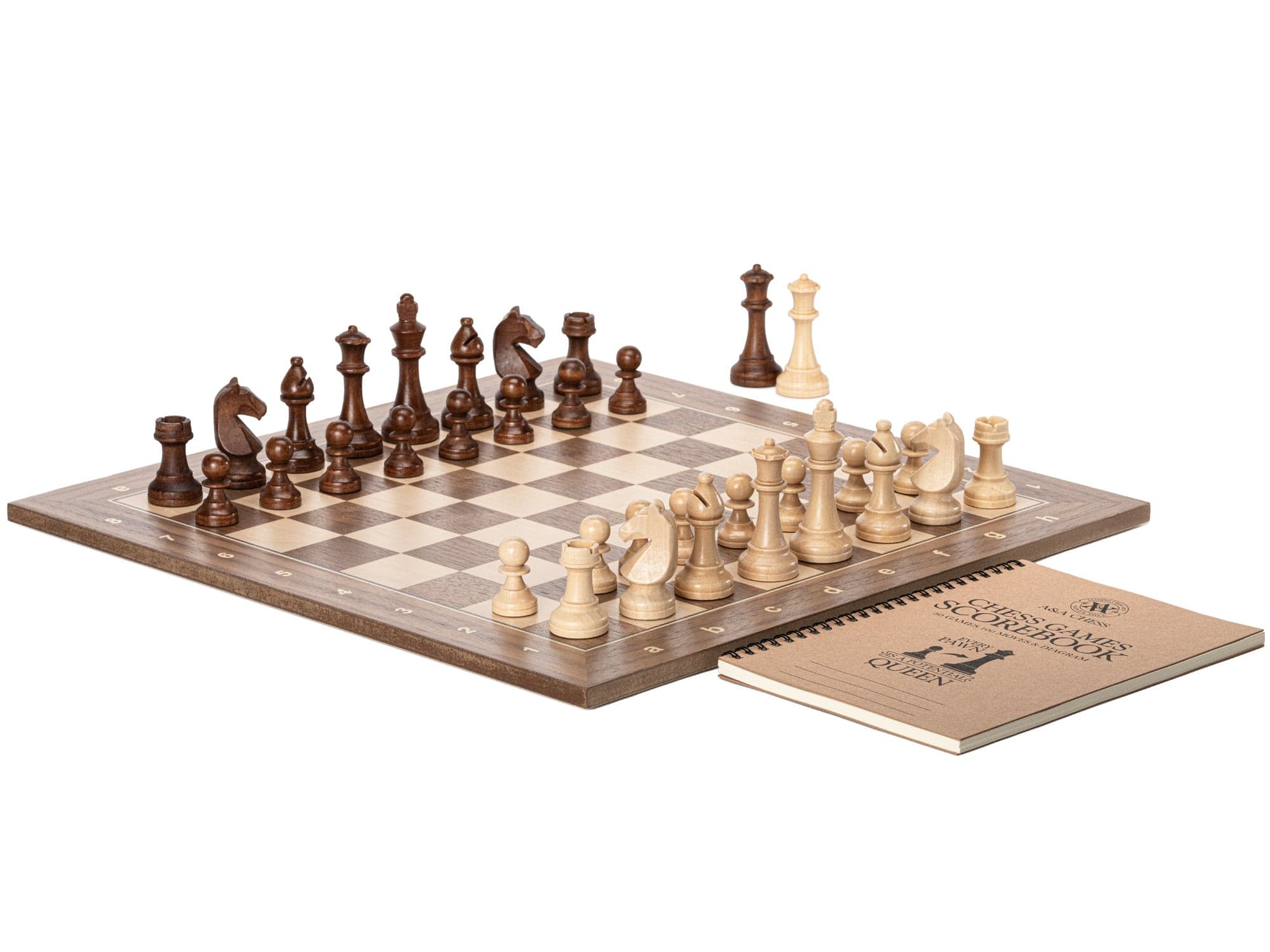
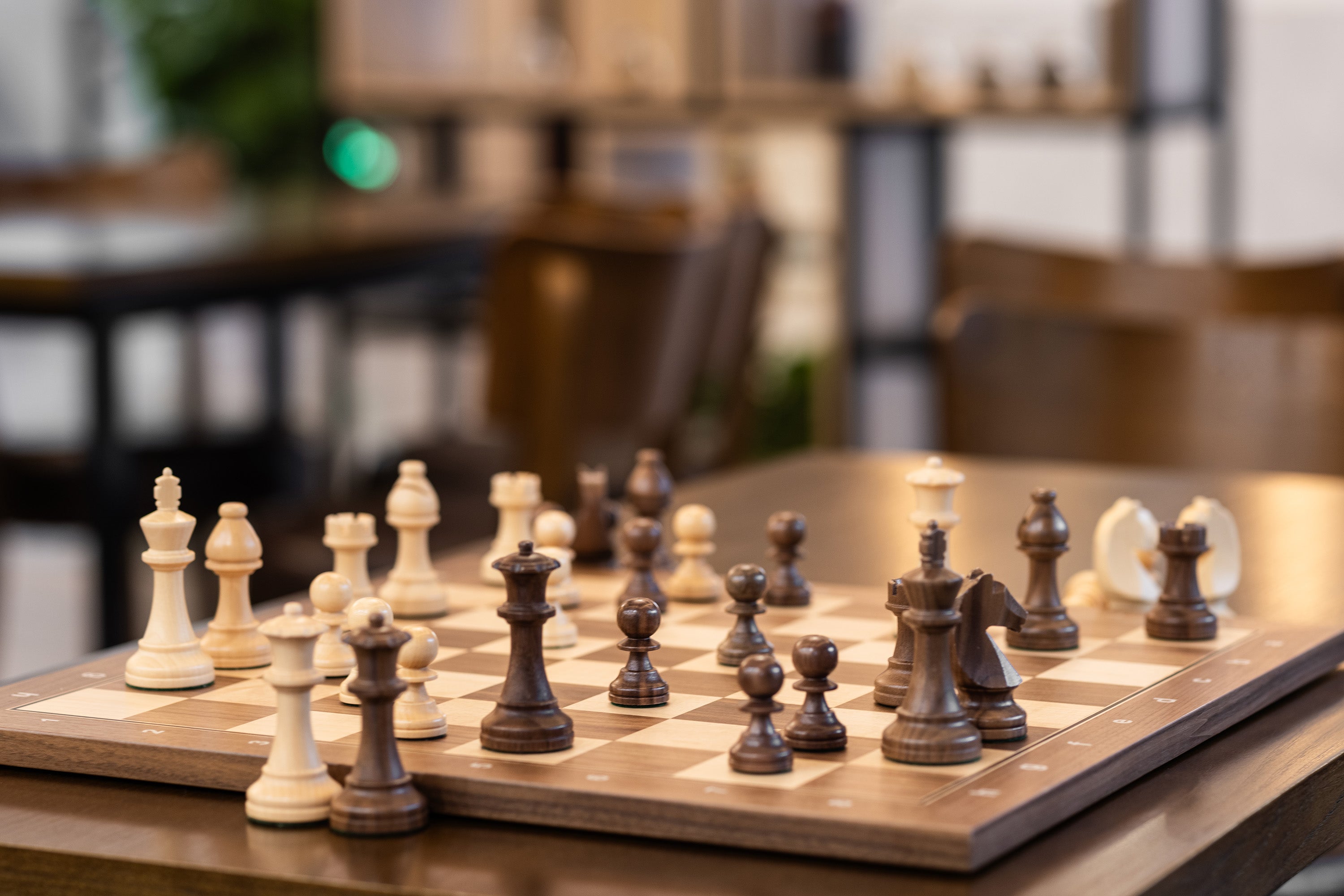
A board around 15 inches is a practical middle size for many homes. It provides sufficient playing space while remaining easier to store than a full tournament board.
Remember to leave space around the board for captured pieces, drinks, a scorebook, or a chess clock.
2. Piece Stability
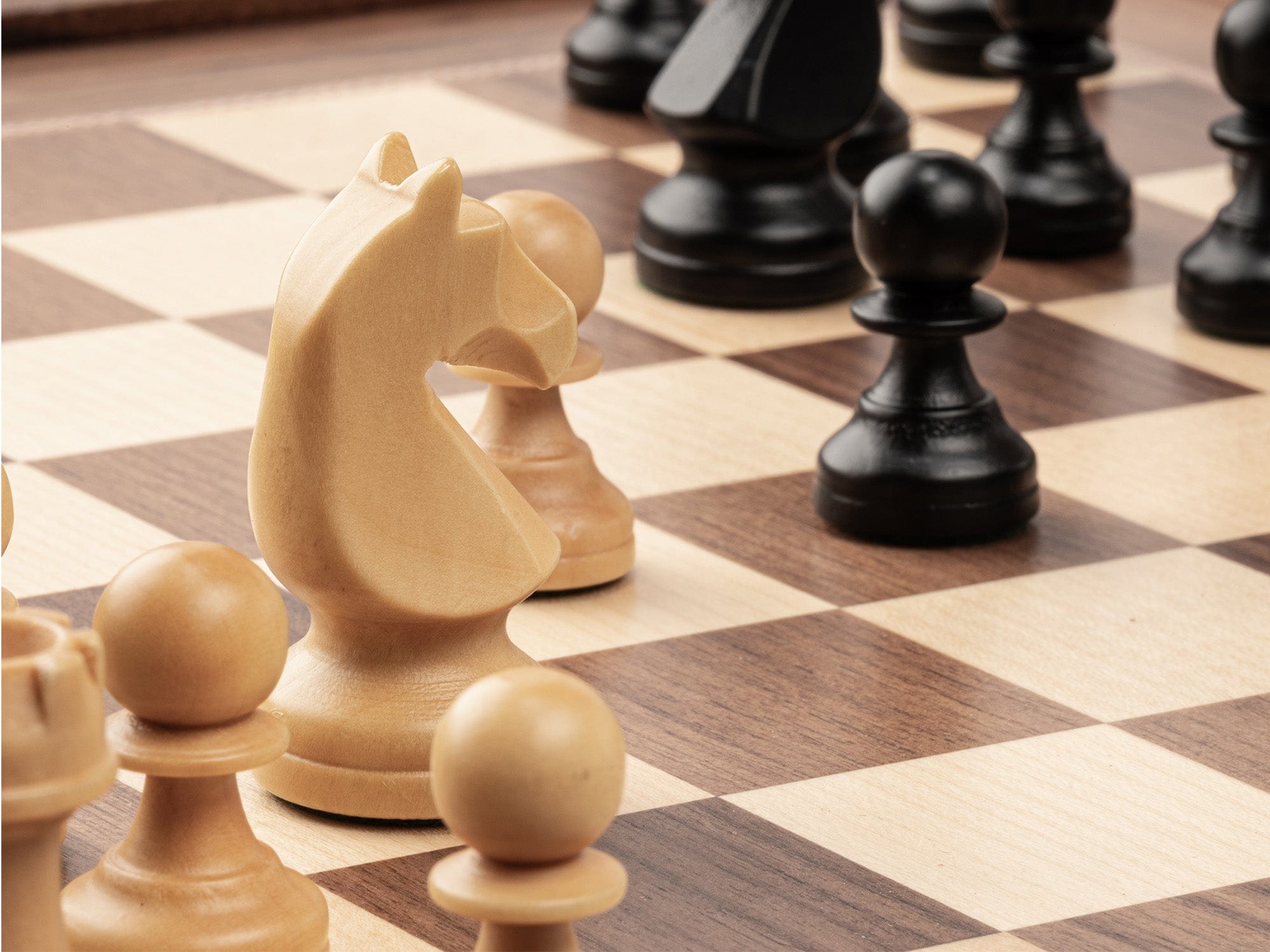
Young players may accidentally touch nearby pieces, bump the table, or move too quickly. A stable piece base makes the game less frustrating.
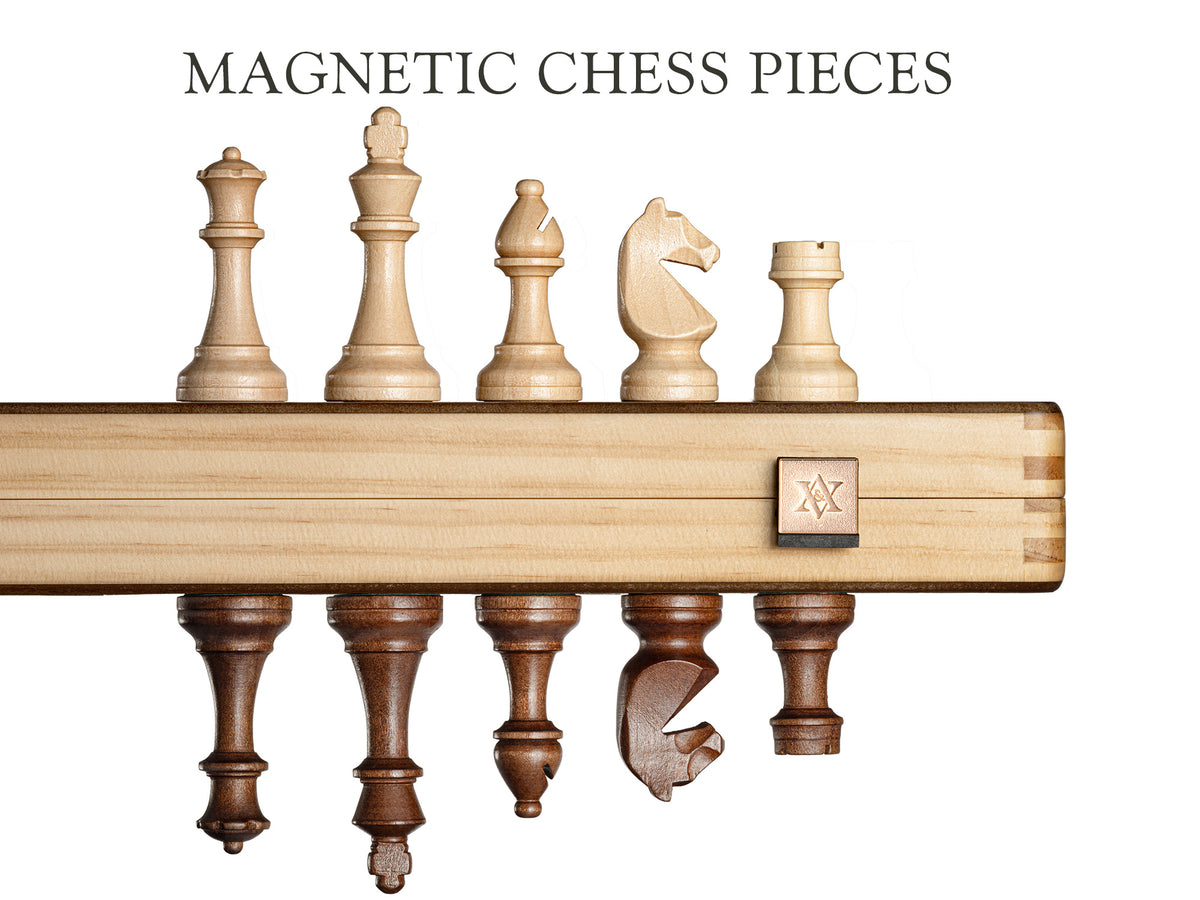
Weighted pieces provide a solid feel, while magnetic pieces help prevent the position from being disturbed.
3. Storage
Missing pieces are one of the most common problems with household board games.
Look for:
- Individual storage slots
- A built-in drawer
- Internal trays
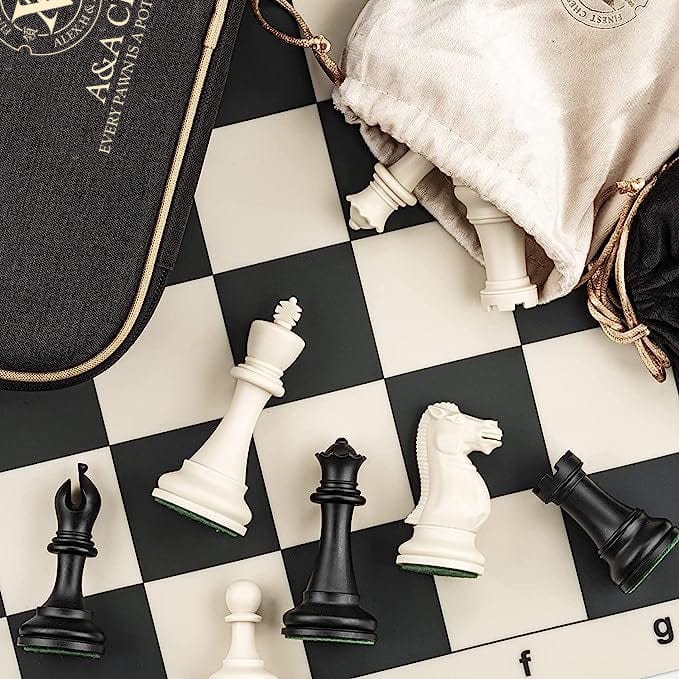
- Felt storage bags
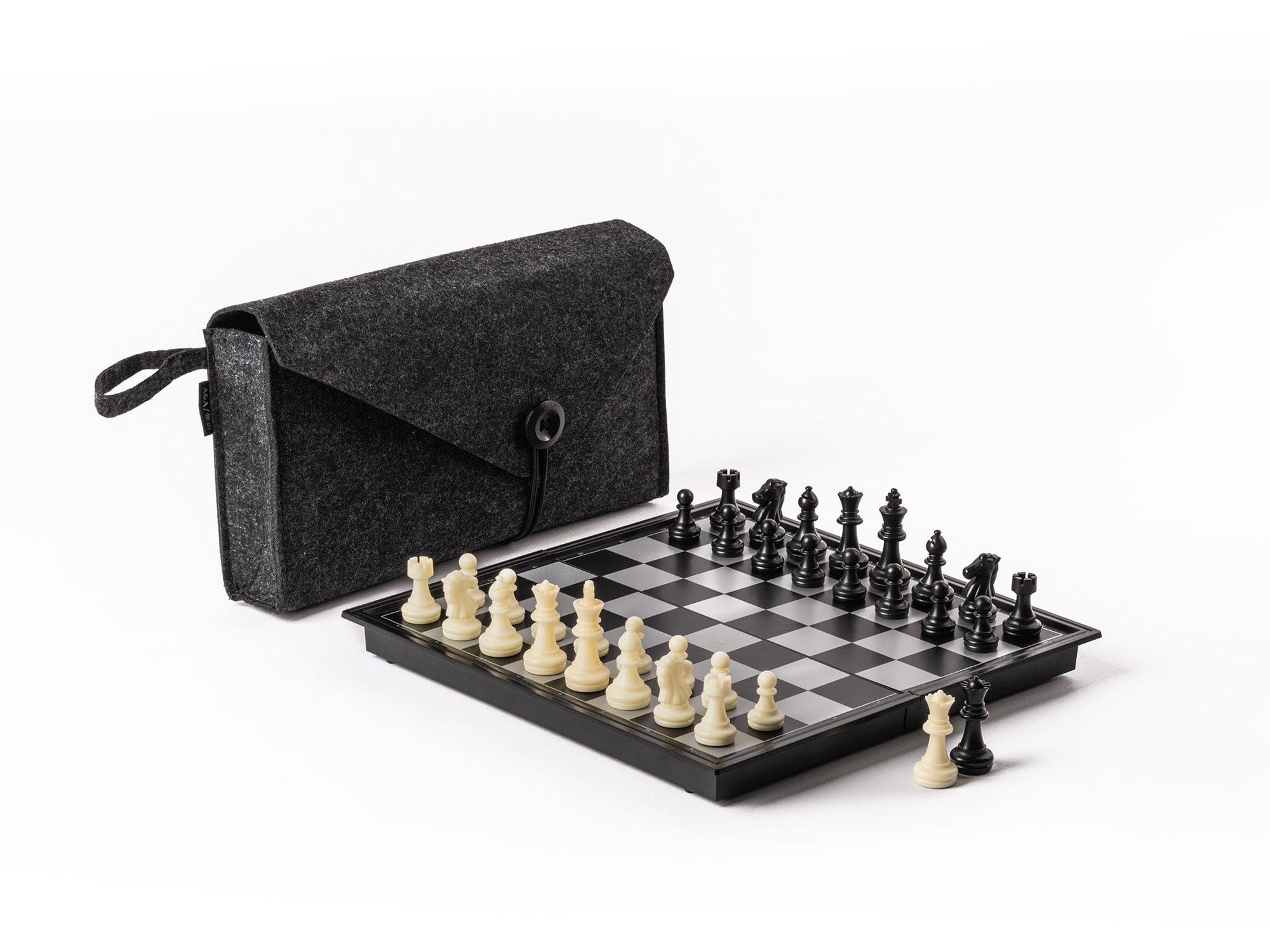
- A folding board with protected compartments
A well-organized set is easier to use regularly because the family does not need to search for pieces before every game.
4. Durability
A family chess set may be opened several times a week and handled by players with different levels of experience.
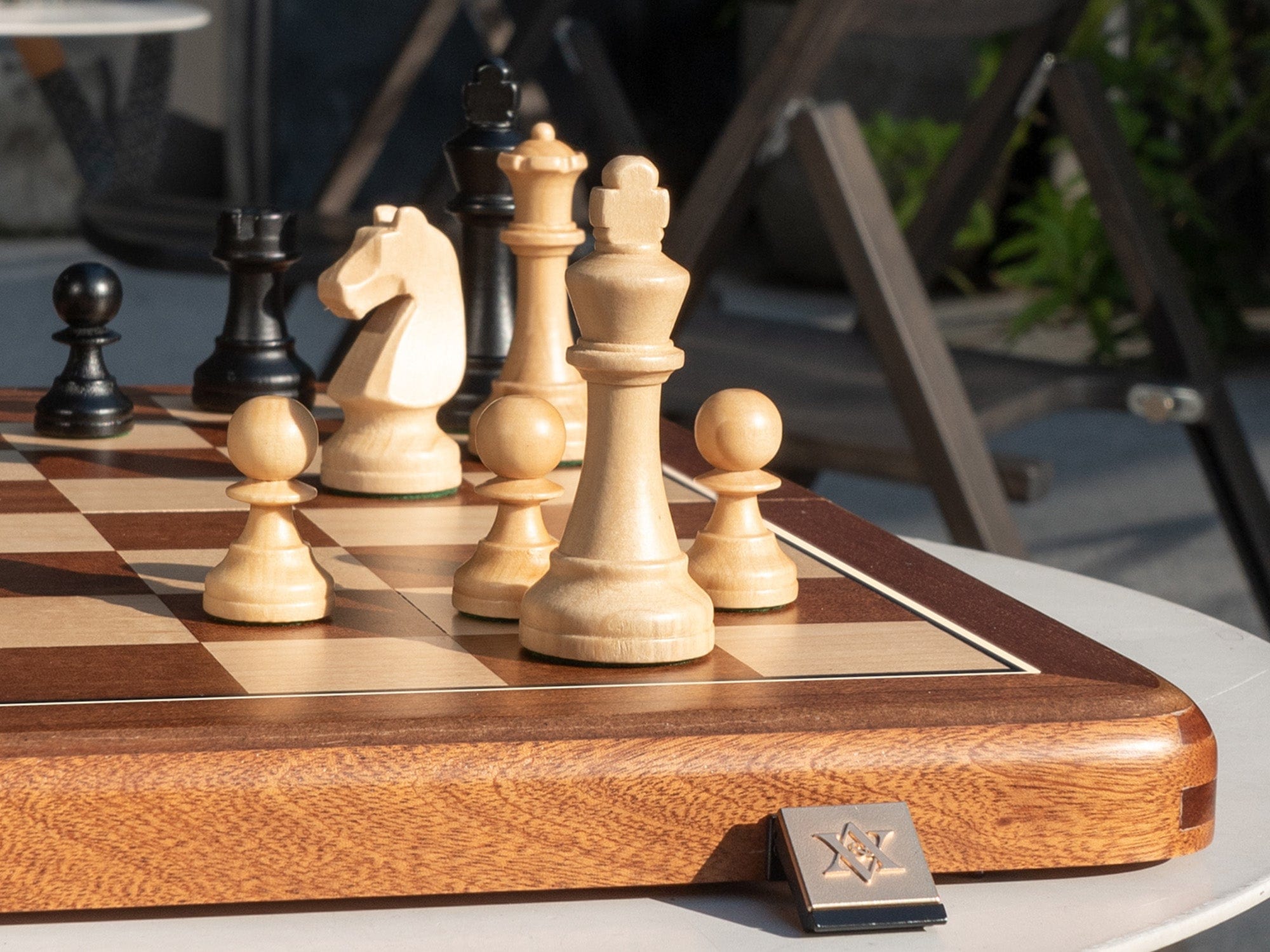
Solid wood pieces, reinforced hinges, rounded board corners, felted bases, and secure storage all contribute to long-term usability.
5. Game Variety
Some households will use chess most often. Others may benefit from a set that also includes checkers or backgammon.
A multi-game set helps family members choose a game based on available time, age, and experience.
Browse the A&A CHESS beginner chess sets for accessible options designed for students, families, and new players.
Magnetic, Folding, or Drawer Storage?
Each design solves a different family-use problem.
Magnetic Chess Sets
A magnetic chess set helps pieces remain in position if the board is touched or moved.
This makes magnetic sets useful for:
- Families with younger children
- Small tables
- Outdoor patios
- Holiday travel
- Casual games in cafés
- Homes with pets
- Players who like to pause and continue a game later
Magnet strength should be balanced. The pieces should remain stable without becoming difficult to lift.
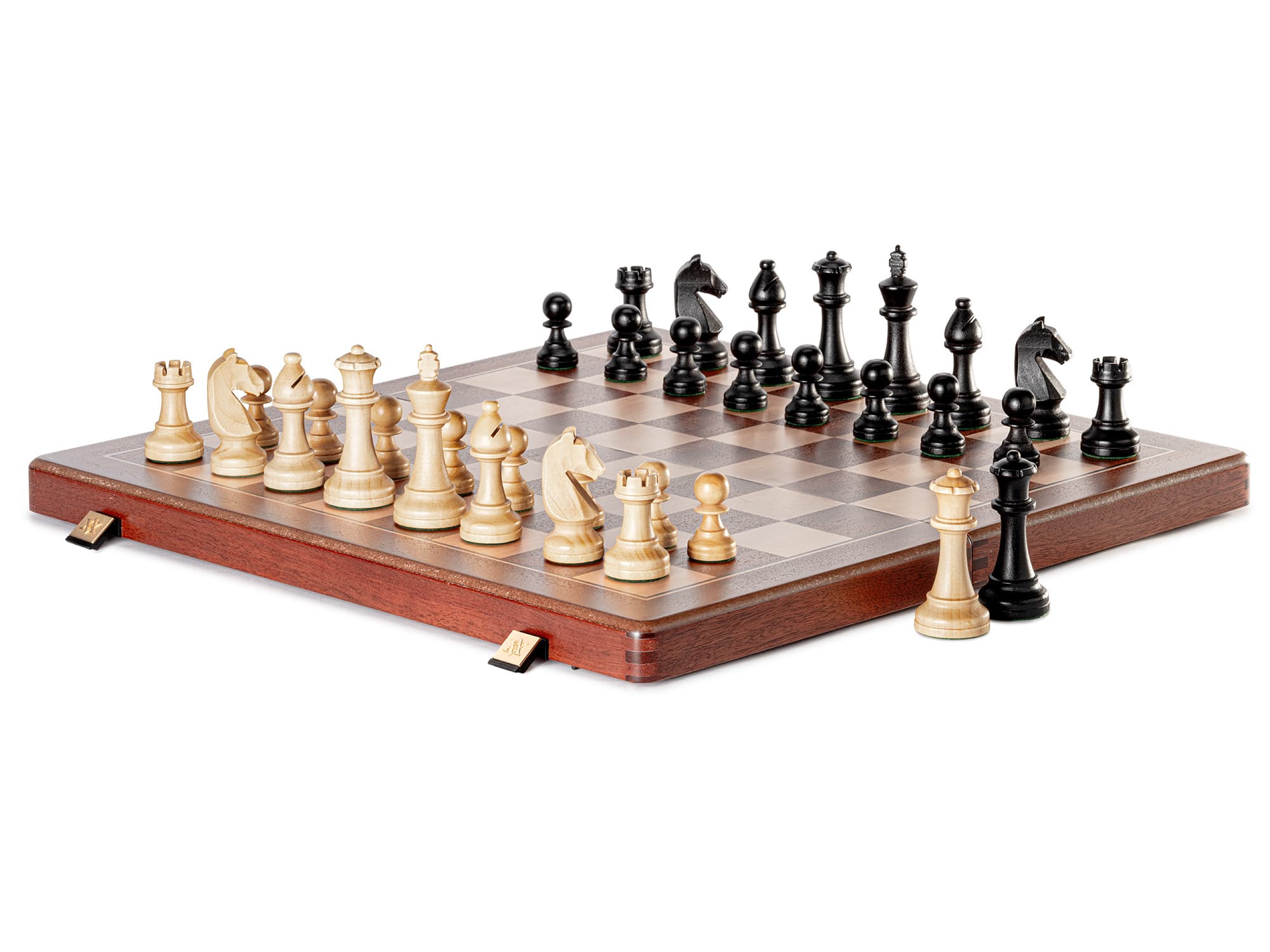
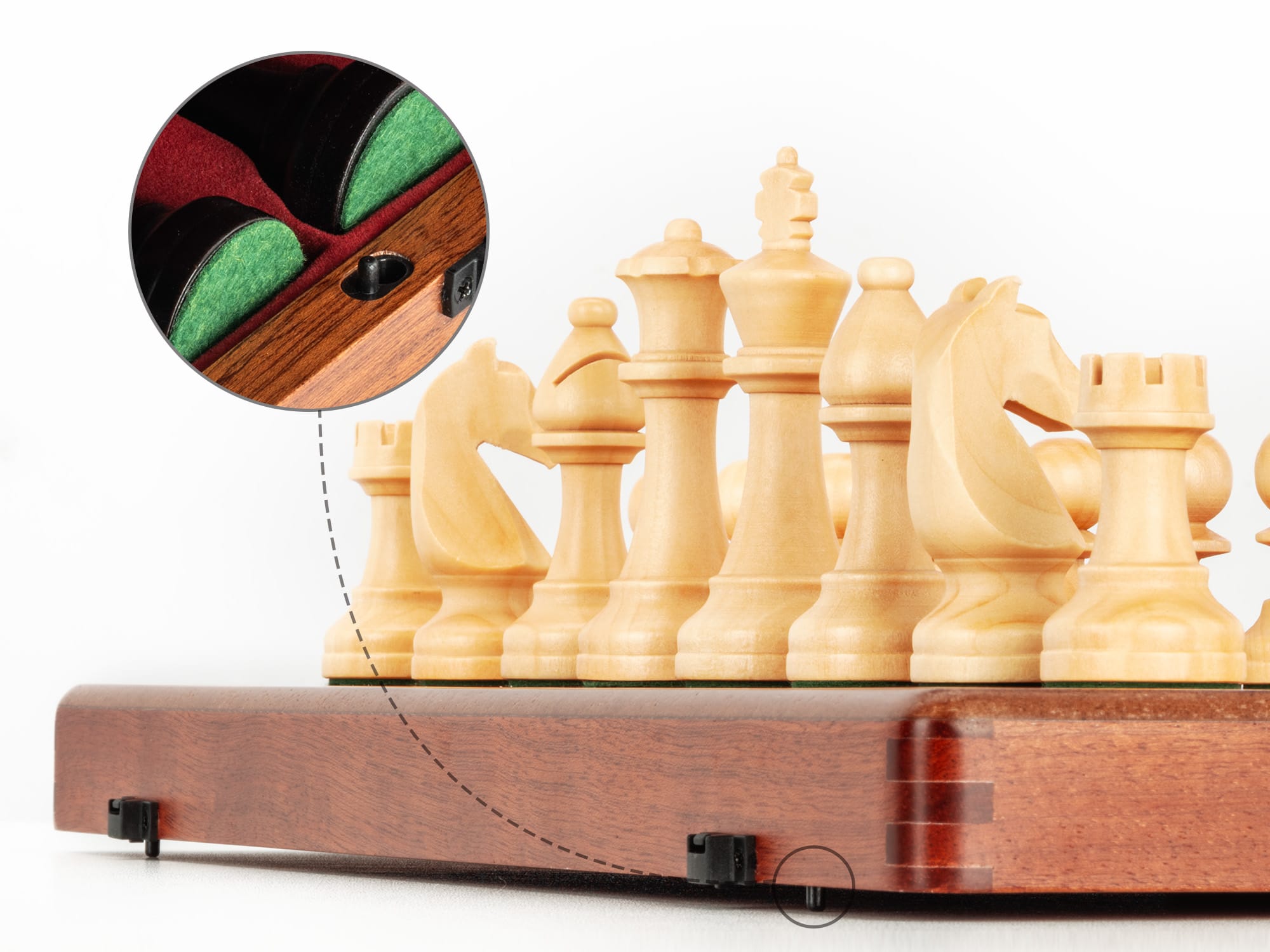
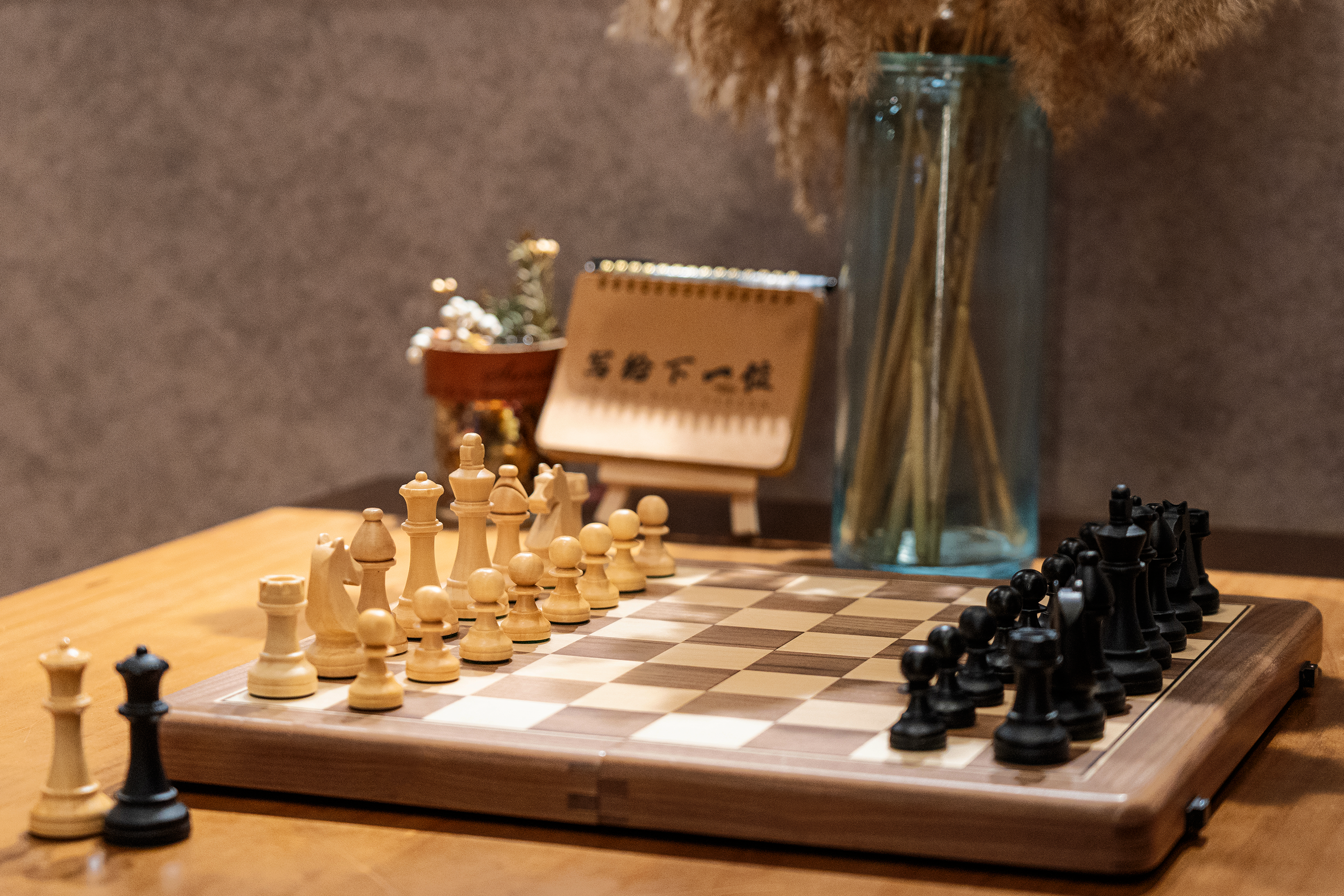
The 15-inch natural wood folding magnetic chess set uses solid wood pieces with built-in magnets and felted bases. Its playing board measures approximately 15 by 15 inches, with 1.57-inch squares and a 3-inch king.
A dedicated internal tray keeps the pieces separated, while the folding design reduces the amount of space required for storage.
Folding Chess Sets
A folding board is one of the most practical choices for everyday family play.
When opened, it provides a complete playing surface. After the game, the board can be folded and placed on a shelf, inside a cabinet, or in a travel bag.
However, folding boards should lie flat during play. A raised center seam can cause pieces to tilt or create an uneven surface.
The 15-inch magnetic wooden folding chess set uses a support structure designed to keep the board stable and flat. It also includes organized piece storage and a compact folded profile for easier transportation.
Chess Sets with Drawers
A drawer-style chess set is ideal for families that want to leave the board visible as part of the room.
The drawer keeps the pieces organized without requiring the board itself to fold. Players can pull out the drawer, set up the pieces, and begin a game without opening a separate container.
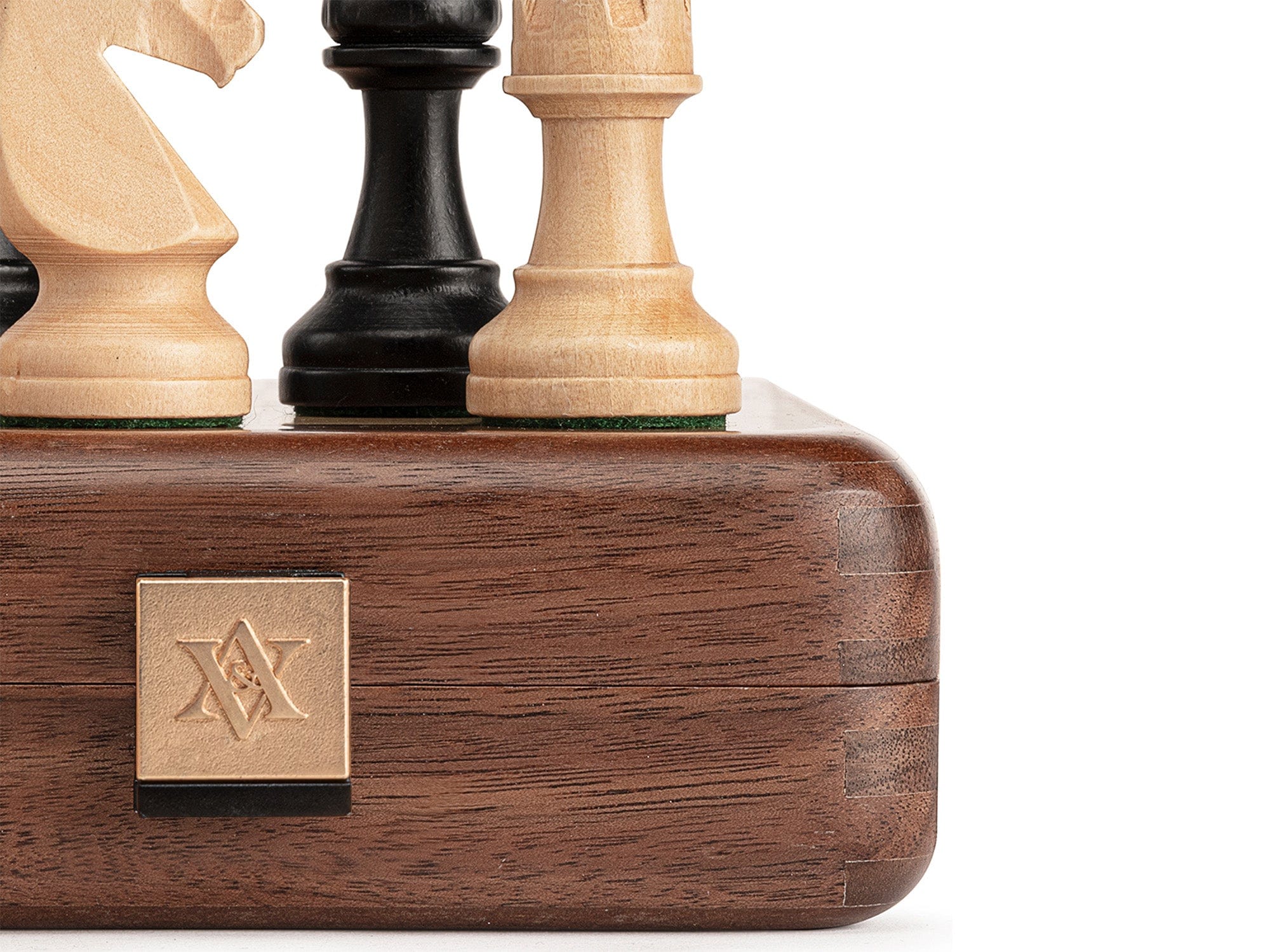
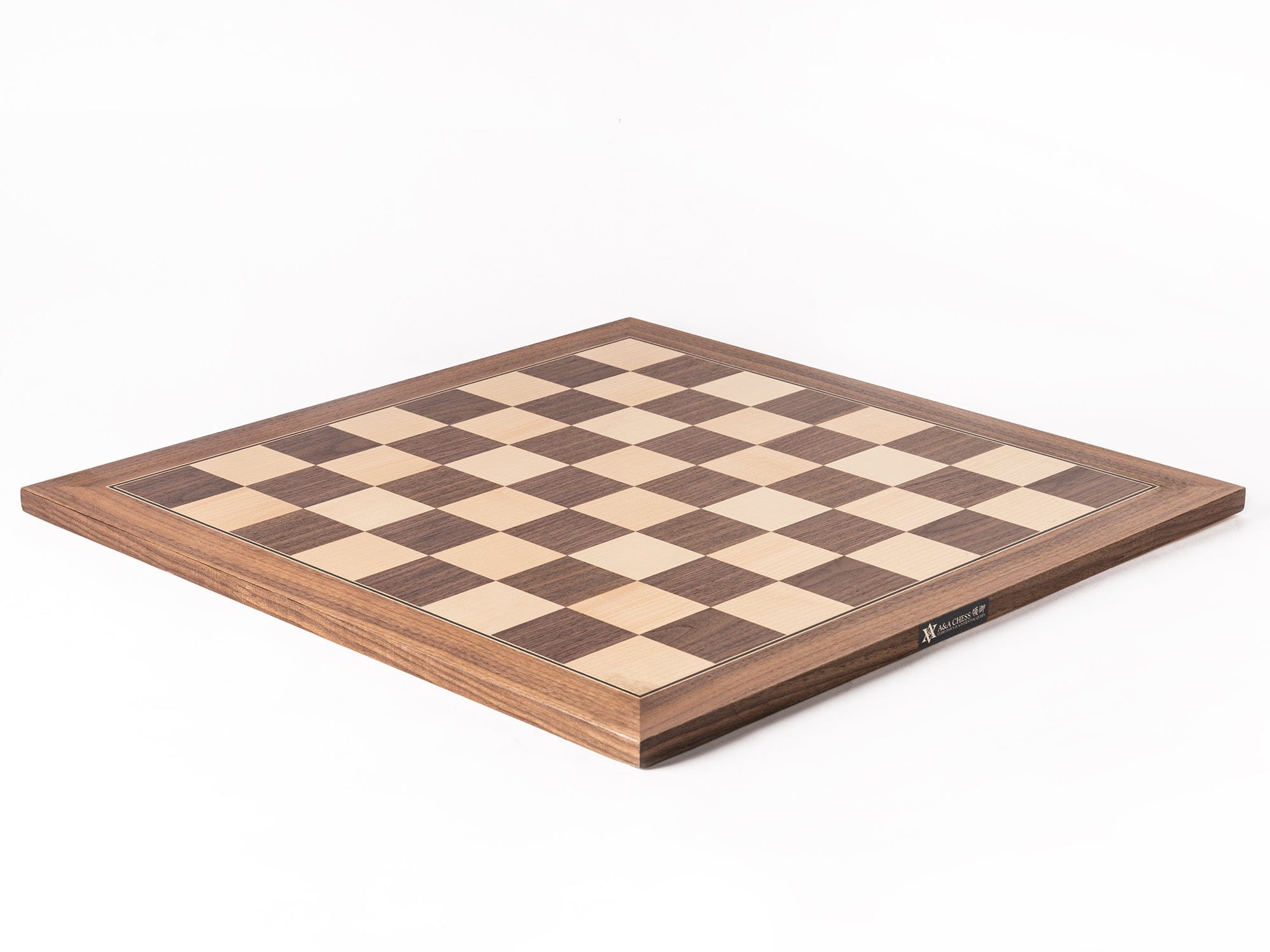
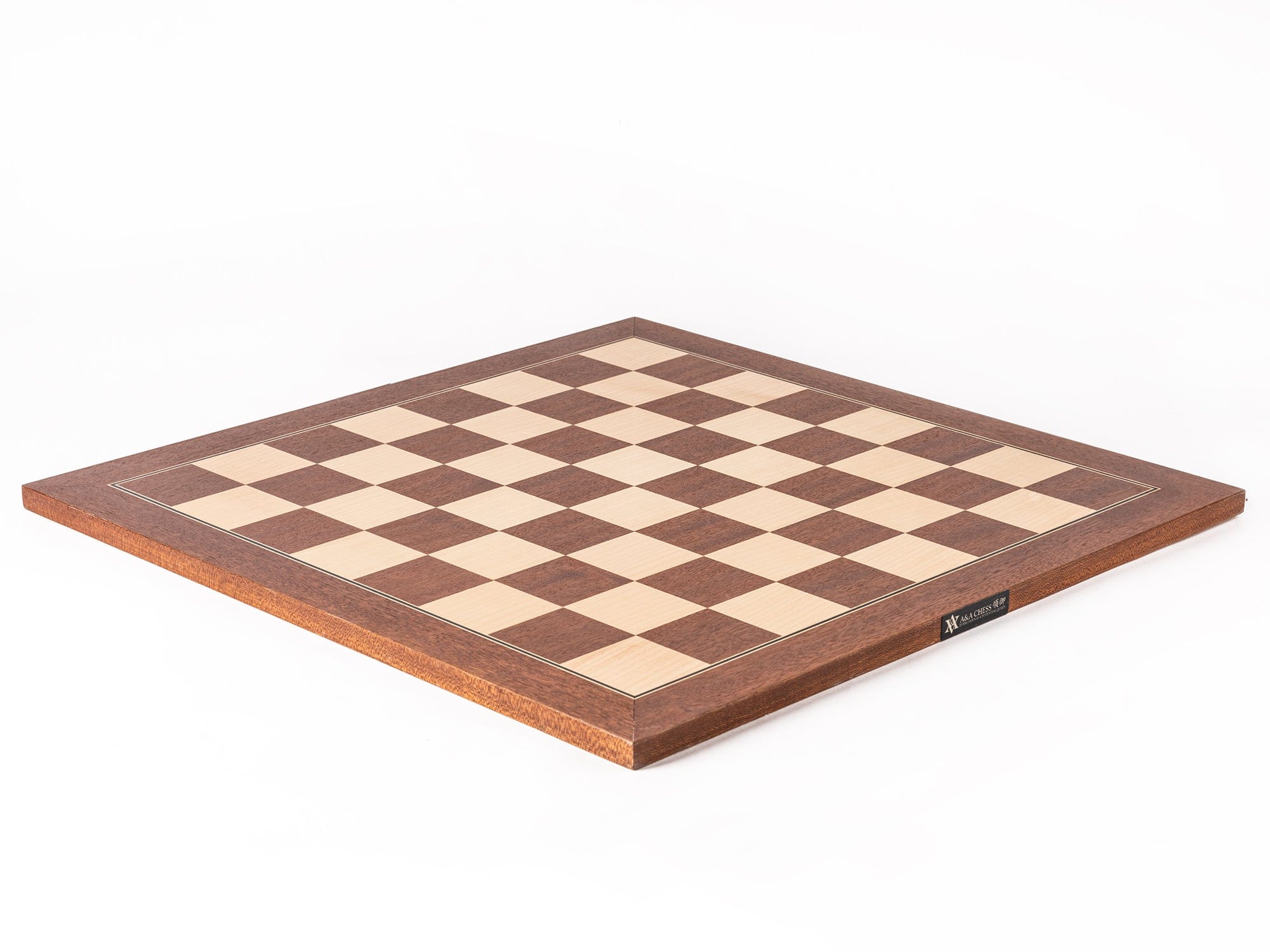
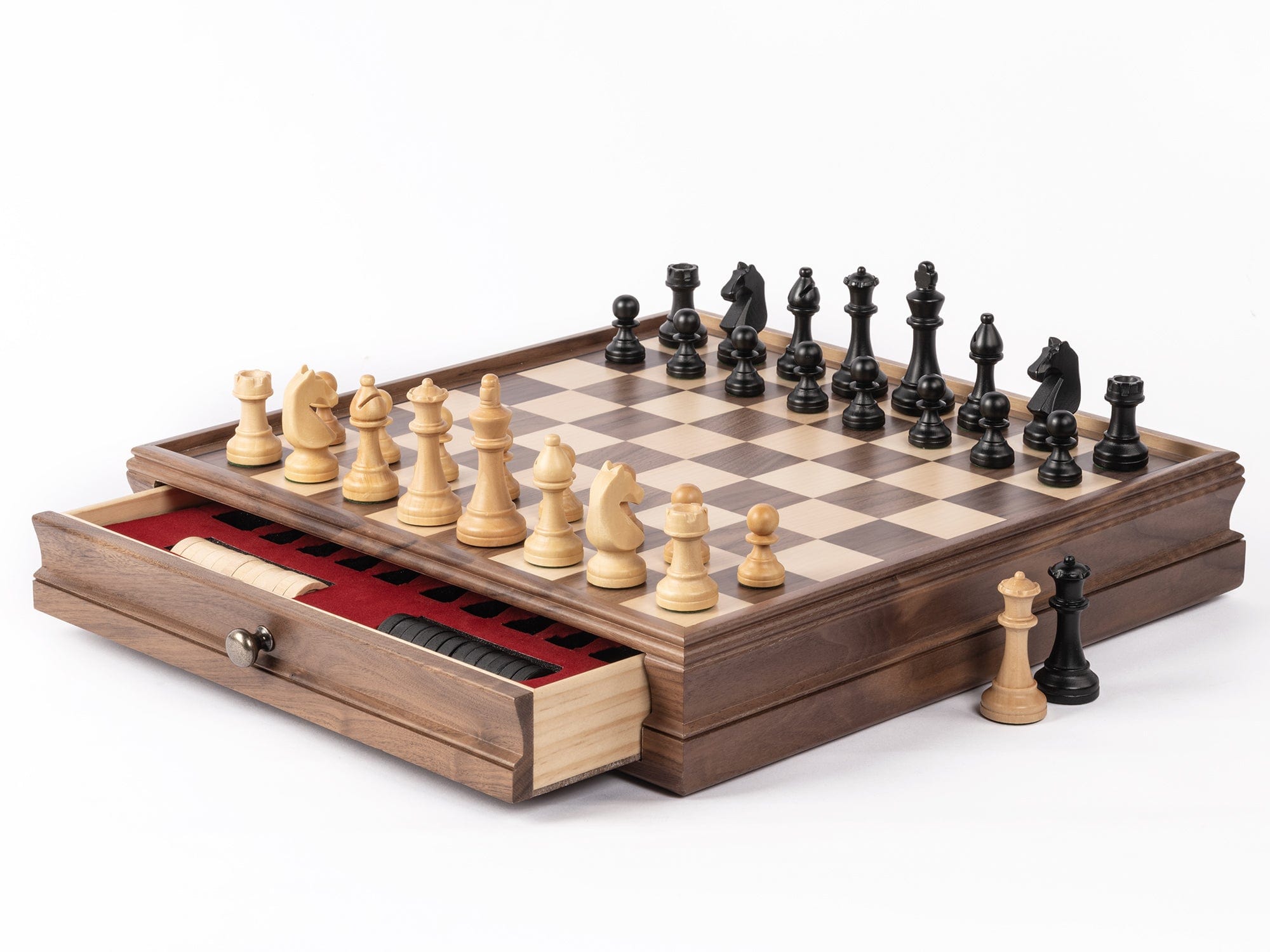
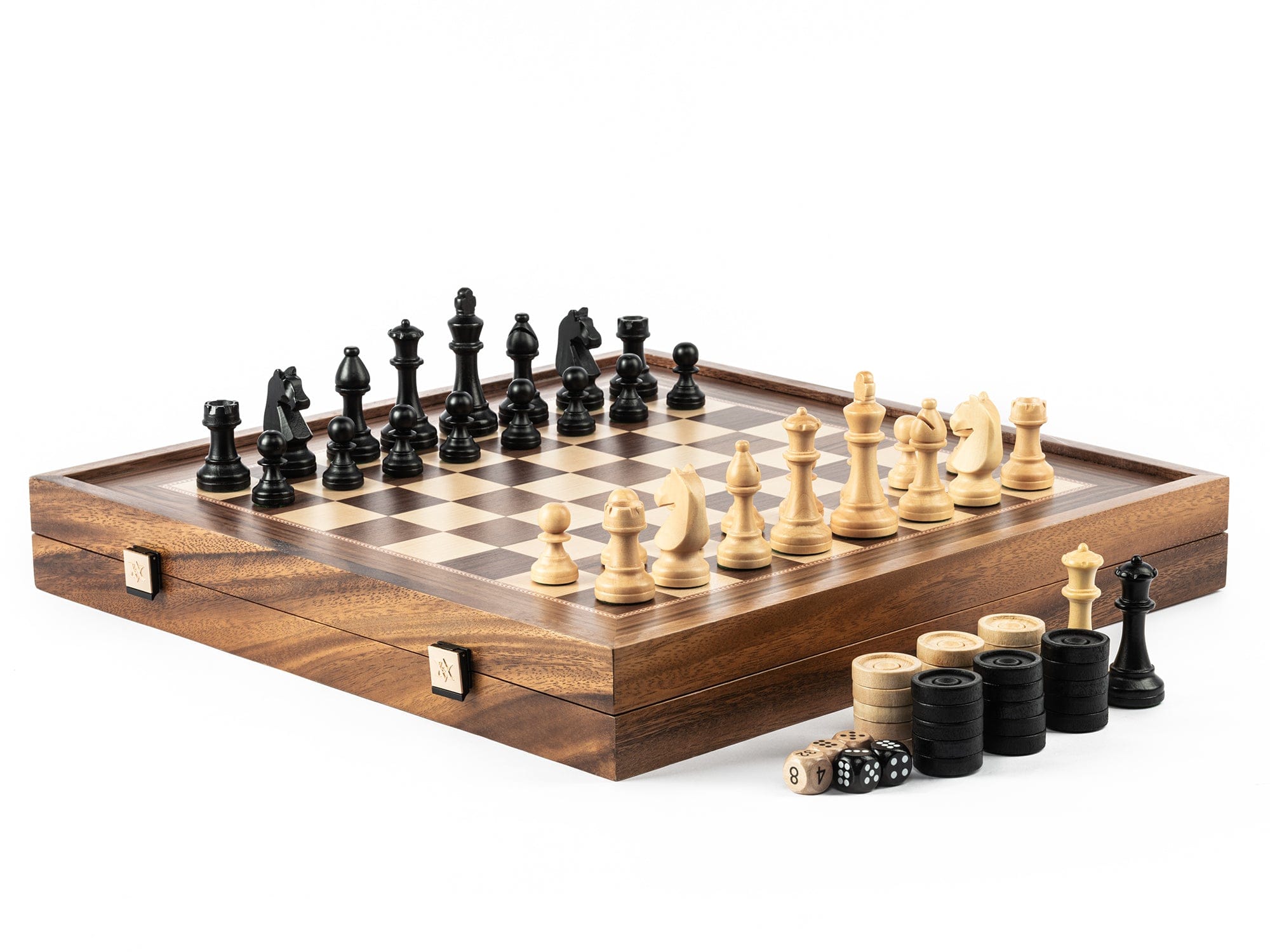
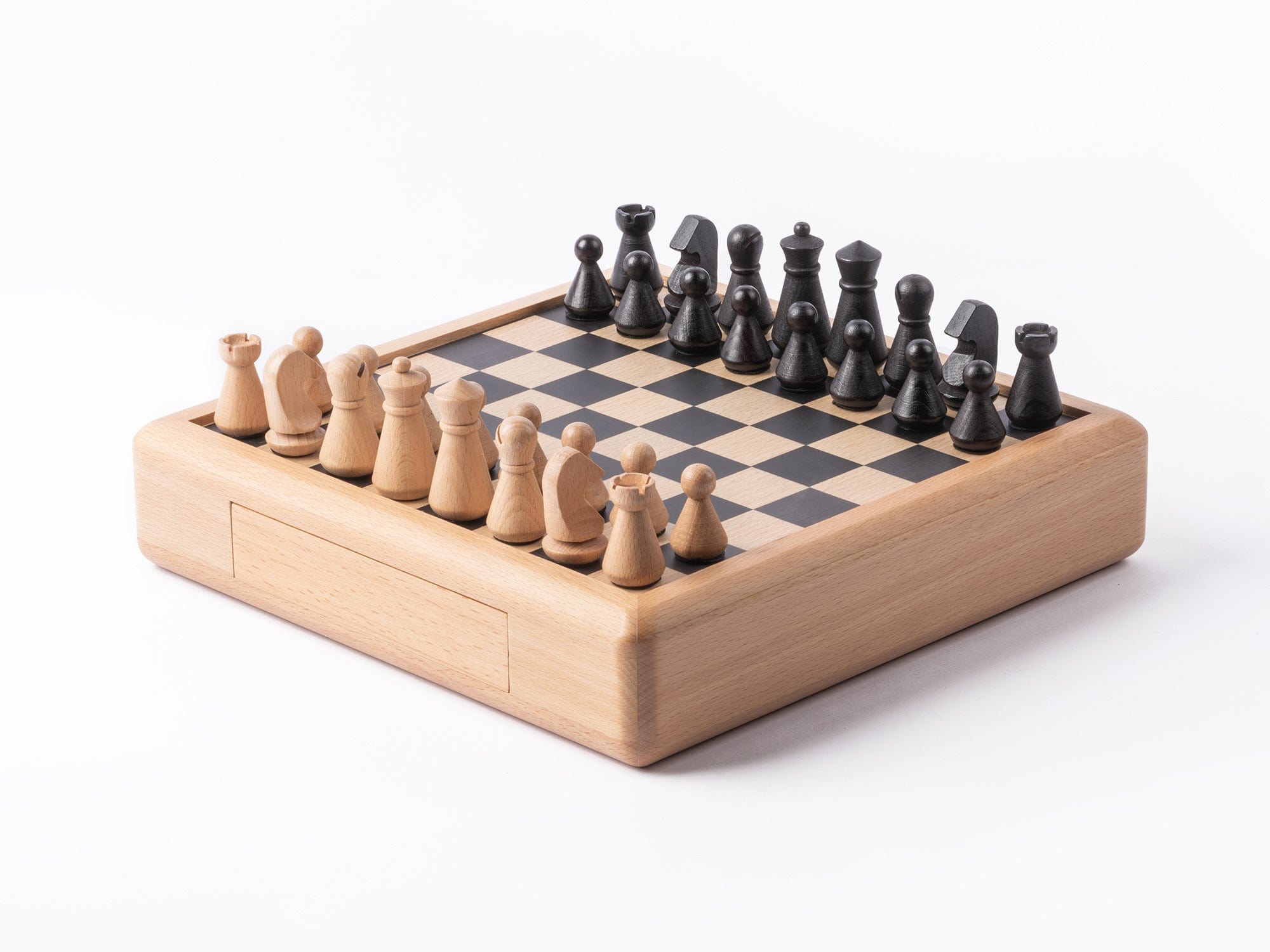
The 15-inch walnut chess and checkers set with drawer combines chess and checkers in one wooden set.
Its built-in, velvet-lined drawer protects the pieces and reduces clutter. The walnut and maple playing surface also allows the set to function as a decorative object on a coffee table, desk, or bookshelf.
Families interested in a board that works as both entertainment and interior décor can explore the decorative chess set collection.
How to Teach Chess Without Making It Feel Like Homework

A common mistake is trying to explain every chess rule, special move, opening principle, and tactical idea in the first lesson.
That approach can overwhelm beginners.
Instead, introduce chess in small stages.
Begin with the Board
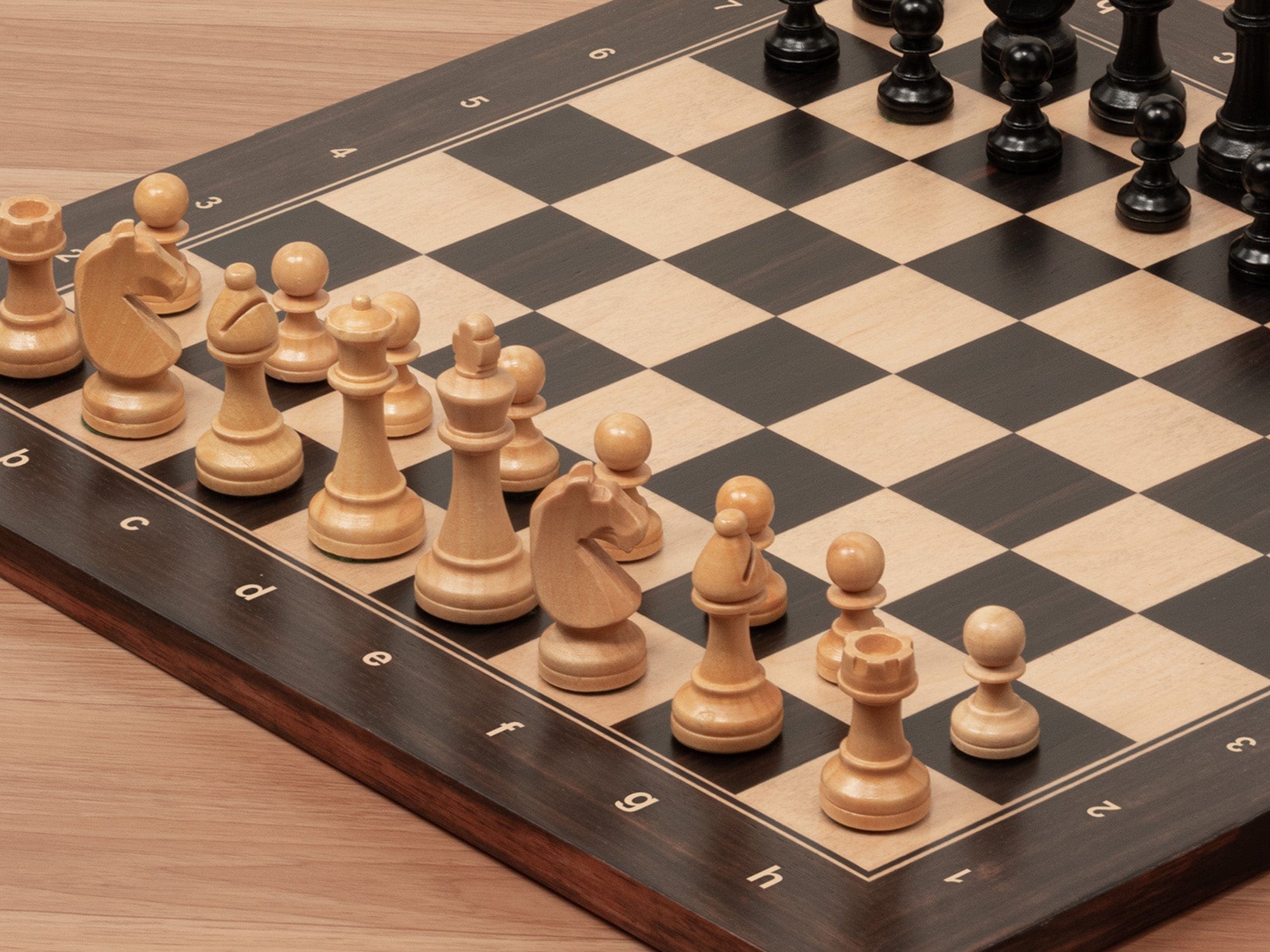
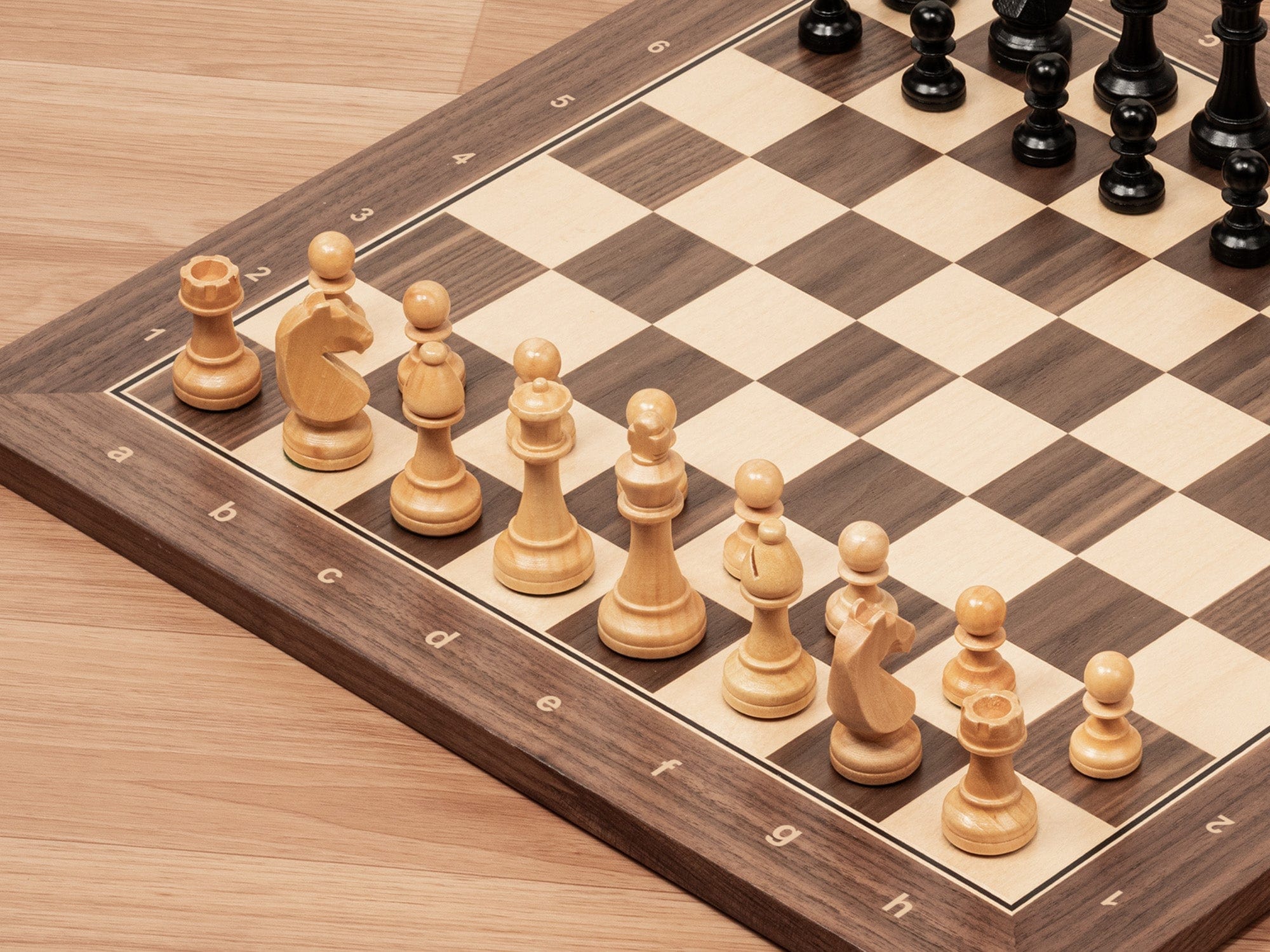
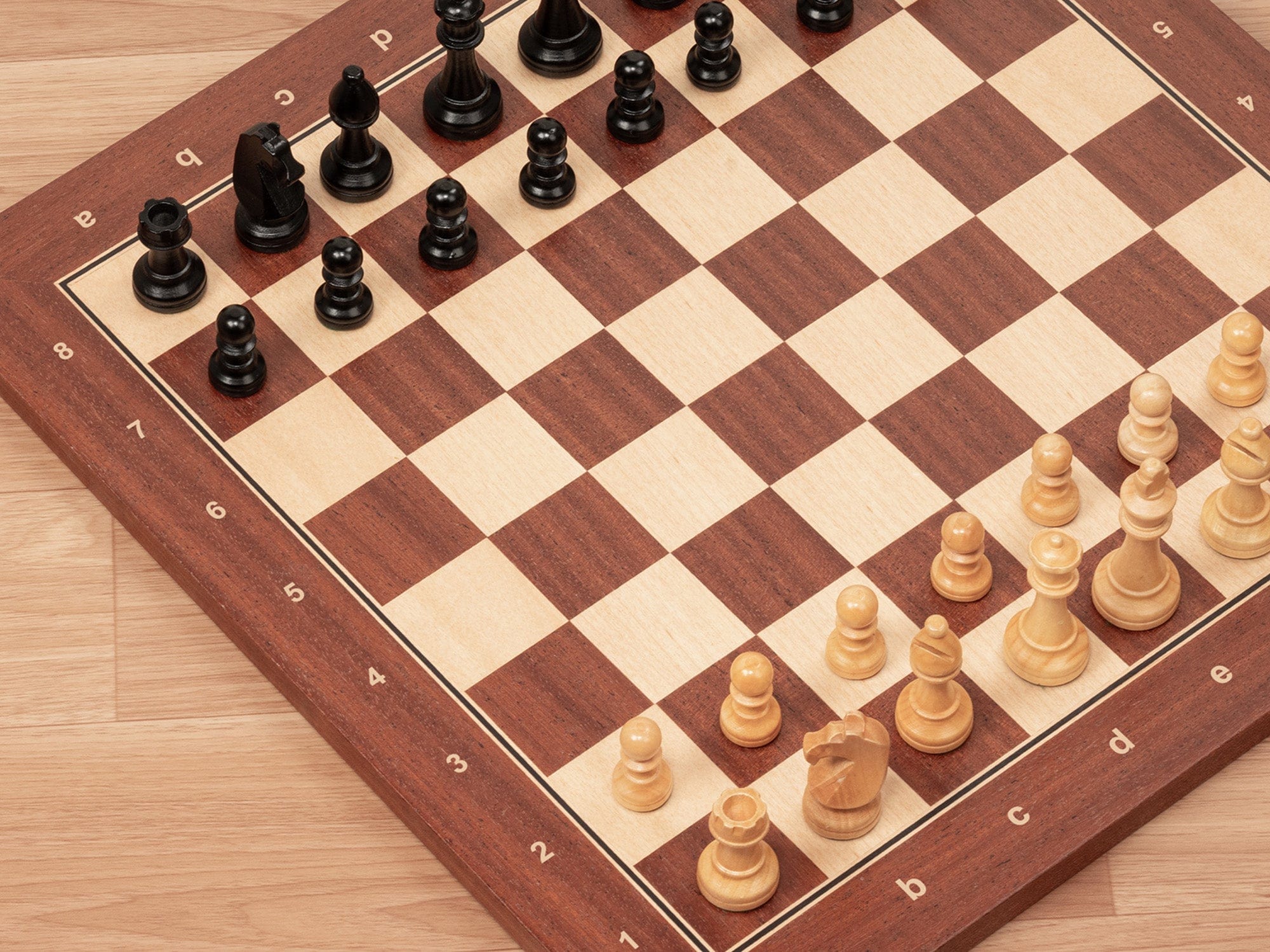
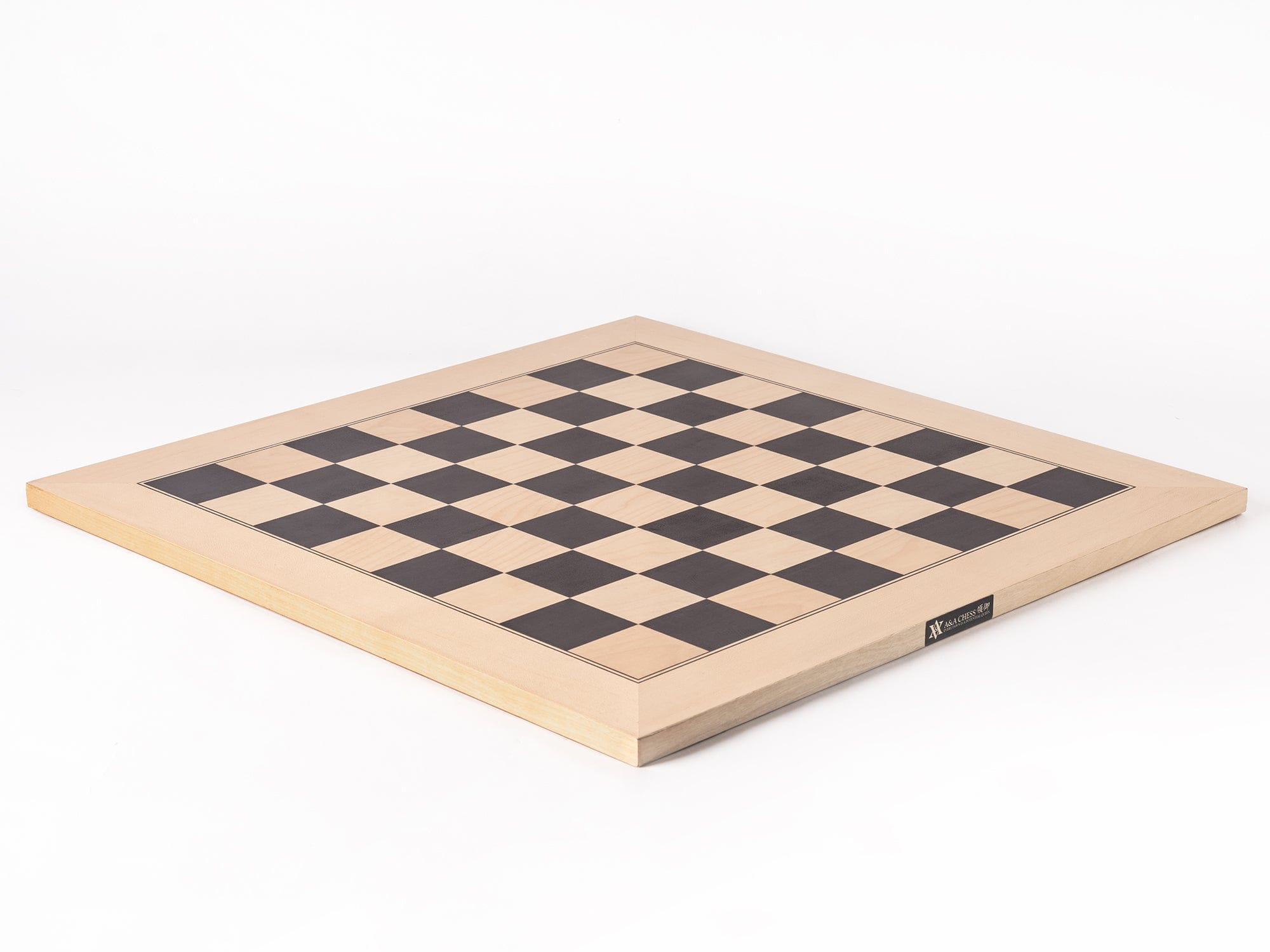
Show the player that the board contains 64 alternating squares. Position it so that the lower-right corner is a light square.
Then explain that each side begins with 16 pieces.
Introduce One Piece at a Time
Start with simple pieces such as the rook or bishop.
Place only a few pieces on the board and let the beginner move them. Ask questions such as:
- Which squares can the rook reach?
- Can the bishop change square color?
- What pieces can the knight jump over?
- Which piece is worth protecting most?
This turns the lesson into exploration instead of memorization.
Play Mini-Games
A complete chess game may be too long for a young beginner. Mini-games allow players to practice one skill at a time.
Examples include:
- Pawns racing to the opposite side
- One rook trying to capture several pawns
- King and queen against king
- Knight movement challenges
- Finding all legal captures
- Escaping from check
Avoid Correcting Every Move
Beginners need room to make decisions.
Instead of immediately saying that a move is wrong, ask what the player thinks might happen next. This helps them notice threats independently.
Celebrate Improvement, Not Only Victory
A beginner may lose the game but still recognize a check, protect a piece, or complete castling correctly.
These small achievements should be treated as progress.
Seven Family Chess Night Formats
A family chess night does not need to follow the same format every week. Variety helps maintain interest.
1. Parent-versus-Child Match
Play one complete game without distractions. The stronger player can begin with fewer pieces or allow the beginner to take back one move.
2. Family Team Chess
Divide the family into two teams.
Team members discuss their move before one representative places the piece. This format makes chess more social and allows beginners to learn from experienced relatives.
3. Chess and Checkers Night
Begin with a chess game and finish with checkers, or allow each family member to choose one game.
A wooden chess and checkers set provides both options on one board and can be useful when players have different experience levels.
4. Puzzle Night
Set up tactical positions and let everyone search for the best move.
Give one point for finding a check, two points for winning material, and three points for discovering checkmate.
5. Family Ladder
Create a simple ranking board.
When one player defeats someone above them, the players exchange positions. Reset the ladder every month so new players can participate without feeling permanently behind.
6. Ten-Minute Challenge
Give each player ten minutes for the complete game.
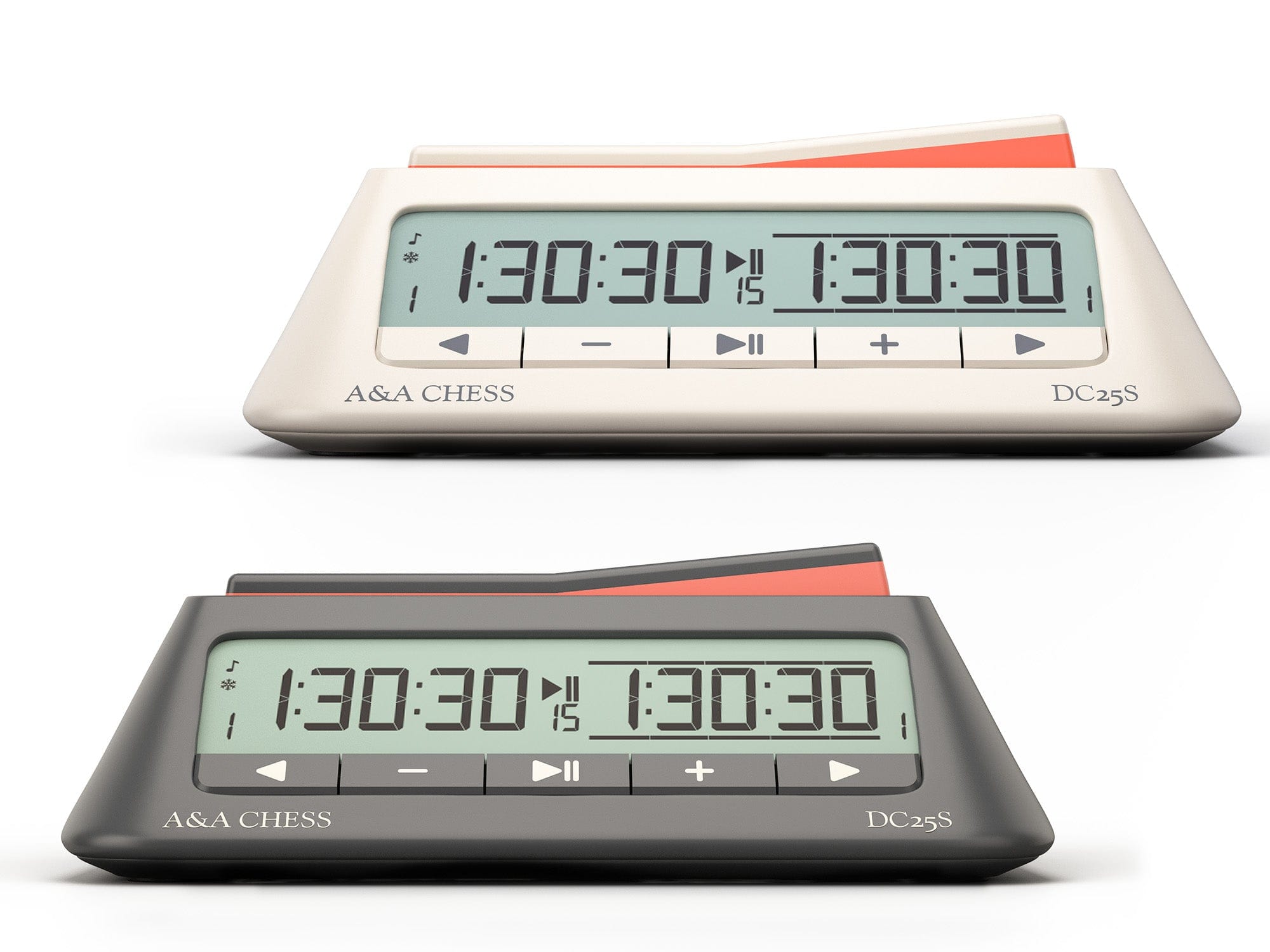
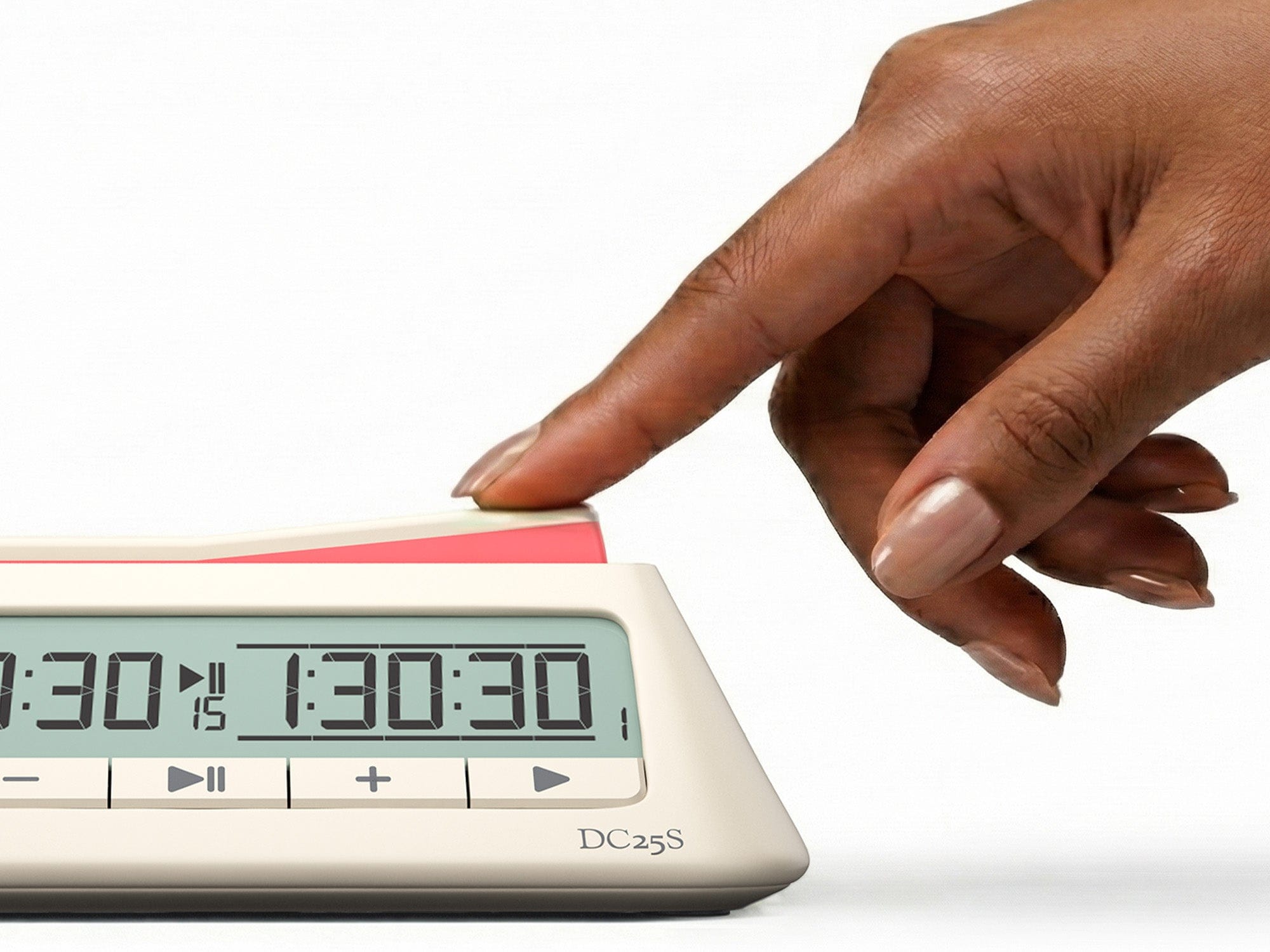
Timed games add energy to the evening, but new players should first become comfortable with the rules. Chess clocks and other useful equipment are available in the chess accessories collection.
7. Three-Generation Game Night
Invite children, parents, and grandparents to participate.
Pair players from different generations or organize a consultation match in which each team must agree on its move.
This creates opportunities for stories, teaching, and shared decision-making that would not normally occur during individual entertainment.
Recommended A&A CHESS Family Setups
Different households need different types of equipment.
Best for Families with Young Beginners
Choose a magnetic folding set with clear piece shapes and protected storage.
The magnetic connection helps the position remain stable, while the folding design makes cleanup easier. A beginner-friendly set can also be stored between lessons without taking up permanent table space.
The natural wood folding magnetic chess set is particularly suitable for households that want the stability of magnets with the appearance and feel of wood.
Best for a Living Room or Coffee Table
Choose a wooden set with a built-in drawer.
The walnut chess and checkers set with drawer can remain visible as part of the room instead of being hidden inside a cupboard.
Because it includes both chess and checkers, family members can select the game that matches their available time and experience.
Best for Storage and Portability
Choose a 15-inch folding set.
The magnetic wooden walnut-finish folding chess set folds to approximately half its playing width and provides internal organization for the pieces.
It is suitable for family holidays, visits to grandparents, weekend trips, and households with limited storage space.
Best for Families That Want Several Games
A multi-game product provides more flexibility for gatherings that include both chess players and casual guests.
The wooden three-in-one combination game set combines chess, checkers, and backgammon in one hardwood design. Product availability may vary, but its product page can help shoppers compare multi-game features and dimensions.
Best for Gift Buyers
A family chess set can be given for:
- Birthdays
- Christmas
- Housewarming celebrations
- Graduation
- Father’s Day
- Mother’s Day
- Family anniversaries
- School achievement
- Retirement
- Corporate occasions
The A&A CHESS gift collection includes wooden, folding, magnetic, and multi-game options for different recipients.
How to Create a Comfortable Game-Night Space
The environment can determine whether family game night feels relaxing or forced.
Choose a Stable Table
The board should sit on a flat surface where all players can reach the center comfortably.
Avoid placing the board beside items that can easily spill or fall.
Use Warm, Even Lighting
Players should be able to distinguish the pieces and squares without glare. A table lamp or overhead light should illuminate the complete board.
Keep Phones Outside the Playing Area
Place phones in a basket, drawer, or charging area for the duration of the game.
Parents should follow the same rule as children. A screen-free activity feels more meaningful when everyone participates equally.
Prepare Simple Snacks
Choose snacks that do not leave grease or crumbs on wooden pieces. Drinks should be placed at a safe distance from the board.
Establish a Clear Duration
A successful family evening does not need to last several hours.
Try:
- Twenty minutes for young children
- Thirty to forty-five minutes for beginners
- One hour for several short games
- Ninety minutes for a family tournament
Ending while everyone is still interested can make the family more willing to play again.
Store the Set Properly
Count the pieces after the final game and return each one to its drawer, tray, bag, or compartment.
This simple habit prevents missing pieces and makes the next family game night easier to begin.
Frequently Asked Questions
Is chess a good screen-free activity for children?
Yes. Chess gives children a physical activity that requires attention, turn-taking, and face-to-face interaction.
Lessons should remain age-appropriate. Younger children may benefit from mini-games rather than complete matches.
What is the best chess set for a family?
A 15-inch folding or drawer-style chess set is a practical choice for many families.
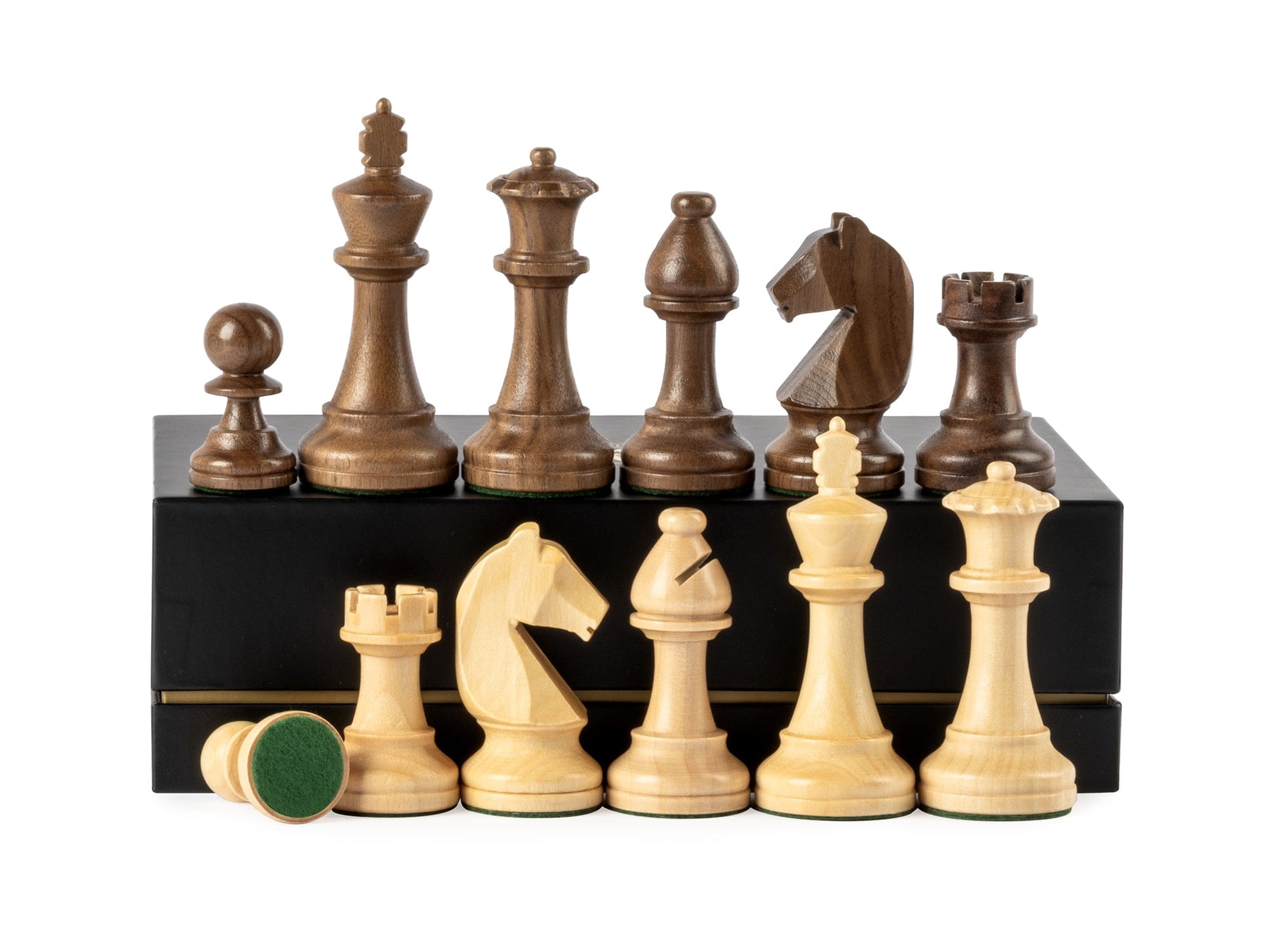
Look for clear Staunton-style pieces, secure storage, durable construction, and magnetic or weighted bases if younger children will use the set.
At what age can a child start learning chess?
There is no single correct age.
Many children can begin learning piece names and basic movements when they are able to follow simple rules and take turns. Formal strategy can be introduced gradually.
Is a magnetic chess set better for children?
Magnetic pieces are helpful because they are less likely to slide or fall when the table is bumped.
However, the magnets should not be so strong that children struggle to move the pieces.
How long should a family chess night last?
For beginners and younger children, twenty to forty-five minutes may be enough.
Older children and experienced players may enjoy longer sessions or several games. The goal is to create a positive routine, not to force everyone to continue after losing interest.
Should parents let children win at chess?
Parents do not need to lose deliberately.
A better approach is to use a fair handicap, allow a limited number of takebacks, play with fewer starting pieces, or solve positions cooperatively.
Children can then experience success while still understanding that their decisions matter.
Is chess or checkers better for a family game night?
Chess offers greater strategic depth, while checkers is usually easier to teach quickly.
A combination chess and checkers set allows the family to choose based on the players and available time.
Can a chess set also be used as home décor?
Yes. A natural wooden chessboard can add geometric structure, warm wood tones, and visual interest to a living room, office, library, or study.
A drawer-style design is especially useful because the pieces can be stored without removing the board from display.
How do we keep younger children interested?
Use shorter games, mini-challenges, team play, puzzles, and small rewards for participation.
Avoid beginning with long lectures about openings or advanced strategy.
What happens if a chess piece is lost?
Check the product warranty and replacement policy before purchasing.
The A&A CHESS FAQ provides additional information about products, customer service, shipping, and replacement support.
Final Thoughts
A screen-free family game night does not need complicated planning.
Choose a comfortable table, place phones outside the playing area, prepare one reliable chess set, and give every family member a way to participate.
Some evenings may include a serious chess match. Others may involve checkers, puzzles, team consultation, or a short lesson for a beginner. The format can change while the purpose remains the same: creating intentional time together.
The right family chess set makes that routine easier.
Magnetic pieces reduce disruption. Folding boards simplify storage. Built-in drawers protect the pieces. Multi-game sets provide variety. Natural wood allows the game to remain visible as part of the home.
Most importantly, chess creates a shared experience that does not disappear when a device is turned off.
Explore A&A CHESS family chess sets to find beginner, magnetic, wooden, decorative, and multi-game options for your next screen-free family evening.



Hinterlasse einen Kommentar
Diese Website ist durch hCaptcha geschützt und es gelten die allgemeinen Geschäftsbedingungen und Datenschutzbestimmungen von hCaptcha.